What are the super tie-break rules for US Open, Australian Open, Wimbledon and French Open after rule change
FAQ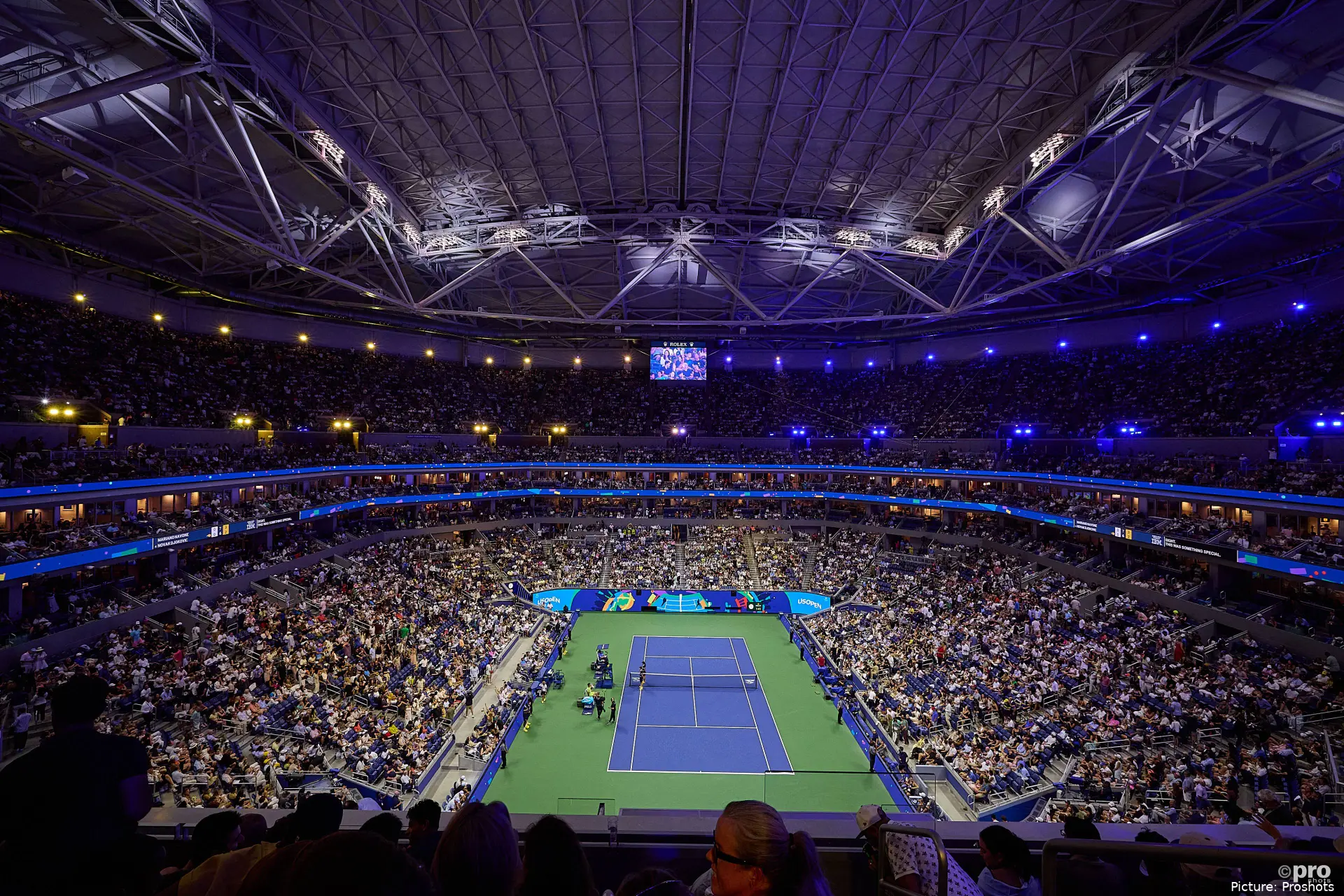
Here is all you need to know about the tie-break rules for the Grand Slams, including the US Open, French Open, Wimbledon and Australian Open, with recent changes to the scoring system meaning that, unlike in the past, matches cannot continue without an end in sight.
Tie-breaks occur in tennis when a set reaches 6-6 in games. It is then the first player to win seven points in the tie-break with at least a two-point margin. This could be 7-5, 7-4, 7-3, but also 10-8 or even 14-12. As long as there is not a two-point margin, this continues until there is one.
Here is what to expect in this article about the super tie-break:
1. The Grand Slam Board’s Unified Super Tie-Break Rules
2. Record-Breaking Tie-Break: Rybakina vs. Blinkova (2019 Australian Open)
3. Comparison: Old vs. New Grand Slam Tie-Break Rules
4. Why Tennis Switched to the 10-Point Final Set Tie-Break
5. 2025-2026 US Open Rule Changes and Mixed Doubles Updates
6. Pros and Cons: The Impact of Super Tie-Breaks on Tennis
2. Record-Breaking Tie-Break: Rybakina vs. Blinkova (2019 Australian Open)
3. Comparison: Old vs. New Grand Slam Tie-Break Rules
4. Why Tennis Switched to the 10-Point Final Set Tie-Break
5. 2025-2026 US Open Rule Changes and Mixed Doubles Updates
6. Pros and Cons: The Impact of Super Tie-Breaks on Tennis
1. The Grand Slam Board’s Unified Super Tie-Break Rules
After a player starts the tie-break with one point on serve, the serving alternates, with each player having two each on serve. In 2019, the Australian Open was the first Grand Slam to implement a 10-point tie-break rule in the final set when the score reaches 6-6 in games. These rules also apply to Qualifying during the Australian Open and have been followed by other Grand Slams, including the French Open, Wimbledon and US Open.
Read also
“Further to extensive consultation with the WTA, ATP, ITF and tennis officiating community, the Grand Slam Board’s decision is based on a strong desire to create greater consistency in the rules of the game at the Grand Slams, and thus enhance the experience for the players and fans alike,” read a joint statement.
It is similar to a normal tie-break, albeit one player starts off with a point on serve, and then the other player has two points on serve, which then alternates between each player having two each. The winner is the first to reach 10 with at least a 2-point margin. If a player gets to 10 and this isn't the case, it continues until they achieve that.
2. Record-Breaking Tie-Break: Rybakina vs. Blinkova (2019 Australian Open)
The main spur for change was the longest tie-break in Grand Slam history (22-20). In the 2023 edition of the Australian Open, something remarkable occurred. Elena Rybakina and Anna Blinkova had to fight out a super tie-break in their final set of Round 2. Both women kept saving tons of match points thrown at them by their opponent. This occurred on a staggering fourteen occasions in total! The super tie-break eventually recorded an endscore of 22-20 in favour of underdog Anna Blinkova, who then and there won the match on a super tie-break. That was the first time in the whole breaker that one athlete had been able to put the required two-point difference in a tie-break on the scoreboard! It was also the longest Grand Slam tie-break in WTA history.
As with other Grand Slams, the super-breaker has not affected the scoring of sets with it still being best of three in the Women's Singles and best of five in the men's singles.
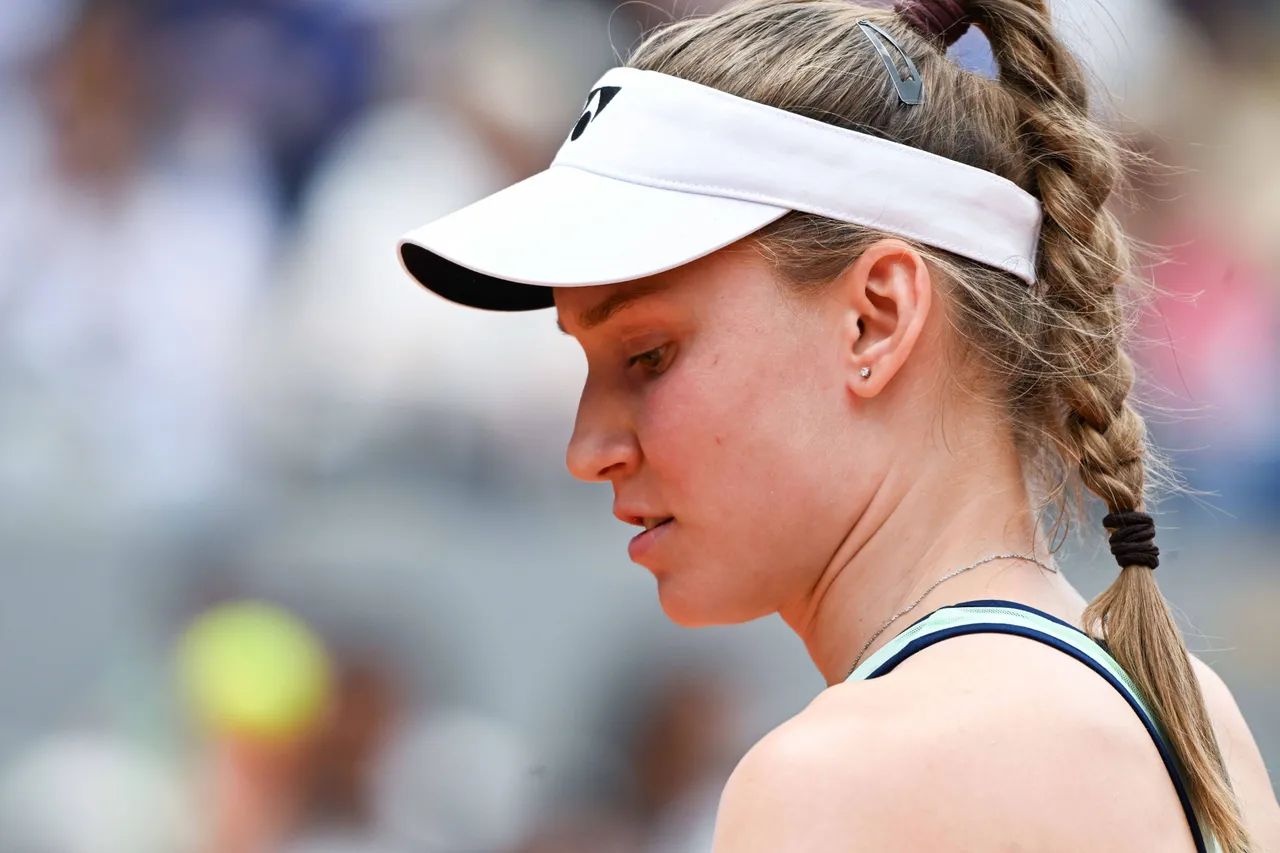
Elena Rybakina v Anna Blinkova was the first prominent example of this.
3. Comparison: Old vs. New Grand Slam Tie-Break Rules
Prior to this agreement, the US Open used a seven point tie-break system at 6-6 in the final set. Wimbledon used a seven point tie-break only at 12-12.
Meanwhile, the French Open did not use a final set tie-break at all and relied solely on advantage sets. In addition, French Open (Roland Garros) was the last Grand Slam to adopt the new system.
Lastly, Australian Open had already been using the 10-point tie-break system at 6-6 ever since 2019.
The governing bodies of the four majors have now implemented standardized tie-break rules to ensure consistency across all Grand Slam tournaments.
4. Why Tennis Switched to the 10-Point Final Set Tie-Break
Before 2022, each Grand Slam had its own rule which created confusion for players, fans, and officials alike, and meant that, for instance, Wimbledon after the French Open had different rules for their tournament compared to others.
In addition, it came down to player welfare and scheduling. A 10-point tie-break provides a quicker conclusion. Marathon matches such as John Isner v Nicolas Mahut lasted over 11 hours with a 70-68 final set. This would be taxing and cause scheduling delays if it continues to be the case.
But with the new tie-break rules, it still creates a dramatic yet more predictable and compact conclusion to a tournament.
5. 2025-2026 US Open Rule Changes and Mixed Doubles Updates
The US Open introduced a "reimagined" Mixed Doubles Championship in 2025, moving the event to Fan Week (the week prior to the main draw). This change was designed to allow high-ranking singles players to compete without exhausting themselves before the main singles event.
Scoring Rules for the Mixed Doubles Championship:
- Early Rounds (R1 through Semifinals): Matches follow a "Fast4" style - best-of-three sets, where each set is played to four games (a tie-break occurs at 4-4).
- The Final: The championship match returns to a traditional format with sets played to six games.
- No-Ad Scoring: All matches use "No-Ad" scoring. At deuce, a single "sudden death" point decides the game.
- 10-Point Match Tie-break: If teams split the first two sets, a 10-point match tie-break is played in lieu of a full third set.
Note: This "Match Tie-break" is different from the "Super Tie-break" used in singles. While both go to 10 points, the Mixed Doubles version replaces the entire third set, whereas the singles version only occurs at 6-6 in the final set.
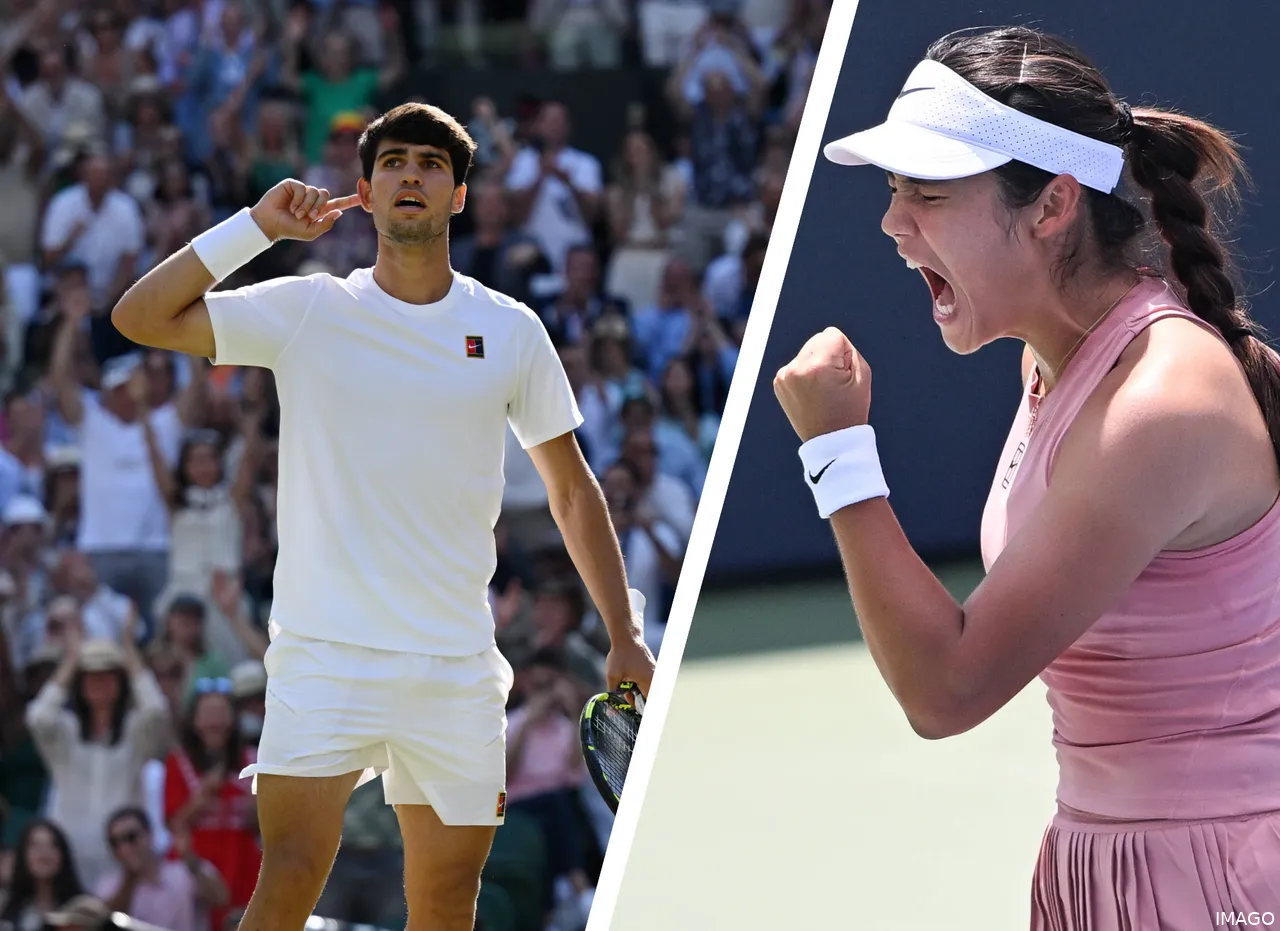
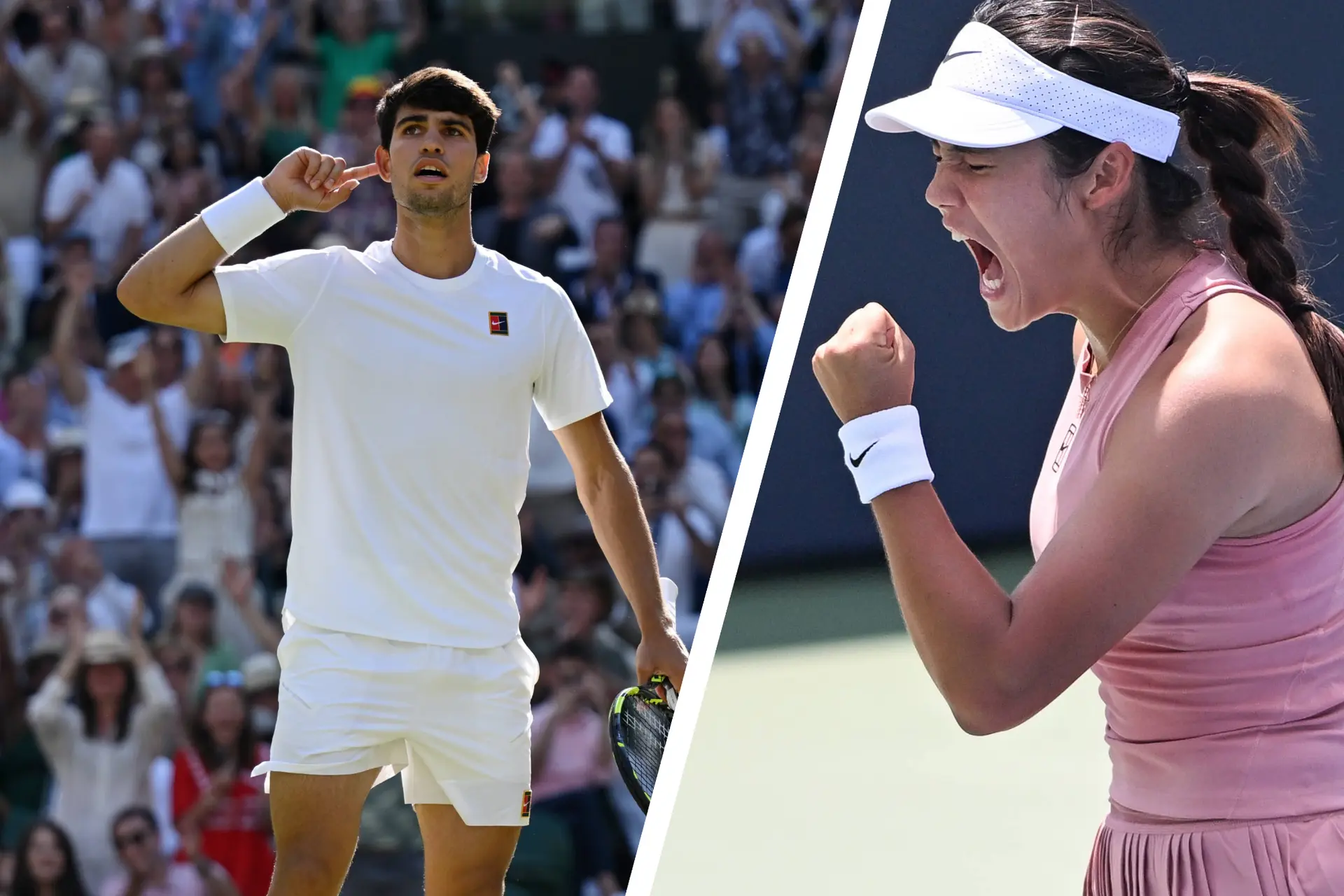
Alcaraz and Raducanu team together at the US Open under different tie-break type rules.
6. Pros and Cons: The Impact of Super Tie-Breaks on Tennis
While for many it is a pretty drawn out process and one that sees games completed quicker some aren't as hasty to let go of the old format.
Such issues with the new format include:
- Loss of epic fifth sets: Critics would argue that final sets which extend beyond 6-6 provide some of the most memorable emotional moments in tennis history. Examples include Federer v Roddick at Wimbledon 2009 or Nadal v Djokovic (Australian Open 2012).
- Tiebreak feels so sudden: A 10-point decider can abruptly end a long, drawn-out match with drama and prove anticlimactic.
Others would be for it for the following reasons:
- Random lottery type feel: With this shorter format, the idea that players who wouldn't win as easily without it means that it could lead to a shock factor.
- Scheduling and broadcast clarity: Super tie-breaks help tournaments stick to schedules, avoid marathon delays, and make match timings more predictable for broadcasters and fans.

Samuel GillEditor-in-Chief
Samuel Gill is the Chief Content Officer (CCO) of TennisUpToDate.com, a role he has held since 2020. He is responsible for editorial governance across the platform, including setting content standards, overseeing accuracy and consistency, and guiding long-term editorial strategy. Since joining, he has contributed more than 10,000 articles and editorial pieces across the TennisUpToDate network, playing a central role in the daily operation and development of the site.
Based in Leicester, Samuel has a broad background in tennis media. In his current role, he works closely with editors and writers to ensure coverage meets clear journalistic standards, with particular attention to verification, consistency, and timely updates when new information becomes available.
claps 11visitors 5
Just In

Popular News
Latest Comments
- A healthy Qinwen may be hard to stop next season. She was already scaring her opponents before her medical leave(s). Unfortunately, Zheng insisted on singing again. On the positive side -- Mirra did not sing!! ;~}
 mandoist11-10-2026
 - Where is it written that athletes, entertainers... People in general... are mandated to keep looking at -- or even using [anti]Social Media? Public & private figures consistently complain and reveal their concerns about negativity and violence thrown at them -- yet they insist on participating. Avoid it, don't use it, don't read it. It's okay to occasionally look up at the World instead beating your eyes & thumbs to death on The Inventions out there.mandoist11-10-2026
- great articlestennisseserver07-10-2026
- Medvedev was leading Djokovic 7-5, 3-5 when an attempted return..' NO you ignorants, Djokovic was leading .weiss05-10-2026
- No more bullshit "Wildcards" to these two. Qualify like everyone else -- there will be cameras there, too. Time to scream... WTF ????!!!!mandoist29-09-2026
- Let's not BS the general public -- Sabalenka started showing cracks in her game last season. Her losses and near-losses started at about the same time she began being distracted by Fame (constant Selfies, making TV commercials, magazine shoots, endless Social Media nonsense, etc., etc.) One would think even Saba could recognize the parallels with others who failed before her -- Raducanu, Giorgi, Bouchard to name a few.mandoist25-09-2026
- Gross!! Hey Raducanu, Giorgi, and Bouchard -- reserve a seat at your Social Media Selfie table for Saba + Naomi. They're heading in your direction soon enough.mandoist24-09-2026
- And then these same players will complain about how lengthy their season’s were and need more time-off. I’m all for more tennis but the amount of tennis we get now is actually kind of crazy! We all need a break, especially the players.DaveyWavey23-09-2026
- You should do a comparison article for "different kinds of justice" the courts decide for tennis players. I can think of at least three players who received very small bans of a few months, however Tara Moore has been fighting for her literal survival the past few years. It seems odd considering she is not a "name" player, unlike the other cases.DaveyWavey22-09-2026
- PRIZE MONEY & POINTS Winner - $185,500 Finalist - $114,500 Semi-Finalist - $66,003 Quarter-Finalist - $35,000 Round of 16 - $18,045 Round of 32 - $13,005 Winner - 500 Finalist - 325 Semi-Finalist - 195 Quarter-Finalist - 108 Round of 16 - 60 Round of 32 - 1DaveyWavey20-09-2026

Loading