COLUMN - The hardest ten matches in tennis: Why no qualifier has ever won Wimbledon ala Emma Raducanu at Flushing Meadows
Column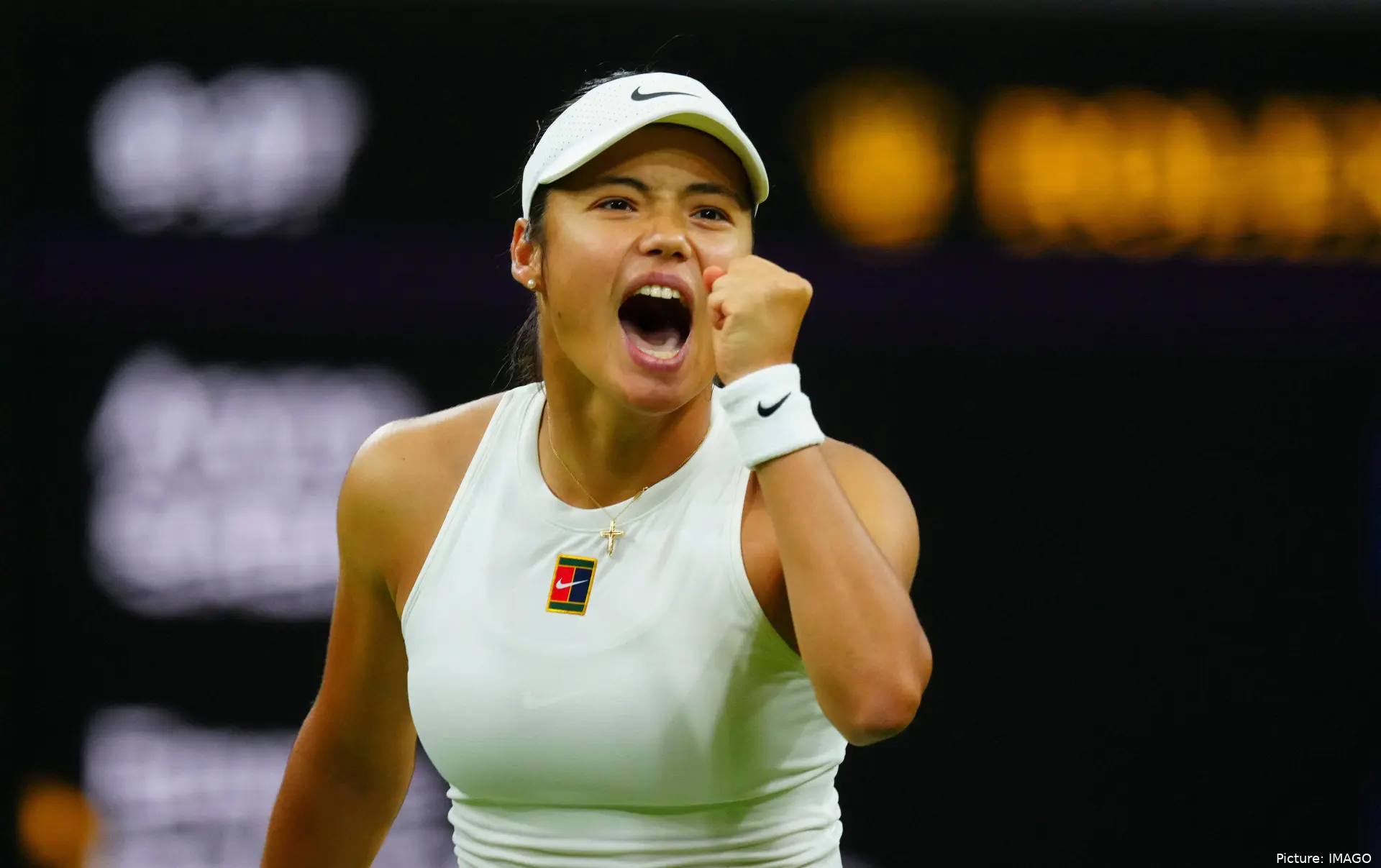
On Monday morning, while most tennis fans were debating who will win this year’s Wimbledon trophy, another tournament quietly began across London. Not at the All England Club. At Roehampton. For hundreds of professional tennis players, Wimbledon starts a week before Wimbledon.
The Wimbledon Qualifying Competition is one of the sport’s great hidden battles. For readers who don’t obsessively follow our game, those who did not gain direct entry into the main draw arrive carrying the same dream as everyone else: win Wimbledon. The difference is that before they can even step onto Centre Court or Court No. 1, or, far more likely, some random outside court, they must first survive three rounds of qualifying simply to earn the right to enter the tournament proper. Sixteen men will emerge from qualifying. Sixteen women will do the same.
Then the real challenge begins. Every year, watching qualifying raises the same question: Could someone actually do this??? Could a player start in Roehampton, win three qualifying matches, win seven more matches at Wimbledon, and leave London holding one of the most famous trophies in sports?
History suggests the answer is a very hard no. Not unlikely. Not improbable. Impossible. At least so far. Since the beginning of the Open Era in 1968, no men’s singles player has ever come through Wimbledon qualifying and gone on to win the Wimbledon title. No woman has done it either.
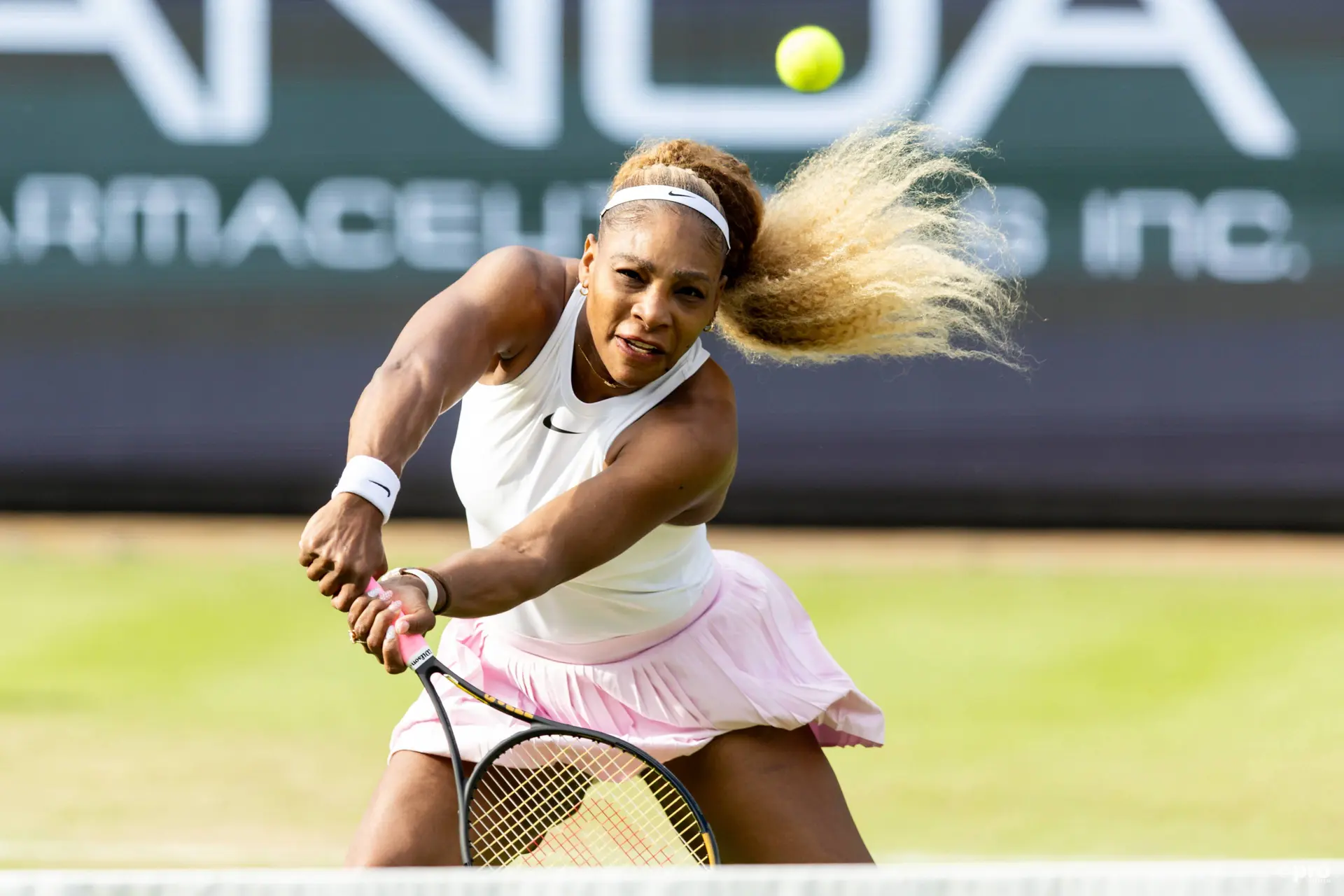
That fact becomes even more remarkable when you consider how many unlikely stories tennis has produced over the years. We have seen teenage champions, wild-card dream runs, comeback stories that seemed impossible, and players rise from obscurity to the very top of the sport.
Yet nobody has ever managed to survive qualifying and then win Wimbledon. The closest calls have become part of tennis folklore. An 18-year-old John McEnroe came through qualifying and reached the semifinals in 1977, introducing himself to the tennis world before most fans knew who he was. Vladimir Voltchkov shocked the sport by reaching the semifinals as a qualifier in 2000. Alexandra Stevenson became the first female qualifier to reach the Wimbledon semifinals in 1999.
All remarkable achievements. All stopped three matches short. The deeper you look, the more understandable the record becomes. To win Wimbledon from qualifying requires ten consecutive victories spread across roughly three weeks. Ten. Over three grueling weeks
The first challenge is qualifying itself. Like main draw, there are no easy openings. Most players in qualifying are ranked between roughly 100 and 250 in the world. The differences between them are razor thin. Careers can turn on a handful of points. Many of these players have spent years battling each other on the Challenger Tour and know each other’s strengths and weaknesses intimately. Surviving those first three matches is frequently more difficult than fans realize. Then comes the main draw.

Maja Chwalinska the shock surprise at RG.
The level rises. The crowds grow larger. The media attention arrives. The pressure multiplies exponentially. Eventually, every qualifier who keeps winning runs headlong into one of the best players on the planet. And all of this happens on grass. That matters.
Again, for those who don’t obsess over tennis, it’s worth noting that remains the most specialized surface in professional tennis. Players have only a brief window each season to prepare for it. Matches can swing on a handful of points. Big servers become dangerous. Hot streaks become lethal. One poor service game can undo two hours of excellent tennis.
The modern game may have made the task even harder. The depth on both tours is extraordinary. The difference between No. 30 and No. 130 in the rankings is often much smaller than casual fans imagine. At the same time, the physical demands of professional tennis continue to increase. Recovery has become almost as important as performance. Winning seven matches at a Grand Slam is exhausting. Winning ten in succession requires maintaining peak physical and mental performance for nearly three straight weeks.
Even the greatest players have struggled mightily to do that. If all of this sounds overly dramatic, consider what happened just a few weeks ago in Paris. Maja Chwalińska arrived at Roland-Garros needing to qualify for the main draw. Then she produced one of the most surprising runs in recent Grand Slam history.
She won all of her qualifying matches. Then she won six more matches in the main draw. Suddenly, a player few expected to contend was standing in the French Open final, one victory away from accomplishing something that would have ranked among the greatest underdog stories tennis has ever seen. For a moment, the sport was forced to reconsider what was possible.
Chwalinska and Raducanu anomalies
If a qualifier could come within one match of winning Roland-Garros, why couldn’t someone do the same at Wimbledon?
The answer lies in the numbers. Chwalińska’s extraordinary run required three weeks of consecutive victories at the absolutely highest level of professional tennis
Winning Wimbledon from qualifying requires the same on the most difficult and unpredictable surface There’ll top of this is harsh statistical reality. Across all four Grand Slam tournaments, only one player in history has ever won a major singles title after coming through qualifying. Emma Raducanu.

Emma Raducanu on court at the US Open
At the 2021 US Open, she won three qualifying matches and seven main-draw matches without dropping a set. The achievement remains one of the most astonishing accomplishments the sport has ever witnessed precisely because nobody else has ever done it. Not at the Australian Open. Not at Roland-Garros. Not at Wimbledon. Every June, however, the dream begins again.
This week at Roehampton, players will walk onto court knowing the odds. They understand the history. They know that no qualifier has ever lifted the Wimbledon singles trophy. They also know something else.
Every great sporting achievement begins as something that has never been done before. That is what makes qualifying so compelling.
For most fans, Wimbledon is a two-week tournament. For the players at Roehampton, it is closer to three. And somewhere among them is a player who believes that ten consecutive victories are possible. History disagrees. But history only has to be wrong once.

Aron SolomonGuest Author
A Pulitzer Prize-nominated journalist for his groundbreaking op-ed in The Independent exposing the NFL’s “race-norming” policies, Aron Solomon, JD, is a globally recognized thought leader in law, media, and strategy.
As Chief Strategy Officer for AMPLIFY, he leverages his deep expertise to shape the future of legal marketing. Aron has taught entrepreneurship at McGill University and the University of Pennsylvania and was honored as a Fastcase 50 recipient, recognizing him among the world’s top legal innovators. A prolific commentator on law, business, and culture, his insights regularly appear in Newsweek, The Hill, Crunchbase News, and Literary Hub.
He has also been featured in The New York Times, Fast Company, Fortune, Forbes, CBS News, CNBC, USA Today, ESPN, TechCrunch, BuzzFeed, Venture Beat and countless other leading global media outlets. We are proud to have Aron on board at TennisUpToDate, where his deep tennis expertise enriches the site with sharp, original columns that connect the sport to wider cultural debates.
claps 0visitors 0
Just In

Popular News

Latest Comments
- Does Sinner need that 4.5 mil? I doubt it. He can make that with three modelling gigs!😅🤣Rapunzel21-10-2026
- Did "People Magazine" purchase this website? This nonstop storyline is bullshit.
 mandoist21-10-2026
 - Listen... this is of no concern to anyone but these two. Deal with your own issues -- most of us have our own. Thanks, media, for these insignificant follow-ups which are meaningless.mandoist21-10-2026
- This is so very very sad, for all three of them. I truly thought they had an unbreakable bond, but life throws up so many differing challenges. Having your homeland suffering in such a terrible way, makes happiness lose out to guilt as well. Our thoughts are with them. X💔bjsexton20-10-2026
- I have lost all respect for Svitolina! Could she not have waited until he had played at the Paris Masters!!! She is selfish and don't give a damn about Gael. That is NOT how love is demonstrated Elina!!Rapunzel19-10-2026
- Perhaps convenient tennis tour sex is not a strong enough experience in which to base a marriage?mandoist19-10-2026
- Fight the Good Fight... Tennis (sports in general) need more Humans such as yourself.mandoist18-10-2026
- When is WTA going to mandate Genetic Testing (DNA) ???mandoist18-10-2026
- Hey, Dan... you just wake up from a coma? Regardless -- Thanks for the comedy this morning!mandoist18-10-2026
- Two Things: 1. Stop allowing these Spoiled Trust-Fund Elitists to behave badly. Your little hand-slaps do not deter them. 2. STOP the incessantly annoying "towel wiping" nonsense!!!!mandoist15-10-2026

Loading