COLUMN: Andreeva plays like a champion, Svitolina ends my Nosková dream, and a final that is about more than tennis
WTA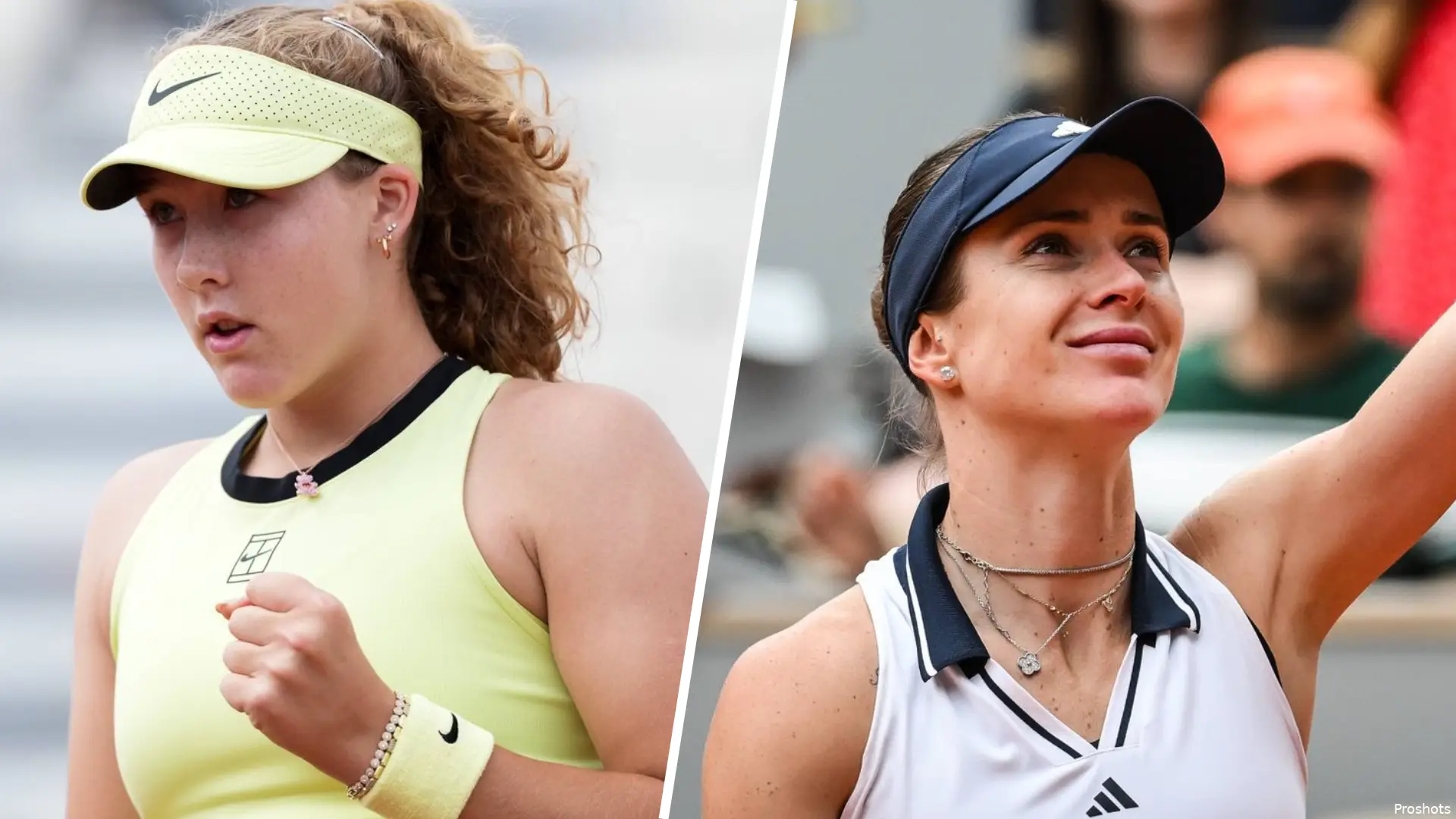
I’ve spent much of this week arguing that Linda Nosková is the best tennis player in the world when she’s playing her best tennis. I’ve also been predicting that she would win the WTA Finals at Indian Wells. Well, I have some bad news for my prediction. Nosková isn’t going to win the tournament.
Elina Svitolina made sure of that on Saturday, producing a performance that was even better than the one she delivered against Aryna Sabalenka on Friday. And given how well Svitolina played in that match, that’s saying something.
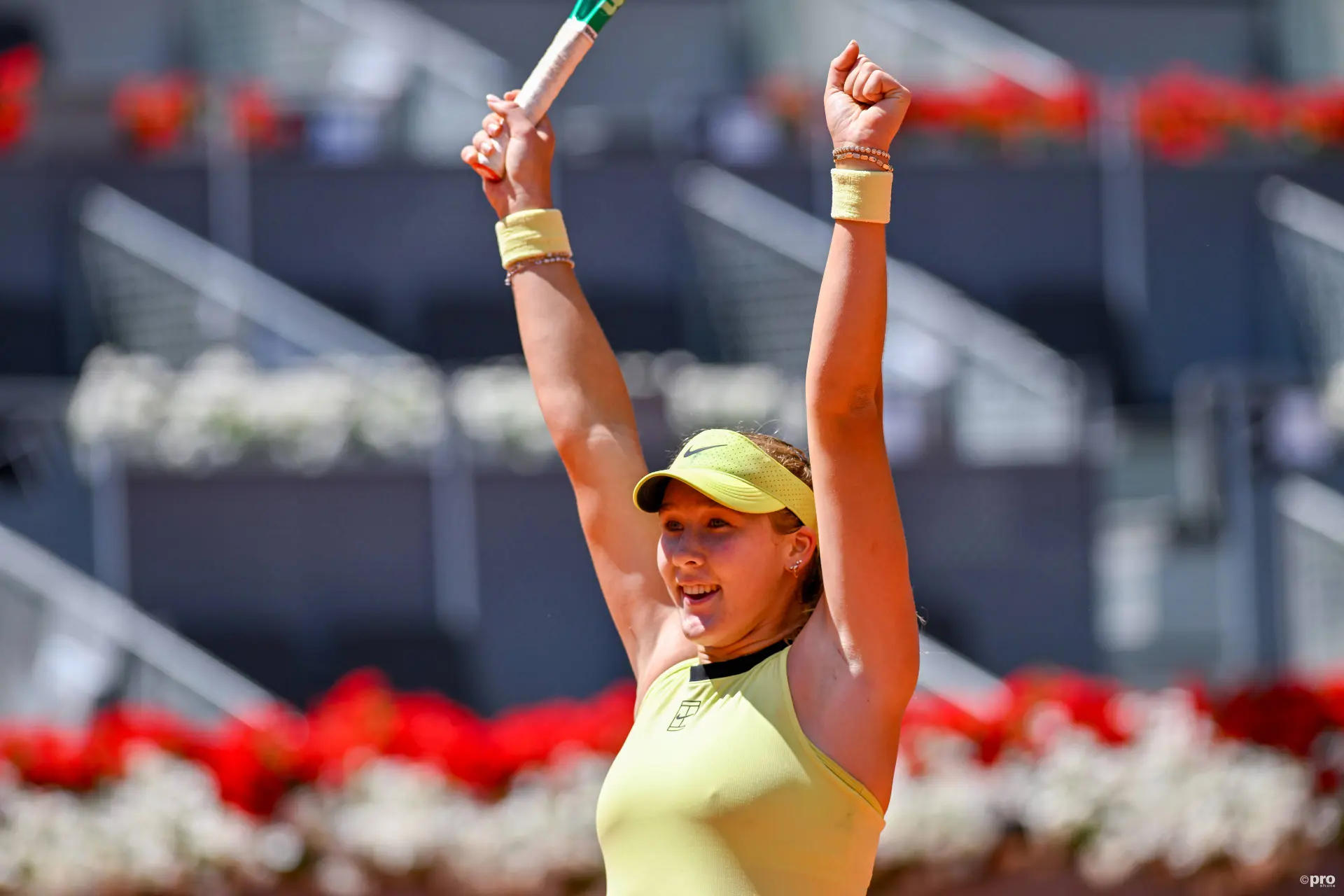
But before we get to the end of my Nosková prediction, we need to talk about Mirra Andreeva. Because Saturday’s first semifinal, in which Andreeva defeated Jessica Pegula 6–3, 6–4, featured some of the finest tennis we’ve seen all week. In fact, the opening four games were so good that I found myself wondering where this level of play had been hiding for the previous six days.
We’ve watched some terrific moments at Indian Wells. We’ve also endured some tennis that looked like it was being played by people who would rather be sitting beside a swimming pool in the Maldives. Saturday was different. For the first time this week, I felt as though I was watching the WTA Finals at their absolute best.
Andreeva Hits a Ball That Would Terrify Most Tennis Players
I’ve played competitive tennis at a relatively high level, and one of the things that experience gives you is a pretty good understanding of what certain shots would feel like if you were standing on the other side of the net.
Watching Andreeva on Saturday, I kept thinking about the weight of her ball. There’s a difference between a shot that’s fast and one that’s genuinely heavy. Speed is part of it, certainly, but there’s also the spin, the depth, and the way the ball seems to explode off the court after it lands.
Andreeva hits an extraordinarily heavy ball. When she really gets behind a groundstroke, the thing comes off her racket like a cannonball. You can see how much trouble it creates for an opponent, even one as experienced and accomplished as Pegula. And I can tell you that standing across the net from some of those shots would be scary as hell.
What impressed me even more was that Andreeva wasn’t simply hitting hard. She was choosing the right moments to attack, moving beautifully, and playing with a level of tactical maturity that we don’t always associate with someone who’s 19 years old.
The opening games were magnificent. Pegula broke serve in the third game to take a 2–1 lead, and I wondered whether we were about to see the other side of Andreeva’s personality.
Like Sabalenka, Andreeva can become frustrated with herself rather quickly. We’ve seen moments when her emotions threaten to interfere with her extraordinary talent. Getting broken early in a semifinal against an experienced opponent seemed like exactly the sort of situation that could test her.
Instead, she broke straight back. Two games apiece. And in that moment, I thought we learned something important about Andreeva.
She didn’t allow the early setback to become an emotional event. She simply went back to playing tennis, and what followed was as good as anything I’ve watched at this tournament. That response at 1–2 may have been the most important moment of her afternoon.
When One Player’s Best Is Better Than the Other’s
Andreeva took the first set 6–3, and the quality of her tennis was extraordinary. Pegula wasn’t playing badly. Quite the opposite. There were stretches when she was hitting the ball beautifully, constructing points intelligently, and doing the things that have made her one of the most consistent players in women’s tennis.
The problem was that Andreeva was better. Not a little better. At times, when both players were producing their best tennis, Andreeva’s best looked 30 or 40 percent better than Pegula’s.
That’s not a statistical measurement, obviously. It’s the impression you get watching two elite athletes exchange tremendous shots, only to discover that one of them has another level available. Andreeva seemed to have that extra level whenever she needed it.
Pegula deserves credit for continuing to compete. She broke early in the second set and built a 3–1 lead, giving herself an opportunity to turn the match around. But Andreeva broke back, and the longer the set continued, the more difficult Pegula’s afternoon became.
There was an interesting emotional reversal, too. I’d entered the match wondering whether Andreeva might become frustrated if things didn’t go her way. Instead, it was Pegula who began showing signs of irritation as the second set progressed. And I understood why.
Imagine playing some of your best tennis, hitting shots that would win points against almost anyone else on tour, and discovering that the person across the net can consistently produce something better. That’s exhausting, physically and psychologically.
Late in the second set, Pegula’s frustration seemed to turn into resignation. It wasn’t that she stopped trying. She simply appeared to recognize that she was facing someone operating at a level she couldn’t quite match.
Andreeva closed out the match 6–3, 6–4. I don’t think she needed to play quite that well to beat Pegula on Saturday. But she did. And that’s what made the performance so impressive.
There are matches in which a player wins because her opponent isn’t particularly good. There are others in which someone survives despite playing below her best. This wasn’t either of those. Andreeva played nearly flawless tennis against a very good opponent, and the result was thoroughly deserved.
She is now in Sunday’s WTA Finals championship match. And if she plays anything like she did on Saturday, whoever faces her will have an enormous problem.
The Sun Was Almost a Third Player in the Second Semifinal
Then came Nosková against Svitolina. I’ve been looking forward to this match all week, partly because I genuinely believe Nosková has the ability to dominate women’s tennis, and partly because Svitolina’s remarkable victory over Sabalenka on Friday suggested she was playing some of the best tennis of her season.
What I hadn’t fully appreciated was just how much the November sun would influence the match. We’ve discussed the unusual playing conditions at Indian Wells throughout this tournament. The venue is famous for its beautiful March weather, but November is a very different proposition.
The sun sits considerably lower in the sky, and the shadows across the court create visual problems that players don’t encounter in quite the same way during the traditional Indian Wells tournament. Saturday’s second semifinal provided a particularly vivid demonstration.
The opening games felt remarkably even. Both women were striking the ball well, and there wasn’t much separating them in the quality of the rallies. But the scoreline began moving decisively in Svitolina’s direction.
One of the most interesting details was that the first three breaks of serve occurred when the server was facing directly into the sun. And the problem wasn’t limited to the service motion. Imagine looking upward into that low, bright California sun as you toss the ball. You’re already struggling to see clearly while attempting one of the most technically demanding movements in tennis.
Then your opponent returns the serve, and suddenly you’re trying to pick up a moving tennis ball emerging from deep shadows on the other side of the court. It’s an awful combination. You’re dealing with extreme brightness and darkness within the space of a few seconds, while trying to react to a ball traveling at professional speeds. That’s difficult enough for recreational players. At this level, where a fraction of a second can determine whether you make clean contact, it becomes a serious competitive problem.
I don’t think the sun explains the outcome of the match. Svitolina was simply too good for that argument to hold up. But it certainly influenced the way the first set developed, and it helps explain why a contest that initially felt so even became so lopsided on the scoreboard.
Svitolina won the opening set 6–2. And suddenly, my tournament prediction was in considerable trouble.

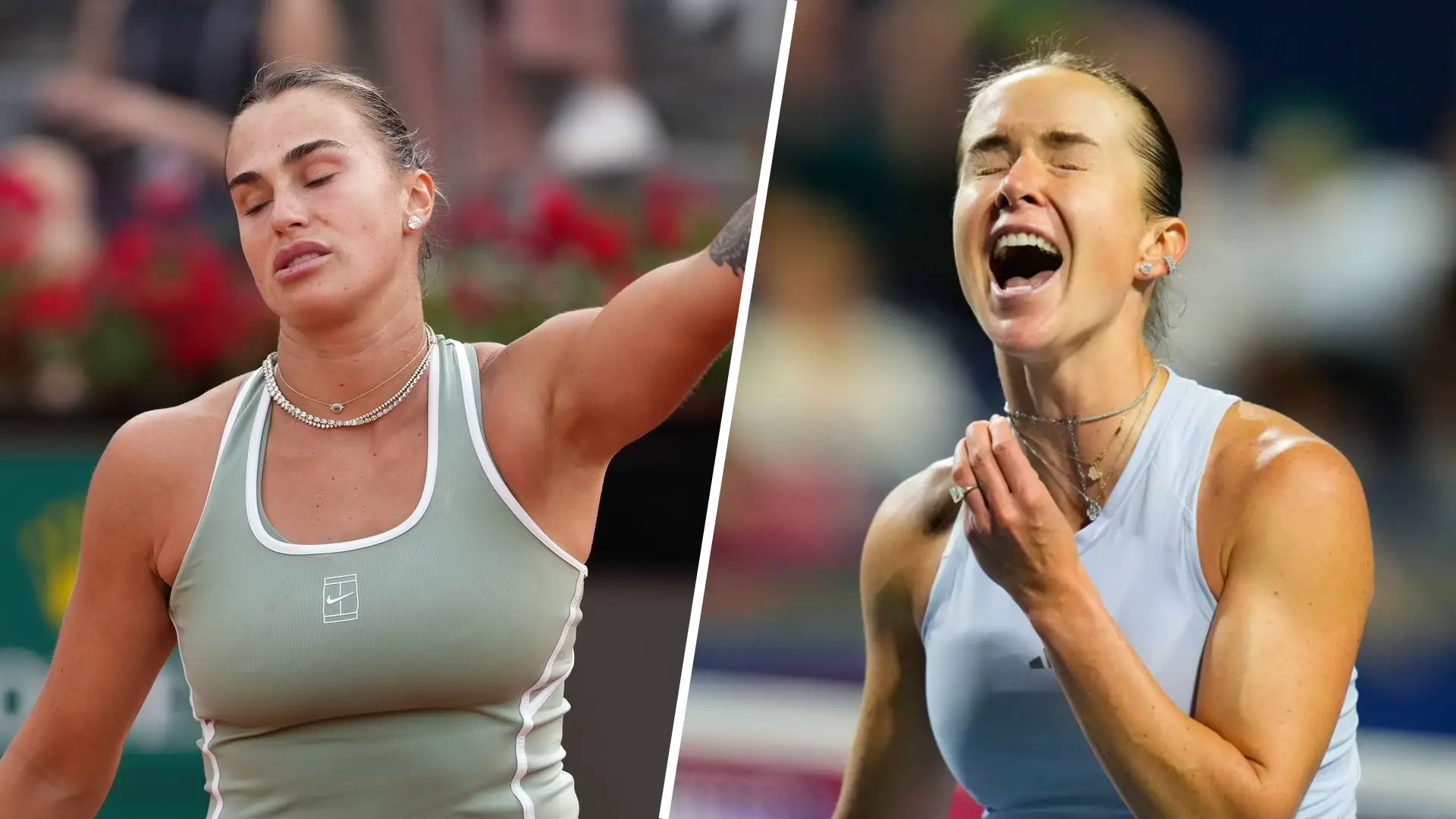
Linda Noskova could nto find that winning combination against Elina Svitolina
Watching Nosková Lose Something We Had Seen All Week
One of the things I’ve admired most about Nosková at these Finals has been her attitude. She’s played with a wonderful combination of aggression, confidence, and what I can only describe as positive energy.
Even when matches became difficult, she seemed to believe she could find a solution. That was particularly evident in her victory over Coco Gauff, when she produced some astonishing tennis without appearing overwhelmed by the occasion. And although she lost a terrific match to Pegula on Thursday after holding a match point, I didn’t come away thinking her confidence had been damaged.
Saturday felt different. After losing the first set 6–2, Nosková quickly found herself down 3–0 in the second, preparing to serve with her tournament life hanging by a thread. And for the first time all week, I thought I could see the energy draining out of her.
Not just the physical energy. The positivity, the belief, and the sense that she was enjoying the challenge. That’s a difficult thing to watch when you’ve spent the week convinced that a player is capable of winning the entire tournament. But it’s also part of what makes tennis so fascinating.
Confidence isn’t something you either possess or don’t possess. It can change during a match, sometimes almost imperceptibly. A player who looked fearless 20 minutes earlier can suddenly seem uncertain about shots she’s been hitting successfully all week.
Nosková wasn’t facing an opponent who was giving her many opportunities to rebuild that confidence. Quite the opposite. Svitolina was playing extraordinary tennis.
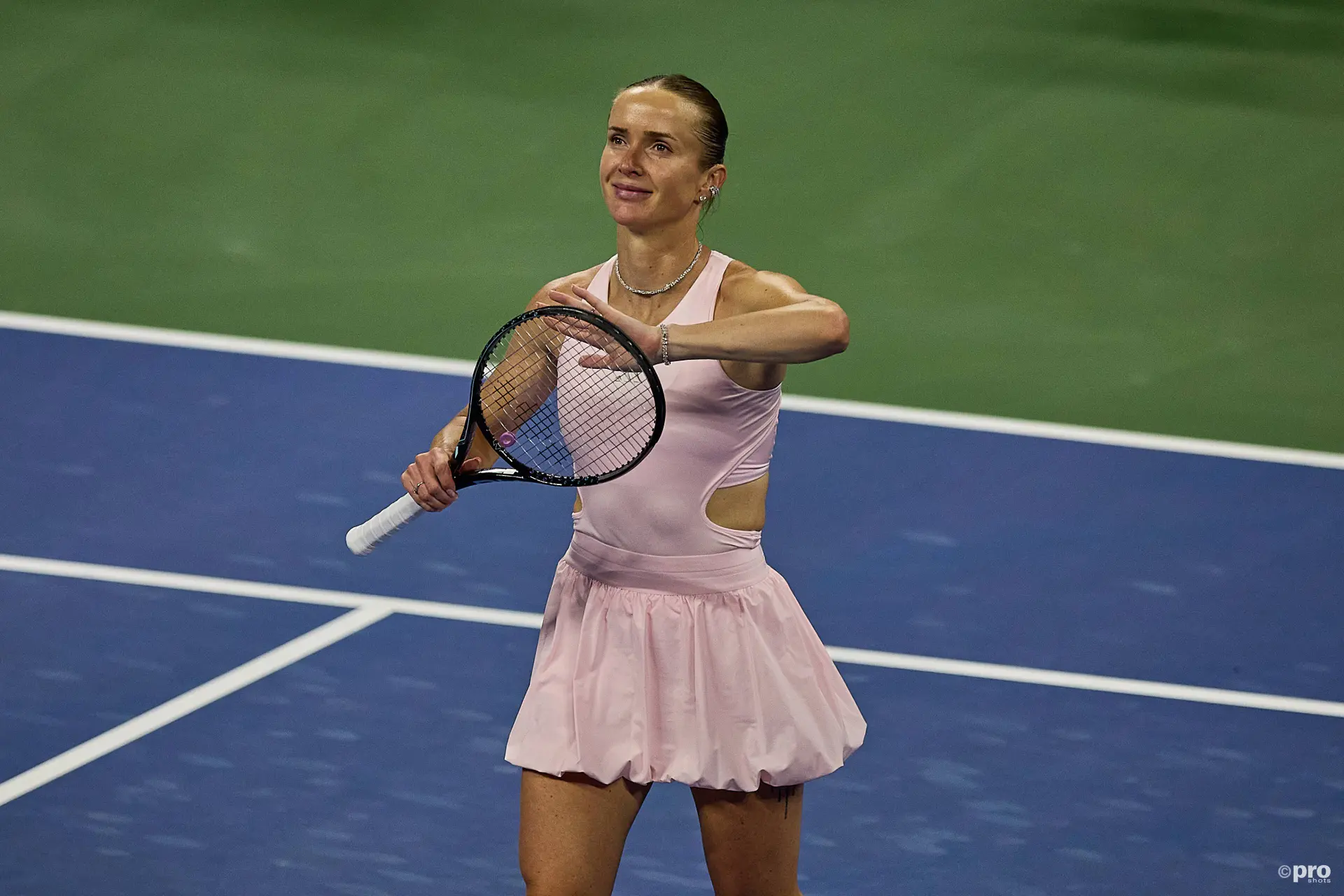
Svitolina Was Even Better Than She Had Been Against Sabalenka
On Friday, I thought Svitolina played inspired tennis against Sabalenka. She handled the occasion beautifully, remained composed while Sabalenka was becoming increasingly frustrated, and finished the match with three aces in the final game.
It was one of the most impressive performances of the tournament. Saturday was better. Against Nosková, Svitolina was about as close to flawless as I’ve seen her.
Her movement was exceptional. Her shot selection was intelligent, and she seemed to have an answer for virtually everything Nosková attempted. More importantly, she wasn’t simply waiting for her opponent to make mistakes.
That’s sometimes the unfair reputation attached to players who defend as well as Svitolina does. We describe them as consistent, determined, or difficult to beat, as though their principal skill is making the other player hit one more ball.
Svitolina was doing considerably more than that. She was controlling rallies when opportunities presented themselves, changing direction intelligently, and refusing to give Nosková the comfortable attacking positions she prefers. And when Nosková tried to force the issue, Svitolina was often already in the right place.
It was an exceptionally complete performance. There’s also an interesting statistic that speaks to Svitolina’s experience in these situations.
With Saturday’s victory, she improved to 20–3 in WTA semifinals after winning the opening set. That’s a remarkable record. It suggests that once Svitolina establishes control in a semifinal, she’s exceptionally difficult to dislodge. Nosková discovered that on Saturday. And I discovered that my prediction wasn’t going to survive the afternoon.

Elina Svitolina is in a third WTA Finals final
Two Players Who Earned Their Places
So Sunday’s championship match will feature Mirra Andreeva against Elina Svitolina. And I have to say, I love this matchup.
Andreeva is 19 years old, fearless when she’s playing well, and capable of hitting a tennis ball with a ferocity that seems almost unreasonable for someone so young.
Svitolina is an experienced competitor who understands the tactical and emotional demands of big matches, and who has just produced two outstanding performances on consecutive days.
Their paths to the final have been impressive in different ways. Andreeva demolished Sabalenka earlier in the week, then played what I consider the best tennis of the tournament against Pegula. Svitolina defeated Sabalenka in a dramatic three-set match on Friday, then returned less than 24 hours later and produced an even better performance against Nosková.
Neither player has stumbled into this final. Both have earned it. And the contrast between them should make for a fascinating afternoon.
Andreeva will want to impose her power, take control of rallies, and prevent Svitolina from turning the match into a prolonged examination of patience and endurance.
Svitolina will want to use her movement, experience, and extraordinary ability to absorb pressure to make Andreeva uncomfortable.
There will also be an emotional dimension. Andreeva showed tremendous maturity against Pegula, particularly when she was broken early in the first set and again when she fell behind in the second. But a WTA Finals championship match is a different kind of occasion. Svitolina, meanwhile, has looked almost impossibly composed over the past two days.
If Andreeva starts making mistakes, will she maintain the same calm she showed Saturday? And if Svitolina finds herself facing the kind of relentless power Andreeva produced against Pegula, will her remarkable defensive skills be enough? Those are questions worth watching.
A Final That Cannot Escape the War in Ukraine
It would be remarkably naive to pretend that Sunday’s final is simply a tennis match between two players at opposite ends of their careers.
Elina Svitolina is a 32-year-old Ukrainian who has become one of her country’s most recognizable sporting figures during Russia’s invasion. She has spoken publicly about the war, supported humanitarian efforts, and made it clear that representing Ukraine carries a meaning far beyond winning tennis matches. Her prominence and commitment have even prompted speculation about whether she might someday pursue political office in Ukraine.
Across the net will be Mirra Andreeva, a 19-year-old Russian who competes without her country’s flag because of the restrictions imposed on Russian and Belarusian players following the invasion.
Andreeva has not publicly condemned Russia’s invasion of Ukraine. When questioned about the war, she has expressed a desire for peace without directly criticizing the Russian government or its actions. That is a position, certainly, but it is not the same as condemning the invasion.
I think we need to be careful about what conclusions we draw from that silence. Andreeva was only 14 when the full-scale invasion began, and publicly criticizing the Russian government can carry consequences that people living in democratic societies don’t always fully appreciate. We cannot know what she privately believes.
But we also cannot pretend that her nationality, her public position, and Svitolina’s experiences are irrelevant to Sunday’s match.
For Svitolina, the war isn’t an abstract political controversy or something that can be set aside until the tennis is finished. It is a continuing tragedy affecting her country, her fellow Ukrainians, and the world in which she and her family live.
She has consistently declined to shake hands with Russian and Belarusian opponents while the war continues, explaining that the decision is rooted in her country’s circumstances rather than a personal dispute with every player she faces.
Andreeva, for her part, has generally tried to keep her attention on tennis when confronted with these questions. Those positions exist in the same sporting world, but they come from profoundly different experiences.
None of this means Sunday’s final should become a referendum on two individual athletes. Nor does it diminish Andreeva’s extraordinary talent or the tennis she played to reach the championship match. But sport doesn’t exist in a vacuum, particularly when one competitor comes from a country fighting for its survival and the other comes from the country that invaded it.
Sunday’s final promises to be a fascinating contest between two exceptional tennis players. It will also carry a political and emotional weight that no amount of talk about forehands, backhands, or tactical adjustments can entirely erase. We can appreciate the tennis while acknowledging everything else. In fact, I think we have an obligation to do both.
A Tournament That Finally Found Its Best Tennis
I’ve had plenty of complaints about these WTA Finals. The exhausting length of the season, the occasional lack of energy, the strange November playing conditions, and some matches that simply weren’t worthy of a season-ending championship.
But I also think it’s important to recognize when a tournament gets better. And this one has. The tennis over the past three days has been dramatically more compelling than much of what we watched earlier in the week.
Read also
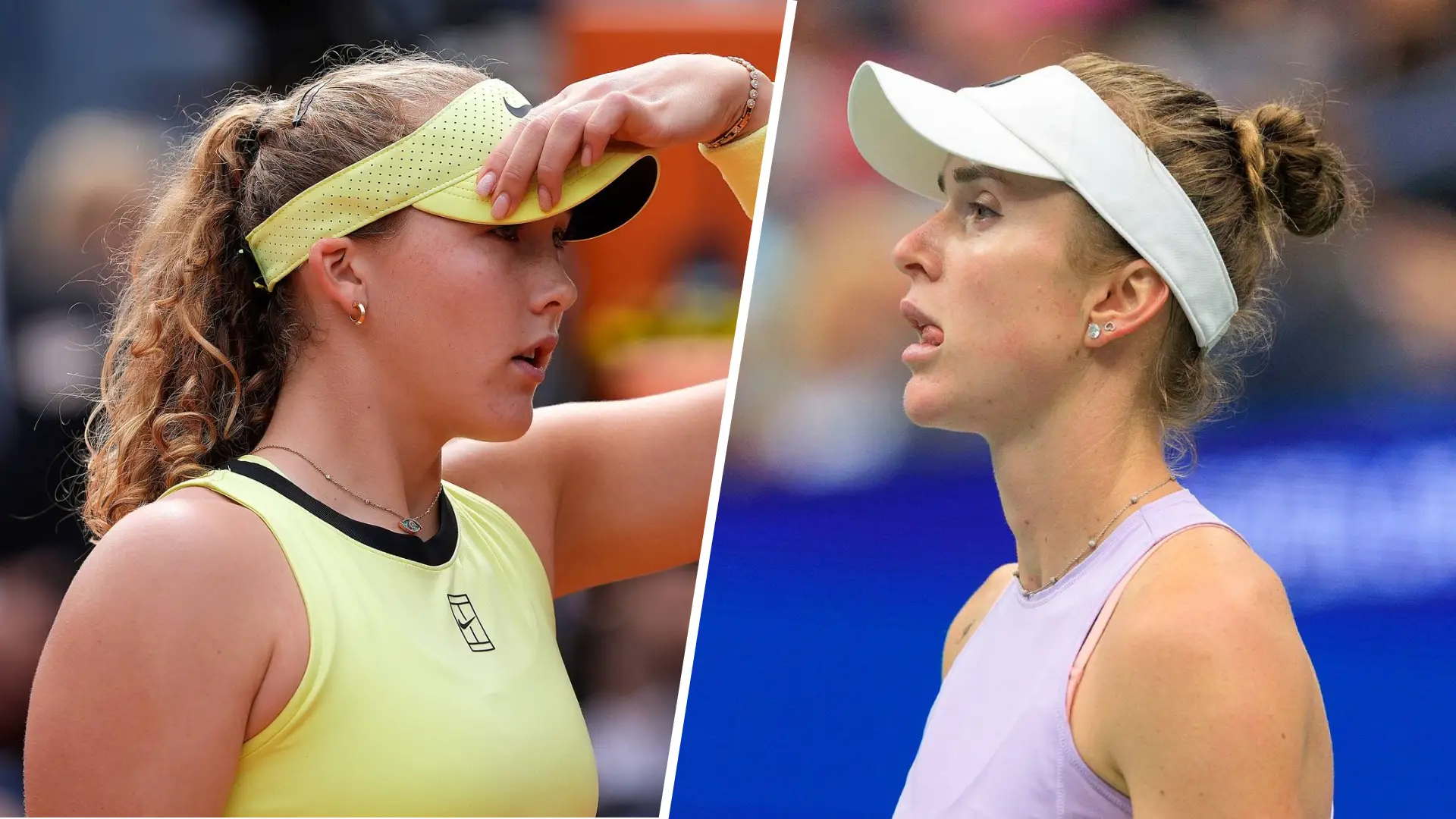
We’ve seen extraordinary comebacks, remarkable collapses, and performances that remind us why these women are among the best athletes in the world. Saturday gave us Andreeva at something approaching her absolute best, followed by Svitolina producing a masterclass in controlled, intelligent, and beautifully executed tennis.
I would have loved to see Nosková reach the final. I’ve made no secret of that. But the two players who advanced deserved to advance. And after watching them on Saturday, I wouldn’t be surprised if Sunday’s final turns out to be the best match of the entire tournament.
As for my prediction? Well, I still believe Nosková has the talent to become the best player in the world; I just won’t be collecting any kudos from that particular prediction this weekend. And after watching Andreeva and Svitolina on Saturday, I’m not entirely sure I’d be comfortable prognosticating against either one of them on Sunday.

Aron SolomonGuest Author
A Pulitzer Prize-nominated journalist for his groundbreaking op-ed in The Independent exposing the NFL’s “race-norming” policies, Aron Solomon, JD, is a globally recognized thought leader in law, media, and strategy.
As Chief Strategy Officer for AMPLIFY, he leverages his deep expertise to shape the future of legal marketing. Aron has taught entrepreneurship at McGill University and the University of Pennsylvania and was honored as a Fastcase 50 recipient, recognizing him among the world’s top legal innovators. A prolific commentator on law, business, and culture, his insights regularly appear in Newsweek, The Hill, Crunchbase News, and Literary Hub.
He has also been featured in The New York Times, Fast Company, Fortune, Forbes, CBS News, CNBC, USA Today, ESPN, TechCrunch, BuzzFeed, Venture Beat and countless other leading global media outlets. We are proud to have Aron on board at TennisUpToDate, where his deep tennis expertise enriches the site with sharp, original columns that connect the sport to wider cultural debates.
claps 0visitors 0
Just In
Popular News
Latest Comments
- Tennis "fans" have short memories. This is exactly who Saba always was... granted she found a 'new' persona when she began winning matches and tourneys. Off-court she's always been a racist potty-mouth. Her meanness also shines through when she thinks no one else is around. In short, the "person" you've witnessed in post-match on-court interviews is NOT who she is. As for her familiar "apologies, she can stick that routine in her racquet bags because I never believed her words nor phony "respect" for her opponents -- and I ain't buying that now.
 mandoist15-11-2026
- Was Saba not paying attention to those who sought an inordinate amount of attention outside of their sport (occupation)... and to the point they lost their focus and eventually their place in tennis? For example: Giorgi, Bouchard, Raducanu, etc. They became infatuated with endless Selfies, videos, podcasts, TV commercials, magazine shoots, and so on. Thus their tennis suffered. Priorities are important.mandoist14-11-2026
- I, like writer of this wonderful article, also picked Noskova to win this entire thing. I would love it if she and Andreeva are in the final.Rapunzel12-11-2026
- "Priorities", Saba... spend less time in front of cameras, anti-Social Media, selfies and back to Tennis.mandoist12-11-2026
- Tell this to Andreeva!mandoist12-11-2026
- Andreeva with 11 games in a row to add to Saba's downward spiral issue !!! Personal feelings aside... Jess Pegula may want to reassess her evaluation of Mirra's abilities.mandoist12-11-2026
- I predicted whenthe list was finalised that Linda Noskova would win the WTA Finals and her matches against Gauff and Kostyuk prove that. She is the best (underrated) player in the world!Rapunzel11-11-2026
- Either Lena has a chronic internal ailment (i.e., colitis, enteritis, Crohn's, or some type of lower abdomen issue) -- or she is once again dealing with 'Vukovitis'. Mental stress can indeed cause lower body pains. No matter... whatever is truly going on sucks. "Virus" excuse is getting a bit old -- and often -- at this point.mandoist09-11-2026
- Ironically, Martina became a U.S. Citizen about the same time as the Orange Convicted Felon & Abuser was just beginning on his road to losing all Daddy's Millions!!mandoist09-11-2026
- "Another fresh start is in the cards." Thanks for the Humor!! I'm guessing this is the minimum one can do to keep all your sponsors hanging-on in perpetuity?mandoist09-11-2026
