COLUMN - I’m asking Santa for No Christmas tennis (and I’ve been good!)
WTAWednesday, 23 September 2026 at 11:37
Every December, social media reminds us that human beings have an almost unlimited capacity to ruin perfectly good food.
Somebody makes a strawberry and mushroom salad. Somebody stuffs a Christmas turkey with macaroni and cheese. Somebody decides Brussels sprouts belong in Jell-O. Somebody creates a candy-cane charcuterie board involving ingredients that should never have met.
And inevitably, somebody pours mayonnaise over something that was doing perfectly fine without mayonnaise. You look at these culinary atrocities and have only one question: Why? Welcome to professional tennis on Christmas Day.
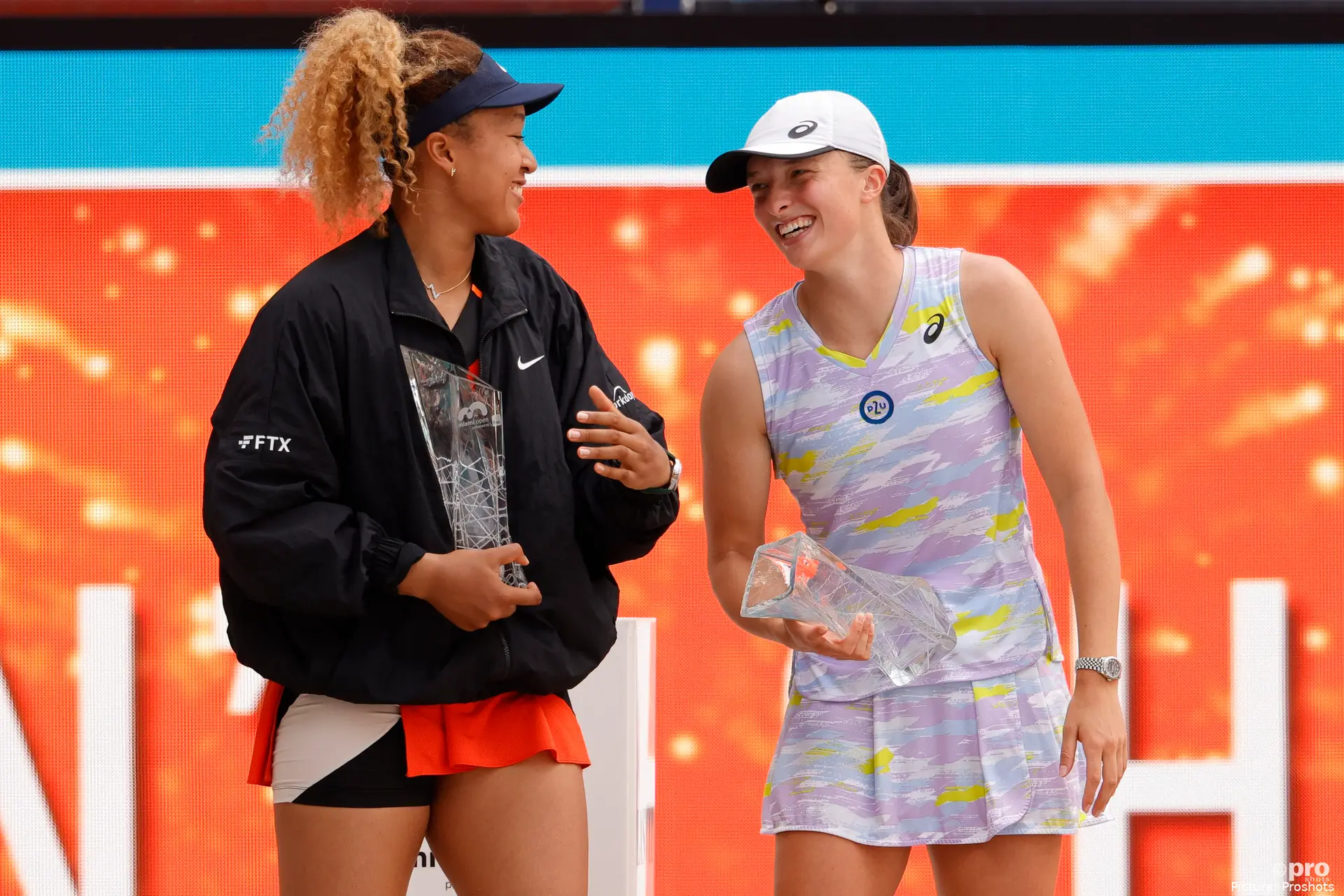
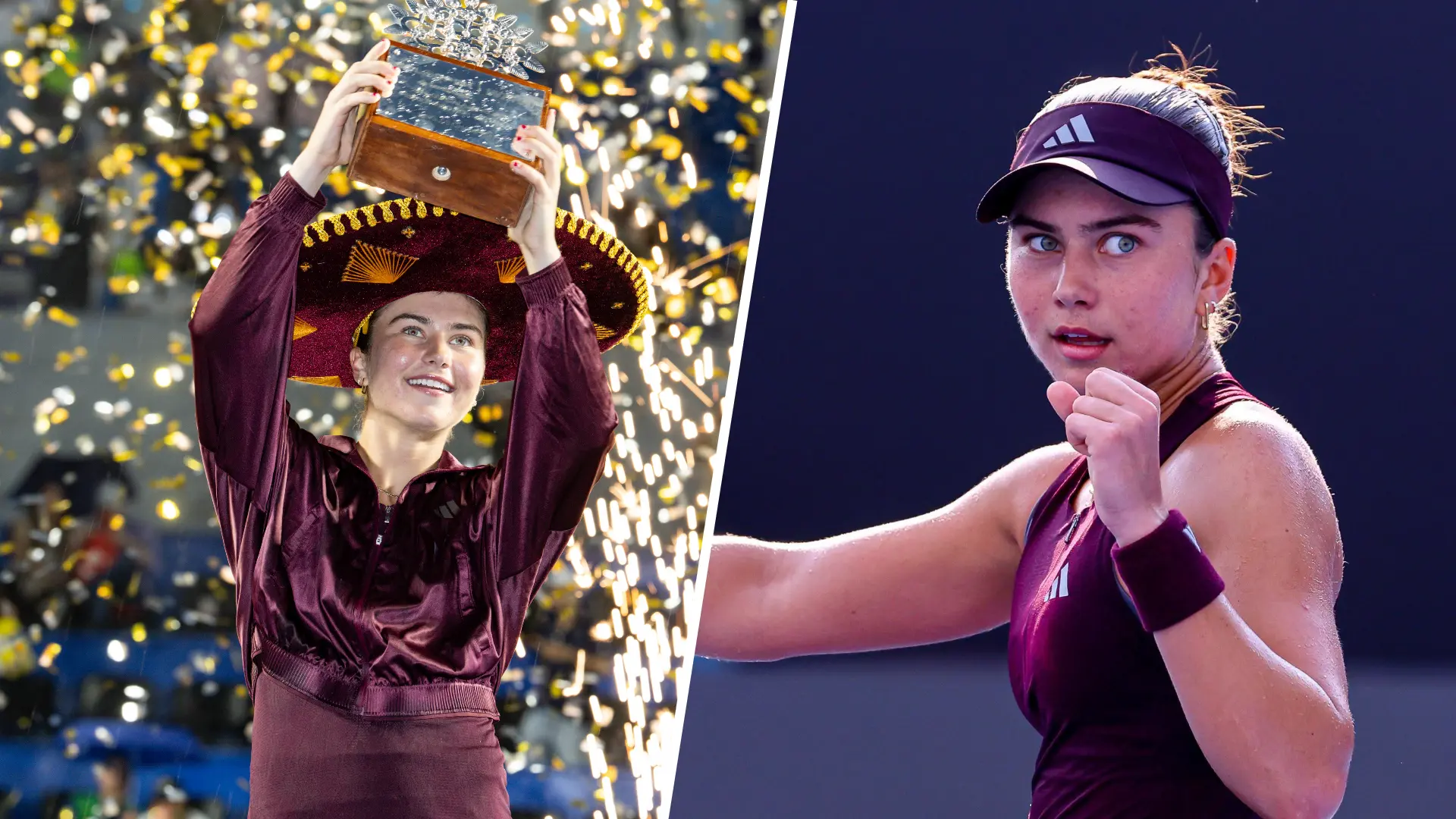
According to the announced schedule for THE SIX, Naomi Osaka, Iga Świątek, Mirra Andreeva and Jasmine Paolini are supposed to play quarterfinal matches on December 25. The winners advance to face Elena Rybakina or Aryna Sabalenka on December 26. The final comes December 27. Prize money: $1.1 million. Because apparently what tennis needed for Christmas was tennis.
We need this exhibition about as badly as we need strawberry and mushroom salad. That isn’t a criticism of the six women involved. If somebody offered me an enormous check to work Christmas Day, there is an amount at which I would suddenly discover that December 25 is just another Wednesday.

Naomi Osaka will be spending Christmas playing.
Good for them. The problem is the larger mentality behind it.
Professional tennis has spent years discussing player fatigue, injuries, scheduling, travel and the relentless length of the season. Players finish one season and almost immediately begin preparing for Australia. The theoretical offseason looks considerably different when you subtract travel, training, sponsor obligations and the physical work required to prepare for another year.
There is precious little actual vacation. So naturally, tennis looked at Christmas.
And booked a tournament. It is the Brussels sprouts in Jell-O of sports scheduling. For reals.
Nobody needed to invent it. Nobody was sitting around the Christmas tree thinking, “You know what would really complete this experience? A Rybakina semifinal.” Sometimes a blank space on the calendar is allowed to remain blank.
In fact, professional tennis desperately needs more blank spaces. There is something sports leagues once understood instinctively that tennis increasingly seems determined to forget: it is good to make people miss you.
Absence creates anticipation. The NFL eventually goes away. Baseball goes away. The NBA goes away. Their return means something partly because there was a period when you couldn’t watch them. Tennis barely leaves the room.
Exhibitions with Christmas stockings
The Australian summer becomes the Middle East, which becomes Indian Wells and Miami, which becomes clay, which becomes Roland Garros, which becomes grass and Wimbledon, which becomes the North American hard-court swing and the US Open, which becomes Asia, which becomes the WTA Finals.
Then come the exhibitions. Apparently now they come with Christmas stockings.
And here is where the joke stops being quite as funny.
Tennis cannot spend eleven months talking about player welfare and then treat every remaining empty date as inventory.
Those two ideas eventually collide. You cannot lament injuries, exhaustion and abbreviated offseasons while simultaneously inventing reasons for elite players to compete on December 25.
Yes, this is an exhibition. Nobody should pretend it carries the physical or emotional demands of Wimbledon or the US Open. And presumably the players participating have decided that the money, experience or both make it worthwhile. That’s perfectly fair. But this is about something bigger than six players and three days.
It’s about a sport that seems incapable of saying: Enough tennis. See you next year. Christmas would be an excellent place to start. Put the racquets down.
Go home. Eat something terrible. Watch Home Alone for the 38th time. Argue over whether Die Hard is a Christmas movie.
Let Aryna Sabalenka wake up without having a match later that day. Let Iga Świątek disappear from public view for a while. Let Mirra Andreeva enjoy being a young woman rather than an international sporting product. And let tennis fans experience something increasingly unfamiliar.
Missing tennis. Imagine how wonderful the first tournaments in Australia would feel if we hadn’t spent December searching for another exhibition to stream.
Imagine turning on tennis in January and thinking: I’ve missed this. That feeling has value.
Sports executives understandably spend enormous amounts of time figuring out how to create more content. More matches. More events. More inventory. More sponsorship opportunities. More things to sell. But sometimes the smartest product decision is not creating another product.
Sometimes Christmas dinner already has enough food on the table. We don’t need strawberry and mushroom salad.
We don’t need Brussels sprouts suspended in Jell-O. And we definitely don’t need somebody wandering into the kitchen at the last minute carrying a bowl of mayonnaise and announcing that they’ve had an idea. Tennis is magnificent.
I love watching it. That’s precisely why I’d like the opportunity to miss it. Give the players Christmas. Give the fans Christmas. Give the sport an offseason, however brief.
Read also

Then meet us in Australia. We’ll be hungry for tennis again. Preferably after somebody throws away the strawberry and mushroom salad.

Aron SolomonGuest Author
A Pulitzer Prize-nominated journalist for his groundbreaking op-ed in The Independent exposing the NFL’s “race-norming” policies, Aron Solomon, JD, is a globally recognized thought leader in law, media, and strategy.
As Chief Strategy Officer for AMPLIFY, he leverages his deep expertise to shape the future of legal marketing. Aron has taught entrepreneurship at McGill University and the University of Pennsylvania and was honored as a Fastcase 50 recipient, recognizing him among the world’s top legal innovators. A prolific commentator on law, business, and culture, his insights regularly appear in Newsweek, The Hill, Crunchbase News, and Literary Hub.
He has also been featured in The New York Times, Fast Company, Fortune, Forbes, CBS News, CNBC, USA Today, ESPN, TechCrunch, BuzzFeed, Venture Beat and countless other leading global media outlets. We are proud to have Aron on board at TennisUpToDate, where his deep tennis expertise enriches the site with sharp, original columns that connect the sport to wider cultural debates.
claps 0visitors 0
Just In


Popular News
Latest Comments
- And then these same players will complain about how lengthy their season’s were and need more time-off. I’m all for more tennis but the amount of tennis we get now is actually kind of crazy! We all need a break, especially the players.DaveyWavey23-09-2026
- You should do a comparison article for "different kinds of justice" the courts decide for tennis players. I can think of at least three players who received very small bans of a few months, however Tara Moore has been fighting for her literal survival the past few years. It seems odd considering she is not a "name" player, unlike the other cases.DaveyWavey22-09-2026
- PRIZE MONEY & POINTS Winner - $185,500 Finalist - $114,500 Semi-Finalist - $66,003 Quarter-Finalist - $35,000 Round of 16 - $18,045 Round of 32 - $13,005 Winner - 500 Finalist - 325 Semi-Finalist - 195 Quarter-Finalist - 108 Round of 16 - 60 Round of 32 - 1DaveyWavey20-09-2026
- Pegula withdrew from this Singapore event
 tennishappens19-09-2026
 - Serena Williams chose her tournaments. It's not such a bad idea.MuswellHillbilly17-09-2026
- This child is just too fragile. Step away from tennis for a year. Get healthy, get fit; train hard;ranking be damned, and come back as strong contender. Anisimova did it. So can Emma.Rapunzel17-09-2026
- Double standards, what can be said!? Venus is p**ing on media and public. Can't face defeat. Cowerdness! Shouldn't be given any other wild cards ever. That's gross disrespect.DragosJacob16-09-2026
- Anywhere is better than Saudi Arabia!DaveyWavey16-09-2026
- He'd be a perfect coach for Rafael Jodar.DaveyWavey16-09-2026
- This financial 'chump-change' means nothing to Saba. Her vacuity likely cannot fathom the "problem" with her unprofessional actions and reactions in general. The racquet smash is not my focus. My focus was/is on her distasteful, totally unprofessional, disgusting facial expressions and eye-rolls while standing behind Elena as she spoke on the podium. This woman needs a degree of therapy for her True Attitude(s). She is not fooling anyone within the WTA circles with her post-match winner "humor" and smiley behavior. Her True Self comes out when losing a set/match and as a runner-up on the podium.
 mandoist16-09-2026

Loading