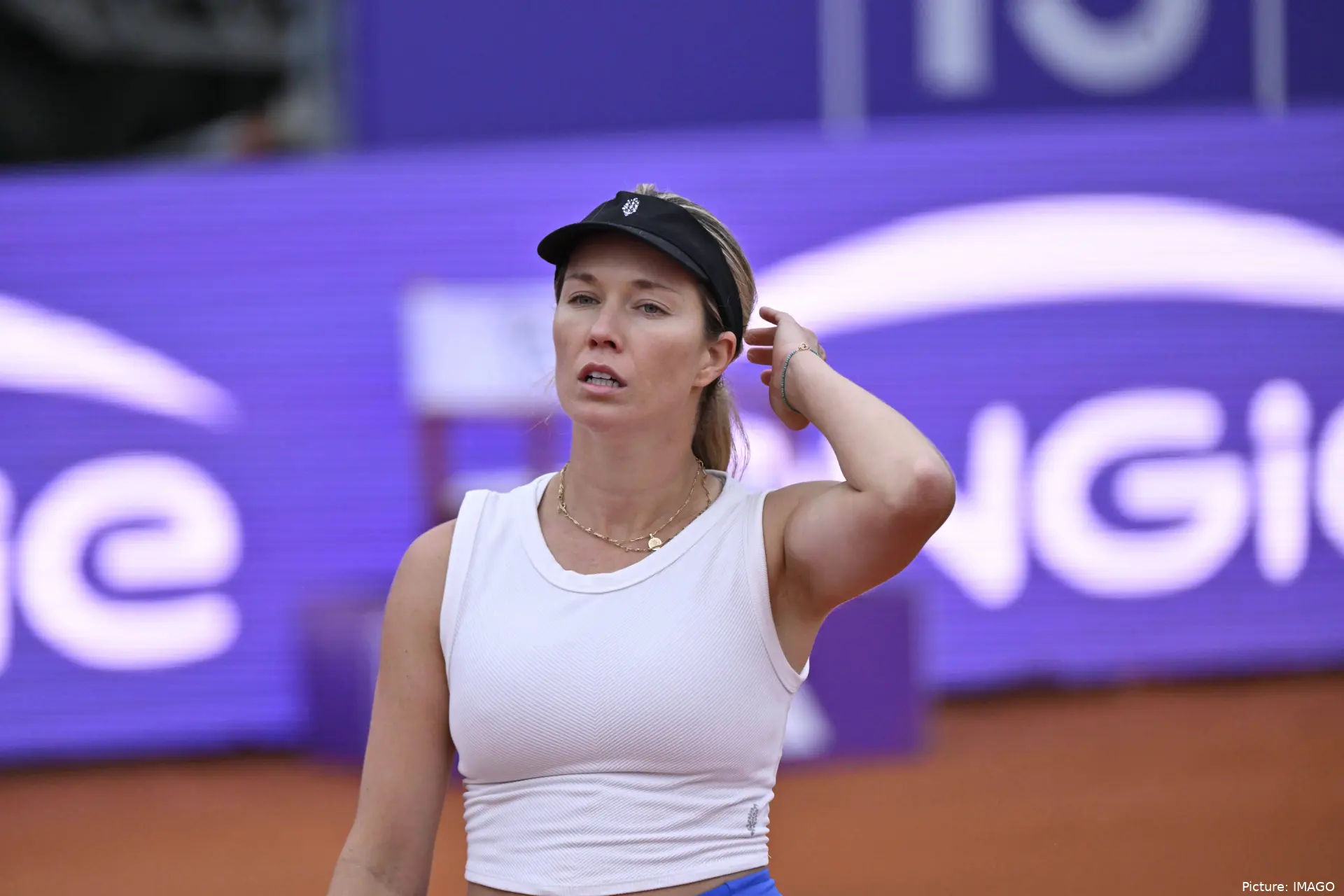
Danielle Collins hasn't played a competitive match since the first round of the 2025 US Open.
She isn't officially retired. She hasn't announced a comeback, either. At 32, Collins is instead somewhere in between, sidelined by a back problem while undergoing fertility treatment, with her ranking sitting in the 60s and her future on a tennis court uncertain.
That is a strange place for a player of her résumé to be. Collins is a Grand Slam finalist, a former world No. 7 and a Masters 1000 champion. In 2024, while supposedly playing the final season of her career, she produced the best tennis of her life.
Her story isn't one of a player who failed to reach her potential. It's about a player who reached extraordinary heights while constantly having to negotiate with her own body — and who finally found her best level at almost exactly the moment she thought she was leaving the sport behind.
Collins was never a conventional case. She didn't turn professional until after two NCAA singles titles at Virginia, arrived on tour in her mid-20s rather than her teens, and then spent the rest of her career compressing a normal athletic timeline into a shorter, more urgent one — racing against a chronic illness that never gave her the option of a leisurely prime.
Read also
Danielle Collins — then v. now
| Then | |
| Career-high ranking | No. 7 (July 2022) |
| Grand Slam final | Australian Open, 2022 (lost to Ashleigh Barty) |
| WTA titles | 4 — Palermo, San Jose, Miami (2024), Charleston (2024) |
| Best season | 2024: 42-17, Miami + Charleston titles, Olympic team, back in the top 10 |
| 2025 status | 15-14 record; last match: 2025 US Open, R1 loss to Jaqueline Cristian |
| 2026 status | Sidelined indefinitely — recovering from a back injury and undergoing fertility treatment |
The rise: a late start, a fast impression
Collins turned pro in 2016 with two NCAA titles already behind her, an unusual path in a sport that increasingly rewards leaving college early or skipping it altogether. It didn't slow her down much.
By January 2019 she was into the Australian Open semifinal as a virtual unknown, beating former No. 1 Angelique Kerber along the way before losing to Petra Kvitova. Two title runs arrived back to back in the summer of 2021, in Palermo and San Jose, part of a 12-match winning streak that was, at the time, the best stretch of her career.

That same year, 2021, Collins was diagnosed with endometriosis and underwent emergency surgery to remove a tennis-ball-sized ovarian cyst. She has spoken openly since about the condition and the toll it takes on daily life, well before it began shaping the biggest decisions of her career.
In interviews since, she's described the relief of finally understanding what had been happening to her body for years, saying she felt able to live a normal life again once she had a diagnosis to work with rather than unexplained pain.
The final that got away, and the shadow that followed it
Collins reached her only Grand Slam final at the 2022 Australian Open, losing to Ashleigh Barty in straight sets in what turned out to be Barty's last tournament before her own sudden retirement. Collins climbed to a career-high No. 7 that July. It looked, briefly, like the platform for a run at a maiden major.
Instead, endometriosis increasingly dictated the terms of her career. In January 2024, after a second-round loss at the Australian Open, Collins announced that the coming season would be her last, citing the physical toll of the condition and her desire to start a family before it became impossible.

2024: the best farewell season anyone's ever had
What followed was one of the stranger twists in recent tennis memory. Playing with nothing to lose, Collins won the Miami Open two months later as an unseeded, 53rd-ranked entrant — the lowest-ranked champion in the tournament's history — beating Elena Rybakina in the final in front of her childhood idol Andre Agassi.
She won Charleston the following week, made the US Olympic team, and climbed back into the world's top 10, finishing the year 42-17. It was, by a distance, the best season of her career, produced entirely under the assumption that it was also her last.
That result complicated the goodbye. In October 2024, Collins reversed her decision and announced she would continue into 2025, citing ongoing fertility complications rather than a change of heart about retirement itself.
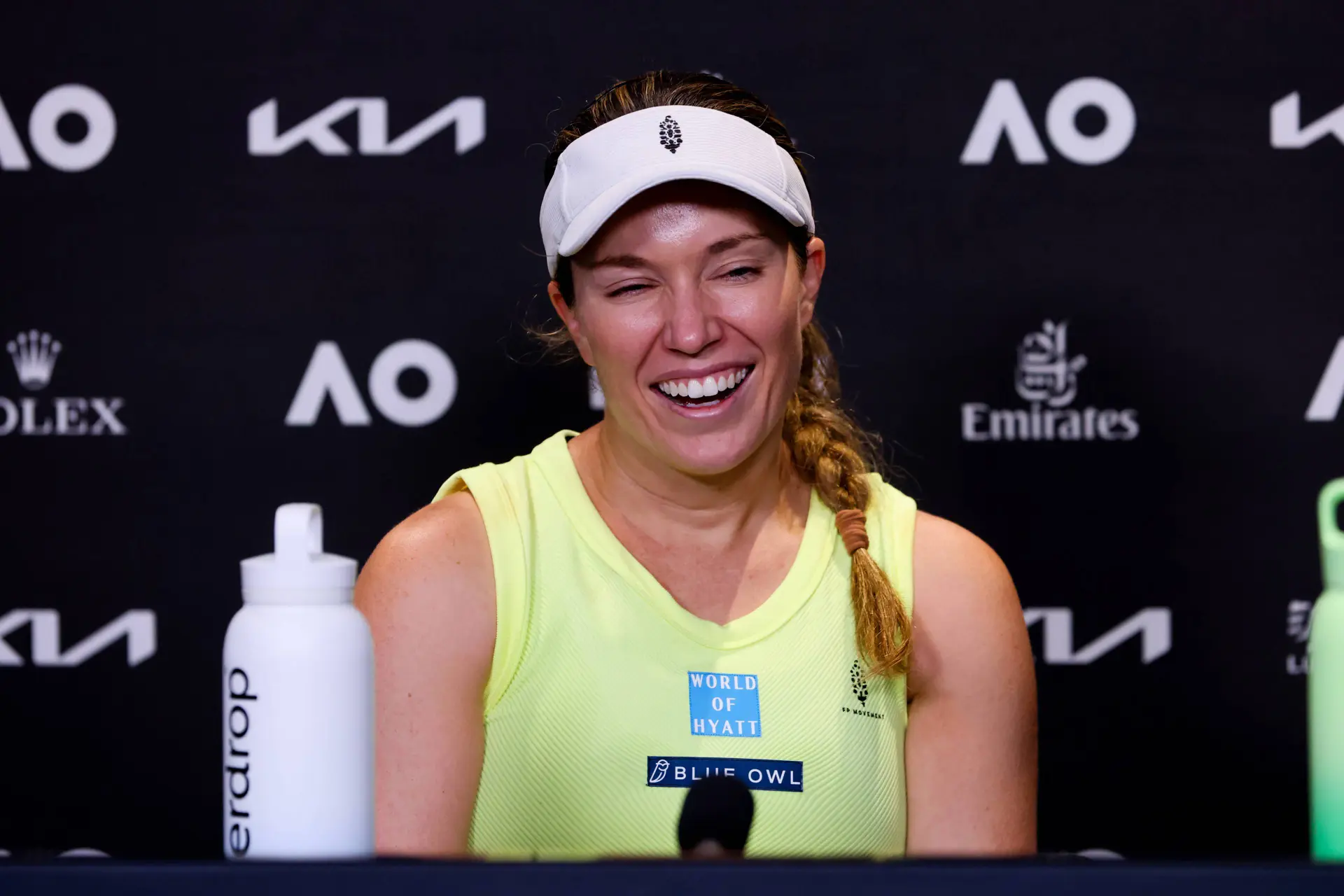
Danielle Collins’ Miami 2024 Run
| Round | Opponent | Ranking | Score |
| R128 | Bernarda Pera | 81 | 3-6, 6-1, 6-1 |
| R64 | Anastasia Potapova | 29 | 6-2, 6-2 |
| R32 | Elina Avanesyan | 65 | 6-1, 6-2 |
| R16 | Sorana Cîrstea | 24 | 6-3, 6-2 |
| QF | Caroline Garcia | 27 | 6-3, 6-2 |
| SF | Ekaterina Alexandrova | 16 | 6-3, 6-2 |
| F | Elena Rybakina | 4 | 7-5, 6-3 |
The pause that hasn't ended
2025 offered no repeat of that magic. A recurring back injury limited her to a 15-14 record, her ranking slid outside the top 40, and her season ended quietly with a first-round US Open loss to Jaqueline Cristian — her last competitive match to date.
In December 2025, Collins confirmed she would miss the start of 2026, including the Australian Open where she'd once been runner-up, to continue recovering from the back injury and to undergo egg-freezing procedures tied to her endometriosis. She has since taken on a broadcasting role with Tennis Channel rather than commit to a return date.
None of that reads like a finished career, exactly — Collins has never said this is the end, and the WTA's newer protected-ranking rules for players undergoing fertility treatment exist precisely to make a comeback logistically possible. But taken together, the picture is unmistakable: a player who reached No. 7 in the world and won her biggest title while telling everyone it was her last, repeatedly forced to choose between the tour and her own health in a way most of her rivals never have to consider.
It's worth remembering, too, how rarely this specific version of a career gets told. Injuries end careers all the time, and so, eventually, does age. Collins' story is neither of those — it's a talented player whose body kept negotiating with her ambitions on its own terms, at 25, at 28, at 32, forcing a season-by-season renegotiation of what was even possible. Whatever Danielle Collins' career ends up being remembered for, it was never short of talent. It was only ever short of time.

Cristhián AvilaTennis Journalist
Cristhián Ávila is a tennis journalist based in Santiago, Chile, and has been part of the TennisUpToDate team since early 2023. He covers the ATP and WTA Tours as well as all four Grand Slams, producing breaking news, match reports, analysis, and regular liveblogs from major tournaments.
His reporting combines statistical analysis with clear explanation, helping readers understand tactical developments, player form, and broader storylines across the tour. Working fluently in both Spanish and English, Cristhián collaborates with an international editorial team and contributes to comprehensive global coverage. As part of his work, he has conducted interviews and media interactions with leading figures in the sport, including Caroline Wozniacki and John McEnroe.
In his journalism, Cristhián places strong emphasis on careful sourcing, editorial accuracy, and updating articles promptly when new, verified information becomes available. His coverage is grounded in research, context, and direct engagement with professional tennis.
claps 0visitors 0
Just In


Popular News
Latest Comments
- A healthy Qinwen may be hard to stop next season. She was already scaring her opponents before her medical leave(s). Unfortunately, Zheng insisted on singing again. On the positive side -- Mirra did not sing!! ;~}
 mandoist11-10-2026
 - Where is it written that athletes, entertainers... People in general... are mandated to keep looking at -- or even using [anti]Social Media? Public & private figures consistently complain and reveal their concerns about negativity and violence thrown at them -- yet they insist on participating. Avoid it, don't use it, don't read it. It's okay to occasionally look up at the World instead beating your eyes & thumbs to death on The Inventions out there.mandoist11-10-2026
- great articlestennisseserver07-10-2026
- Medvedev was leading Djokovic 7-5, 3-5 when an attempted return..' NO you ignorants, Djokovic was leading .weiss05-10-2026
- No more bullshit "Wildcards" to these two. Qualify like everyone else -- there will be cameras there, too. Time to scream... WTF ????!!!!mandoist29-09-2026
- Let's not BS the general public -- Sabalenka started showing cracks in her game last season. Her losses and near-losses started at about the same time she began being distracted by Fame (constant Selfies, making TV commercials, magazine shoots, endless Social Media nonsense, etc., etc.) One would think even Saba could recognize the parallels with others who failed before her -- Raducanu, Giorgi, Bouchard to name a few.mandoist25-09-2026
- Gross!! Hey Raducanu, Giorgi, and Bouchard -- reserve a seat at your Social Media Selfie table for Saba + Naomi. They're heading in your direction soon enough.mandoist24-09-2026
- And then these same players will complain about how lengthy their season’s were and need more time-off. I’m all for more tennis but the amount of tennis we get now is actually kind of crazy! We all need a break, especially the players.DaveyWavey23-09-2026
- You should do a comparison article for "different kinds of justice" the courts decide for tennis players. I can think of at least three players who received very small bans of a few months, however Tara Moore has been fighting for her literal survival the past few years. It seems odd considering she is not a "name" player, unlike the other cases.DaveyWavey22-09-2026
- PRIZE MONEY & POINTS Winner - $185,500 Finalist - $114,500 Semi-Finalist - $66,003 Quarter-Finalist - $35,000 Round of 16 - $18,045 Round of 32 - $13,005 Winner - 500 Finalist - 325 Semi-Finalist - 195 Quarter-Finalist - 108 Round of 16 - 60 Round of 32 - 1DaveyWavey20-09-2026

Loading