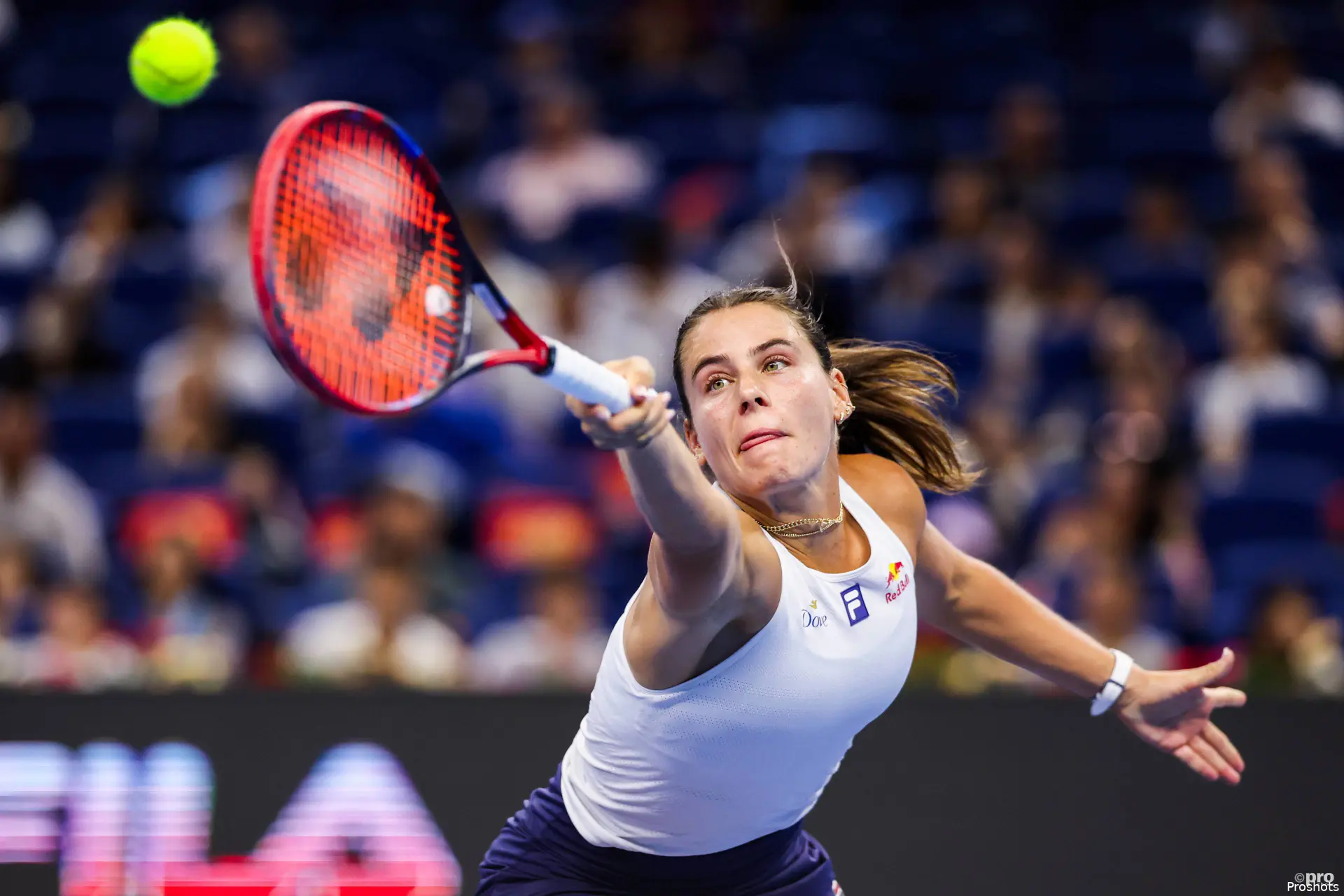
The numbers tell an uncomfortable story. Emma Navarro’s 2026 season has been rough. By my count, she’s sitting at 4–8 on the year, with roughly $200,000 earned on court. That’s a perfectly respectable living for most tennis professionals. But for a player who not long ago reached a career-high ranking of No. 8, those numbers feel jarringly out of place.
The results haven’t helped quiet the noise. Her early exit at the Austin WTA 125—where she entered as a last-minute top-seeded wildcard—only added to the sense that something isn’t quite clicking. And in the live rankings, Navarro now sits outside the Top 25, around No. 27.
For many observers, the reaction has been predictable: concern, skepticism, and in some corners, a premature verdict. But tennis history teaches us one thing over and over again. A short slump is not a career diagnosis.
From where I sit as a close observer of the women’s tour, there is gloom in Navarro’s current results. But there is not doom. To understand why, it helps to look past the scoreboard and back to the fundamentals of her game.
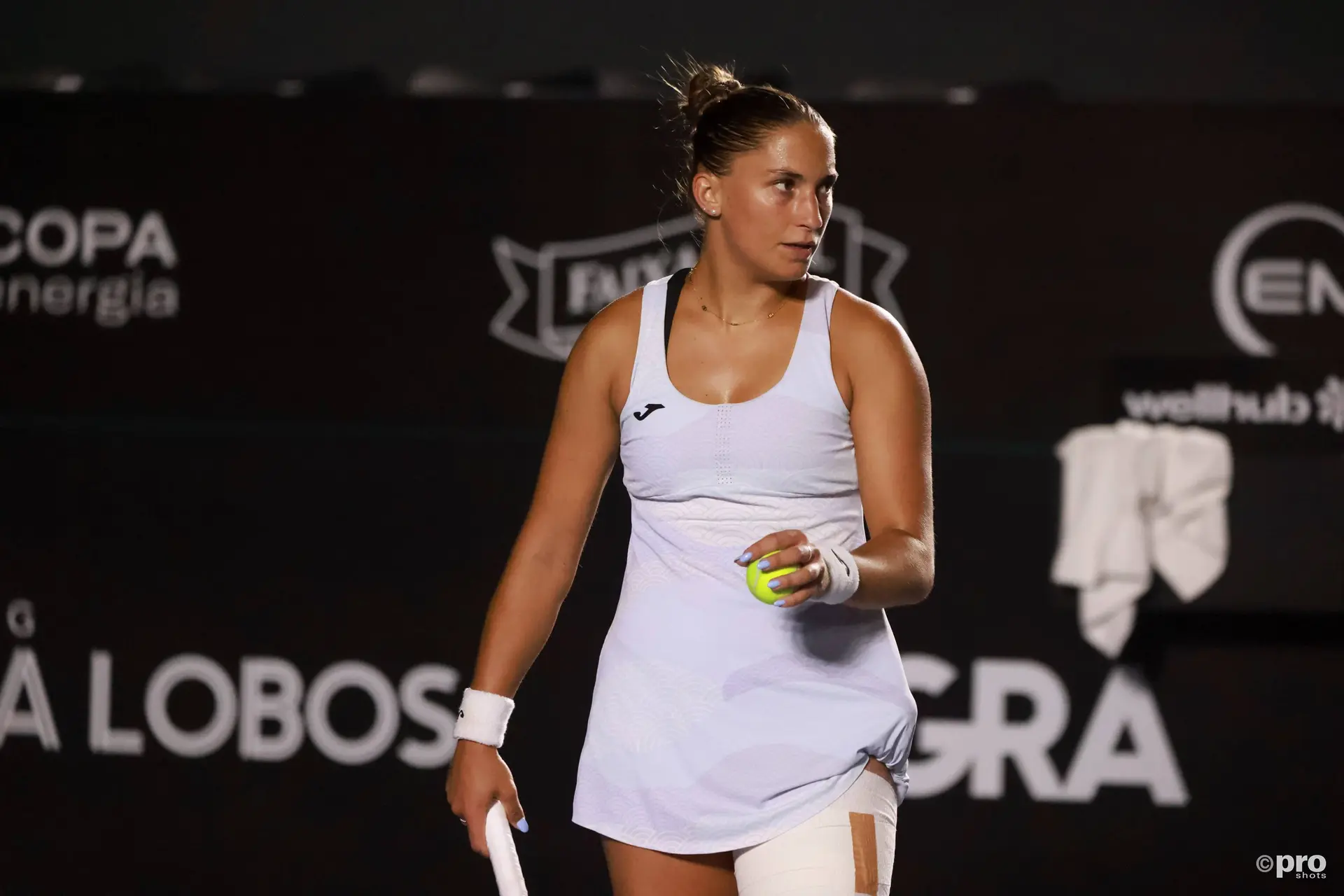
What the issue is for Navarro
Navarro did not accidentally work her way into the Top 10. That climb required a combination of physical endurance, mental discipline, and tactical intelligence that few players ever fully develop. Her game, at its best, is balanced in a way that coaches often dream about. She moves exceptionally well, absorbs pace comfortably, and can redirect the ball with precision rather than relying solely on brute force.
In an era where many matches are decided by who can hit the hardest first, Navarro’s ability to construct points is quietly valuable. She reads rallies well, stays composed in extended exchanges, and has the kind of all-court instincts that allow her to adjust to different opponents.
Those traits don’t disappear overnight. What often disappears—temporarily—is rhythm. Professional tennis is brutally sensitive to rhythm. Confidence, travel fatigue, coaching dynamics, injuries that don’t make headlines, off-court distractions, scheduling choices, equipment tweaks—any number of small variables can tilt a season off course. A few early losses can cascade into tight matches, and tight matches can turn into a string of disappointing score lines.

Emma Navarro competing in China
The margins are razor thin. At the highest level of the WTA Tour, the difference between a Top 10 run and a 4–8 start can sometimes be just a handful of points across a few matches. That doesn’t mean something fundamental is broken.
In Navarro’s case, I suspect the issue is balance—both on the court and off it. That’s not speculation about anything specific. It’s simply an observation that even the most talented players periodically lose the equilibrium that allows their game to flow freely. When that balance returns, the results tend to follow. And Navarro has something working in her favor that many players in a slump do not: a foundation that travels well across surfaces and seasons.
She doesn’t rely on a single weapon that opponents can easily neutralize. Her strengths—movement, consistency, court awareness—are structural qualities. They allow a player to rebuild form more quickly once confidence returns.
Ingredients don't vanish overnight
We’ve seen this pattern countless times in tennis. A player dips outside the Top 20, the narrative quickly turns pessimistic, and within a few months that same player strings together a deep run at a major or a surprise title. The tour is simply too competitive—and too unpredictable—for any single stretch of results to define a player’s trajectory.
That’s especially true for someone like Navarro, whose rise to the Top 10 was built on steady, disciplined progress rather than a single flash-in-the-pan tournament. When she was playing her best tennis, Navarro wasn’t surviving matches. She was controlling them. Her rally tolerance forced opponents to press harder than they wanted to. Her court coverage turned defensive situations into neutral ones. And her shot selection showed a maturity that many players take years longer to develop.
Those ingredients don’t vanish. They sometimes just need recalibration. The other factor worth remembering is how brutally crowded the WTA Top 100 has become. The depth on the women’s tour right now is extraordinary. On any given week, a player ranked outside the Top 40 can produce tennis good enough to beat someone in the Top 10.
That reality compresses rankings and amplifies slumps. A handful of early exits can send a player tumbling down the standings faster than the public expects. Climbing back up requires the same patience and resilience that got them there in the first place.
Navarro has already shown she possesses those qualities. She earned her place among the elite through work ethic and incremental improvement. Players who build their careers that way tend to be the ones who eventually find their footing again.
So yes, the start to 2026 has been disappointing. The results are not what Navarro—or her supporters—expected. But writing off her talent would be a mistake. In tennis, the line between struggle and resurgence is often just one good week away. And Emma Navarro still has far too much game to be counted out.


Aron SolomonGuest Author
A Pulitzer Prize-nominated journalist for his groundbreaking op-ed in The Independent exposing the NFL’s “race-norming” policies, Aron Solomon, JD, is a globally recognized thought leader in law, media, and strategy.
As Chief Strategy Officer for AMPLIFY, he leverages his deep expertise to shape the future of legal marketing. Aron has taught entrepreneurship at McGill University and the University of Pennsylvania and was honored as a Fastcase 50 recipient, recognizing him among the world’s top legal innovators. A prolific commentator on law, business, and culture, his insights regularly appear in Newsweek, The Hill, Crunchbase News, and Literary Hub.
He has also been featured in The New York Times, Fast Company, Fortune, Forbes, CBS News, CNBC, USA Today, ESPN, TechCrunch, BuzzFeed, Venture Beat and countless other leading global media outlets. We are proud to have Aron on board at TennisUpToDate, where his deep tennis expertise enriches the site with sharp, original columns that connect the sport to wider cultural debates.
claps 0visitors 0
Just In


Popular News


Latest Comments
- Does Sinner need that 4.5 mil? I doubt it. He can make that with three modelling gigs!😅🤣Rapunzel21-10-2026
- Did "People Magazine" purchase this website? This nonstop storyline is bullshit.
 mandoist21-10-2026
 - Listen... this is of no concern to anyone but these two. Deal with your own issues -- most of us have our own. Thanks, media, for these insignificant follow-ups which are meaningless.mandoist21-10-2026
- This is so very very sad, for all three of them. I truly thought they had an unbreakable bond, but life throws up so many differing challenges. Having your homeland suffering in such a terrible way, makes happiness lose out to guilt as well. Our thoughts are with them. X💔bjsexton20-10-2026
- I have lost all respect for Svitolina! Could she not have waited until he had played at the Paris Masters!!! She is selfish and don't give a damn about Gael. That is NOT how love is demonstrated Elina!!Rapunzel19-10-2026
- Perhaps convenient tennis tour sex is not a strong enough experience in which to base a marriage?mandoist19-10-2026
- Fight the Good Fight... Tennis (sports in general) need more Humans such as yourself.mandoist18-10-2026
- When is WTA going to mandate Genetic Testing (DNA) ???mandoist18-10-2026
- Hey, Dan... you just wake up from a coma? Regardless -- Thanks for the comedy this morning!mandoist18-10-2026
- Two Things: 1. Stop allowing these Spoiled Trust-Fund Elitists to behave badly. Your little hand-slaps do not deter them. 2. STOP the incessantly annoying "towel wiping" nonsense!!!!mandoist15-10-2026

Loading