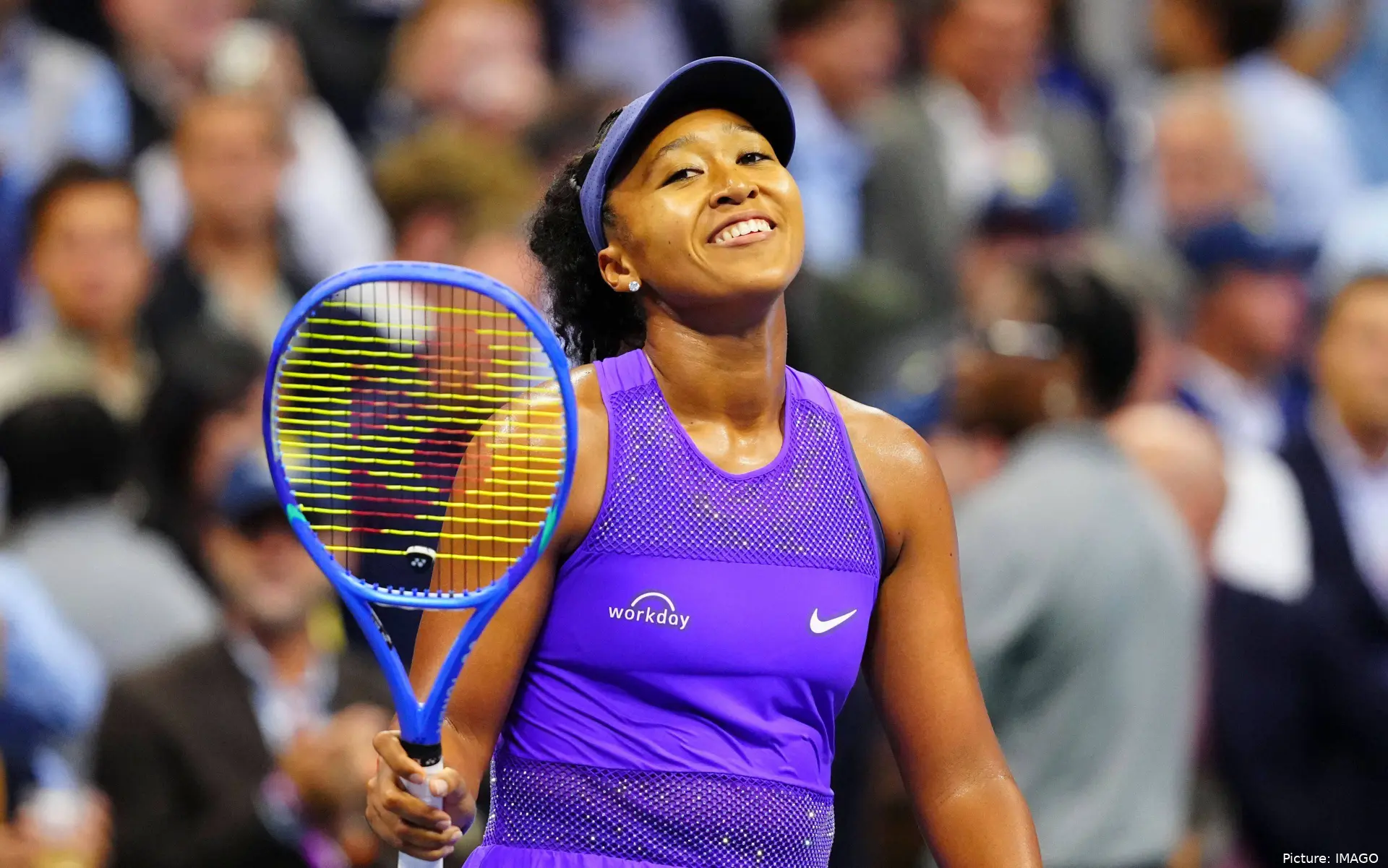
Most entries in this series follow a familiar shape: a rise, a peak, an injury or a personal crisis, and then a slow fade that never quite reverses. Naomi Osaka's career fits the first half of that shape perfectly. Four Grand Slam titles between 2018 and 2021, a No. 1 ranking, a very public mental health break, and then motherhood — the kind of sequence that, for most players, marks the quiet beginning of the end.
Except Osaka's story hasn't ended, and it isn't fading either. She reached a US Open semifinal last year and a maiden Wimbledon quarterfinal this year, results that belong to a player still very much building something rather than one coasting on reputation.
Her 2026 US Open ended in the fourth round against Elena Rybakina, the eventual world No. 1, and Osaka's reaction afterward said more about where her career actually stands than the scoreline did: she's no longer sure another Grand Slam title would even change her life.
That's not resignation. It's something rarer in professional sport — a genuine redefinition of what a comeback is supposed to accomplish, arriving from a player with more claim than almost anyone to simply chase the number back to five.
Four Grand Slam titles, and a perfect record in major finals
Osaka's rise was about as fast and clean as tennis produces. She won her first WTA title at Indian Wells in 2018, then beat Serena Williams in a chaotic, controversial US Open final months later to claim her first major, becoming the first Japanese Grand Slam singles champion and, by January 2019, the first Asian player ever to reach world No. 1. She added the Australian Open that same month, beating Petra Kvitova in three sets.
A second US Open title followed in 2020, beating Victoria Azarenka from a set down in a tournament where she wore a different mask bearing the name of a Black victim of racial violence in every round — one of the more powerful crossovers of athlete activism and elite competition in recent memory. A fourth major arrived at the 2021 Australian Open, beating Jennifer Brady, making Osaka just the third player in the Open Era, alongside Roger Federer and Monica Seles, to win every one of her first four Grand Slam finals without a single loss.
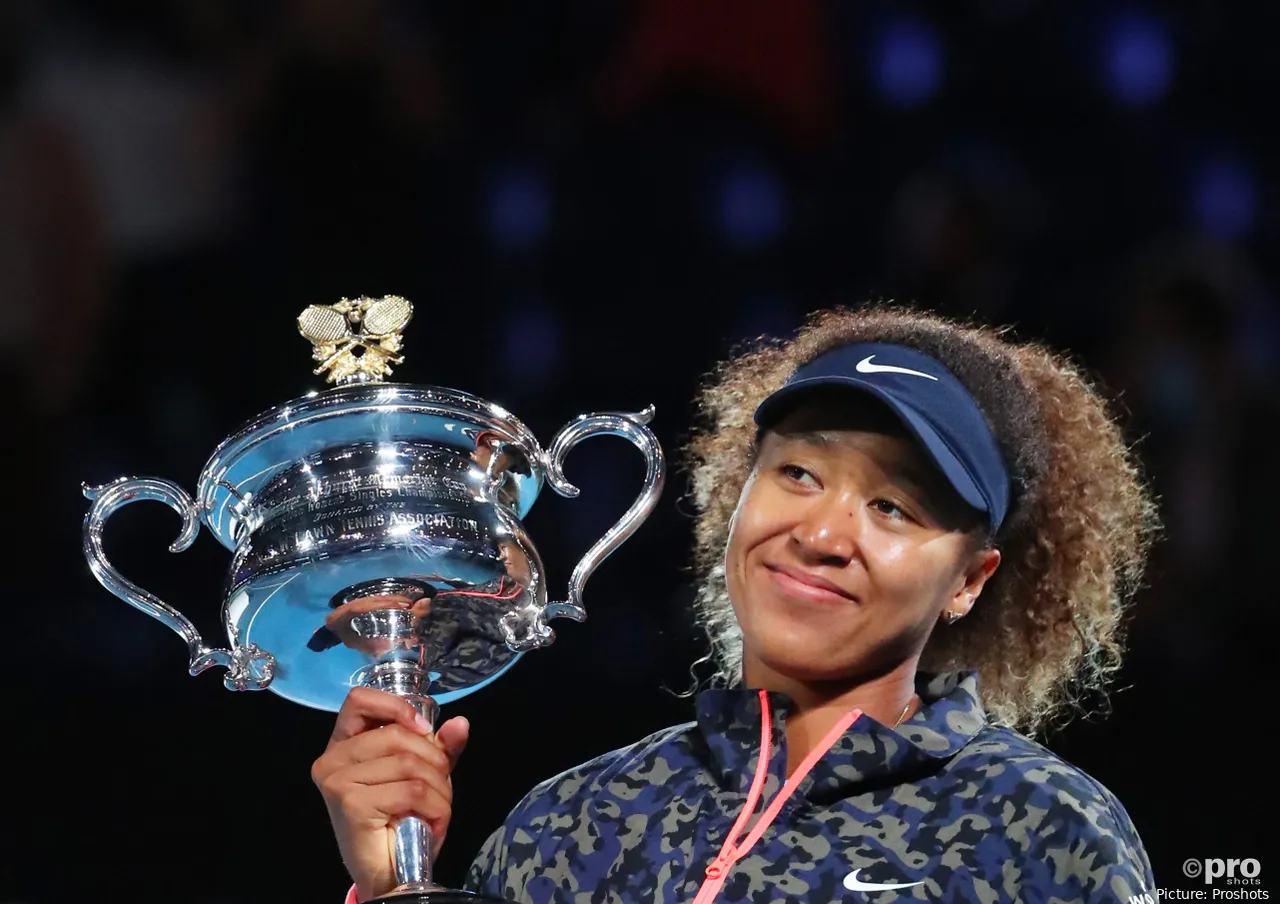
Naomi Osaka has been a multiple Grand Slam champion.
Osaka's four Grand Slam titles
| Year | Tournament | Final opponent | Score |
| 2018 | US Open | Serena Williams | 6-2, 6-4 |
| 2019 | Australian Open | Petra Kvitova | 7-6(2), 5-7, 6-4 |
| 2020 | US Open | Victoria Azarenka | 1-6, 6-3, 6-3 |
| 2021 | Australian Open | Jennifer Brady | 6-4, 6-3 |
The break that looked like the end
Weeks after that fourth title, Osaka withdrew from the 2021 French Open after declining mandatory press conferences and revealing she had been dealing with anxiety and depression, sparking a global conversation about athlete mental health that extended well beyond tennis.
She skipped Wimbledon entirely and spent the following seasons searching for consistency, with a runner-up finish at the 2022 Miami Open — her first final since that last Australian Open title — standing out as the one genuine high point.
She played her final tournament before stepping away in September 2022, then announced a maternity break; her daughter, Shai, was born in July 2023. It's the kind of break, at that stage of a career already interrupted by a mental health crisis, that ends plenty of careers outright rather than pausing them.

Naomi Osaka with Iga Swiatek in Miami.
A comeback that took its time
Osaka returned in January 2024 after 15 months away, initially working with Wim Fissette, the coach who had guided her to two Grand Slam titles. Their reunion, however, lasted only until September. Fissette had already left Qinwen Zheng in 2023 to return to Osaka's team for her comeback, a decision that caused considerable frustration for the Chinese player. Zheng said she cried when Fissette told her he was leaving and accused him of breaking his contract, calling the decision “very immoral.”
Osaka then moved on to Patrick Mouratoglou, beginning another chapter of her comeback in September 2024. The partnership lasted less than a year before they split in July 2025, after which Osaka began working with Tomasz Wiktorowski, Iga Swiatek's former coach. The changes reflected how unsettled the early stages of Osaka's return remained as she tried to rediscover her level after maternity leave.
Her first full season back produced the modest results of a rebuilding year. Osaka reached the quarterfinals in Doha and 's-Hertogenbosch and the fourth round in Rome and Beijing, but struggled to reproduce the level that had made her a four-time Grand Slam champion. In 2025, however, the comeback began to look more substantial as she reached her first WTA final since returning in Auckland and then the Montreal final.
The breakthrough came at the US Open, where Osaka beat Coco Gauff and Karolina Muchova back-to-back to reach her first Grand Slam semifinal since winning the 2021 Australian Open. The run also returned her to the world's top 20 for the first time since January 2022, suggesting that her comeback was becoming more than simply a return to competition.

Naomi Osaka in action.
Osaka's comeback timeline
| Date | Milestone |
| Mar 2022 | Last final - she lost against Iga Swiatek at the Miami Open |
| Sep 2022 | Plays her last tournament before stepping away |
| Jul 2023 | Gives birth to daughter Shai |
| Jan 2024 | Returns to Tour at the Brisbane International |
| May 2025 | Osaka played WTA 125 tournament in Open de Saint-Malo - is her first title in 4 years and her first title on clay-courts |
| Aug 2025 | Back to a WTA 1000 final in Montreal and first Grand Slam semifinal since 2021, at the US Open |
| May 2026 | First-ever fourth round at the French Open |
| Jul 2026 | First-ever Wimbledon quarterfinal, including a win over world No. 1 Sabalenka |
| Sep 2026 | Loses in the US Open fourth round to eventual world No. 1 Elena Rybakina |
2026: historic firsts, just not the ones people expected
This season has produced results that are historic for Osaka specifically, even without a return to a Grand Slam final. She reached the fourth round of the French Open for the first time in her career, on a surface that had never suited her game particularly well, and then made her first-ever Wimbledon quarterfinal, highlighted by a straight-sets win over world No. 1 Aryna Sabalenka.
Her US Open ended earlier this year than last, a fourth-round loss to Rybakina, but even that defeat came against the player who left New York as the new world No. 1.
There's a version of this season a five-time major champion might describe as underwhelming. For a 28-year-old who spent 15 months away from the sport rebuilding a body and a career from scratch, breaking new ground at two majors that had never been her strongest is a genuinely different kind of achievement — proof of a more complete, more versatile player than the one who won four hard-court-heavy titles the first time around.
A different definition of success
What makes Osaka's story stand apart from a typical career revival is how openly she's described the shift in what actually matters to her now.
Asked after the Rybakina loss how it felt to go five years without a major, she said it felt both long and short at once—"I had a kid, you know? There's a lot that happened in that time," and made clear that winning another Grand Slam isn't something weighing on her.
Read also

She's spoken before about wanting to show her daughter that she's capable of anything, framing her return less as a chase for a fifth title and more as a demonstration for someone who wasn't even born the last time she held one.
That's the real reason this isn't a graveyard story, despite the ranking dips, the missed years, and the very real possibility that a fifth Grand Slam title never arrives. Osaka isn't fading quietly or clinging to a version of success that's slipped out of reach. She's built an entirely new career, on her own terms, out of the wreckage a lot of people assumed was permanent — and by her own account, she's not particularly interested in being measured against the player she used to be.

Cristhián AvilaTennis Journalist
Cristhián Ávila is a tennis journalist based in Santiago, Chile, and has been part of the TennisUpToDate team since early 2023. He covers the ATP and WTA Tours as well as all four Grand Slams, producing breaking news, match reports, analysis, and regular liveblogs from major tournaments.
His reporting combines statistical analysis with clear explanation, helping readers understand tactical developments, player form, and broader storylines across the tour. Working fluently in both Spanish and English, Cristhián collaborates with an international editorial team and contributes to comprehensive global coverage. As part of his work, he has conducted interviews and media interactions with leading figures in the sport, including Caroline Wozniacki and John McEnroe.
In his journalism, Cristhián places strong emphasis on careful sourcing, editorial accuracy, and updating articles promptly when new, verified information becomes available. His coverage is grounded in research, context, and direct engagement with professional tennis.
claps 0visitors 0
Just In

Popular News

Latest Comments
- Does Sinner need that 4.5 mil? I doubt it. He can make that with three modelling gigs!😅🤣Rapunzel21-10-2026
- Did "People Magazine" purchase this website? This nonstop storyline is bullshit.
 mandoist21-10-2026
 - Listen... this is of no concern to anyone but these two. Deal with your own issues -- most of us have our own. Thanks, media, for these insignificant follow-ups which are meaningless.mandoist21-10-2026
- This is so very very sad, for all three of them. I truly thought they had an unbreakable bond, but life throws up so many differing challenges. Having your homeland suffering in such a terrible way, makes happiness lose out to guilt as well. Our thoughts are with them. X💔bjsexton20-10-2026
- I have lost all respect for Svitolina! Could she not have waited until he had played at the Paris Masters!!! She is selfish and don't give a damn about Gael. That is NOT how love is demonstrated Elina!!Rapunzel19-10-2026
- Perhaps convenient tennis tour sex is not a strong enough experience in which to base a marriage?mandoist19-10-2026
- Fight the Good Fight... Tennis (sports in general) need more Humans such as yourself.mandoist18-10-2026
- When is WTA going to mandate Genetic Testing (DNA) ???mandoist18-10-2026
- Hey, Dan... you just wake up from a coma? Regardless -- Thanks for the comedy this morning!mandoist18-10-2026
- Two Things: 1. Stop allowing these Spoiled Trust-Fund Elitists to behave badly. Your little hand-slaps do not deter them. 2. STOP the incessantly annoying "towel wiping" nonsense!!!!mandoist15-10-2026

Loading