“Fasten seat belt”: Rick Macci believes one change could transform Alex Eala into an even bigger force
WTA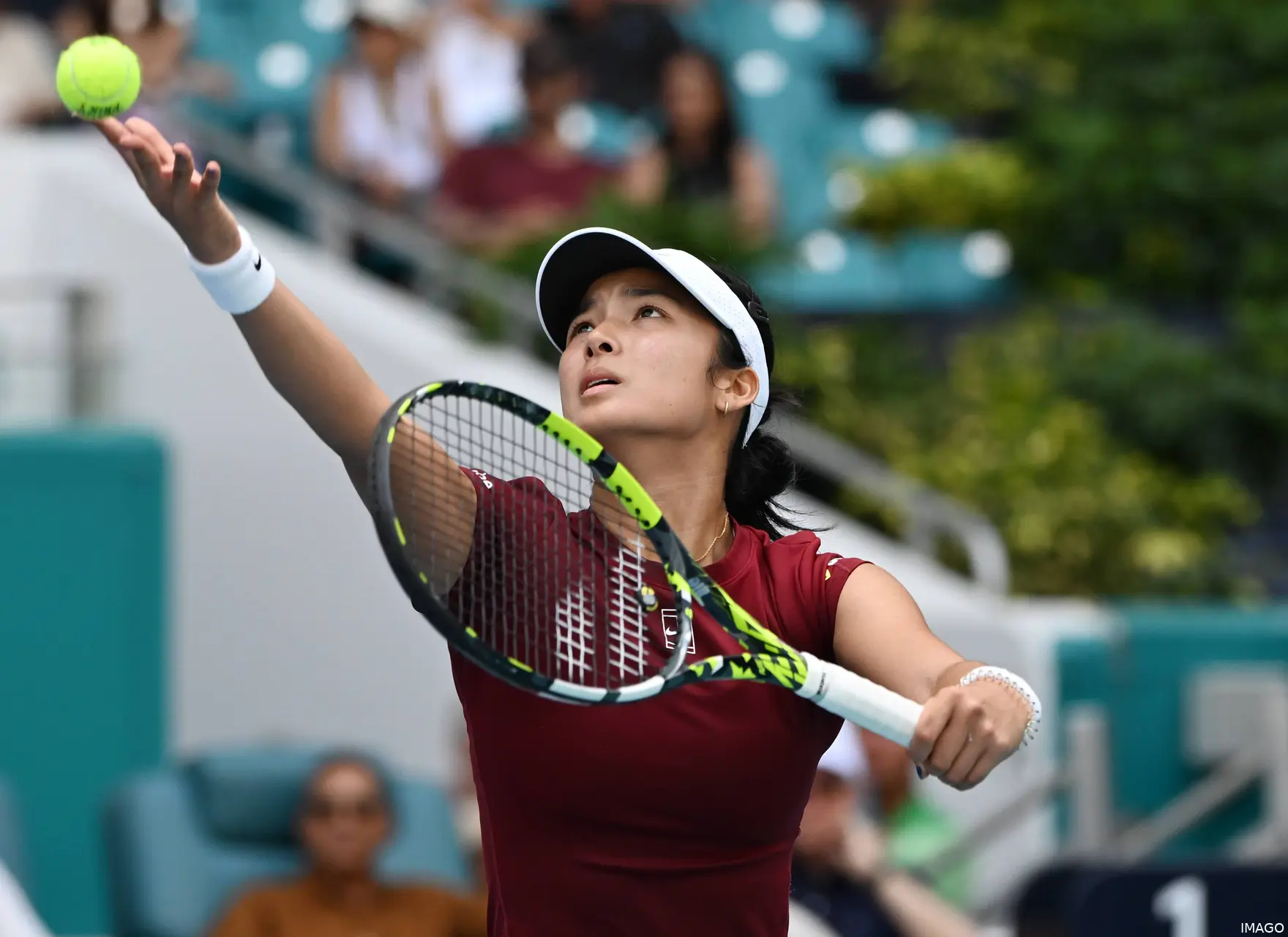
Rick Macci believes Alex Eala is still only scratching the surface of her potential. The legendary American coach, who helped develop Serena and Venus Williams, says the Filipina’s serve needs a complete biomechanical reconstruction and argues that fixing that single area could turn her into an even more dangerous player on the WTA Tour.
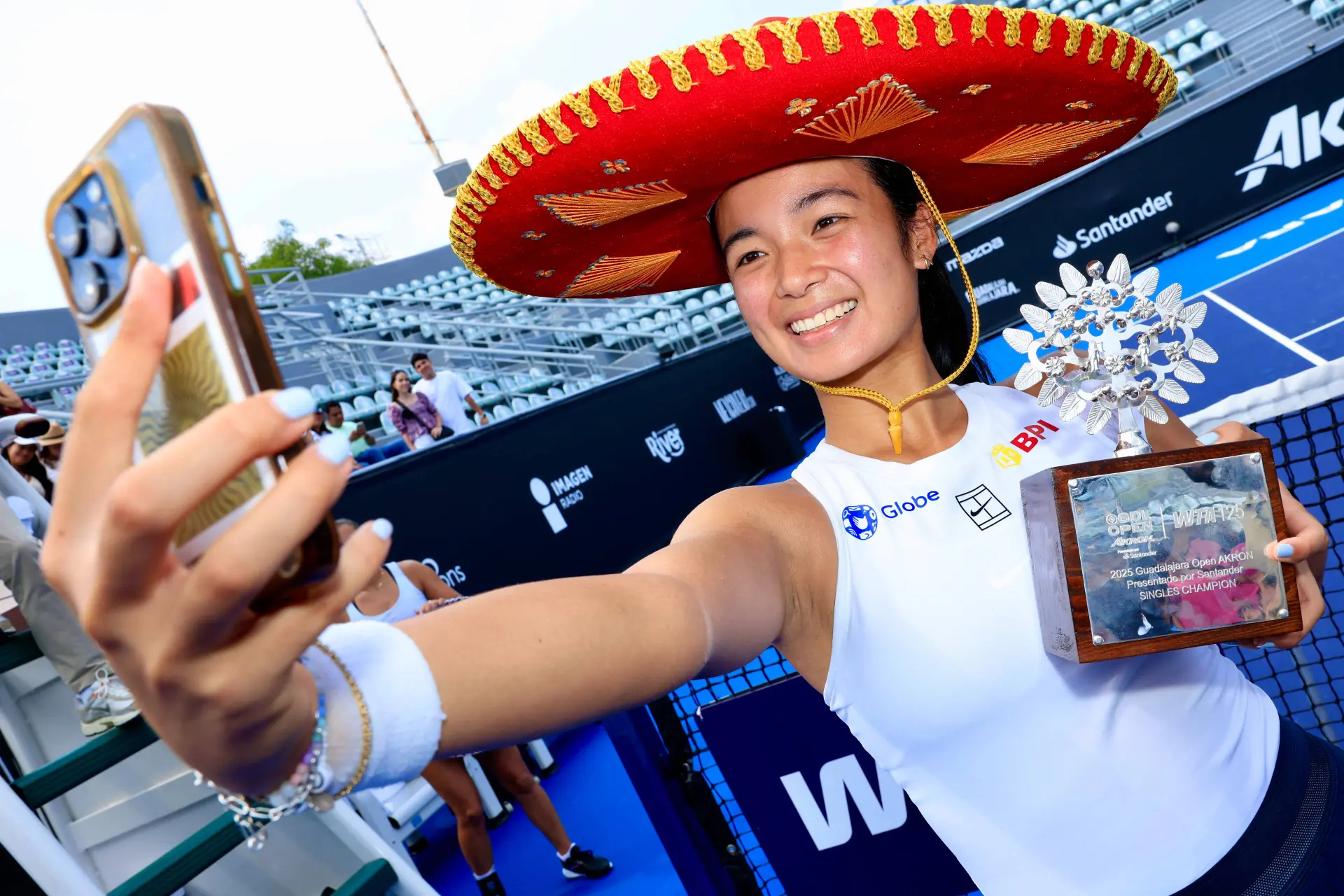
The timing of Macci’s comments is significant given Eala’s remarkable rise over the past month. The 21-year-old broke into the top 20 for the first time after winning the DC Open last week for her maiden WTA title, and she has continued that momentum at the Canadian Open, where she reached the fourth round with victories over Alycia Parks and Caty McNally.
Eala’s breakthrough has been driven by elite ball striking, early ball contact and the ability to dictate rallies from both wings. However, the serve remains the part of her game most frequently questioned by analysts, particularly when compared with the power generated by the top players on the WTA Tour.
The numbers illustrate the gap. During Wimbledon, Eala averaged roughly 86 mph on her first serve and around 75 mph on her second serve, well below the WTA average first-serve speed of around 105 mph. By comparison, world No. 1 Aryna Sabalenka regularly serves near 110 mph, making Eala’s delivery one of the clearest technical areas still separating her from the very top tier of women’s tennis.
Macci sees a complete technical fix
Macci argues that the issue is not simply a lack of power, but a mechanical problem that affects the entire service motion. According to the veteran coach, the timing of Eala’s leg drive and racquet entry is fundamentally out of sync, reducing acceleration and forcing her body to open too early.
“If Eala gets biomechanical help on the serve, fasten seat belt,” Macci wrote on social media. “With the human eye and at 400 frames per second the timing of the leg drive to innate the racquet entry is 100% off. This causes a decrease in acceleration and the right side to open too early and head to drop. This is the main culprit.”

He also pointed to Eala’s pinpoint stance, arguing that the position of her back foot contributes to early over-rotation. Because Eala is left-handed, Macci believes the upside could be dramatic if the motion is rebuilt correctly.
“Being a lefty she has an advantage and if this is reconstructed I can see a 115 mph lefty laser and more that will provide a breathtaking Philippine sunset and she will win more sets!”
If Eala gets biomechanical help on the serve fasten seat belt. With the human eye and at 400 frames per second the timing of the leg drive to innate the racquet entry is 100% off. This causes a decrease in acceleration and the right side to open to early and head to drop. This is…
— Rick Macci (@RickMacci) August 8, 2026
The one weapon that could change Eala’s ceiling
Macci’s assessment is especially striking because Eala is already producing elite results despite what he considers an inefficient serve. During her recent surge she defeated a remarkable group of opponents, including Zheng Qinwen, Leylah Fernandez, Elina Svitolina, Naomi Osaka and Jessica Pegula on her way to the title in Washington.
One of the unusual aspects of Eala’s serve is that it can still create timing problems despite lacking elite pace. After losing to the Filipina, Iga Swiatek admitted that the ball arrived so slowly that it became difficult to adjust her rhythm, showing that Eala has already learned to win with a delivery that remains underdeveloped.
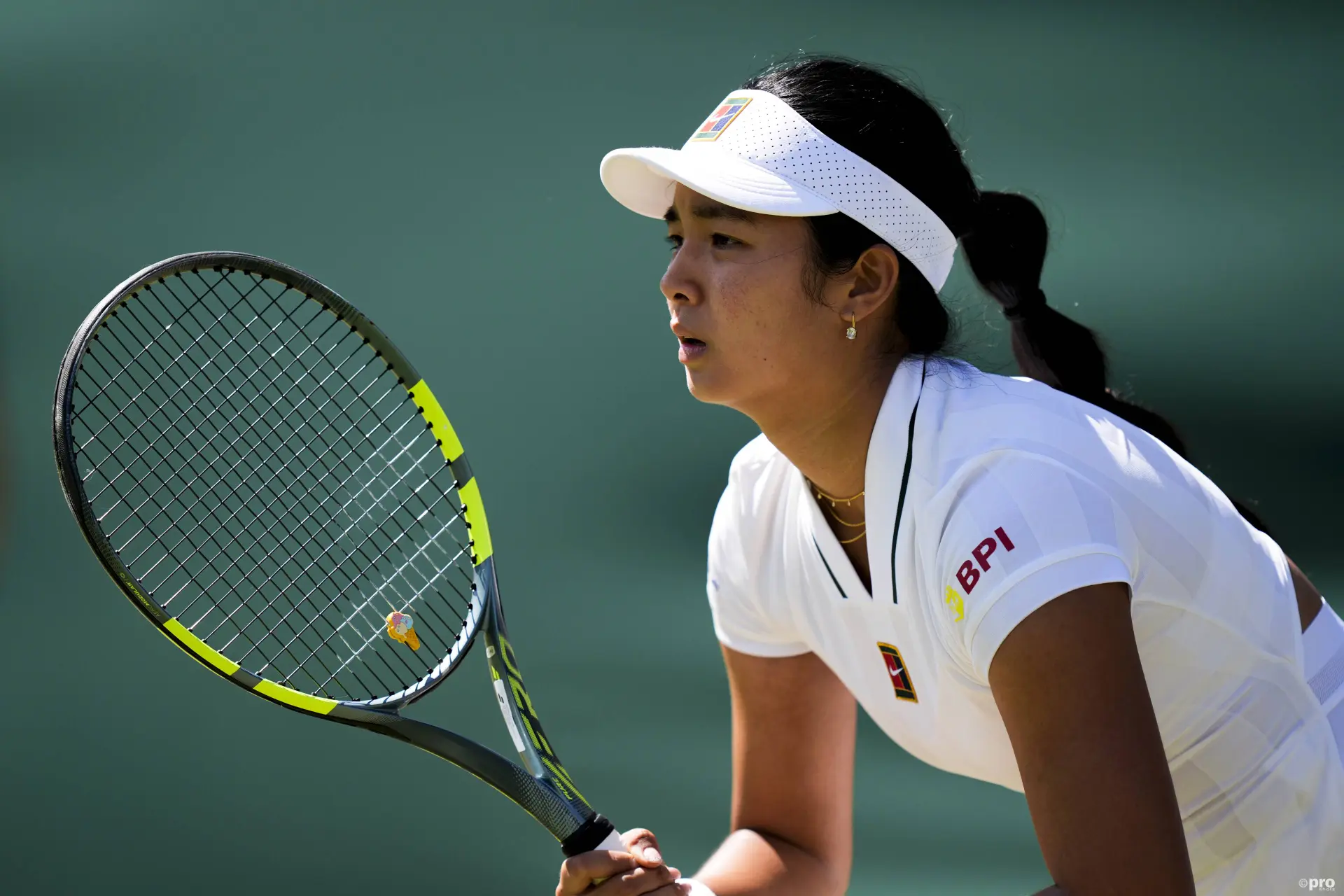
For Macci, the question is not whether Eala can succeed with her current serve, but how much stronger she could become if it were transformed into a true power weapon. He believes that a rebuilt delivery would add another dimension to a player whose baseline game is already among the most explosive emerging forces on the WTA Tour.
“The Philippine Machine is earning a lot of green and her on the rise firepower is some of the best we have seen. Her movement can be exploited and make her pay but because of her elite ball striking she still has the final say. Her serve needs reconstructive surgery to become a laser and if this happens she add another taser.”
The Philippine Machine is earning a lot of green and her on the rise firepower is some of the best we have seen. Her movement can be exploited and make her pay but because of her elite ball striking she still has the final say. Her serve needs reconstructive surgery to become…
— Rick Macci (@RickMacci) August 8, 2026
Whether Eala eventually reaches the top 10 will depend on more than one technical adjustment, but Macci’s message is clear: the Filipina has already become one of the fastest-rising players in women’s tennis, and the part of her game that still looks vulnerable may also be the part with the greatest room for improvement.

Cristhián AvilaTennis Journalist
Cristhián Ávila is a tennis journalist based in Santiago, Chile, and has been part of the TennisUpToDate team since early 2023. He covers the ATP and WTA Tours as well as all four Grand Slams, producing breaking news, match reports, analysis, and regular liveblogs from major tournaments.
His reporting combines statistical analysis with clear explanation, helping readers understand tactical developments, player form, and broader storylines across the tour. Working fluently in both Spanish and English, Cristhián collaborates with an international editorial team and contributes to comprehensive global coverage. As part of his work, he has conducted interviews and media interactions with leading figures in the sport, including Caroline Wozniacki and John McEnroe.
In his journalism, Cristhián places strong emphasis on careful sourcing, editorial accuracy, and updating articles promptly when new, verified information becomes available. His coverage is grounded in research, context, and direct engagement with professional tennis.
claps 0visitors 0
Just In



Popular News

Latest Comments
- A healthy Qinwen may be hard to stop next season. She was already scaring her opponents before her medical leave(s). Unfortunately, Zheng insisted on singing again. On the positive side -- Mirra did not sing!! ;~}
 mandoist11-10-2026
 - Where is it written that athletes, entertainers... People in general... are mandated to keep looking at -- or even using [anti]Social Media? Public & private figures consistently complain and reveal their concerns about negativity and violence thrown at them -- yet they insist on participating. Avoid it, don't use it, don't read it. It's okay to occasionally look up at the World instead beating your eyes & thumbs to death on The Inventions out there.mandoist11-10-2026
- great articlestennisseserver07-10-2026
- Medvedev was leading Djokovic 7-5, 3-5 when an attempted return..' NO you ignorants, Djokovic was leading .weiss05-10-2026
- No more bullshit "Wildcards" to these two. Qualify like everyone else -- there will be cameras there, too. Time to scream... WTF ????!!!!mandoist29-09-2026
- Let's not BS the general public -- Sabalenka started showing cracks in her game last season. Her losses and near-losses started at about the same time she began being distracted by Fame (constant Selfies, making TV commercials, magazine shoots, endless Social Media nonsense, etc., etc.) One would think even Saba could recognize the parallels with others who failed before her -- Raducanu, Giorgi, Bouchard to name a few.mandoist25-09-2026
- Gross!! Hey Raducanu, Giorgi, and Bouchard -- reserve a seat at your Social Media Selfie table for Saba + Naomi. They're heading in your direction soon enough.mandoist24-09-2026
- And then these same players will complain about how lengthy their season’s were and need more time-off. I’m all for more tennis but the amount of tennis we get now is actually kind of crazy! We all need a break, especially the players.DaveyWavey23-09-2026
- You should do a comparison article for "different kinds of justice" the courts decide for tennis players. I can think of at least three players who received very small bans of a few months, however Tara Moore has been fighting for her literal survival the past few years. It seems odd considering she is not a "name" player, unlike the other cases.DaveyWavey22-09-2026
- PRIZE MONEY & POINTS Winner - $185,500 Finalist - $114,500 Semi-Finalist - $66,003 Quarter-Finalist - $35,000 Round of 16 - $18,045 Round of 32 - $13,005 Winner - 500 Finalist - 325 Semi-Finalist - 195 Quarter-Finalist - 108 Round of 16 - 60 Round of 32 - 1DaveyWavey20-09-2026

Loading