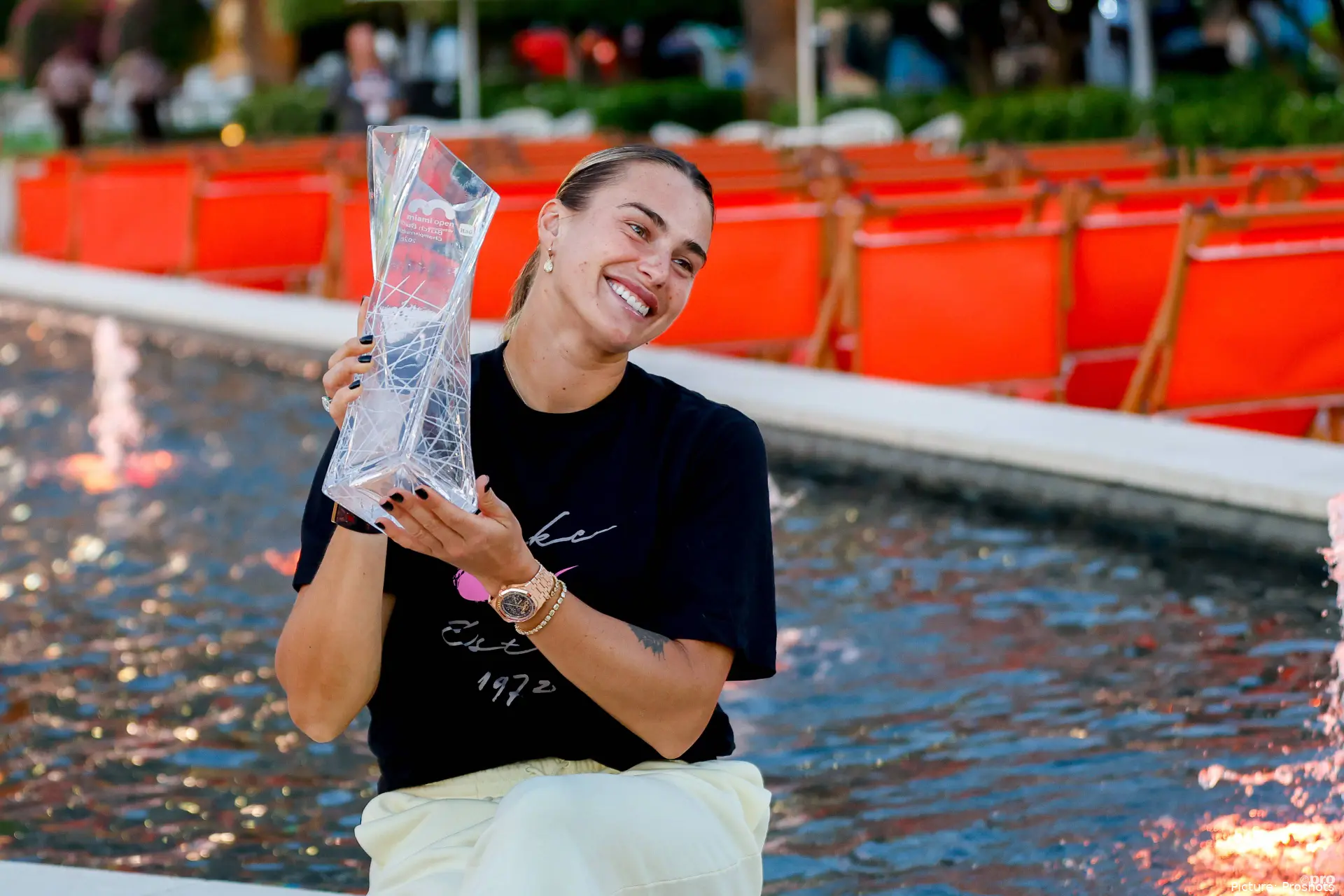
World No. 1 Aryna Sabalenka arrives at the Madrid Open with a clear statement of intent, shaped by both form and mentality. The Belarusian described losing as “the worst feeling,” a mindset that underpins her current 12-match winning streak and sets the tone for her clay-court debut after a dominant Sunshine Double.
Sabalenka has not lost since the end of January, collecting titles at Indian Wells and Miami while defending her crown in the latter. That run has reinforced her position at No. 1 and positioned Madrid as the next stage in a season built on controlled scheduling and sustained performance rather than volume of tournaments.
Her decision to skip Stuttgart forms part of that strategy. After managing physical demands earlier in the year, Sabalenka opted to prioritise recovery ahead of the Madrid–Rome stretch, aiming to maintain peak condition across the most demanding phase of the clay swing.
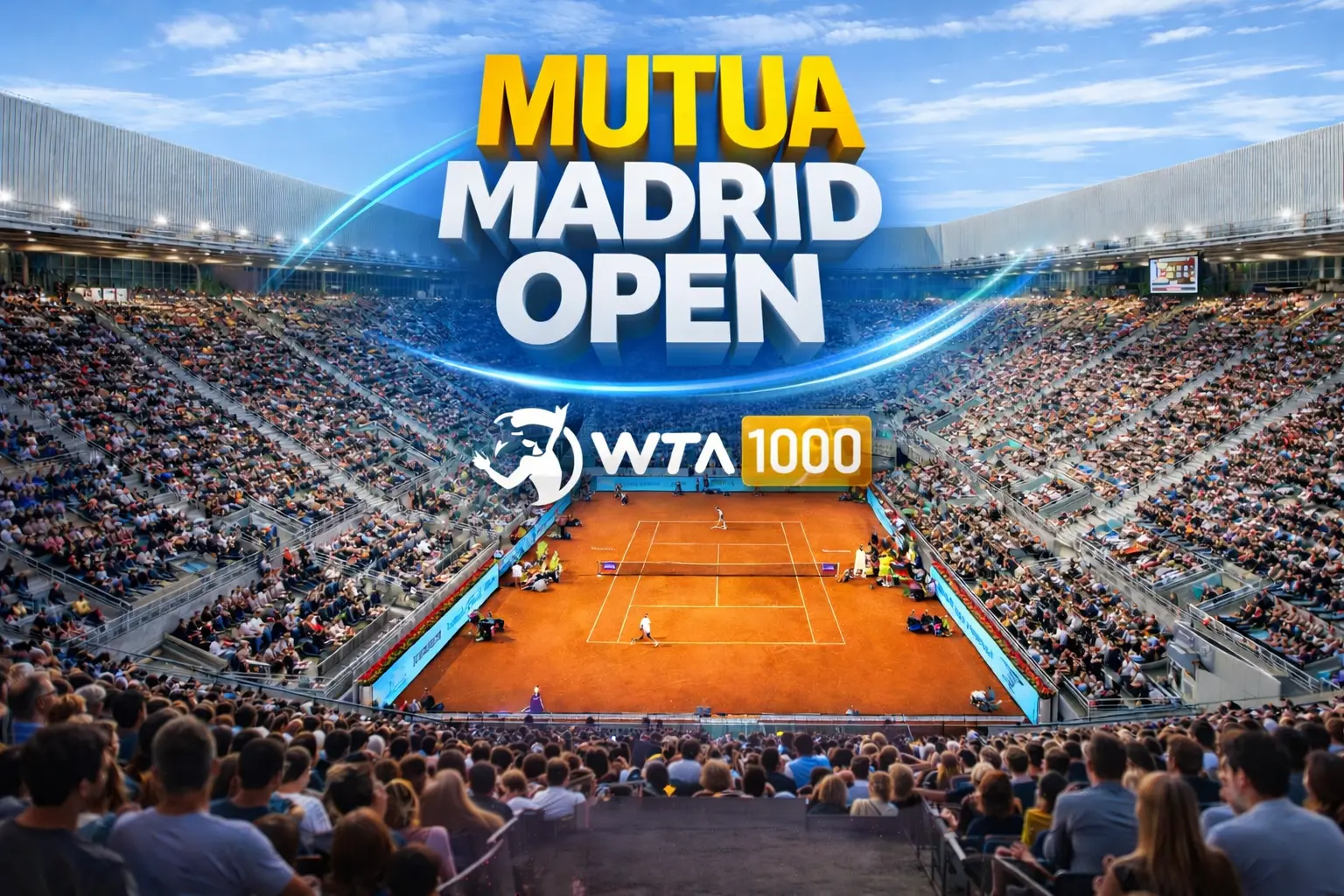
Madrid represents both continuity and opportunity. The Caja Mágica has been one of her most consistent environments, with three titles (2021, 2023, 2025), a runner-up finish in 2024, and a 23–4 record — her strongest return at any WTA 1000 event.
Managing pressure, schedule and performance
Sabalenka framed her reduced calendar as a necessary adjustment to sustain performance levels across the season. Rather than expanding her schedule, she emphasised the importance of recovery and physical management, particularly after periods where her body required additional rest.
“It was a pity for me to skip Stuttgart. I’ll try to come back next year for sure, but the ideal plan is maybe to open the schedule a bit less to stay healthy, to be ready to show my best in every tournament I play,”the 4-time Grand Slam champion said in press conference. “This year my body has struggled at certain moments and I needed rest to recover, so that’s why my schedule has had fewer tournaments, to do the right thing physically. I hope I can show my best level every time I compete.”
That approach aligns with a broader understanding of pressure within the tour. Sabalenka pointed to the importance of maintaining balance outside competition, particularly in managing the mental demands that come with sustained success and expectation. “Mental health is very important, and that’s why I work with a psychologist. I’ve done everything possible to stay mentally healthy.”
“What I’ve realised over the years is that it’s vital to surround yourself with people you feel comfortable with, protected, free to say whatever you want, to ask anything, and to talk about things beyond tennis.”
“It’s very important to do things that bring you happiness beyond this sport, because sport comes with a lot of pressure and expectations. If you don’t have anything beyond tennis, it’s very tough to stay in that pressure zone all the time.”
Madrid comfort, evolution and competitive edge
Sabalenka’s connection with Madrid remains a defining factor. Beyond results, she highlighted the environment and support as central to her consistency at the tournament, reinforcing the conditions that have made it one of her most successful stops on tour.
“I think it’s the people. I feel like they connect with me, they support me a lot, and that makes me always want to come back to Madrid to feel that atmosphere. That’s the key. And the food is incredible — that’s all that matters, the support and the food.”
Her development as a player has also been shaped by willingness to implement structural changes, even at the risk of short-term regression. Sabalenka referenced technical adjustments, including periods where performance dipped before stabilising at a higher level.
“It’s very demanding. It’s not easy to make those changes because you always try to protect your level, your ranking, your points,” the 27-year-old player added. “But if you don’t improve, other players will go after your weaknesses. That’s how you become better.
“When I struggled with double faults, that was the moment I felt ready to change many things. You accept that maybe things get worse during the process, but if something can give you more, you have to go through that phase and find out.”
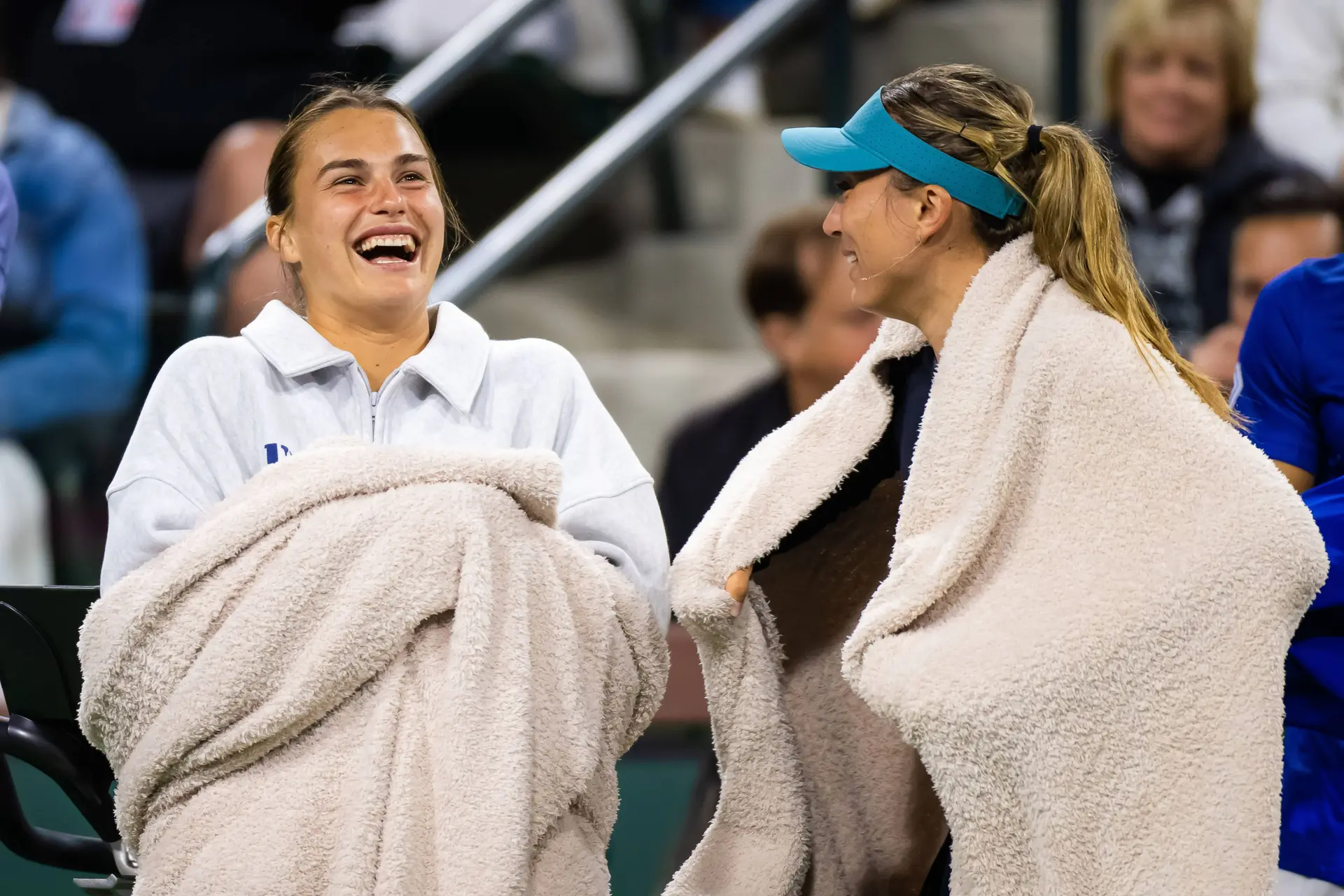
That combination of adaptation and competitive drive is reflected in her approach to winning and losing, where the emotional response remains a central motivator. “You never forget the feeling of losing, honestly. I hate that feeling. I don’t sleep — I hate it. It’s the worst. That’s why I always try to go out there and give my best, because I don’t want to deal with that feeling. But this is sport, anything can happen. You have to expect the best, but be ready for the worst.”
Sabalenka will open her Madrid campaign against the winner of Peyton Stearns and Lois Boisson, with a potential third-round meeting against Jaqueline Cristian. Given her form, record at the venue, and current trajectory, the tournament represents both a continuation of her dominance and a key test as the clay season progresses toward Rome and Roland Garros.

Cristhián AvilaTennis Journalist
Cristhián Ávila is a tennis journalist based in Santiago, Chile, and has been part of the TennisUpToDate team since early 2023. He covers the ATP and WTA Tours as well as all four Grand Slams, producing breaking news, match reports, analysis, and regular liveblogs from major tournaments.
His reporting combines statistical analysis with clear explanation, helping readers understand tactical developments, player form, and broader storylines across the tour. Working fluently in both Spanish and English, Cristhián collaborates with an international editorial team and contributes to comprehensive global coverage. As part of his work, he has conducted interviews and media interactions with leading figures in the sport, including Caroline Wozniacki and John McEnroe.
In his journalism, Cristhián places strong emphasis on careful sourcing, editorial accuracy, and updating articles promptly when new, verified information becomes available. His coverage is grounded in research, context, and direct engagement with professional tennis.
claps 0visitors 0
Just In

Popular News
Latest Comments
- Does Sinner need that 4.5 mil? I doubt it. He can make that with three modelling gigs!😅🤣Rapunzel21-10-2026
- Did "People Magazine" purchase this website? This nonstop storyline is bullshit.
 mandoist21-10-2026
 - Listen... this is of no concern to anyone but these two. Deal with your own issues -- most of us have our own. Thanks, media, for these insignificant follow-ups which are meaningless.mandoist21-10-2026
- This is so very very sad, for all three of them. I truly thought they had an unbreakable bond, but life throws up so many differing challenges. Having your homeland suffering in such a terrible way, makes happiness lose out to guilt as well. Our thoughts are with them. X💔bjsexton20-10-2026
- I have lost all respect for Svitolina! Could she not have waited until he had played at the Paris Masters!!! She is selfish and don't give a damn about Gael. That is NOT how love is demonstrated Elina!!Rapunzel19-10-2026
- Perhaps convenient tennis tour sex is not a strong enough experience in which to base a marriage?mandoist19-10-2026
- Fight the Good Fight... Tennis (sports in general) need more Humans such as yourself.mandoist18-10-2026
- When is WTA going to mandate Genetic Testing (DNA) ???mandoist18-10-2026
- Hey, Dan... you just wake up from a coma? Regardless -- Thanks for the comedy this morning!mandoist18-10-2026
- Two Things: 1. Stop allowing these Spoiled Trust-Fund Elitists to behave badly. Your little hand-slaps do not deter them. 2. STOP the incessantly annoying "towel wiping" nonsense!!!!mandoist15-10-2026

Loading