"I just felt like the world wasn't fair, I know that sounds pretty childish": Iga Swiatek's inner turmoil amid doping case and World Number One blow
WTA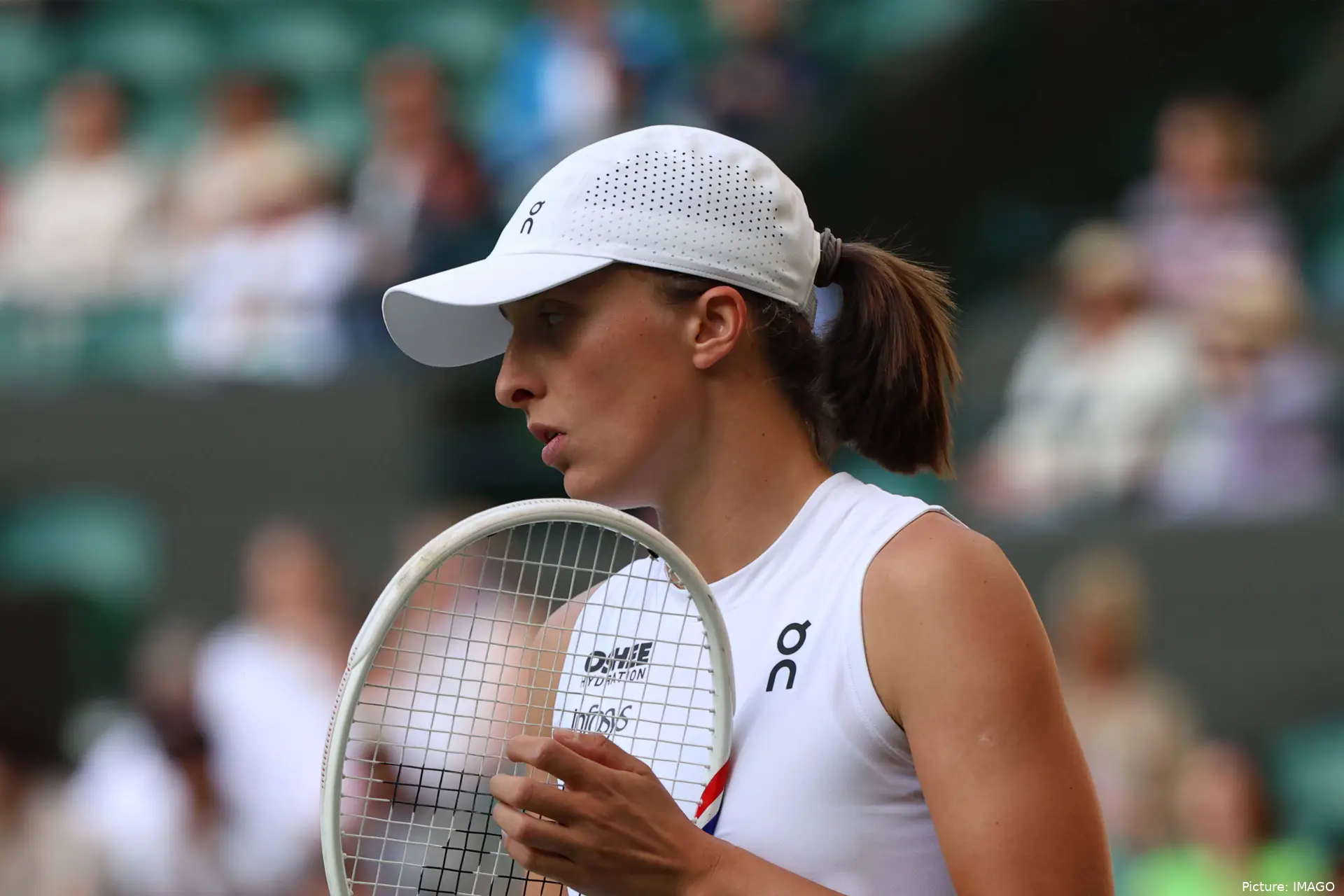
In a sport defined by relentless competition and the constant churn of results, Iga Swiatek has learned that success isn’t always as straightforward or as satisfying as it looks from the outside. Since her breakthrough as a teenager, she has compiled an extraordinary résumé: six Grand Slam titles across all three surfaces, a dominant reign as World No.1, and a place in the sport’s modern pantheon.
But as she told Andy Roddick on his podcast Served, losing that top ranking in 2023 triggered more than just a shift in the numbers—it brought a wave of complicated emotions that took months to unpack.
“I just felt like the world wasn’t fair,” Świątek admitted candidly. “I know that sounds pretty childish, and I’m a top-ten player, so I shouldn’t be angry about things like that. I should be kind of grateful. But it took me a while to get over it and to focus on the future instead of the past.”
She had briefly ceded the No.1 spot to Aryna Sabalenka, and though it was just for a matter of weeks, the psychological impact hit hard. “When I lost the number one to Aryna... I was kind of devastated,” she said. “But then it was freeing when I kind of worked through it and when I turned it around to something positive as like being motivated and convincing myself that now I’m going to be able to focus on hunting instead of being hunted.”
Still, that adjustment didn’t happen overnight. Świątek was dealing with more than just rankings. “It started with my case and coming back after the case and all these mixed feelings that I had,” she recalled. “Also playing well in Australia and then playing well in Doha—where I lost in the semis—but I felt like I was playing good. Maybe it wasn’t super humble of me, but I felt like I deserved to be number one, and it was taken away from me. And having these kinds of feelings didn’t help me for the next months because I just felt like the world is not fair.” For a player used to focusing on improvement and consistency, that internal frustration lingered longer than she anticipated. “I knew I wasn’t playing good. And it’s not like you can dig out of your problems in one week—you’re probably going to need a bit more time and a bit more consistency.”

Lack of focus and coaching change
That turning point didn’t come at Roland Garros, where she has won four titles. Instead, it came in Rome, after a loss that felt particularly hollow. “When I lost in Rome pretty early and I for sure underperformed, my head wasn’t in the match at all,” she said. “I couldn’t focus. I had many thoughts about... I don’t know, I made my own problems, you know. But I was able actually to reset after that. I knew that if I’m not going to do it now, it’s going to last forever.” She returned to the practice court with renewed intention. “Before Roland Garros, I came out on a practice court with a little bit different mindset, and I practiced better, I played better at Roland Garros. I had a little bit more of that fire in me that I had for the last years. And yeah, basically after Roland Garros, I feel like I just continued that.”
One of the biggest changes behind the scenes was Świątek’s decision to change coaches. She parted ways with Tomasz Wiktorowski and brought in Wim Fissette, a seasoned figure in the tennis world. But for Świątek, whose team is like a second family, the transition was far from easy. “Switching coaches was a big deal for me because I don’t like changes. My team is super important for me, and any change, it’s like kind of putting me off the balance a little bit,” she explained. “With Wim, it was tricky because I knew how experienced he is and I wanted to use his experience. I was expecting at the beginning that he’s going to talk to me and tell me something that’s going to be just, you know, a Eureka kind of moment and it’s going to change everything. But I realized that I probably learned too much over the past years to have that, you know. And now the changes are going to be much smaller, and I’ll have to adjust my tennis delicately—not like I did when I started working with my previous coach before 2022.”

Doping case, losing World No.1 and changing coach - a malaise for Iga Swiatek.
The pressure to prove herself under a new setup only intensified her internal doubts. “I wanted to win something kind of for Wim because I knew that he’s a great coach, and I was winning before—so why aren’t I winning now?” she said. “Every month I had a different challenge, I gotta say, and different thoughts in my head.” After so much turmoil, her surprise triumph at Wimbledon felt sweeter than most. “That’s why this Wimbledon victory tastes much, much better—because it was so unexpected,” she said. “Obviously I worked, and every year I wanted to develop, but it came a little bit out of nowhere, you know, because my best result was quarterfinal and every year my opponents could find a solution playing against me.”
Brutal tennis schedule
Despite her growing legacy, Świątek resists dwelling on the historical milestones she’s surpassed. “I don’t look at my life in that kind of broad perspective,” she said. “I kind of got it after I won even junior Wimbledon—like, okay, you win a tournament, but then you have another one to test yourself.” She admits that sometimes she forgets even the biggest wins. “I gotta say, I forget quickly about the tournaments that I won. Sometimes I think I should even celebrate a bit more, but, you know, for some part of the seasons, it wasn’t easy because everybody expected me to win. So I felt more the relief instead of this excitement.”
The brutal pace of the tennis calendar makes it difficult for players to savour success. “You don’t have much time to do that,” she said. “Because, as I said, next week you have another challenge. In tennis, it’s not like you only have world championships or Olympics, and if you win that you can kind of be happy for a month or two. You just have to get back into it straight away.” Roddick, ever the wry observer, jumped in: “Are you saying the tennis schedule never stops—and maybe it should sometimes?” Świątek laughed. “Well, I’ve been saying that for a long, long time.”
The conversation ended on a lighter note, as Roddick referenced her earlier “case,” a minor controversy involving jet lag and a sleep aid. “She’s jet-lagged, she took melatonin. I took four melatonin before the show today,” he joked. Świątek couldn’t help but tease him: “Why aren’t you sleeping now?” Roddick grinned: “Because it’s this melatonin-coffee trade-off I got going—completely unhealthy.”

Samuel GillEditor-in-Chief
Samuel Gill is the Chief Content Officer (CCO) of TennisUpToDate.com, a role he has held since 2020. He is responsible for editorial governance across the platform, including setting content standards, overseeing accuracy and consistency, and guiding long-term editorial strategy. Since joining, he has contributed more than 10,000 articles and editorial pieces across the TennisUpToDate network, playing a central role in the daily operation and development of the site.
Based in Leicester, Samuel has a broad background in tennis media. In his current role, he works closely with editors and writers to ensure coverage meets clear journalistic standards, with particular attention to verification, consistency, and timely updates when new information becomes available.
claps 0visitors 0
Just In




Popular News

Latest Comments
- Wtf? Why is there no reason? And what about the men's?Bel08-11-2026
- One step by another step -- WTA continues to 'lose the plot'. Too many hi-tech microphones being installed at most venues!!! Remove them (especially those along the hallways, sidewalks, and pathways throughout the venues. Not to mention (most of all) remove the mic's from the Players/Coaches Box.
 mandoist06-11-2026
- Enough of her bullshit. Go marry someone.mandoist06-11-2026
- Don't you just love this young lady!? We fans often expect athletes to be supermen and superwomen, often forgetting that they WILL GET TIRED! I love Alex's perspective. Tiredness for an athlete should never be viewed as a negative, especially if you are healthy, taking care of your body and mental health and putting in the work. What a mature perspective. Good for you, Alex!Rapunzel05-11-2026
- Jess is absolutely correct! But the disrespect is a trait I have noticed in most of the Russian players. Mirra is good but very immature and lacks humility. Conceivable needs to get a handle on that!Rapunzel05-11-2026
- Having spent weeks and weeks through the years on tour, I can say with confidence that Conchita was (is) one of the very few who realize the surprising level of maturity (and sometimes lack of) which Mirra seems to have developed in such a demanding adult world of Pro-Tennis. While at the same time reminding herself (Conchita, that is) that Mirra is still young and developing mentally and physically. The general public may forget at times, or not at all realize, these modern era young athletes do not have a 'normal' Youth. It's a major sacrifice, among countless sacrifices, these athletes must make. People who blow-off that fact are ignorant and unfair when they blurt out, "They choose fame so they have to put up with the intrusions on their lives". No, they do not.mandoist05-11-2026
- Okay... someone with a camera was EAVESDROPPING on a private conversation. Shouldn't that be the point of discussion here? Regardless of the sensationalist crap by media, Pegula (and anyone) has a right to an opinion. There used to be an expectation that private conversations were respected, regardless of 'stardom' and whatever other defensive excuses media tries to shove in our faces. Boo-hoo if feelings are hurt. BTW: Having been employed at various tourney venues, etc., I can't tell you how nasty and offensive players can be when discussing their opponents and colleagues... in "private". Well, I could, but won't. I also challenge anyone to deny what Jessica said is false.mandoist05-11-2026
- Vacherot is Mongasque, rather than Swiss. The tournament was Swiss :DTrwd7702-11-2026
- After a couple decades traveling to IIHF tourneys overseas... our family is done with it... and I will not be the only one!! Bad enough the NHL allows Ovachenko (a Putin Supporter and Campaigner) to live and play in the USA. Let's not forget the STATE SPONSORED RUSSIAN DOPING PROGRAMS still in effect today.mandoist31-10-2026
- Osaka's mental state apparently does not allow her to reach any more Quarter Finals? I mean, she doesn't really have the time for tennis with all the pre-planning that must go into her 12 year-old "fashion" goals.mandoist29-10-2026
