"I sometimes wish I were 20 again to play another 10 years in this era" - Ajla Tomljanovic lauds generous increase in prize money as she sets out future tennis ambitions
WTA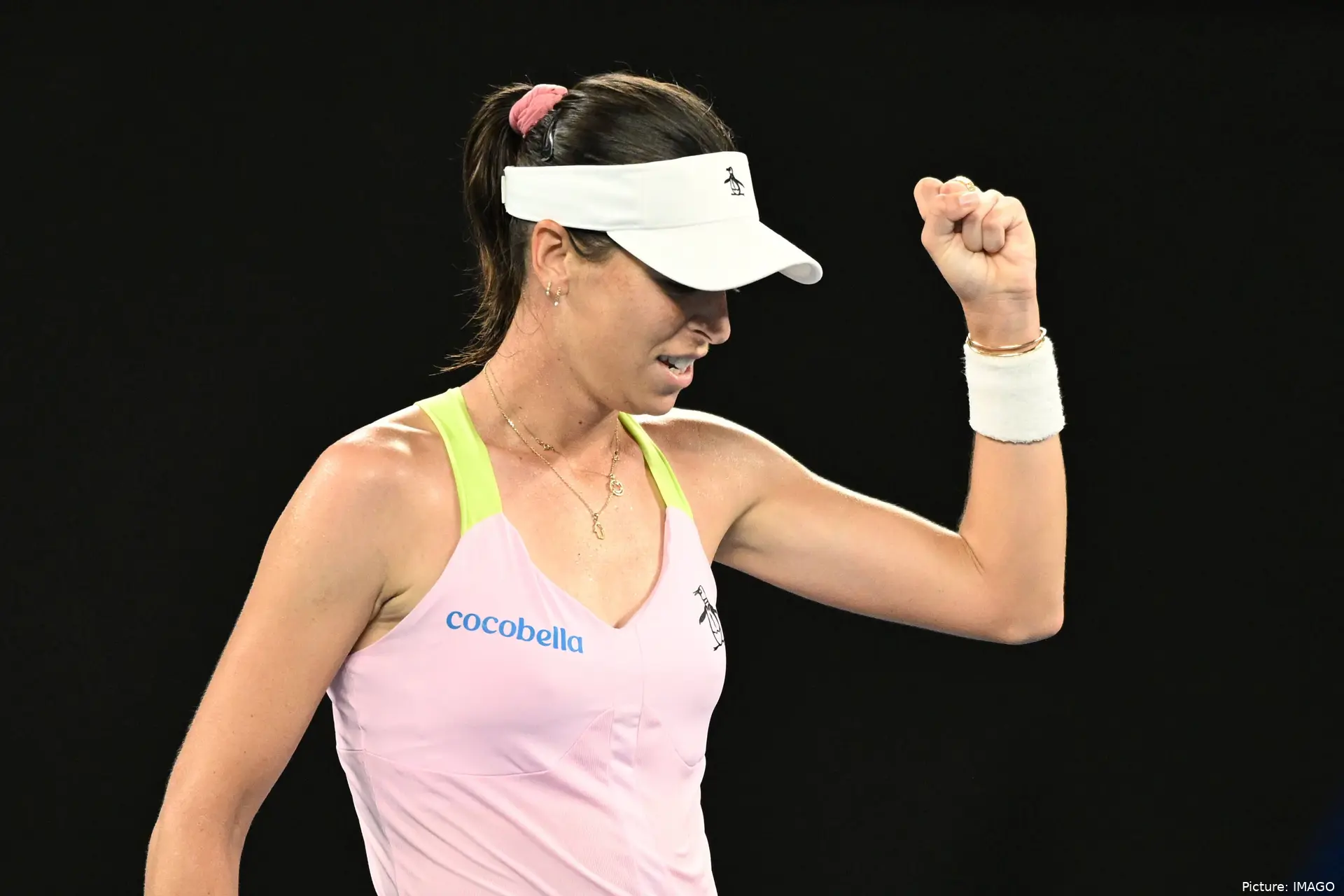
Ajla Tomljanovic took the time out of her busy schedule to sit down on the Love All podcast with four-time Grand Slam champion Kim Clijsters. She talked about her start to the season, commenting on the best players in the world while praising the rise in prize money on the WTA Tour.
Skipping Middle East swing after Australia injury scare
While a lot of the top players in the world are competing in the coveted events in the Qatar Open, the Aussie opted to sit these out and put all her focus and effort over in the United States. "After Melbourne, I went to Abu Dhabi, but I didn’t really feel well," she explained. "I got a bit sick and decided to pull the plug on that swing. I’ve never done well there and thought, “2026, I’m going to change that.” I didn’t, so my gut was right. I decided to go back home, train and get ready for Austin and the U.S. swing."
Ahead of the Australian Open, she did have a big scare. "In the second round of Adelaide, I injured my pec. It was scary at first — I thought it was really bad," she admitted. "By the time I got to Melbourne, it wasn’t as bad as I’d feared. There was no tear, just a strain. I’ve had pec issues before and they’re scary. You don’t trust it. And if I could choose anywhere not to be injured, it would be Australia. So it was stressful, but I was really happy with how I handled it. I went into the first round and played two good matches."
She had to be cautious ahead of her home Grand Slam. "We didn’t start serving until Saturday and I played Monday. We built it up in the gym with rehab and strength work. It was minimal time on court — more about strengthening the muscle without aggravating it."

In the end, she was able to compete without any problems. "Once I stepped on court, my mentality was: I’m going full out. Even if it gets a bit worse, it’s worth it at this stage in my career. Slams — especially at home — are what I really play for. I took a few ibuprofens for courage! But we managed it well and it didn’t get worse." She would win her opening match against Yulia Starodubtseva before going out to Elena-Gabriella Ruse.
Switching from Croatia to Australia
Born in Croatia, Tomljanovic represented Croatia from 2009-2018. This changed after she re-located to Australia, opting to switch nationalities on the big stage. "As soon as I had “AUS” behind my name, I felt connected. Australia embraced me from the start. I’ve played a lot of Billie Jean King Cup ties and now two Olympics. It feels natural," she stated.
"There’s added pressure, but it’s good pressure. I’ve never felt like I had to carry something on my shoulders. I just want to do well for myself and the people cheering for me. And the Australian crowd is incredible — if you embrace them, they embrace you right back."

Ajla Tomljanovic competing at Wimbledon
She explained how it came about. "I got residency around 23 and could represent Australia at Slams, but not on the WTA Tour — which was confusing for people. Around 25, I was cleared to play Billie Jean King Cup and got my passport so I could represent Australia fully. That was about seven or eight years ago. It was a long process — about four or five years. For most people that’s not long, but when you really want to represent a country, you get impatient."
Prior success at Wimbledon and how good she still is
Wimbledon has been Tomljanovic's best Grand Slam based on results. She made a brace of quarter-finals in 2021 and 2022 despite not always being a grass fan. "Before my first quarterfinal in 2021, I didn’t enjoy grass at all. Everyone said I had the game for it, but it never clicked. I hated how quickly things happened — I felt out of control," she said.
"Then something shifted. I remember texting a friend saying, 'I think this is the year something changes at Wimbledon.' And it did. After that first run — even though Ash Barty beat me soundly — I came back believing I could win matches there. Belief changes everything. I may have been playing at the same level before, but when you walk on court believing you can win, it’s different."
This form has slowly fallen away, with her game not at the complete highs it was once at. "It goes in waves. Some days I feel like I can hang with the best. Other days I feel far away," she commented. "In the last few years — especially with injuries — I wondered if I still had the level. I saw the game evolving and felt like I couldn’t catch up. That’s when I started doing a bit of media work, exploring what I like outside tennis. It took pressure off."
When taking some time away from the sport, she realised how much she missed being on court. "But when I started commentating, I realised: I still want to be the one playing. Reuniting with Goran brought belief back. Last year after Europe, I actually told my dad and team I thought it might be my last year. I didn’t announce it — I’m not that type — because I might change my mind the next day. But thinking that way helped me enjoy tournaments more."
The motivation is very much there for the 32-year-old to continue playing at the highest level, with a target already in place. "After Australia this year, I told my dad, “I’m making it to LA 2028.” And he said, 'Great.'"

Speaking highly of the world number one
She was in full praise of Aryna Sabalenka as the topic turned to discussing the best players int he world. "I haven’t played her since she’s been dominating the last few years, but I called her match courtside against [Victoria] Mboko. What impressed me most was that even if she misses two balls, she keeps going the same way. That really clicked for me — it’s the champion’s mentality. Her belief never wavers."
While her tournament run ended in yet more Grand Slam final disappointment, the gauntlet is thrown down to her rivals. "Even though she didn’t win the Australian Open, she feels like the benchmark right now. Everyone’s asking: what is she doing better than everyone else to close that gap?"
Commentating gives her that advantage to view the sport from a different perspective. "I still look at it through a player’s lens. What can I learn? What is she doing well? What’s hurting her? What’s not working? You see things you don’t see from across the net — body language, little moments of tension. You realise they’re human. For example, Sabalenka was in control for a set and a half, then it goes to a tiebreak and you see the tension. Calling matches like that helps my own tennis so much."
Not piling the pressure on Gauff
Despite her recent struggles, this was not altering Tomljanovic's viewpoint on Coco Gauff. "I love her mentality. We forget she’s only 21. She’s been at the top for years, so people expect so much from her. She’s a two-time Grand Slam champion — and that pressure is kind of ridiculous for someone so young," she summarised.
"When you play her, you have to beat her. She’s never going to go away. Even if she’s not having her best tennis day, she’s so athletic that you have to earn every point."
She was able to draw upon prior clashes with her. "I played her at the US Open. I thought I played a really good match, better than I expected going in. She was struggling with her serve, double faulting a lot — and still made the quarterfinals. The mental strength that takes is underestimated."
Growing prize money in women's side of the sport
There is a record $2.5 million on offer at the WTA 500 Charleston Open. Tomljanovic admitted that she was not the most knowledgeable person when it came to money. "I might not be the best person to ask because growing up, I didn’t even know how much I made until my dad did my taxes at the end of the year," she said.
However, now she understands it more, she was in full praise of the rise in funds that players on the WTA earn on a regular basis. "But looking at the difference from my first Slam main draw to now — it’s incredible. You really see the growth in women’s tennis and women’s sports overall. We must be leading in terms of equality compared to the men."
It is enough to make her want to decrease her age by a few years to get her more time competing, with a special mention going out to Emma Navarro's dad. "With Charleston — Ben Navarro has always pushed for women’s tennis. Even before this prize money increase, Charleston was a tournament I never wanted to miss. It shows other events what’s possible and gets conversations going. That’s how change happens. Honestly, I sometimes wish I were 20 again to play another 10 years in this era."
Lucas MichaelTennis Journalist
Lucas Michael is a tennis journalist based in Cambridge, UK, specializing in comprehensive coverage of the ATP and WTA tours. For the past 1.5 years, he has been a core contributor to TennisUpToDate, where he has authored more than 3,000 data-driven match reports, deep-dive analysis pieces, and engaging liveblogs.
Lucas pairs real-time statistical analysis with on-the-ground reporting, frequently traveling to tournaments to cover the action firsthand from the press box and player press conferences. This blend of advanced metrics and direct access allows him to provide sharp context regarding player form, tactical trends, and breaking tour developments.
He holds a BA (Hons) in Sports Journalism. Grounded in core journalistic ethics, Lucas places a strict emphasis on meticulous sourcing, editorial accuracy, and a commitment to updating live content swiftly as verified information emerges.
claps 0visitors 0
Just In

Popular News
Latest Comments
- A healthy Qinwen may be hard to stop next season. She was already scaring her opponents before her medical leave(s). Unfortunately, Zheng insisted on singing again. On the positive side -- Mirra did not sing!! ;~}
 mandoist11-10-2026
 - Where is it written that athletes, entertainers... People in general... are mandated to keep looking at -- or even using [anti]Social Media? Public & private figures consistently complain and reveal their concerns about negativity and violence thrown at them -- yet they insist on participating. Avoid it, don't use it, don't read it. It's okay to occasionally look up at the World instead beating your eyes & thumbs to death on The Inventions out there.mandoist11-10-2026
- great articlestennisseserver07-10-2026
- Medvedev was leading Djokovic 7-5, 3-5 when an attempted return..' NO you ignorants, Djokovic was leading .weiss05-10-2026
- No more bullshit "Wildcards" to these two. Qualify like everyone else -- there will be cameras there, too. Time to scream... WTF ????!!!!mandoist29-09-2026
- Let's not BS the general public -- Sabalenka started showing cracks in her game last season. Her losses and near-losses started at about the same time she began being distracted by Fame (constant Selfies, making TV commercials, magazine shoots, endless Social Media nonsense, etc., etc.) One would think even Saba could recognize the parallels with others who failed before her -- Raducanu, Giorgi, Bouchard to name a few.mandoist25-09-2026
- Gross!! Hey Raducanu, Giorgi, and Bouchard -- reserve a seat at your Social Media Selfie table for Saba + Naomi. They're heading in your direction soon enough.mandoist24-09-2026
- And then these same players will complain about how lengthy their season’s were and need more time-off. I’m all for more tennis but the amount of tennis we get now is actually kind of crazy! We all need a break, especially the players.DaveyWavey23-09-2026
- You should do a comparison article for "different kinds of justice" the courts decide for tennis players. I can think of at least three players who received very small bans of a few months, however Tara Moore has been fighting for her literal survival the past few years. It seems odd considering she is not a "name" player, unlike the other cases.DaveyWavey22-09-2026
- PRIZE MONEY & POINTS Winner - $185,500 Finalist - $114,500 Semi-Finalist - $66,003 Quarter-Finalist - $35,000 Round of 16 - $18,045 Round of 32 - $13,005 Winner - 500 Finalist - 325 Semi-Finalist - 195 Quarter-Finalist - 108 Round of 16 - 60 Round of 32 - 1DaveyWavey20-09-2026

Loading