“It was so hard to say no to Venus”: Leylah Fernandez reflects on missed chance and Miami reunion
WTA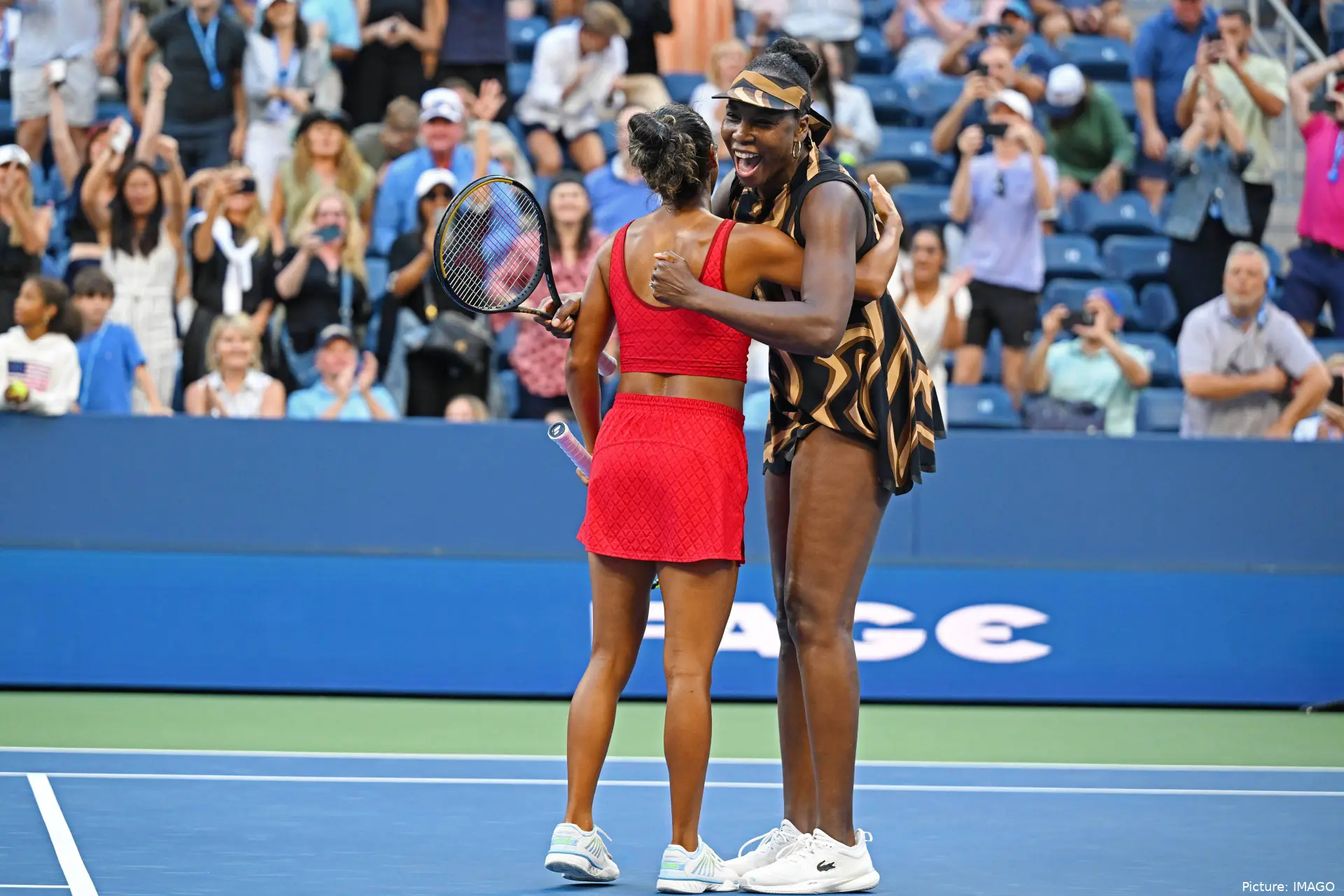
Leylah Fernandez provided a candid insight into her evolving doubles partnership with Venus Williams, revealing that their recent reunion at the Miami Open could have happened earlier. Speaking at the Credit One Charleston Open, the Canadian described the difficulty of turning down a request from the former World No. 1, offering a perspective shaped more by personal connection than scheduling logistics.
The two first teamed up at the 2025 US Open, forming a high-profile partnership that combined experience and youth. Since then, they have remained in contact, exploring opportunities to reunite on court. Their latest appearance together in Miami marked a continuation of that collaboration, though Fernandez disclosed that plans had nearly materialised earlier in the season.
Fernandez, currently ranked No. 24 in singles and No. 80 in doubles, has balanced her commitments across both disciplines in 2026. In Charleston, she competed in doubles alongside Kristina Mladenovic, exiting in the opening round, while progressing more comfortably in singles with a straight-sets win over Polina Kudermetova to reach the Round of 16.
However, the most revealing element of her press conference centred on what did not happen. An opportunity to partner Williams at the Australian Open was missed due to prior commitments, a decision Fernandez described as particularly difficult given her respect for the seven-time Grand Slam singles champion.
“Oh no, it’s two days too late”: the missed Australian Open opportunity
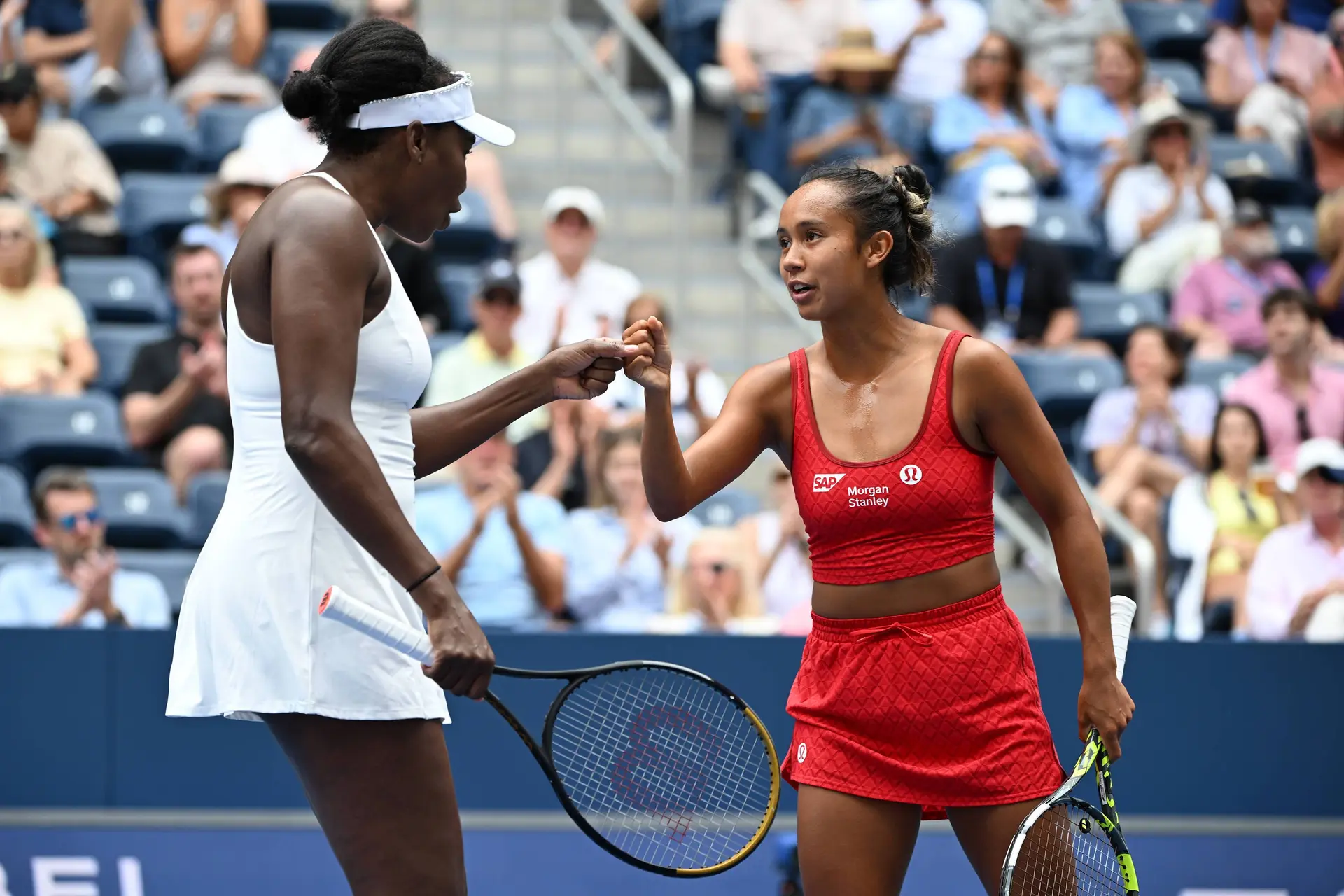
Fernandez explained that Williams had reached out with a proposal to play doubles in Australia, but the timing left her unable to accept. Having already committed to Timea Babos, she was forced to decline, despite acknowledging the significance of the invitation and her desire to share the court again with Williams.
“Yeah. With Venus we kind of kept in contact after the US Open. We were hoping to play — well, she asked me to play in Australia, but unfortunately I was already committed with Timea Babos, so that was it. And then I did ask if she was going to the Middle East, but she wasn’t.”
The decision was not taken lightly. Fernandez described the emotional weight of declining Williams, highlighting the personal dynamic between them and the difficulty of disappointing a player she views as a mentor figure. The situation was compounded by the narrow timing window, with the request arriving just days after her commitment had been finalised.
“There’s no disrespect to Timea. She’s an amazing doubles player. She’s had an amazing career. But it was so hard to say no to Venus because she has that big sister energy. I never want to disappoint my siblings, and saying no to them is so hard. When her coach messaged me, I was like, ‘Oh no! It’s two days too late!’ I couldn’t do it.”
Read also
“Just keep moving forward”: lessons from Miami reunion
Despite the missed opportunity in Australia, Fernandez and Williams eventually reunited in Miami, where their partnership offered both competitive and developmental value. Fernandez emphasised the mentorship aspect of playing alongside Williams, particularly in high-pressure moments such as match tiebreaks.
She recalled a decisive moment in a third-set tiebreak where missed volleys contributed to a narrow defeat. The immediate emotional response was disappointment, but Williams’ reaction provided a contrasting perspective, reinforcing resilience and long-term focus rather than dwelling on errors.
“It was a lot of fun. She’s a great mentor. In the last tiebreak, the third-set tiebreaker, we were up and we lost it. I remember I had a couple of easy volleys and I missed, and I was really heartbroken at the end of the match. She told me I played great, just to keep going, keep forward. If we all had a time machine, we would use it, but we don’t, so just keep moving forward.”
Fernandez noted that this exchange had a tangible impact on her mindset, helping her reframe the loss and maintain focus on improvement. The experience underscored the broader value of their partnership, extending beyond results into areas of mental approach and professional growth. “That definitely helped me to recharge and look at the bright side and just keep working the next day and find ways to improve.”

Cristhián AvilaTennis Journalist
Cristhián Ávila is a tennis journalist based in Santiago, Chile, and has been part of the TennisUpToDate team since early 2023. He covers the ATP and WTA Tours as well as all four Grand Slams, producing breaking news, match reports, analysis, and regular liveblogs from major tournaments.
His reporting combines statistical analysis with clear explanation, helping readers understand tactical developments, player form, and broader storylines across the tour. Working fluently in both Spanish and English, Cristhián collaborates with an international editorial team and contributes to comprehensive global coverage. As part of his work, he has conducted interviews and media interactions with leading figures in the sport, including Caroline Wozniacki and John McEnroe.
In his journalism, Cristhián places strong emphasis on careful sourcing, editorial accuracy, and updating articles promptly when new, verified information becomes available. His coverage is grounded in research, context, and direct engagement with professional tennis.
claps 0visitors 0
Just In

Popular News

Latest Comments
- Does Sinner need that 4.5 mil? I doubt it. He can make that with three modelling gigs!😅🤣Rapunzel21-10-2026
- Did "People Magazine" purchase this website? This nonstop storyline is bullshit.
 mandoist21-10-2026
 - Listen... this is of no concern to anyone but these two. Deal with your own issues -- most of us have our own. Thanks, media, for these insignificant follow-ups which are meaningless.mandoist21-10-2026
- This is so very very sad, for all three of them. I truly thought they had an unbreakable bond, but life throws up so many differing challenges. Having your homeland suffering in such a terrible way, makes happiness lose out to guilt as well. Our thoughts are with them. X💔bjsexton20-10-2026
- I have lost all respect for Svitolina! Could she not have waited until he had played at the Paris Masters!!! She is selfish and don't give a damn about Gael. That is NOT how love is demonstrated Elina!!Rapunzel19-10-2026
- Perhaps convenient tennis tour sex is not a strong enough experience in which to base a marriage?mandoist19-10-2026
- Fight the Good Fight... Tennis (sports in general) need more Humans such as yourself.mandoist18-10-2026
- When is WTA going to mandate Genetic Testing (DNA) ???mandoist18-10-2026
- Hey, Dan... you just wake up from a coma? Regardless -- Thanks for the comedy this morning!mandoist18-10-2026
- Two Things: 1. Stop allowing these Spoiled Trust-Fund Elitists to behave badly. Your little hand-slaps do not deter them. 2. STOP the incessantly annoying "towel wiping" nonsense!!!!mandoist15-10-2026

Loading