“We all go through those moments”: Kim Clijsters explains Iga Swiatek difficult phase in 2026 season
WTAFriday, 27 March 2026 at 23:30
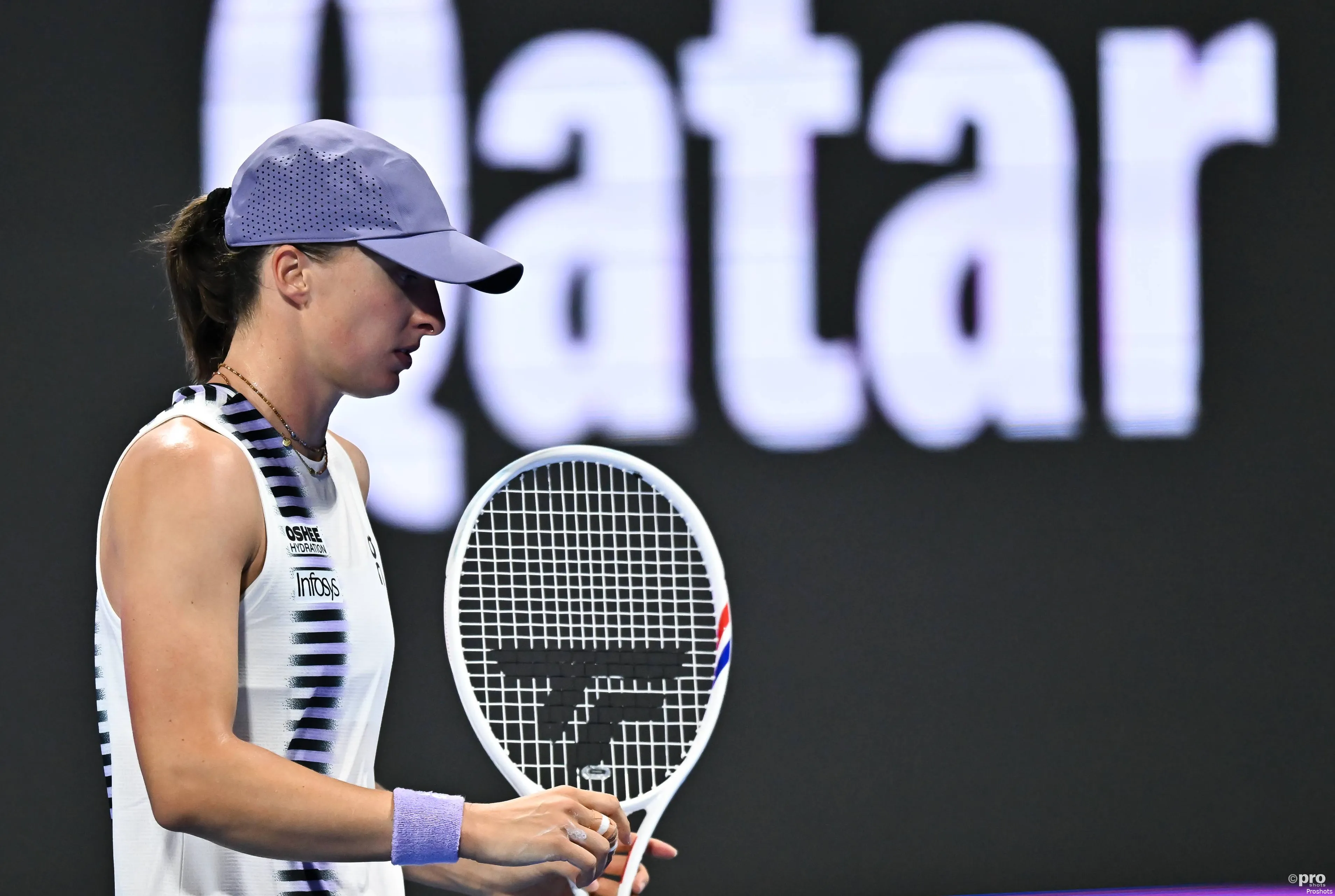
Former world No. 1 Kim Clijsters believes the current struggles of Iga Swiatek are rooted primarily in a mental and emotional imbalance, rather than technical decline, following the Pole’s early exit at the Miami Open. The 6-time Grand Slam champion was defeated in her opening match by compatriot Magda Linette, prompting renewed scrutiny over her current level.
Clijsters, herself a four-time Grand Slam winner, framed Swiatek’s situation through the lens of experience, pointing to visible signs of tension during the match and linking them directly to internal pressure. Her analysis places the emphasis on psychological strain at a moment when Swiatek remains among the elite despite recent setbacks.
The defeat in Miami came amid a broader period of fluctuation for Swiatek, who holds a 12–5 record this season, with quarter-final finishes at the Australian Open, Doha and Indian Wells. However, her early exit in Florida, combined with Coco Gauff’s run to the final, has contributed to a drop in the rankings, with Swiatek now positioned at World No. 4.
Compounding that shift, Swiatek confirmed her split from coach Wim Fissette shortly after the loss. The Belgian coach, who joined her team in October 2024 following the end of her long-term partnership with Tomasz Wiktorowski, had overseen a period that included major titles, but the collaboration ended as the tour transitions into the clay-court swing, beginning in Stuttgart.

Clijsters points to mental tension as key factor
Clijsters’ reading of Swiatek’s performance focused on the connection between physical tension and mental state, suggesting that the issues observed on court are symptomatic of a deeper internal struggle. From her perspective, such phases are not uncommon, even among the most successful players.
She emphasised that the visible tightness in Swiatek’s movement and shot execution reflected a broader psychological dynamic, rather than a sudden drop in ability. That distinction, Clijsters indicated, is critical in understanding the nature of the current slump.
“Just from watching, I feel like for a little bit you could feel the rise of tension in her body, which usually is related to how the mind is,” Clijsters explained in Love All Podcast. “It’s a combination, and it’s sad to hear that she’s going through those struggles, but at the same time it’s very recognizable, because we all go through those moments where you mentally question yourself—am I good enough, can I still do this, am I approaching it the right way.”
Clijsters also contextualised those struggles within the demands of the tour, highlighting the cumulative pressure of a schedule that leaves little room for emotional reset. “You go through life on the road, but at the same time you grow as a person, and sometimes you can get a little stuck in that kind of tennis circus. It’s a very intense environment, and at times even toxic when you’re in it for a long time.”
Coaching change seen as consequence, not cause
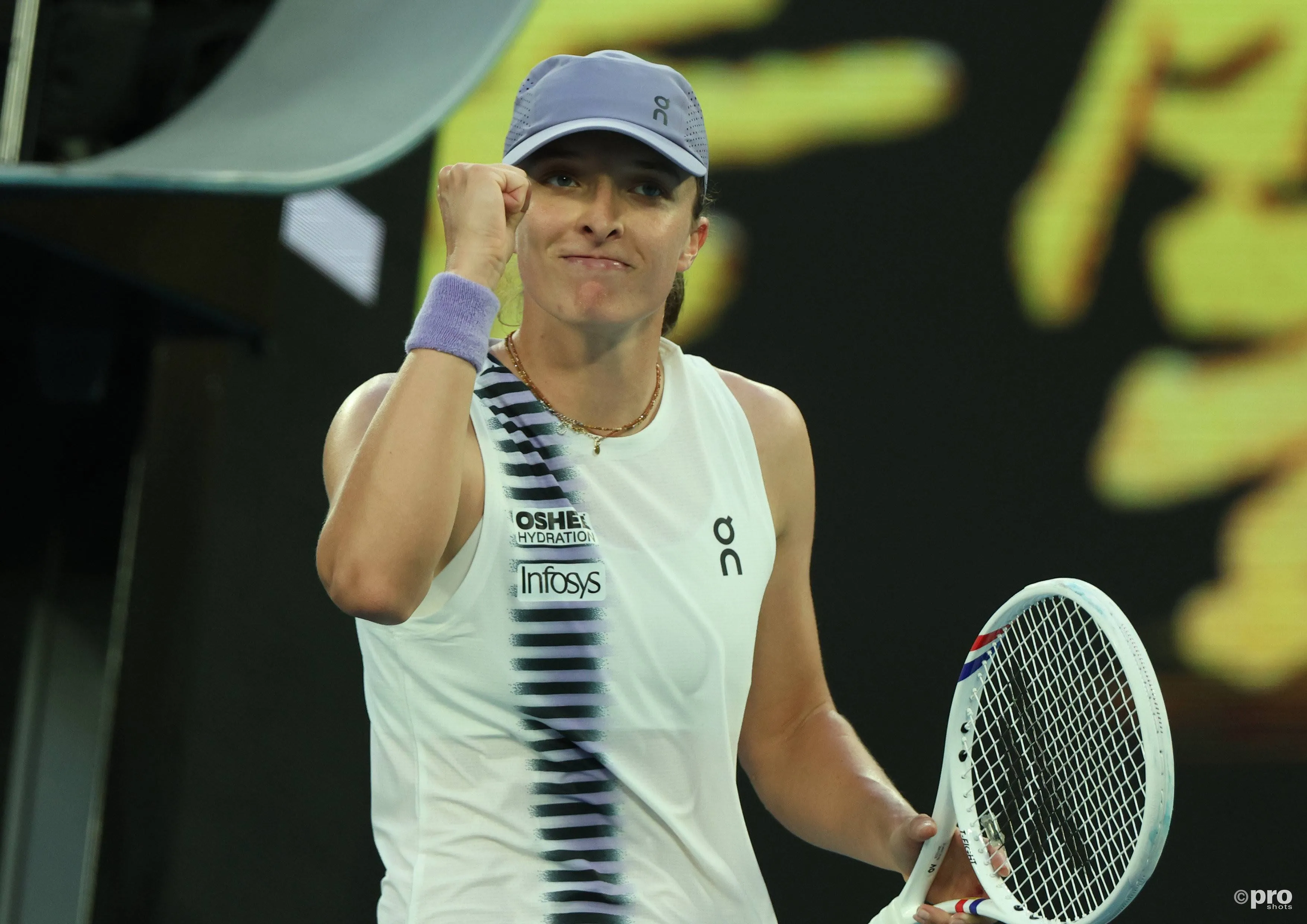
The decision to part ways with Fissette, in Clijsters’ view, reflects the complexity of the situation rather than serving as a direct solution. Drawing on her own experience working with the Belgian coach, she suggested that coaching adjustments alone are unlikely to resolve deeper psychological challenges.
Clijsters pointed out that when a player is operating under significant mental strain, the effectiveness of in-match guidance becomes limited, as the root of the issue lies beyond tactical execution. “When a player is mentally where she was at, I don’t think there’s a lot that you can say from the sideline. It’s a lot further than ‘do this on the tennis court’ or ‘focus on placing the ball there’. It’s a lot deeper than that, and it’s something that has to come from within.”
She also referred to broader patterns on the tour, where players facing similar situations have ultimately needed to take personal responsibility for change, rather than relying solely on external support. “You come to a point where you have to look yourself in the mirror and make the changes and face your weaknesses. You can have support around you, but there’s no magic solution—it’s something you have to go through yourself.”
Swiatek now enters the clay-court swing, historically the strongest phase of her season, where she has built much of her legacy, including multiple Roland Garros titles. That context adds significance to the coming weeks, as she seeks to stabilise both her results and her internal balance.
Clijsters suggested that the key for Swiatek will be restoring clarity in her decision-making and reconnecting with the instinctive patterns that have defined her success on the surface. The transition to clay offers both familiarity and expectation. “It’s not just the tennis part that you can take out and replace. It’s a very detailed relationship, and you have to be able to express yourself openly. It’s not always easy, and personalities have to match, especially when you’re going through a moment like this.”
claps 0visitors 0
Just In

Popular News
Latest Comments
- Sounds like maybe a mental health break? Miss her on the tour. My favorite American female player. Hurry back Emma!
- Why are microphones even allowed in front of the coaching boxes??? In this age of hi-tech, whatever is heard (strategy or otherwise) can instantly be relayed to any given opponent. How and why did WTA decide to slip this past everyone? Also, these strategic placements of mic's is obvious stupidity initiating a commentator's personal decision to expound upon -- and apologize for -- foul language, etc., when a player or team member curses, etc. Then media pounces upon every off-color phrase or word in their sensationalistic "news coverage". This practice of literally -- and openly -- eavesdropping needs to stop!!
- So she actually CAN think clearly! If she wants to play tennis, make it a priority. Learn from Life choices (like having a kid with her rapper ex). Today's game is a grueling exercise in Humility if one is not fully dedicated; or does not have the time to do The Work. Raducanu is a shining example of someone with the talent but lacks the drive, attitude, and/or devotion it takes to maintain 100% capacity of everything the Tour demands.
- It's as if troubled 'Condescending Collins' is competing with The Williams' for the daily spotlight. Some just do not know when to quit. Go fix yourselves and stop informing the public of your personal problems. The general public has their own issues in Life.
- Coach Macci and Martina Navratilova are seemingly the only reasonable voices coming out of the tennis circuit in regards to Iga at the moment. People like Stubbs, Gilbert, and anti-Social Media dwellers have very little or nothing to offer. What they are indeed is... predictable. Why certain media think their input is of value is a mystery. Perhaps easy filler for their publications? Media, in general, could/should consider their poor choices and lazy habits of running to the Loudest Mouths for "expert advice". Certain Internet 'news sources' might do their own research and STOP COPYING & PASTING the first articles to hit the web with little-to-no editing or true journalism. As for Iga (and any athlete) they are not robots. They are Human Beings and Humans, as we all know, are not infallable. Leave the expert criticisms and "solutions" to these athletes and their teams. Disgruntled bettors and so-called "experts" are not a solution!
- Sab has more disappointments to come. She's more or less been 'skating' by many of her opponents. Perhaps less Social Media, TV commercials, and photo-ops... otherwise those distractions will gaurantee a slide in ranking. Take that hint from the downfall of some of her colleagues.
- No kidding. Obviously this did not cross an editor's cubicle. Other than the mediocre grammar... there are more comma's in this mess than in 'War and Peace' !!
- Sketchy chair ump in Eala's match. I lost count how many times Siegemund walked to her box and talked between serves!!
- WTF is wrong with you people at WTA?? The Williams Freebies have gone on far too long!! WTA is resembling a certain Orange President who feels he is free to do as he pleases; and does so despite the fact the entire world knows this game of 'untouchables' is not going to end well for any of these Losers.
- Why is this article so poorly written, and seeming not proofread?


Loading