“She is top-20 in the world, but she needs to improve her game further": Victoria Mboko’s coach sends a clear message after historic season
WTA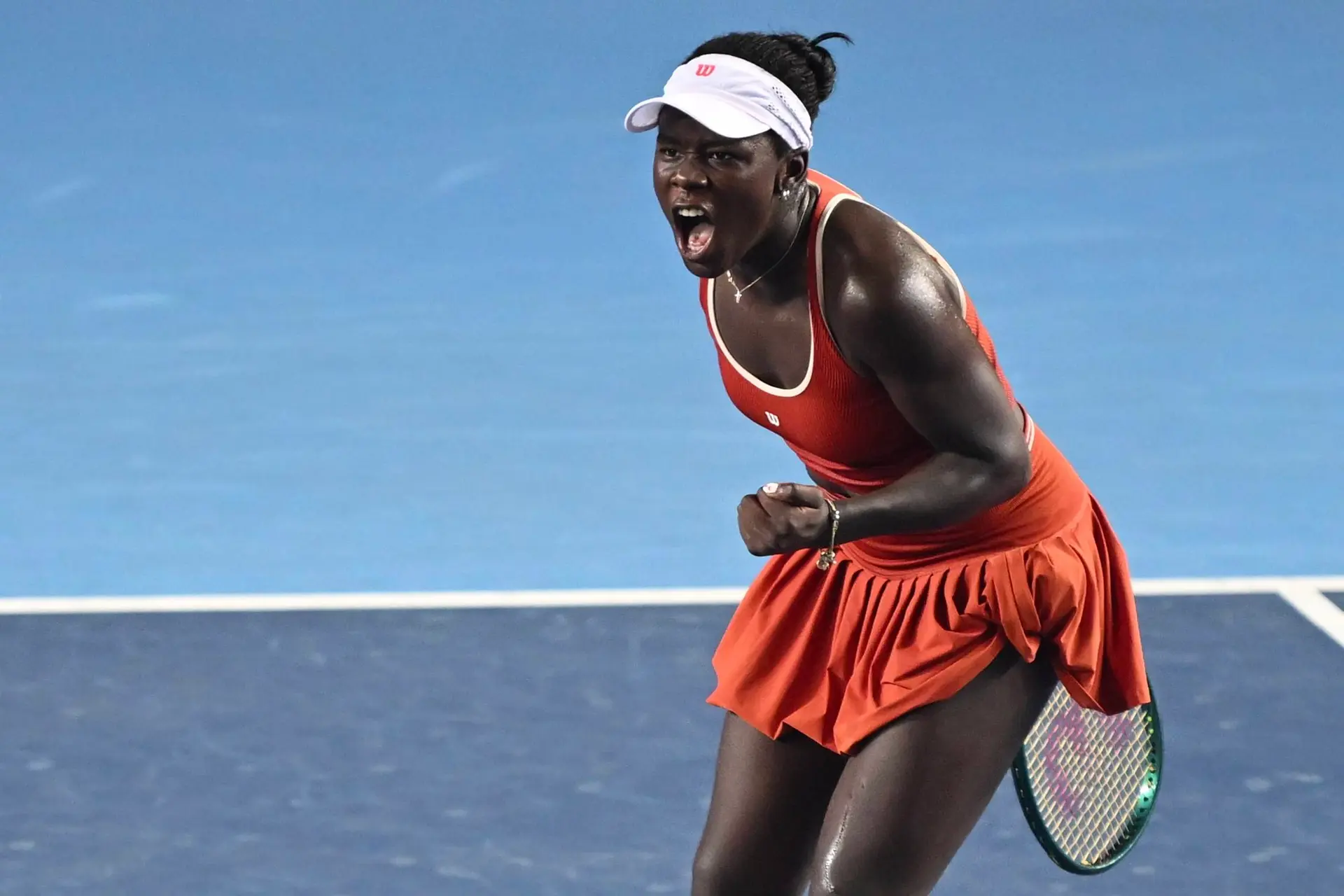
Victoria Mboko's coach, Nathalie Tauziat, has played a decisive role in one of the most striking breakthroughs of the 2025 WTA season. A former world No. 3 with a reputation built on tactical intelligence and longevity, Tauziat has applied a measured, methodical approach to Mboko’s transition from junior promise to elite professional contender.
Mboko’s rise during the 2025 season was rapid but carefully constructed. Starting the year ranked outside the Top 300, the Canadian steadily accumulated match experience and confidence through early ITF success before making the jump to the main tour. Her progression reflected a balance between physical power and growing tactical awareness, a combination that allowed her to compete consistently against higher-ranked opponents.
“Victoria did something incredible by winning in Montreal, and now we have to set even bigger objectives,” the former Wimbledon runner-up said in an interview with Clay Magazine. “She is top-20 in the world, but she needs to improve her game further,”
The breakthrough moment arrived at the National Bank Open in Montreal, where Mboko delivered a landmark title on home soil. The WTA 1000 victory, achieved against a draw that included multiple Grand Slam champions, instantly altered her career trajectory. It also established her as the new reference point for Canadian women’s tennis, surpassing more established names in the national hierarchy.
By season’s end, Mboko had reached a career-high ranking of world No. 18, supported by a 62–14 win–loss record across all levels. Two WTA titles, five ITF trophies, and deep runs in several major tournaments confirmed that her rise was not the result of a single inspired week, but of sustained performance across the calendar.

Montreal, planning, and staying grounded
Despite the scale of the achievement, Tauziat emphasized that the Montreal result did not fundamentally alter the team’s internal approach. The tournament had been identified as an important opportunity well in advance, and expectations were managed within a broader developmental framework rather than framed as a once-in-a-lifetime chance.
“No, absolutely not. The tournament in Canada is always important, and we knew she was going to get a wild card. Doing well there was one of the goals for this year, and she did way more than we expected. We were really happy. The key was thinking only about the next match, about what comes next, and she did what she did.”

From Tauziat’s perspective, the magnitude of the title became clear only in hindsight. At the beginning of the season, the emphasis remained on incremental steps rather than bold predictions, even as Mboko’s level continued to rise week after week. “If someone had told me she was going to win a big tournament like this at the beginning of the year, I would’ve probably said: ‘Listen, we have to go step by step.’ But she did this amazing thing, and now we need to set even bigger objectives, for sure. She is top 20 in the world, but she needs to improve her game further.”

Victoria Mboko proudly boasting the Canadian flag while holding trophy after winning the 2025 Canadian Open
Development priorities and the modern WTA landscape
Looking beyond immediate results, Tauziat has identified comprehensive development as the central focus of Mboko’s next phase. Technical refinement, physical gains, and attention to movement remain ongoing priorities as the Canadian adapts to the demands of a longer and more physically intense tour. “Well, she has to work on many aspects — serve, forehand, backhand, same things as usual, we have to improve her game as a whole. Also, she needs to get better physically, small details when it comes to movement. We’ve got time.”
Tauziat also situates Mboko’s progress within a broader evolution of the women’s game. Increased physicality and power have reshaped the circuit, while the depth of competition and expanded calendar have made sustained success more challenging than in previous eras.
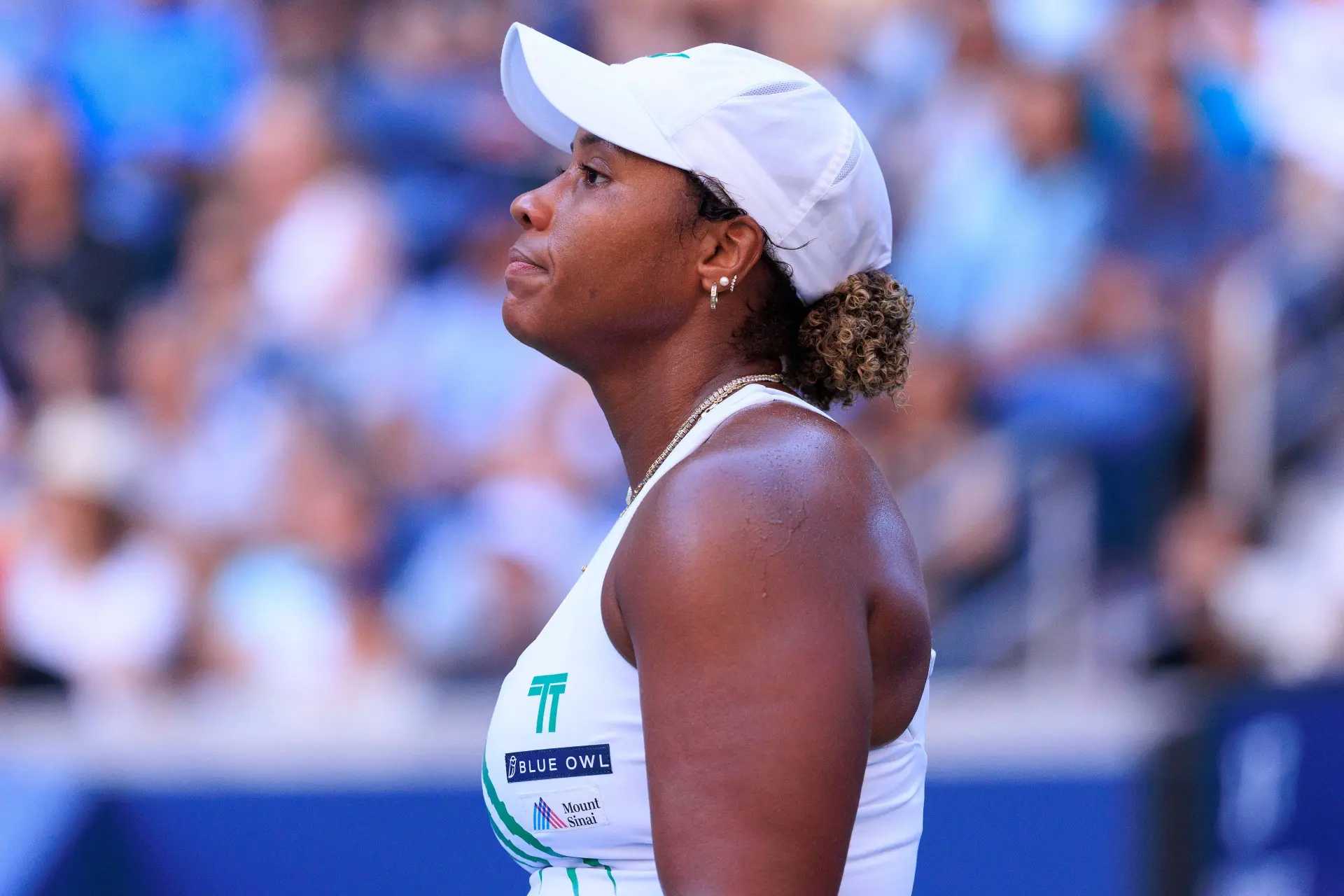
“The girls are better physically than before and they hit the ball stronger, but I don’t think they play so smart sometimes, that’s the change in my opinion. The circuit as a whole is more difficult compared to before — more tournaments, longer tournaments… It’s different.”
When asked about today’s WTA landscape and the absence of a single dominant rivalry (like Sinner-Alcaraz in men’s side), Tauziat pointed to competitive balance as a strength rather than a weakness, both for spectators and for the sport’s overall appeal. “The stadium was completely full for the Montreal final, people really enjoyed it. I don’t think it’s a disadvantage. People don’t know who is going to win… But on the men’s side you don’t know too.”
Her appreciation for the current generation extends to several players whose mentality and versatility stand out, reflecting qualities she values both as a former player and as a coach shaping the next wave. “I like the mentality of Coco Gauff. She is a fighter on the court. I saw her final at the French Open, she played really intelligently,” said the French coach. “I don’t know Emma Navarro personally, but I like her game — she can do everything. Also, Jasmine Paolini, I like her temper. I enjoy watching a lot of players.”


Cristhián AvilaTennis Journalist
Cristhián Ávila is a tennis journalist based in Santiago, Chile, and has been part of the TennisUpToDate team since early 2023. He covers the ATP and WTA Tours as well as all four Grand Slams, producing breaking news, match reports, analysis, and regular liveblogs from major tournaments.
His reporting combines statistical analysis with clear explanation, helping readers understand tactical developments, player form, and broader storylines across the tour. Working fluently in both Spanish and English, Cristhián collaborates with an international editorial team and contributes to comprehensive global coverage. As part of his work, he has conducted interviews and media interactions with leading figures in the sport, including Caroline Wozniacki and John McEnroe.
In his journalism, Cristhián places strong emphasis on careful sourcing, editorial accuracy, and updating articles promptly when new, verified information becomes available. His coverage is grounded in research, context, and direct engagement with professional tennis.
claps 0visitors 0
Just In

Popular News

Latest Comments
- Does Sinner need that 4.5 mil? I doubt it. He can make that with three modelling gigs!😅🤣Rapunzel21-10-2026
- Did "People Magazine" purchase this website? This nonstop storyline is bullshit.
 mandoist21-10-2026
 - Listen... this is of no concern to anyone but these two. Deal with your own issues -- most of us have our own. Thanks, media, for these insignificant follow-ups which are meaningless.mandoist21-10-2026
- This is so very very sad, for all three of them. I truly thought they had an unbreakable bond, but life throws up so many differing challenges. Having your homeland suffering in such a terrible way, makes happiness lose out to guilt as well. Our thoughts are with them. X💔bjsexton20-10-2026
- I have lost all respect for Svitolina! Could she not have waited until he had played at the Paris Masters!!! She is selfish and don't give a damn about Gael. That is NOT how love is demonstrated Elina!!Rapunzel19-10-2026
- Perhaps convenient tennis tour sex is not a strong enough experience in which to base a marriage?mandoist19-10-2026
- Fight the Good Fight... Tennis (sports in general) need more Humans such as yourself.mandoist18-10-2026
- When is WTA going to mandate Genetic Testing (DNA) ???mandoist18-10-2026
- Hey, Dan... you just wake up from a coma? Regardless -- Thanks for the comedy this morning!mandoist18-10-2026
- Two Things: 1. Stop allowing these Spoiled Trust-Fund Elitists to behave badly. Your little hand-slaps do not deter them. 2. STOP the incessantly annoying "towel wiping" nonsense!!!!mandoist15-10-2026

Loading