After a week in which almost everything surrounding the WTA Finals seemed unnecessarily strange, Sunday brought something the tournament desperately needed. Actual tennis.
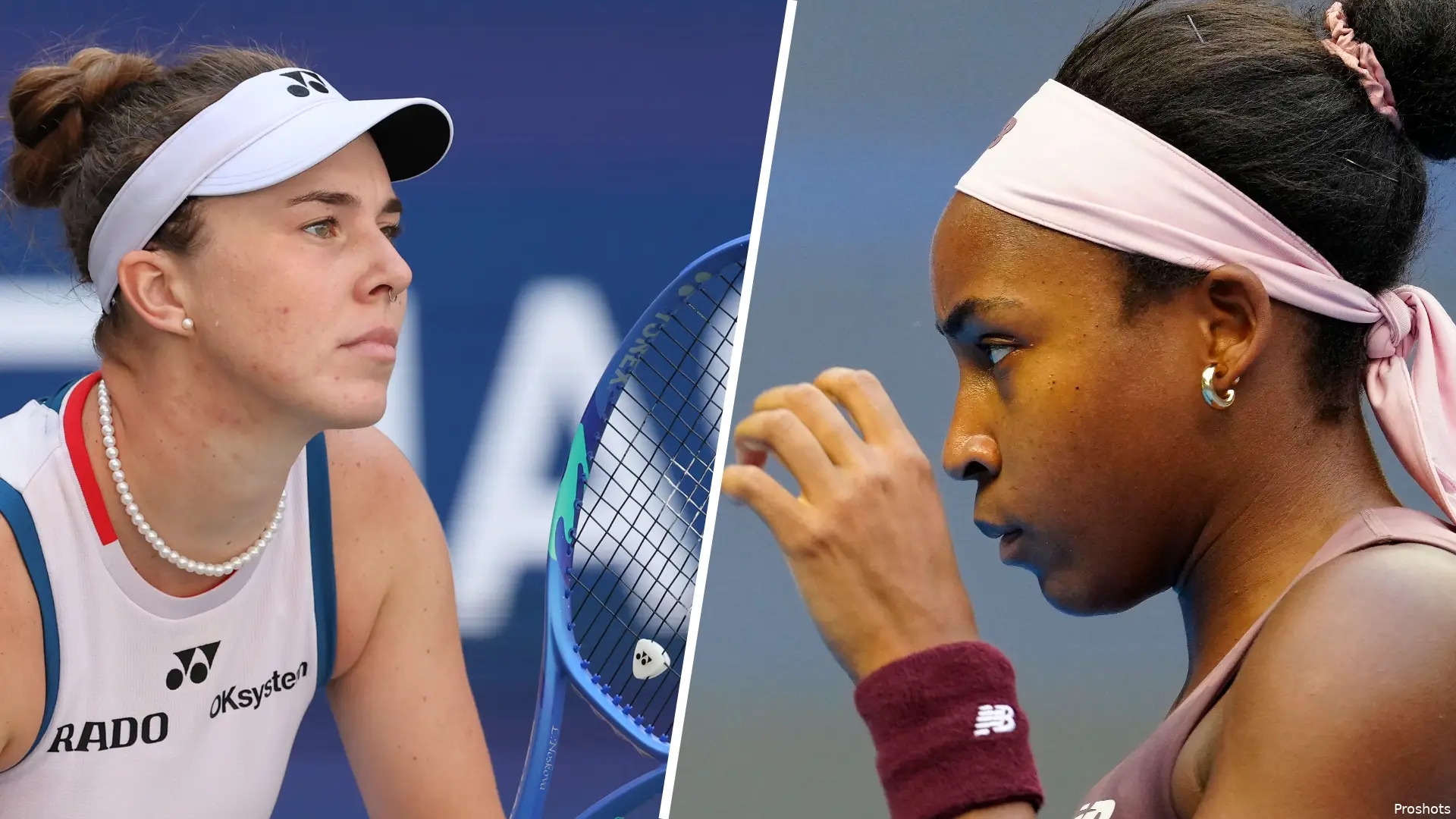
And, for the most part, it was pretty good tennis. Linda Nosková defeated Marta Kostyuk 6-2, 6-4 in a match that lasted 86 minutes. Coco Gauff needed considerably longer, two hours and 36 minutes, to get past Jessica Pegula 6-4, 6-7(5), 6-2. Neither match was a masterpiece, but both were entertaining enough to remind us why these eight women are here in the first place.
More importantly, the opening day offered several lessons about the state of women’s tennis, the wisdom of bringing the Finals to Indian Wells, and what happens when even the world’s best players reach the end of a season that seems determined to extract every last ounce of energy from them.
And there was one particularly satisfying development for those of us who picked Linda Nosková to win this tournament. So far, so good.
Lesson One: Indian Wells Shouldn't Be a One-Year Stand-In
Let’s begin with the crowd. The house was absolutely packed for Sunday’s opening matches. Not reasonably full. Not a respectable turnout for the first day of a tournament. Packed.
There was genuine excitement in the stands, the kind that comes from people who understand what they’re watching and have made a deliberate decision to spend their Sunday watching women’s tennis.
Very good news, they used Stadium 2 instead of Stadium 1 which was a smart move. Indian Wells gets primarily out of town fans for the tournament in March that people plan around so filling Stadium 1 up would've been much tougher this time of year with only a couple months notice
— Tennis Updates (@TennisUpdates26) November 8, 2026
This shouldn’t surprise anyone familiar with Indian Wells. The place has become one of the great tennis destinations in the world, and its fans have demonstrated for years that they appreciate women’s tennis every bit as much as the men’s game.
Which raises a rather obvious question. Why is this only a one-year arrangement? We know that Indian Wells is serving as a temporary home for the WTA Finals before the tournament moves to Charlotte. And I’m not suggesting that Charlotte can’t become a wonderful host. There are plenty of reasons to be optimistic about bringing a major women’s tennis event to that part of the United States.
But look at what Indian Wells already has. The facilities are extraordinary, the atmosphere is almost impossible to replicate, and the tournament has the enormous advantage of an established tennis culture. People travel there specifically to watch tennis. They understand the sport, appreciate its subtleties, and don’t need to be persuaded that a women’s match deserves their attention.
In a week when the WTA’s presentation of its premier year-end event has occasionally seemed more interested in fashion, awkward promotional exercises, and everything except the sport itself, Sunday’s crowd delivered a useful reminder.
Give people a great venue and great players, and they’ll come. Indian Wells may be a stopgap solution on the WTA’s calendar, but it might also be the best place in the world to stage this tournament. Sunday provided a pretty compelling argument for that proposition.
Lesson Two: Ten months of tennis looks like ten months of tennis
One of the things that struck me during both matches was how visibly tired these players looked. Not throughout every game, certainly. There were stretches of excellent tennis, moments of extraordinary shotmaking, and enough competitive intensity to make both matches worth watching.
But there were also periods when the movement seemed a fraction slower, the decision-making a little less sharp, and the mistakes more frequent than we would ordinarily expect from players of this caliber.
It looked like November tennis, played by women whose seasons have been going on since January.

Pegula looked fatigued.
That’s not an excuse for poor play. It’s simply a recognition of what professional tennis asks of its athletes.
These women have spent the better part of ten months traveling across continents, changing surfaces, adjusting to different climates and time zones, managing injuries, and trying to remain mentally engaged in a sport that rarely gives them more than a few days to recover from disappointment.
And unlike team sports, where an exhausted player can occasionally sit on the bench while someone else takes over, tennis offers no such luxury. When your legs feel heavy or your concentration begins to wander, you’re still the person who has to serve the next point.
Gauff and Pegula, in particular, produced a match that sometimes seemed to be as much about managing fatigue as imposing their games. Both women had impressive stretches. Both also had moments when the execution fell short of what they clearly intended.
Nosková and Kostyuk weren’t immune either, although their shorter match was a considerably cleaner affair. The WTA should pay attention to this. The Finals are supposed to celebrate the very best of women’s tennis, yet they arrive at the precise moment when many of the players are least capable of producing their very best tennis consistently.
There isn’t an easy solution, given the commercial and competitive demands of the calendar. But pretending the accumulated physical and mental exhaustion isn’t evident doesn’t help anyone.
Sunday was a reminder that even extraordinary athletes have limits.
Lesson Three: The better players won, and that’s not always a given
Here’s something that sounds obvious but deserves a little consideration. The two women who should have won Sunday’s matches actually won them.
Nosková was better than Kostyuk. Gauff was better than Pegula. Not necessarily on every point, and certainly not during every stretch of their respective matches. But over the course of the afternoon, the winners demonstrated greater consistency and, perhaps more importantly, a better ability to recognize and seize the moments that mattered.
That last quality is particularly important at the WTA Finals. When eight elite players compete against one another, the margins are rarely enormous. Everyone can hit winners. Everyone can serve well enough to make life difficult for an opponent. Everyone has the ability to produce fifteen or twenty minutes of breathtaking tennis.
The difference is often what happens when a match reaches a moment that demands something more than another good forehand.
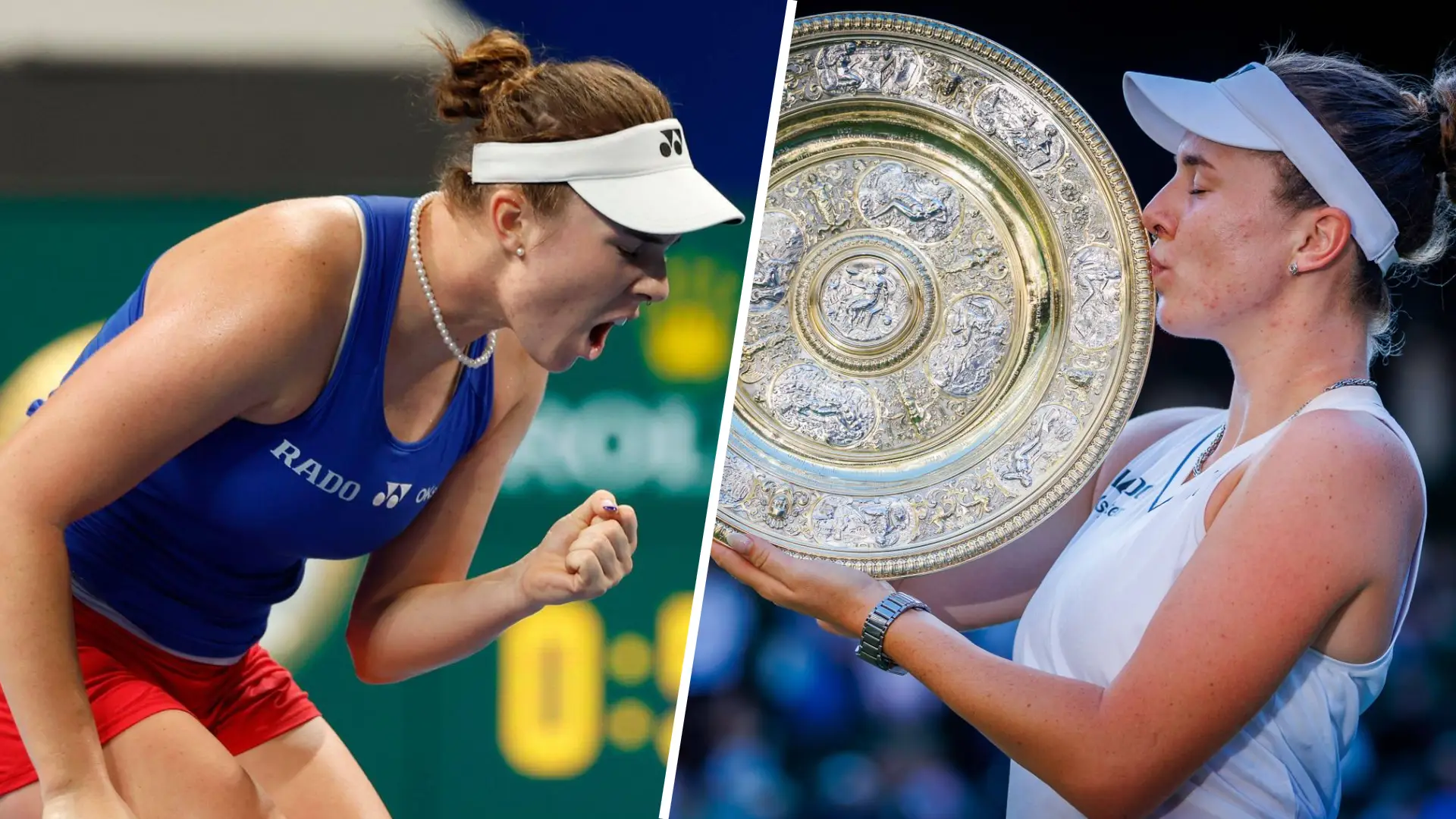
Nosková was particularly impressive in this respect. I’ve been arguing that she has a legitimate chance to win this tournament, despite the fact that doing so would constitute a considerable upset. What I liked about Sunday’s performance wasn’t simply that she won in straight sets. It was that she seemed to understand exactly what the match required.

Put some respect on Noskova.
Kostyuk is a dangerous opponent, capable of producing explosive tennis when she finds her rhythm. Nosková never allowed that rhythm to become the defining feature of the contest. She maintained enough pressure, kept her own game sufficiently organized, and made sure that Kostyuk’s opportunities remained opportunities rather than turning into momentum.
That’s how you win matches at this level, particularly when neither player is operating at absolute peak efficiency.
Gauff’s victory was a different kind of accomplishment. Losing a second-set tiebreak after winning the opening set can be an unpleasant experience, especially against someone as experienced and resourceful as Pegula. It would have been easy for Gauff to become frustrated or allow the match to drift away from her.
Instead, she took control of the deciding set. That 6-2 third set tells us quite a lot about Gauff’s ability to respond when the circumstances become uncomfortable. She didn’t play perfect tennis, but she found the necessary level when it mattered most.
Pegula had her chances. She was good enough to extend the match and make Gauff work considerably harder than Nosková had to work against Kostyuk. But extending a match and winning it are two very different accomplishments. On Sunday, Gauff had the better answers.
Lesson Four: Nosková looks like she belongs here
I want to spend a little more time on Nosková because I think her opening performance deserves attention beyond the scoreline.
When I picked her to win the WTA Finals, I understood that I was making a prediction most people would consider improbable. But there’s something about her game, and increasingly about her competitive temperament, that makes her particularly interesting in a tournament like this. She has the weapons to trouble almost anyone. More importantly, she doesn’t always need to produce spectacular tennis to win. That’s a distinction that matters enormously in a round-robin competition, where managing your energy and finding ways through difficult matches can be just as important as producing a single brilliant performance.
Against Kostyuk, she looked comfortable with the occasion. She didn’t appear overwhelmed by the significance of playing in the Finals, and she didn’t seem particularly interested in making the match more complicated than necessary. There’s a maturity in that approach.
We’ve seen plenty of talented young players arrive at major events determined to prove they belong by attempting increasingly ambitious shots. Sometimes it works. More often, it creates the kind of inconsistency that better opponents eventually exploit.
Nosková appeared content to let her tennis establish her credentials. Of course, one victory doesn’t win a championship. The challenges ahead will be substantially greater, and the round-robin format has a way of punishing anyone who becomes too comfortable after an impressive opening performance. But if you’re looking for a player who could emerge from this tournament with a dramatically enhanced reputation, Sunday’s evidence supports keeping Nosková very high on the list. I’m certainly not abandoning my prediction now.
Lesson five: The WTA needed Sunday more than it realized
Perhaps the most encouraging lesson from the opening day had little to do with the results. After the strange buildup to this tournament, the WTA desperately needed the conversation to return to tennis.
The controversy over microphones at practice courts, the absence of a traditional group photograph amid the understandable sensitivities involving Ukrainian, Russian, and Belarusian players, and that peculiar individual fashion shoot all contributed to an atmosphere that felt oddly disconnected from what should be one of the sport’s great celebrations.
I wrote before the tournament that the WTA seemed to be experiencing a particularly troubling moment in its leadership and presentation of the women’s game. I haven’t changed my mind about that.
But Sunday demonstrated something important. The players remain the WTA’s greatest asset, and when they’re allowed to do what they do best, the sport can still produce a compelling spectacle. A packed Indian Wells crowd watched four terrific competitors give everything they had, even if their bodies occasionally reminded us how long the season has been.
Read also

Two deserving players won. Two others fought hard enough to make their opponents earn those victories. And the tournament finally began to feel like the significant sporting occasion it was always supposed to be. There will be better tennis as the week progresses, or at least I hope there will be. There will undoubtedly be surprises, and the physical demands of playing elite opponents in quick succession will become increasingly apparent.
But for one Sunday afternoon, the WTA Finals managed to escape the distractions surrounding them. The tennis was imperfect, the atmosphere was terrific, and the results made sense. After the week we’ve just endured, I’ll happily take all three.

Aron SolomonGuest Author
A Pulitzer Prize-nominated journalist for his groundbreaking op-ed in The Independent exposing the NFL’s “race-norming” policies, Aron Solomon, JD, is a globally recognized thought leader in law, media, and strategy.
As Chief Strategy Officer for AMPLIFY, he leverages his deep expertise to shape the future of legal marketing. Aron has taught entrepreneurship at McGill University and the University of Pennsylvania and was honored as a Fastcase 50 recipient, recognizing him among the world’s top legal innovators. A prolific commentator on law, business, and culture, his insights regularly appear in Newsweek, The Hill, Crunchbase News, and Literary Hub.
He has also been featured in The New York Times, Fast Company, Fortune, Forbes, CBS News, CNBC, USA Today, ESPN, TechCrunch, BuzzFeed, Venture Beat and countless other leading global media outlets. We are proud to have Aron on board at TennisUpToDate, where his deep tennis expertise enriches the site with sharp, original columns that connect the sport to wider cultural debates.
claps 0visitors 0
Just In

Popular News

Latest Comments
- Vukov is doing this to Lena... AGAIN!!!!! WTA's autonomous collective should be dismantled for allowing Vukov to re-emerge from his hand-slapping suspension. Just ask WTA employees how that's been going lately as they witness his continued verbal abuses. Women's Pro Tennis should start over.
 mandoist08-11-2026
- Can't help but suspect Vukov is back to his old self again. Thank you, WTA. Perhaps you can give them a "Battling Couple of the Year Award 2026" ??mandoist08-11-2026
- Wtf? Why is there no reason? And what about the men's?Bel08-11-2026
- One step by another step -- WTA continues to 'lose the plot'. Too many hi-tech microphones being installed at most venues!!! Remove them (especially those along the hallways, sidewalks, and pathways throughout the venues. Not to mention (most of all) remove the mic's from the Players/Coaches Box.mandoist06-11-2026
- Enough of her bullshit. Go marry someone.mandoist06-11-2026
- Don't you just love this young lady!? We fans often expect athletes to be supermen and superwomen, often forgetting that they WILL GET TIRED! I love Alex's perspective. Tiredness for an athlete should never be viewed as a negative, especially if you are healthy, taking care of your body and mental health and putting in the work. What a mature perspective. Good for you, Alex!Rapunzel05-11-2026
- Jess is absolutely correct! But the disrespect is a trait I have noticed in most of the Russian players. Mirra is good but very immature and lacks humility. Conceivable needs to get a handle on that!Rapunzel05-11-2026
- Having spent weeks and weeks through the years on tour, I can say with confidence that Conchita was (is) one of the very few who realize the surprising level of maturity (and sometimes lack of) which Mirra seems to have developed in such a demanding adult world of Pro-Tennis. While at the same time reminding herself (Conchita, that is) that Mirra is still young and developing mentally and physically. The general public may forget at times, or not at all realize, these modern era young athletes do not have a 'normal' Youth. It's a major sacrifice, among countless sacrifices, these athletes must make. People who blow-off that fact are ignorant and unfair when they blurt out, "They choose fame so they have to put up with the intrusions on their lives". No, they do not.mandoist05-11-2026
- Okay... someone with a camera was EAVESDROPPING on a private conversation. Shouldn't that be the point of discussion here? Regardless of the sensationalist crap by media, Pegula (and anyone) has a right to an opinion. There used to be an expectation that private conversations were respected, regardless of 'stardom' and whatever other defensive excuses media tries to shove in our faces. Boo-hoo if feelings are hurt. BTW: Having been employed at various tourney venues, etc., I can't tell you how nasty and offensive players can be when discussing their opponents and colleagues... in "private". Well, I could, but won't. I also challenge anyone to deny what Jessica said is false.mandoist05-11-2026
- Vacherot is Mongasque, rather than Swiss. The tournament was Swiss :DTrwd7702-11-2026
