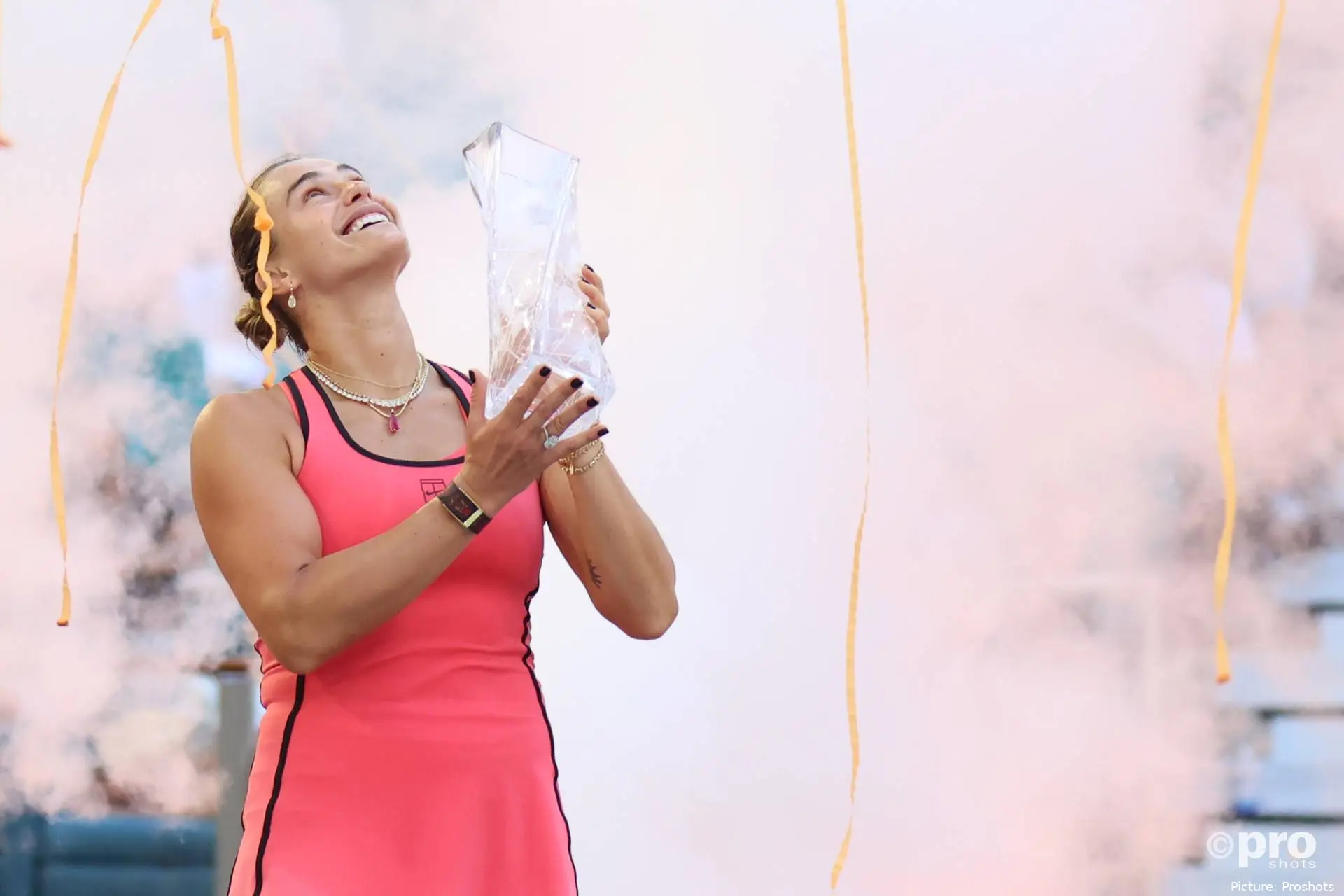
Aryna Sabalenka has welcomed the WTA's decision to introduce equal prize money across all combined WTA 1000 events from 2027, describing the long-awaited change as something players have been pushing for. The world No. 2 made her comments after beginning her China Open campaign in Beijing, where she defeated Renata Zarazua 6-1, 6-3 in her first match since the US Open.
The announcement means women will receive the same prize money as men at every combined 1000 event from next season. Indian Wells, Miami, Madrid and Beijing already met the equal-pay commitment, while Rome, the Canadian Open and Cincinnati will now join them from 2027.
The development represents the completion of a pathway announced by the WTA in 2023, when the tour set 2027 as its target for equal prize money at combined WTA 1000 and 500 events. The latest decision therefore marks a significant change to the financial structure of some of the biggest tournaments outside the Grand Slams.
Sabalenka was also confirmed as one of six WTA representatives on the newly formed Grand Slam Players' Council, alongside Elena Rybakina, Jessica Pegula, Elina Svitolina, Iva Jovic and Maria Sakkari. The Belarusian therefore enters the final part of the season with a more direct role in representing players as the sport continues to address issues around prize money and player interests.
Sabalenka welcomes equal prize money after Beijing return
Asked how much the equal-pay commitment means to the players, Sabalenka was unequivocal about her support for the move.
“Of course, I'm happy with that. This is something we've been pushing for. I feel like we all deserve to be paid equally," the world No. 2 said in press conference. "This is good news. I'm pretty sure all of the players are happy with that. I don't know about men, but all of the women are super happy with that.”

Aryna Sabalenka and Elena Rybakina pictured after Elena Rybakina wins the 2026 Women’s U.S. Open
The timing of the announcement also gives the decision added relevance for Sabalenka herself. Beijing is one of the combined WTA 1000 events that already offers equal prize money, with the tournament featuring a $9.4 million total purse this year. Sabalenka entered the event as the No. 2 seed and opened her campaign with a straightforward victory over Zarazua.
The China Open is also one of the most important stops remaining on the WTA calendar. It is the second-to-last WTA 1000 event of the season and features a 96-player singles draw, with the majority of the world's top players returning to competition after the US Open.
For Sabalenka, the Beijing campaign comes with another objective beyond the tournament itself. She has already qualified for the WTA Finals, but remains in the final stretch of a season in which she has continued to occupy a central position at the top of the women's game.
A new role for Sabalenka in player representation
The equal prize money announcement was not the only major development Sabalenka was asked about in Beijing. The 28-year-old is also part of the newly established Grand Slam Players' Council, giving her a formal role in discussions concerning the players and the sport's biggest events.
Sabalenka described the creation of the council as something players had needed for a long time and welcomed the opportunity to have their views represented more directly.
“It's amazing. This is something that we probably all needed for so long. Now we have our council. We have our opinion to throw in, to transfer the opinion of the players. This is something amazing. This is something definitely to improve everything in the future.”
Read also
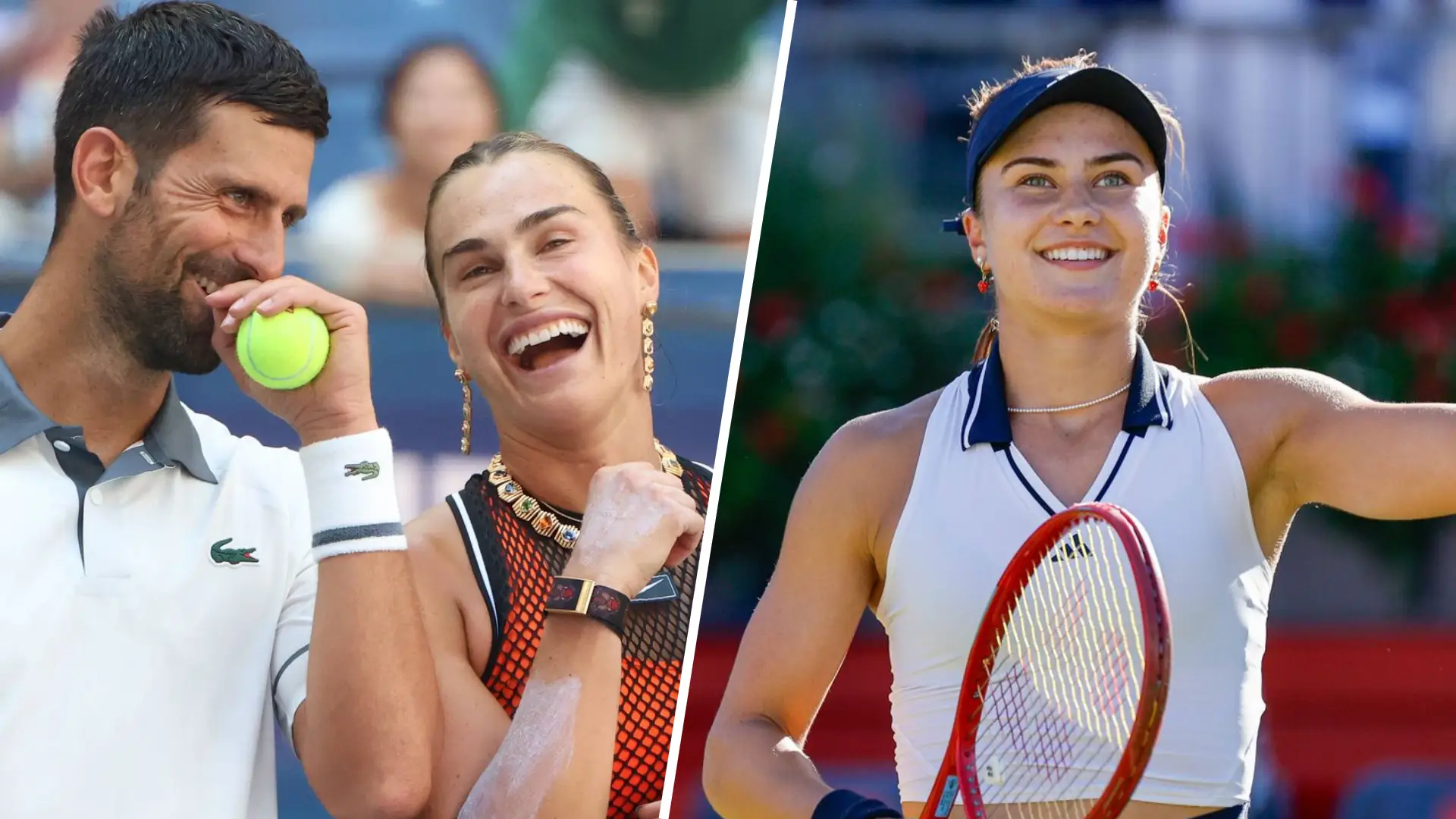
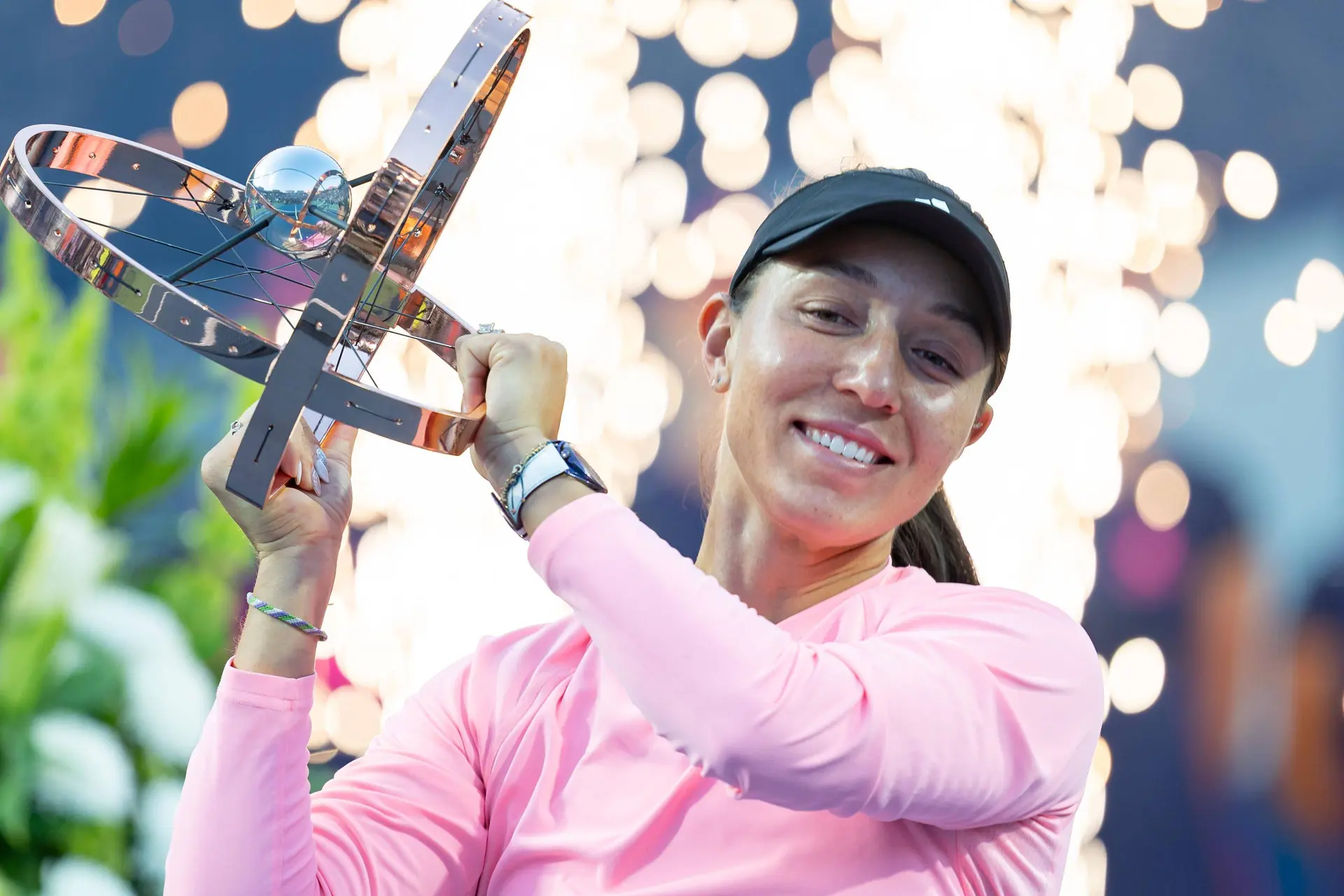
The development comes after Sabalenka and other leading players had publicly pushed for greater player representation and a larger share of Grand Slam revenues.
For now, however, her attention is back on court. After opening the China Open with a win over Zarazua, Sabalenka will continue her Beijing campaign while the WTA's latest structural changes begin to take shape.
Equal prize money across the combined WTA 1000 events will not be fully implemented until 2027, but Sabalenka's reaction made clear where she stands on the change: for the players, it is a step they have been waiting for.

Cristhián AvilaTennis Journalist
Cristhián Ávila is a tennis journalist based in Santiago, Chile, and has been part of the TennisUpToDate team since early 2023. He covers the ATP and WTA Tours as well as all four Grand Slams, producing breaking news, match reports, analysis, and regular liveblogs from major tournaments.
His reporting combines statistical analysis with clear explanation, helping readers understand tactical developments, player form, and broader storylines across the tour. Working fluently in both Spanish and English, Cristhián collaborates with an international editorial team and contributes to comprehensive global coverage. As part of his work, he has conducted interviews and media interactions with leading figures in the sport, including Caroline Wozniacki and John McEnroe.
In his journalism, Cristhián places strong emphasis on careful sourcing, editorial accuracy, and updating articles promptly when new, verified information becomes available. His coverage is grounded in research, context, and direct engagement with professional tennis.
claps 0visitors 0
Just In


Popular News
Latest Comments
- Does Sinner need that 4.5 mil? I doubt it. He can make that with three modelling gigs!😅🤣Rapunzel21-10-2026
- Did "People Magazine" purchase this website? This nonstop storyline is bullshit.
 mandoist21-10-2026
 - Listen... this is of no concern to anyone but these two. Deal with your own issues -- most of us have our own. Thanks, media, for these insignificant follow-ups which are meaningless.mandoist21-10-2026
- This is so very very sad, for all three of them. I truly thought they had an unbreakable bond, but life throws up so many differing challenges. Having your homeland suffering in such a terrible way, makes happiness lose out to guilt as well. Our thoughts are with them. X💔bjsexton20-10-2026
- I have lost all respect for Svitolina! Could she not have waited until he had played at the Paris Masters!!! She is selfish and don't give a damn about Gael. That is NOT how love is demonstrated Elina!!Rapunzel19-10-2026
- Perhaps convenient tennis tour sex is not a strong enough experience in which to base a marriage?mandoist19-10-2026
- Fight the Good Fight... Tennis (sports in general) need more Humans such as yourself.mandoist18-10-2026
- When is WTA going to mandate Genetic Testing (DNA) ???mandoist18-10-2026
- Hey, Dan... you just wake up from a coma? Regardless -- Thanks for the comedy this morning!mandoist18-10-2026
- Two Things: 1. Stop allowing these Spoiled Trust-Fund Elitists to behave badly. Your little hand-slaps do not deter them. 2. STOP the incessantly annoying "towel wiping" nonsense!!!!mandoist15-10-2026

Loading