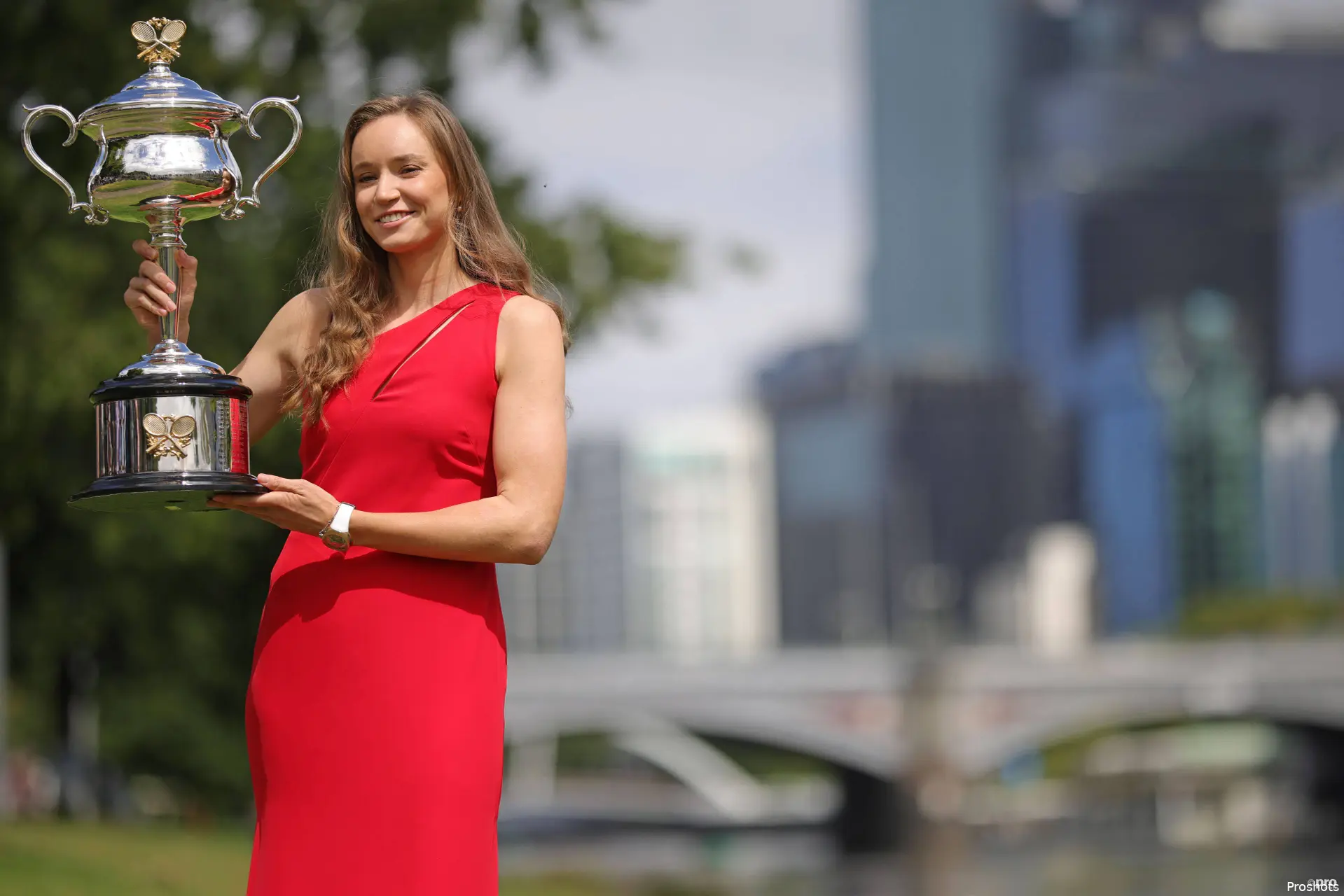
Elena Rybakina is approaching a point that could change the way her career is remembered. The reigning Australian Open champion is currently No. 2 in the world and, with the WTA No. 1 ranking within reach, she could soon take the top spot from Aryna Sabalenka after the Belarusian's long reign.
But her career has unfolded during an unusually competitive era, with several players capable of beating her at the biggest tournaments. That raises an intriguing question: what would Rybakina's career look like if she had played in a different generation? Would she have won more Grand Slams? Would she have been a dominant No. 1? Or would the same strengths and weaknesses have followed her regardless of the era?
That possibility adds another layer to a career that has already produced two Grand Slam titles, three Grand Slam finals and a sustained presence near the top of the rankings. Rybakina has reached this position through a game built around one of the biggest serves in women's tennis, but her numbers extend well beyond that weapon.
At 27, she is also entering a different stage of her career. The question is no longer whether Rybakina can challenge the best players in the world. She has already done that. The more interesting question is how her results, consistency and peak level compare with what elite players have produced across different eras.
Read also
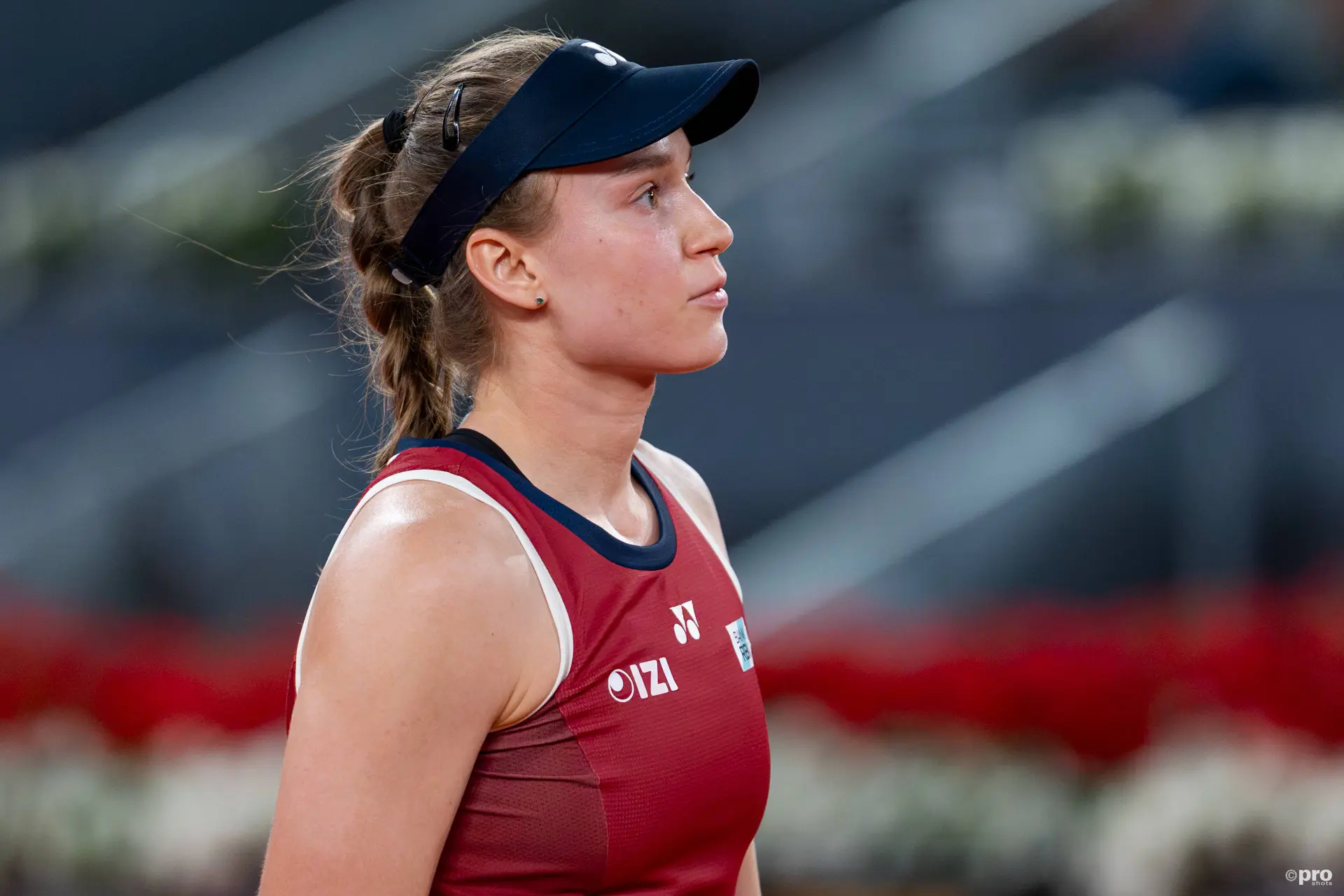
Her current position provides a useful starting point. Rybakina is not chasing an established hierarchy from the outside; she is now directly involved in deciding who controls the top of the WTA. With Sabalenka defending a huge number of points later in the season, the next few weeks could define the balance of power at the summit.
Elena Rybakina's career at a glance
| Achievement | Record |
| Career high | No. 2 |
| Grand Slam titles | 1 |
| Grand Slam finals | 3 |
| Wimbledon | Champion, 2022 |
| Australian Open | Runner-up |
| French Open | Best result |
| US Open | Best result |
| WTA titles | 13 |
| Career prize money | $5,225,125 |
| Weeks at No. 1 | 0 |
Rybakina's numbers already put her in rare company
Rybakina's case for an era-spanning comparison starts with a weapon that has remained remarkably consistent throughout her rise: the serve. The Kazakh was the WTA's ace leader in 2025, producing 516 aces across 76 matches, an average of 6.8 per match. That total was 143 more than Linda Noskova's 373 and 214 ahead of Sabalenka, while Rybakina also won 82.5% of her service games.
The 516 aces were not simply a product of playing a large number of matches. Rybakina's 2025 season placed her alongside some of the biggest servers of the past two decades: Karolina Pliskova hit 517 aces in 2015, while Serena Williams produced 484 in 2012 and 480 in 2013. Rybakina therefore joined a statistical group that includes several of the defining servers of the modern WTA.

Elena Rybakina, along with Kaorlina Pliskova, are the only players to have reached the 500 ace mark in a single season.
Her 2026 numbers have remained at an elite level. Rybakina continues to rank among the WTA leaders in aces, while her service-game win rate, first-serve points won and break-point performance underline why her serve is more than a source of cheap points. She can use it to dictate the first ball, open the court and shorten rallies before opponents have a chance to turn matches into physical battles.
But reducing Rybakina to a big server would miss much of what has made her one of the leading players of her generation. Her consistency at the highest level is perhaps just as remarkable.
Rybakina has spent three consecutive seasons inside the year-end Top 10 from 2023 through 2025, and she could arguably have achieved the same feat in 2022 had Wimbledon awarded ranking points. That tournament, which she won, was stripped of points following the decision to exclude Russian and Belarusian players.
How does Rybakina match up against the greats?
| Player | Rybakina's potential advantage | Opponent's advantage |
| Serena Williams | Height, serve, first-strike power | Movement, return, mental strength |
| Maria Sharapova | Serve + power | Experience, return, competitiveness |
| Justine Henin | Power, serve | Variety, movement, tactical intelligence |
| Kim Clijsters | Serve + weight of shot | Movement and defence |
| Simona Halep | Power | Movement, consistency |
| Venus Williams | Similar aggressive profile | Experience, movement |
She now owns 13 WTA singles titles from 26 finals, giving her a 50 percent conversion rate. Her résumé includes Wimbledon 2022, the Australian Open 2026 and the 2025 WTA Finals, as well as WTA 1000 titles at Indian Wells and Rome in 2023. She has also reached seven WTA 1000 finals, underlining how frequently she has been present in the latter stages of the biggest tournaments outside the Grand Slams.
Her record against elite opposition is another indication of her level. Rybakina is 39-29 against Top 10 opponents, a 57 percent winning rate, while she is 9-9 against players ranked No. 1. Her two most significant rivalries have come against Sabalenka and Iga Swiatek, against whom she owns records of 7-10 and 6-7 respectively. Negative head-to-head records aside, few players can point to multiple victories over both multi-time Grand Slam champions.
She has also passed the 400-win mark on tour and accumulated close to $30 million in career prize money, placing her among the top 15 highest-earning female tennis players in history With several years potentially remaining at the top of the sport, both numbers should continue to rise.
More than a big server
Rybakina's height — she stands at 1.84 metres — naturally draws attention to her serve, but her game is much more complete than the label suggests. She is particularly dangerous when she can take control of a rally early, using flat, powerful groundstrokes to attack both sides of the court.
Her backhand is one of the most intimidating shots on tour, capable of producing winners from deep positions without requiring a long build-up. The forehand remains the less reliable side of her game, particularly when she is forced to generate additional patience rather than dictate, but that weakness has not prevented her from developing into an effective all-court player.
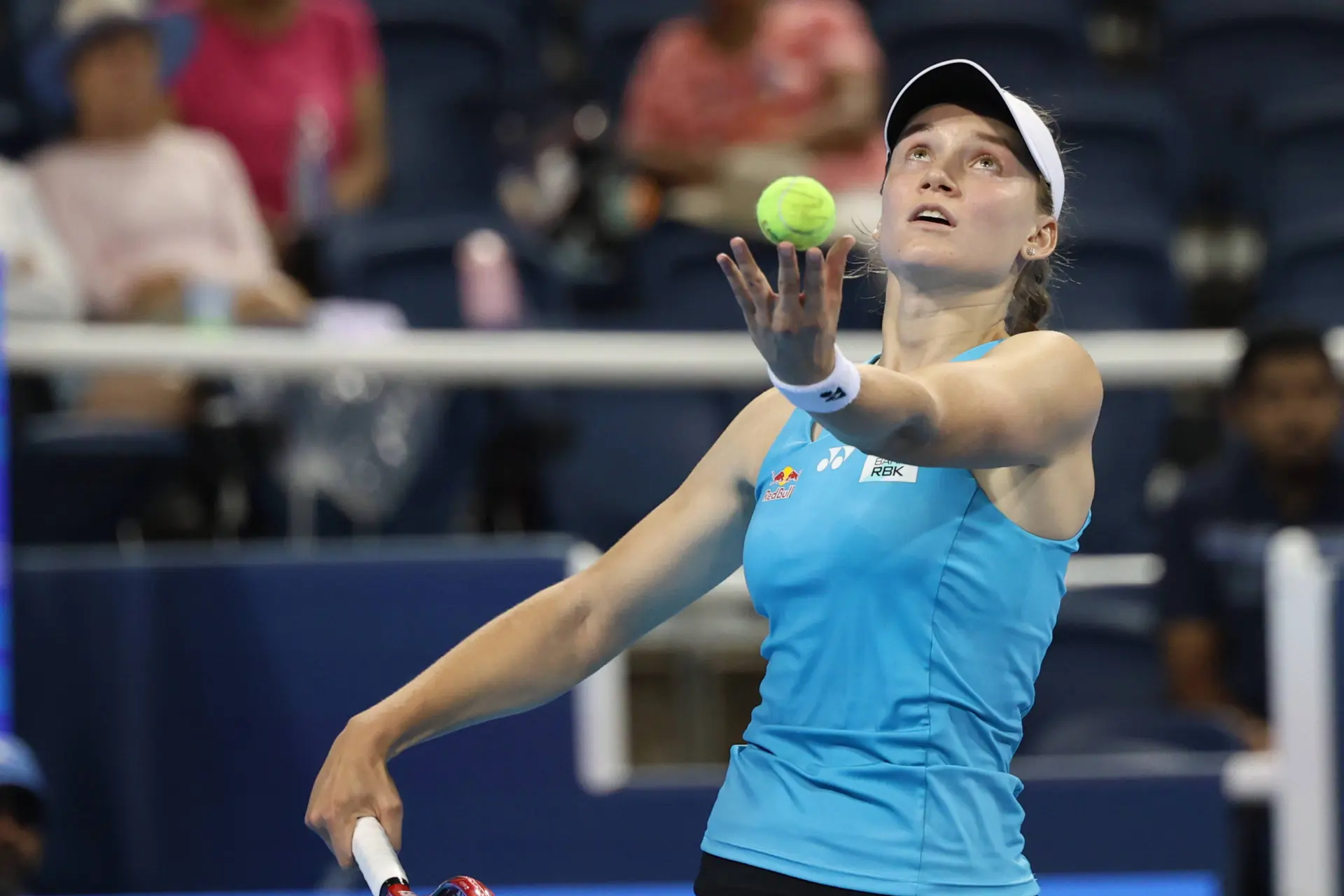
Her movement is also better than her height and power might suggest. Rybakina can defend effectively when necessary and has repeatedly shown that she can survive longer exchanges. Her clay-court résumé is perhaps the clearest evidence. She has won five titles on clay, including the 2023 Italian Open, while also reaching the semifinals in Madrid and the quarterfinals at Roland Garros.
That is a significant return on a surface traditionally considered less suited to players whose greatest weapons are the serve and first strike. Rybakina's ability to succeed on clay suggests that her game would not necessarily collapse in an era where points became longer and physicality more important.
It does, however, make the historical comparison more complicated. The modern WTA has more players capable of returning powerful serves, defending from deep positions and sustaining high-intensity rallies than previous generations. Courts have also generally become slower, reducing the advantage once enjoyed by pure first-strike players.
Rybakina has adapted to that environment. The question is what her numbers would have looked like before those changes became so pronounced.
Would Rybakina have dominated a faster WTA?
There is a strong argument that Rybakina's particular combination of height, serve and clean ball-striking would have been even more dangerous several decades ago.
Women's tennis became considerably more physical during the 1990s and 2000s, with players such as Venus and Serena Williams, Lindsay Davenport and Maria Sharapova demonstrating how devastating power could become when combined with elite athleticism. Rybakina would not have been unique in possessing a huge serve, but the combination of her delivery and her ability to attack from the baseline would have made her a particularly difficult matchup.
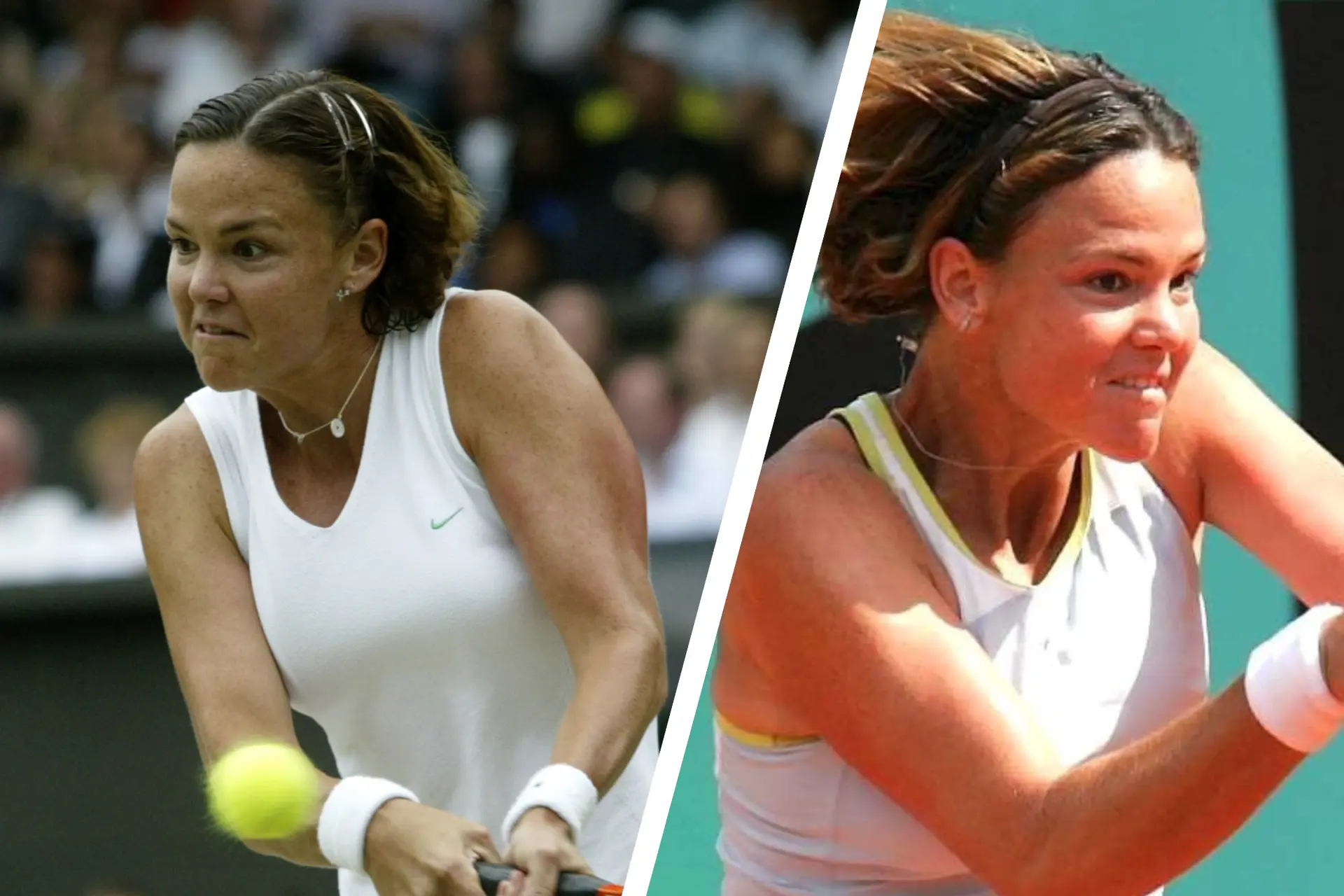
The faster conditions of previous eras could also have amplified her greatest strength. A player who can regularly win the first two or three shots of a rally becomes even more dangerous when the court rewards pace and penetration rather than giving opponents additional time to defend.
Wimbledon is perhaps the clearest example. Rybakina won the 2022 title and has not reached sanother final at the All England Club. For a player with her profile, that return is surprisingly modest. Her serve and flat groundstrokes appear almost tailor-made for grass, yet the modern surface has increasingly rewarded players capable of absorbing pace and constructing longer points.
That does not mean Rybakina would automatically have dominated Wimbledon in another era. Grass has changed, and opponents have evolved with it. But a faster version of the surface could have made it easier for her to turn her serve into short points, protect her service games and avoid the extended exchanges that can reduce the advantage of first-strike tennis.
Hard courts would likely have offered a similar advantage. Her two Grand Slam titles have come on grass and hard courts, and her best results outside Wimbledon have largely come on those surfaces. A faster hard-court environment would have placed even greater emphasis on the first serve, return-plus-one and early ball striking that underpin her game.
There is also an important counterargument. Rybakina is not simply a product of a slower modern game. The fact that she has accumulated five clay-court titles and consistently produced deep runs on the surface suggests that she possesses enough variety to survive outside her ideal conditions.
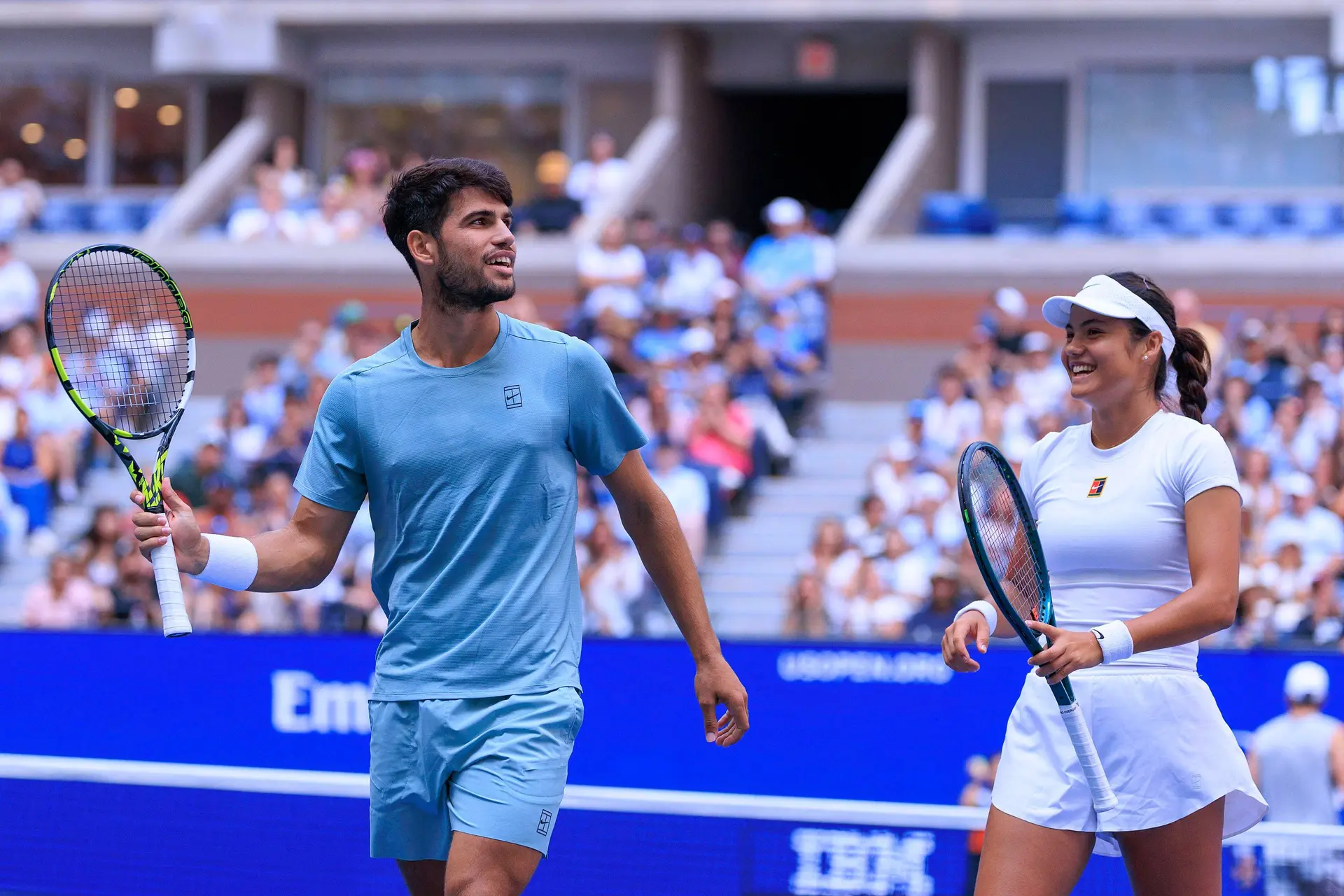
That may ultimately be the most important part of the historical comparison. Rybakina's biggest weapons — the serve, the backhand, the flat forehand and her ability to take the ball early — would almost certainly have been valuable in any era. What changes is how much those weapons would have been amplified by the conditions around her.
Rybakina still has time to make the comparison increasingly difficult. At No. 2 in the world, with the No. 1 ranking now within reach and another Grand Slam season ahead, her career is far from finished. The next few years could add more major titles, more weeks at the top and enough numbers to make the historical debate considerably less hypothetical.
For now, though, one conclusion already looks difficult to dispute: Rybakina would have been a dangerous player in almost any era. The real question is whether a different version of the WTA would have allowed her to turn that danger into an even bigger collection of trophies.
So, what would Rybakina's career look like?
Grand Slam potential: 3-5
Wimbledon: potentially 3 titles
Career ranking: likely No. 1 contender
Biggest variable: health
Rybakina probably wasn't born in the wrong era. She may simply have arrived in an era where the difference between being a Grand Slam champion and becoming a multiple Grand Slam champion is incredibly small.

Cristhián AvilaTennis Journalist
Cristhián Ávila is a tennis journalist based in Santiago, Chile, and has been part of the TennisUpToDate team since early 2023. He covers the ATP and WTA Tours as well as all four Grand Slams, producing breaking news, match reports, analysis, and regular liveblogs from major tournaments.
His reporting combines statistical analysis with clear explanation, helping readers understand tactical developments, player form, and broader storylines across the tour. Working fluently in both Spanish and English, Cristhián collaborates with an international editorial team and contributes to comprehensive global coverage. As part of his work, he has conducted interviews and media interactions with leading figures in the sport, including Caroline Wozniacki and John McEnroe.
In his journalism, Cristhián places strong emphasis on careful sourcing, editorial accuracy, and updating articles promptly when new, verified information becomes available. His coverage is grounded in research, context, and direct engagement with professional tennis.
claps 0visitors 0
Just In

Popular News
Latest Comments
- Does Sinner need that 4.5 mil? I doubt it. He can make that with three modelling gigs!😅🤣Rapunzel21-10-2026
- Did "People Magazine" purchase this website? This nonstop storyline is bullshit.
 mandoist21-10-2026
 - Listen... this is of no concern to anyone but these two. Deal with your own issues -- most of us have our own. Thanks, media, for these insignificant follow-ups which are meaningless.mandoist21-10-2026
- This is so very very sad, for all three of them. I truly thought they had an unbreakable bond, but life throws up so many differing challenges. Having your homeland suffering in such a terrible way, makes happiness lose out to guilt as well. Our thoughts are with them. X💔bjsexton20-10-2026
- I have lost all respect for Svitolina! Could she not have waited until he had played at the Paris Masters!!! She is selfish and don't give a damn about Gael. That is NOT how love is demonstrated Elina!!Rapunzel19-10-2026
- Perhaps convenient tennis tour sex is not a strong enough experience in which to base a marriage?mandoist19-10-2026
- Fight the Good Fight... Tennis (sports in general) need more Humans such as yourself.mandoist18-10-2026
- When is WTA going to mandate Genetic Testing (DNA) ???mandoist18-10-2026
- Hey, Dan... you just wake up from a coma? Regardless -- Thanks for the comedy this morning!mandoist18-10-2026
- Two Things: 1. Stop allowing these Spoiled Trust-Fund Elitists to behave badly. Your little hand-slaps do not deter them. 2. STOP the incessantly annoying "towel wiping" nonsense!!!!mandoist15-10-2026

Loading