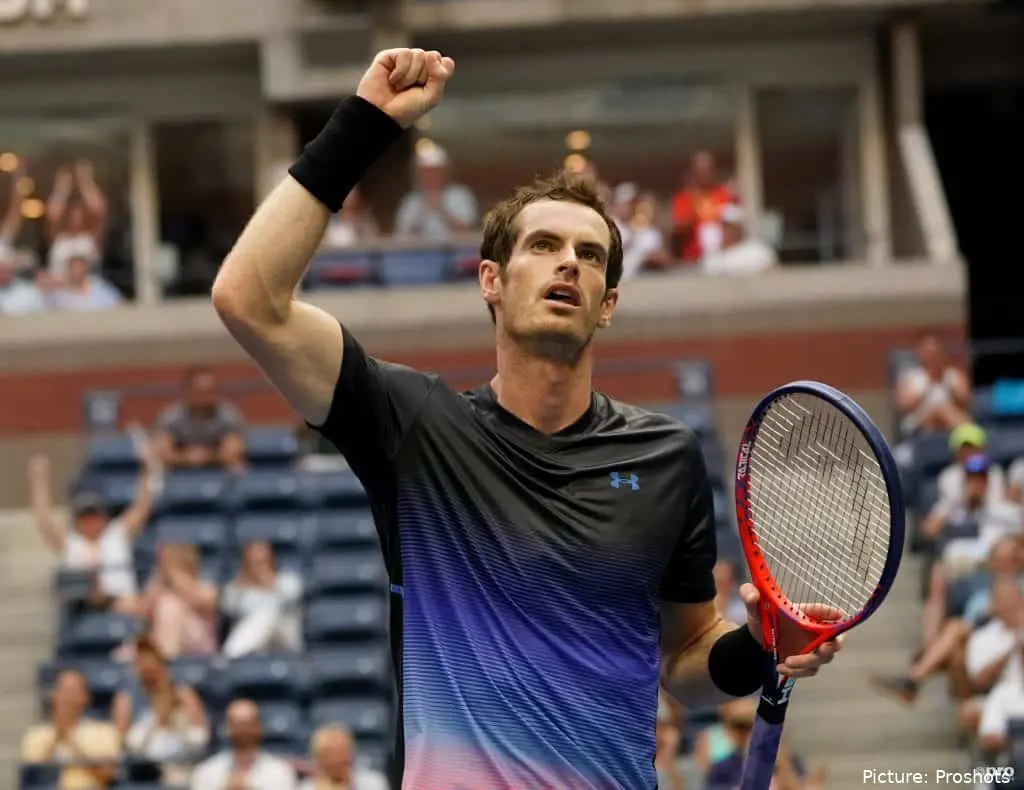
Andy Murray won three Grand Slam titles during the Federer-Nadal-Djokovic era. He also lost eight Grand Slam finals to those three players.
So what would his career have looked like if Federer, Nadal and Djokovic had never existed?The answer is almost certainly a much larger trophy cabinet — but working out exactly how much bigger it could have been is more complicated than simply handing Murray every Grand Slam final he lost.
But what would Murray's career have looked like if Federer, Nadal and Djokovic had never been part of his generation? The answer requires more than simply adding a few Grand Slam titles to his record. Murray would have faced different opponents, different ranking battles and potentially a very different psychological and physical trajectory.
By removing the three players who dominated his era, we can examine how much of Murray's relatively modest Slam tally was the result of his own limitations — and how much was simply the consequence of competing in one of the strongest generations in tennis history.
Andy Murray's career in numbers
| Achievement | Record |
| Career-high ranking | No. 1 |
| Grand Slam titles | 3 |
| Grand Slam finals | 11 |
| Australian Open finals | 5 |
| French Open finals | 1 |
| Wimbledon titles | 2 |
| US Open titles | 1 |
| Olympic singles gold medals | 2 |
| Masters 1000 titles | 14 |
| ATP Finals titles | 1 |
| Weeks at No. 1 | 41 |
Murray's early years
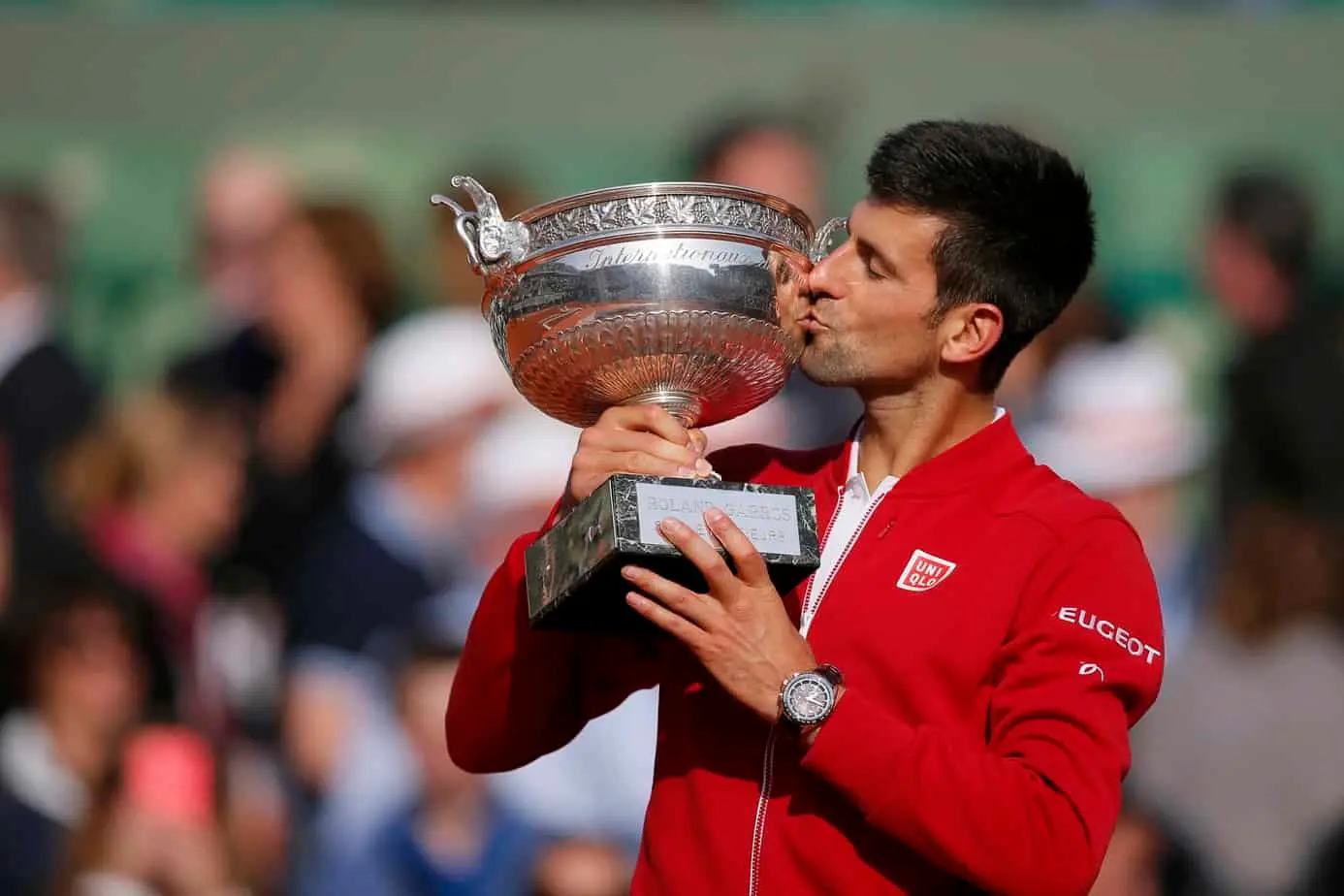
While the Big Three dominated for almost two decades, sharing practically all of the biggest titles between Roger Federer, Rafael Nadal and Novak Djokovic, few players were able to seriously challenge their dominance. Andy Murray emerged as perhaps the closest challenger, developing into a player capable of regularly pushing the three legends and eventually becoming world No. 1 himself.
Murray — born in 1987, the same year as Djokovic — was already standing out as a junior, winning the US Open junior title at 17 in 2004. The Briton was already earning his first Davis Cup appearances as a teenager, establishing himself as one of the names expected to become part of the future of British tennis.
His rise was rapid. At just 19, Murray became British No. 1 for the first time, moving ahead of Greg Rusedski and Tim Henman, who were still competing at a high level and ranked inside the top 50. Murray was showing that he was ready to move higher, and in early 2007 he made his first appearance inside the top 10 just weeks before turning 20.
Federer was already No. 1 and Nadal No. 2, while Djokovic was also in the middle of his rise and entered the top 10 just weeks after Murray. The Briton remained remarkably consistent throughout his career, finishing inside the top 20 for 12 consecutive seasons, including eight in which he finished inside the top four.
That consistency becomes particularly significant when considering the generation he faced: Murray was rarely outside the elite, but he was almost always competing for position behind one of three historically dominant players.

Andy Murray lost four times in the Australian Open final, all of them against Novak Djokovic.
The Grand Slam barrier: Federer, Nadal and Djokovic
Murray's three Grand Slam titles easily place him among the most accomplished players in tennis history, particularly considering that he had to compete against the three most dominant players the sport has ever seen. It took him several years to win his first major. After four Grand Slam final defeats and six semifinal losses, his breakthrough finally came at the 2012 US Open, where he defeated Novak Djokovic in the final.
Of Murray's first four Grand Slam finals, Federer was his opponent on three occasions, while the other came against Djokovic. Federer defeated him in the 2008 US Open final, the 2010 Australian Open final and the 2012 Wimbledon final. Djokovic then beat him in the 2011 Australian Open final. Before winning his first major, Murray had therefore already reached four major finals without lifting the trophy.

The semifinal stage was another recurring obstacle. Nadal defeated Murray in the 2011 French Open, Wimbledon and US Open semifinals, while Djokovic also repeatedly stood between him and Grand Slam finals. Murray was not simply competing against the Big Three in the final rounds; he often had to beat one of them simply to reach those rounds in the first place.
Yet these rivalries were not one-sided. Murray defeated Djokovic in the 2012 US Open final to win his first Grand Slam, then beat him again in the 2013 Wimbledon final to claim his second. He also defeated Federer in the 2012 Olympic gold-medal match at Wimbledon. Against Nadal, Murray's 2008 US Open semifinal victory took him to his first Grand Slam final, while he also recorded important wins over the Spaniard on hard courts.
That is what makes Murray's position in this era so interesting. He was good enough to beat all three players, including on the biggest stages, but not consistently enough to overcome them over an entire career. The difference between being a Grand Slam champion and becoming a dominant Grand Slam champion was often one of the three greatest players in history standing on the other side of the net.

The Window opens: Murray takes over in 2016
Murray's career began to change as the Big Three gradually became less dominant. He reached the Australian Open final in 2013, losing to Djokovic, before finally becoming Britain's first male Wimbledon champion in the Open Era later that year. Injuries then interrupted his progress, including a problem that forced him to miss Roland Garros and eventually the final part of the season.
He returned strongly and continued producing deep runs at the biggest tournaments. Murray reached the Australian Open final again in 2015, although Djokovic defeated him once more. By then, however, the balance at the top of the sport was beginning to change. Federer was no longer able to maintain his previous level throughout an entire season, while Nadal's consistency was increasingly affected by injuries.

Djokovic remained the dominant player and continued collecting major titles, but Murray was getting closer. He had already won eight Masters 1000 titles before claiming his first Grand Slam and continued adding significant titles to his résumé. The question was whether he could take control if the opportunity finally appeared.
That opportunity arrived in 2016. Federer missed most of the season because of injury, while Nadal struggled to maintain his previous level. Murray, meanwhile, produced the best tennis of his career. He reached the French Open final, won Wimbledon and then embarked on an extraordinary run during the second half of the season, winning the Olympics, China Open, Shanghai Masters, Vienna and Paris.
He arrived at the ATP Finals in London with the No. 1 ranking within reach and defeated Djokovic in the final to secure it. Murray finished the year with nine titles, including Wimbledon and Olympic gold, and a 24-match winning streak. For the first time in his career, Murray was not simply chasing the Big Three — he had become the dominant player on tour.
And that season provides perhaps the strongest evidence for the counterfactual. Once Federer and Nadal were no longer consistently operating at their peak and Djokovic's level dropped late in the year, Murray was capable of taking control of the entire tour. 2016 showed that Murray had the level to dominate when the Big Three were no longer operating at their best.
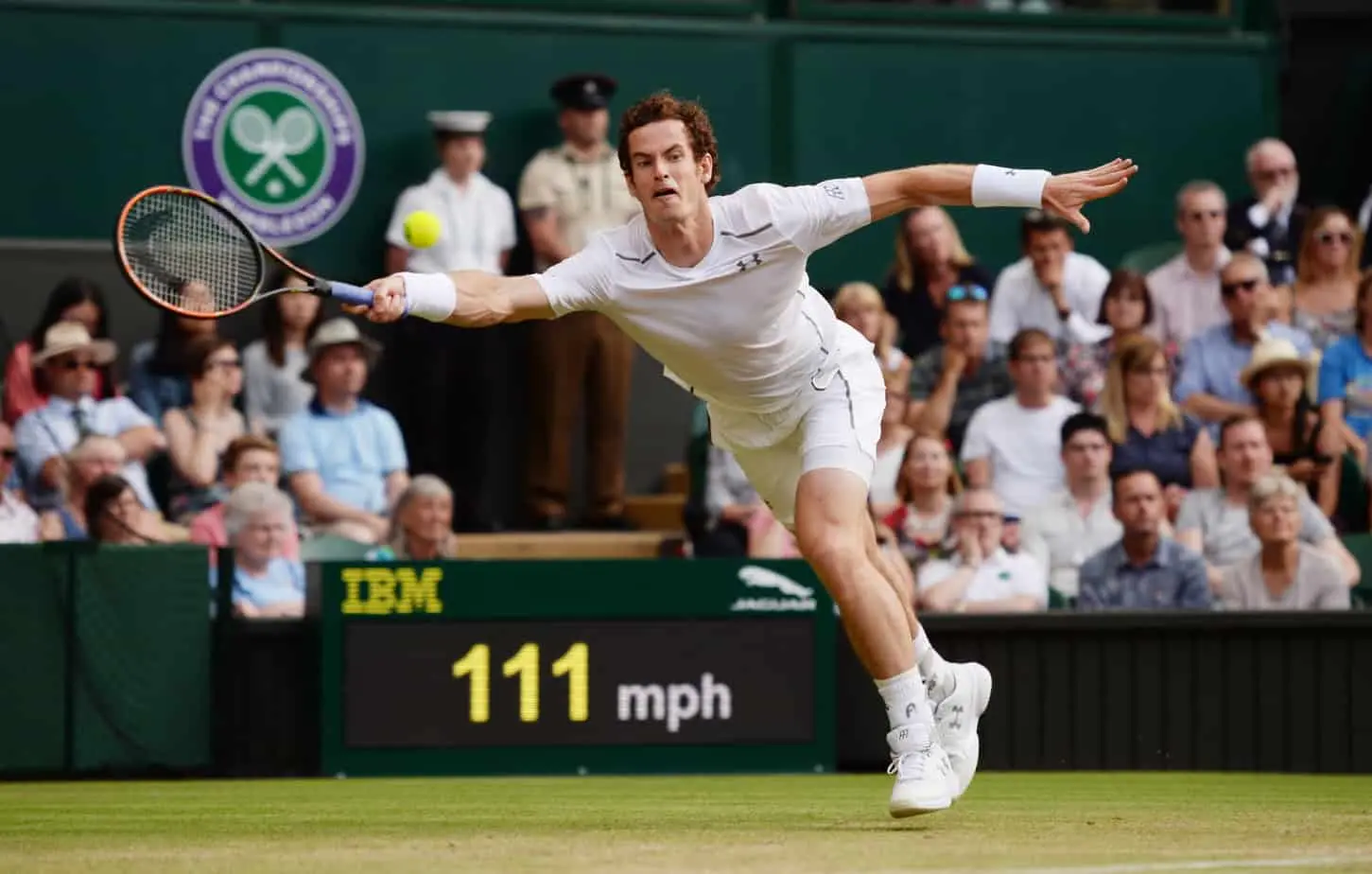
Grand Slam tournament finals: 11 (3 titles, 8 runner-ups)
| Result | Year | Tournament | Opponent | Score |
| Loss | 2008 | US Open | Roger Federer | 2–6, 5–7, 2–6 |
| Loss | 2010 | Australian Open | Roger Federer | 3–6, 4–6, 6–7(11–13) |
| Loss | 2011 | Australian Open | Novak Djokovic | 4–6, 2–6, 3–6 |
| Loss | 2012 | Wimbledon | Roger Federer | 6–4, 5–7, 3–6, 4–6 |
| Win | 2012 | US Open | Novak Djokovic | 7–6(12–10), 7–5, 2–6, 3–6, 6–2 |
| Loss | 2013 | Australian Open | Novak Djokovic | 7–6(7–2), 6–7(3–7), 3–6, 2–6 |
| Win | 2013 | Wimbledon | Novak Djokovic | 6–4, 7–5, 6–4 |
| Loss | 2015 | Australian Open | Novak Djokovic | 6–7(5–7), 7–6(7–4), 3–6, 0–6 |
| Loss | 2016 | Australian Open | Novak Djokovic | 1–6, 5–7, 6–7(3–7) |
| Loss | 2016 | French Open | Novak Djokovic | 6–3, 1–6, 2–6, 4–6 |
| Win | 2016 | Wimbledon (2) | Milos Raonic | 6–4, 7–6(7–3), 7–6(7–2) |
Would Murray have become world No. 1 earlier?
Murray's ranking history provides perhaps the strongest evidence that the Big Three did more than prevent him from winning additional Grand Slam titles. They also blocked his path to the top of the rankings. He first entered the top 10 in 2007 and reached No. 2 in 2009, while remaining a fixture near the top for years through his consistency at Masters 1000 events and Grand Slams.
The clearest evidence came in 2016. Murray won nine titles, including Wimbledon and Olympic gold, reached the French Open final and finished the season with a 24-match winning streak. He eventually overtook Djokovic to become world No. 1 on November 7, 2016, ending the Big Three's 666-week stranglehold on the top spot.
Without Federer, Nadal and Djokovic, it is reasonable to argue that Murray would have had opportunities to reach No. 1 several years earlier. The exact timing cannot be reconstructed because removing three players would fundamentally alter every ranking calculation, but Murray's real career provides a compelling indication of what might have happened: once the Big Three stopped occupying the positions above him, he immediately showed that he had the level to dominate the tour.
How many Grand Slams could Murray have won?
This is the most difficult part of the counterfactual. Murray lost six Grand Slam finals to Federer, Nadal and Djokovic, while several other major campaigns ended against one of the three in the semifinals. Removing them would not automatically turn every defeat into a title, but it would have dramatically increased the number of opportunities Murray had to win majors.
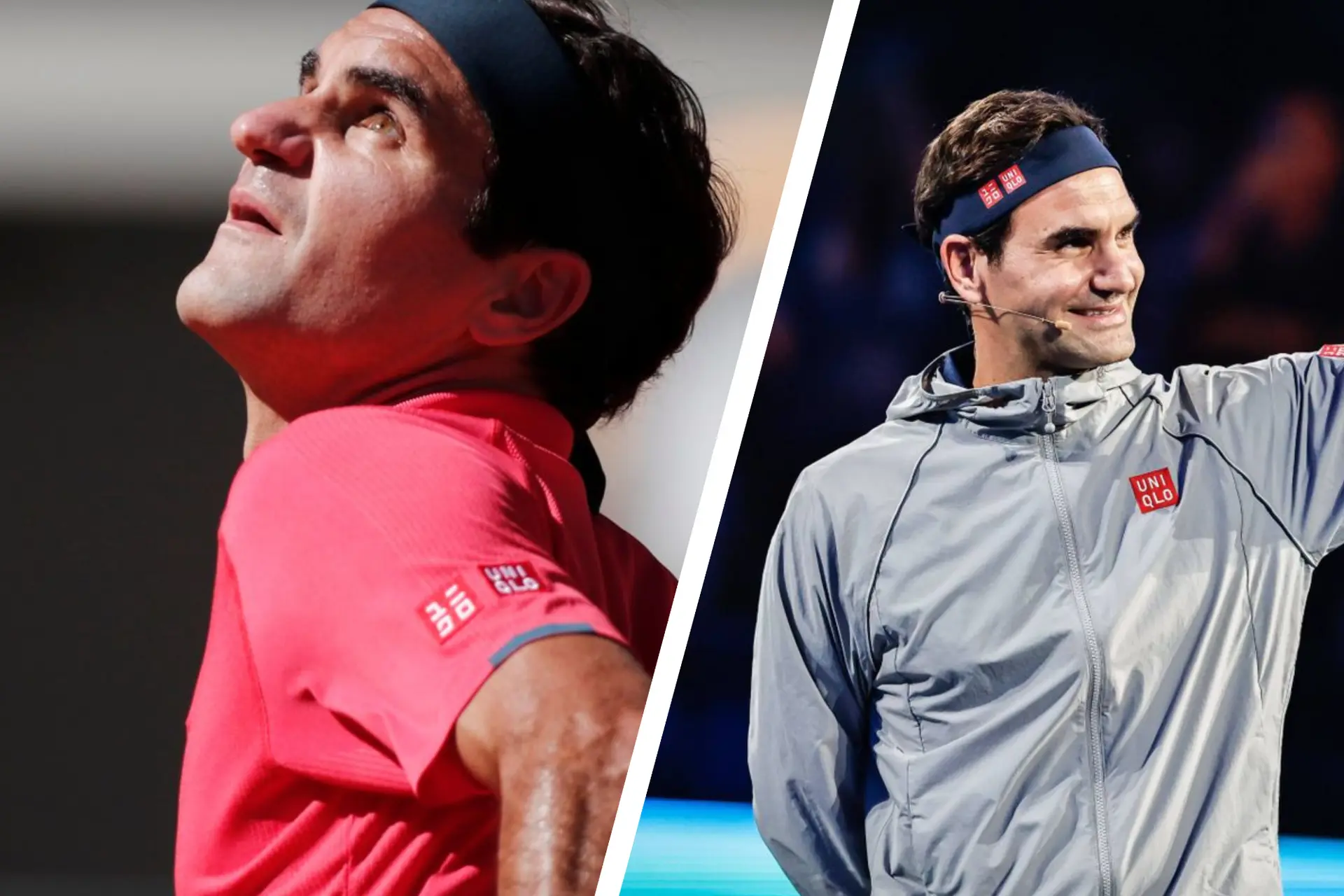
A reasonable estimate would put Murray somewhere around five to seven Grand Slam titles without the Big Three, although any precise number would be speculative. What makes that range plausible is not simply the matches he lost to them, but the consistency with which he reached the latter stages of Grand Slams while competing against three historically dominant players.
Murray's career therefore sits in an unusual place in tennis history. Three Grand Slam titles do not fully capture his level, but neither is it possible to assume that he would have become a multiple-time dominant champion in another era. The strongest conclusion is that the Big Three almost certainly reduced Murray's Grand Slam total — and likely delayed his rise to No. 1 by several years.
So, what would Andy Murray's career have looked like?
Grand Slams: likely significantly more than three.
Wimbledon: potentially several more.
Australian Open: probably at least one.
No. 1: almost certainly still achieved.
Legacy: much closer statistically to the greatest players of his era.
But perhaps the most remarkable thing is that Murray became No. 1 and won three Grand Slams despite spending his entire prime alongside Federer, Nadal and Djokovic.

Cristhián AvilaTennis Journalist
Cristhián Ávila is a tennis journalist based in Santiago, Chile, and has been part of the TennisUpToDate team since early 2023. He covers the ATP and WTA Tours as well as all four Grand Slams, producing breaking news, match reports, analysis, and regular liveblogs from major tournaments.
His reporting combines statistical analysis with clear explanation, helping readers understand tactical developments, player form, and broader storylines across the tour. Working fluently in both Spanish and English, Cristhián collaborates with an international editorial team and contributes to comprehensive global coverage. As part of his work, he has conducted interviews and media interactions with leading figures in the sport, including Caroline Wozniacki and John McEnroe.
In his journalism, Cristhián places strong emphasis on careful sourcing, editorial accuracy, and updating articles promptly when new, verified information becomes available. His coverage is grounded in research, context, and direct engagement with professional tennis.
claps 0visitors 0
Just In

Popular News
Latest Comments
- Fight the Good Fight... Tennis (sports in general) need more Humans such as yourself.
 mandoist18-10-2026
 - When is WTA going to mandate Genetic Testing (DNA) ???mandoist18-10-2026
- Hey, Dan... you just wake up from a coma? Regardless -- Thanks for the comedy this morning!mandoist18-10-2026
- Two Things: 1. Stop allowing these Spoiled Trust-Fund Elitists to behave badly. Your little hand-slaps do not deter them. 2. STOP the incessantly annoying "towel wiping" nonsense!!!!mandoist15-10-2026
- A healthy Qinwen may be hard to stop next season. She was already scaring her opponents before her medical leave(s). Unfortunately, Zheng insisted on singing again. On the positive side -- Mirra did not sing!! ;~}mandoist11-10-2026
- Where is it written that athletes, entertainers... People in general... are mandated to keep looking at -- or even using [anti]Social Media? Public & private figures consistently complain and reveal their concerns about negativity and violence thrown at them -- yet they insist on participating. Avoid it, don't use it, don't read it. It's okay to occasionally look up at the World instead beating your eyes & thumbs to death on The Inventions out there.mandoist11-10-2026
- great articlestennisseserver07-10-2026
- Medvedev was leading Djokovic 7-5, 3-5 when an attempted return..' NO you ignorants, Djokovic was leading .weiss05-10-2026
- No more bullshit "Wildcards" to these two. Qualify like everyone else -- there will be cameras there, too. Time to scream... WTF ????!!!!mandoist29-09-2026
- Let's not BS the general public -- Sabalenka started showing cracks in her game last season. Her losses and near-losses started at about the same time she began being distracted by Fame (constant Selfies, making TV commercials, magazine shoots, endless Social Media nonsense, etc., etc.) One would think even Saba could recognize the parallels with others who failed before her -- Raducanu, Giorgi, Bouchard to name a few.mandoist25-09-2026

Loading