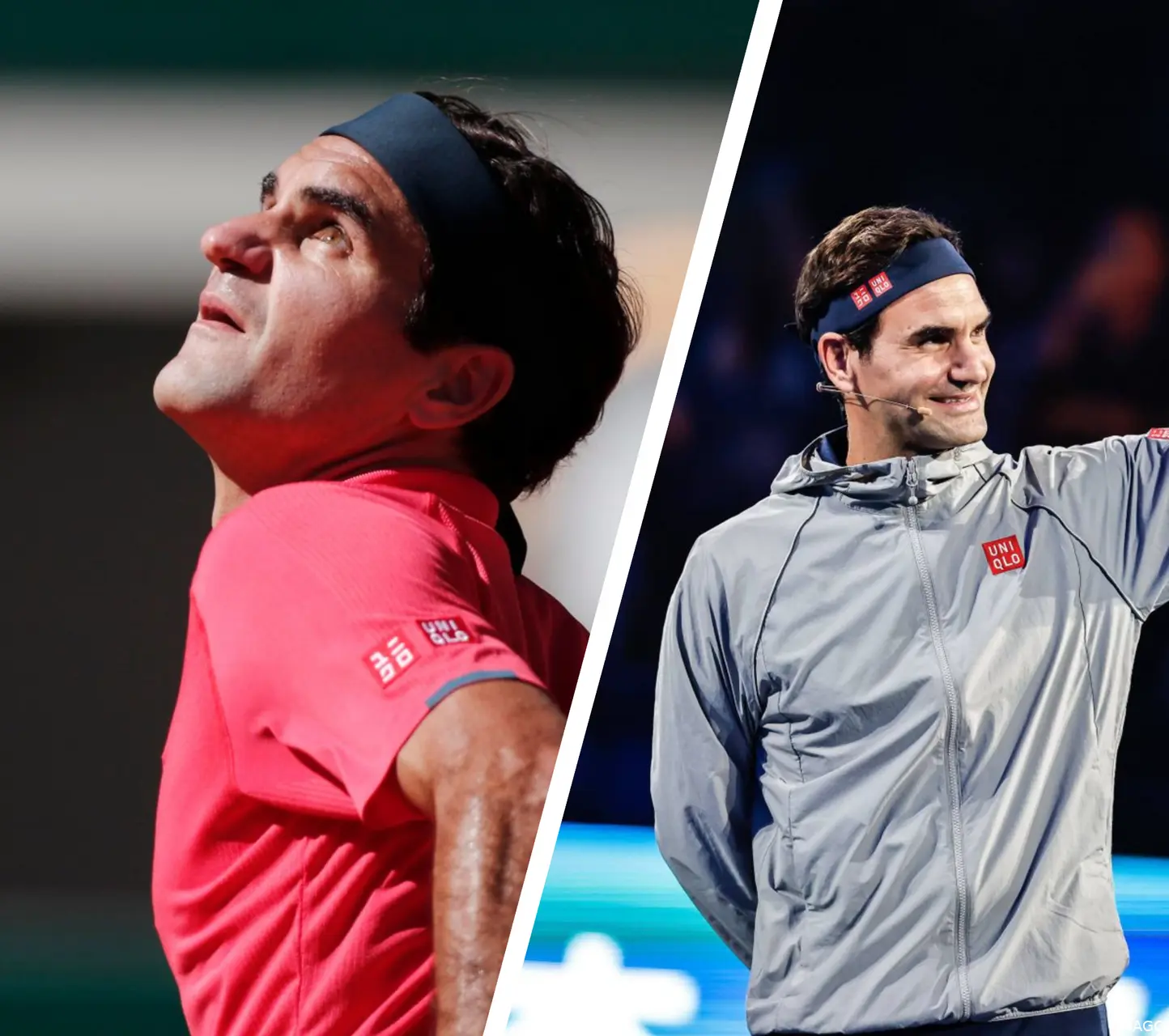
Switzerland's finest Roger Federer was a serial winner, a man who overtook Pete Sampras for most Grand Slam singles titles won. His contribution to tennis, however, went far beyond how many baubles he accumulated. The beauty of his tennis helped turn Federer into a fans favourite. His graceful tennis and balletic movement enchanted fans worldwide.
Born on August 8th, 1981, in the Swiss city of Basel, to parents Robert and Lynette. His mother was born in South Africa. Federer holds both Swiss and South African citizenship.
Alongside his older sister, Diana, they used to accompany the parents on weekends to private tennis courts attached to a pharmaceutical organisation that their parents worked for.
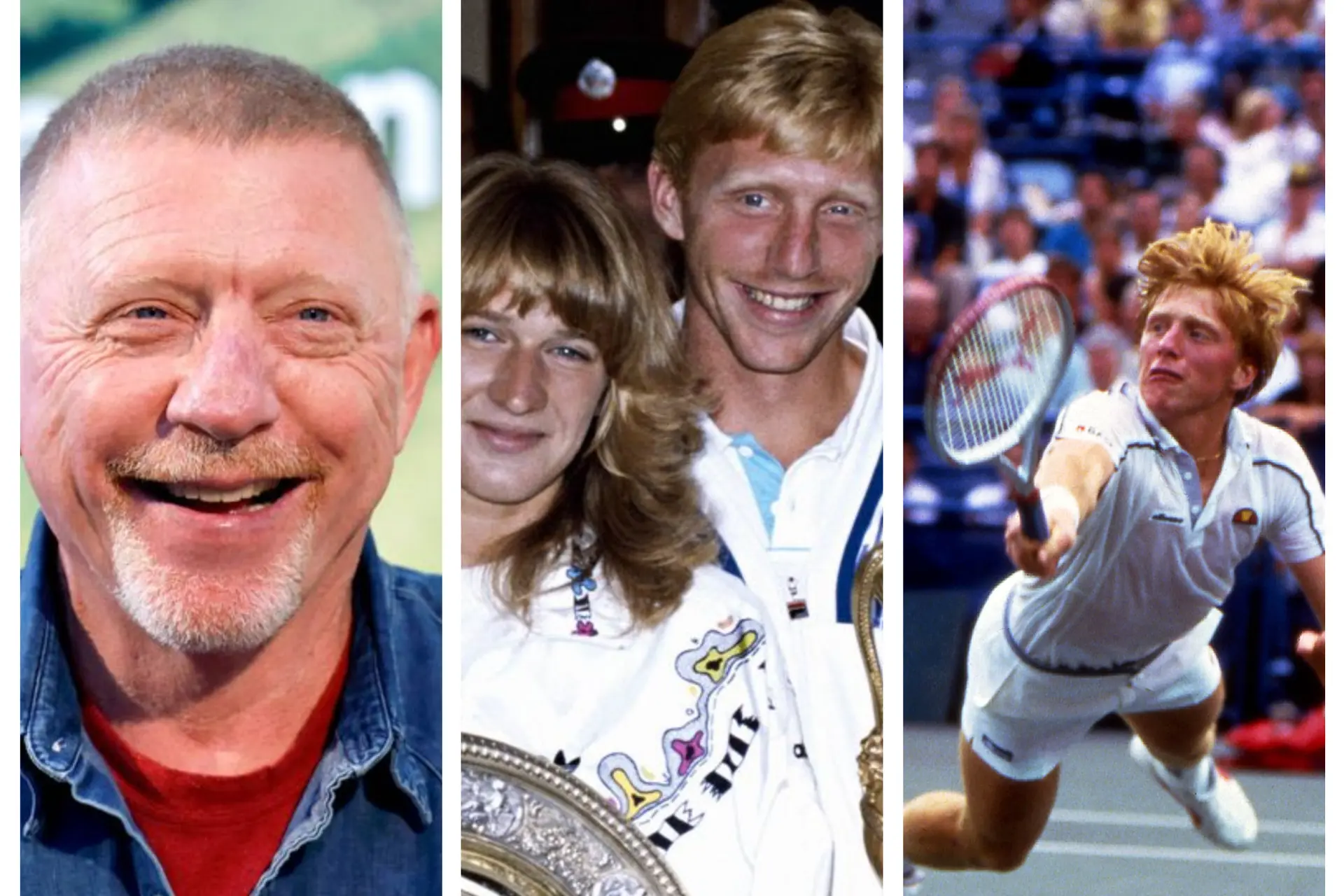
At just eight, Federer enrolled at the Old Boys Tennis club in Basel. He immediately developed a single-handed backhand, partly as a homage to idols such as Stefan Edberg and Boris Becker.
Becoming Swiss under 12 champion made up Federer's mind that he wanted to become a tennis professional. A move to France, aged 14, saw him combine his tennis development with his academic studies.
Read also
Junior Wimbledon champion and early pro career
At the Wimbledon Championships of 1998, Federer won both the singles and doubles events in the boys’ division.
He then went onto win the prestigious Orange Bowl title to help him finish his junior career as world number one. Federer ended his junior career with a 78-20 win/loss record.
He then turned professional in 1999 and started to play in the main draws at the Grand Slams.
The 2000 season witnessed Federer record his first Grand Slam win over Michael Chang at the Australian Open. He also made his first two finals this year, losing in Marseille and at his hometown event the Swiss Indoors in Basel.

Roger Federer kisses a title.
A fourth place finish at the Sydney Olympics in singles was a notable marker of progress. It was at these games where he met his wife Mirka Vavrinec.
Federer claimed his first ATP title in a defunct indoor event in Milan. This February 2001 success was his only title in a year where he came to global attention at Wimbledon. Playing Pete Sampras in round four at Wimbledon, Federer was attempting to snap the four year winning streak of Sampras at Wimbledon, who was on a 31-match winning streak at SW19. In a classic encounter, Federer prevailed in five sets.
BBC commentator on the match, David Mercer, talked about a passing of the baton. Two years later, these comments would be realised when Federer became Wimbledon champion, although Tim Henman beat Federer in the Swiss star's next match after his seismic upset of Sampras. Federer's 2002 season was highlighted by a maiden success in a 1000 event when clinching the German Open on clay. He finished the season inside the top ten for the first time. It was the beginning of 14 successive years where Federer would finish each campaign in the top ten.
Grand Slam breakthrough at Wimbledon
Seven titles in the 2003 season underlined a significant elevation of where Federer now sat in the current tennis firmament. Titles included a first ATP finals crown and most importantly a Grand Slam triumph. The 2003 Wimbledon Championships saw Federer come of age when he emerged victorious at the grass court major. Straight sets wins over Andy Roddick in the semis and Mark Philipoussis in the final made Federer the first Swiss man to become a Grand Slam champion.
On his return to Switzerland the next week, Federer was presented with a cow to mark his achievement at Wimbledon.
Dominant years and birth of Nadal rivalry
The 2004 season saw Federer morph into the dominant force of men’s tennis. He won three of the four Grand Slams and assumed the world number one ranking, a position he wouldn’t relinquish until the summer of 2008.
Maiden successes came his way at the Australian and US Opens. Federer defended his Wimbledon crown with a four set final victory over Andy Roddick. Eleven titles were amassed by Federer during the 2004 season. This included a successful defence of the ATP Finals.
The 2005 season began with Federer suffering a last four reverse at the Australian Open to Marat Safin. Federer added two further Grand Slams this term, producing a grass court clinic to down Andy Roddick in the Wimbledon final, before going to New York a couple of months later to win back-to-back US Opens.
Federer matched his haul from 2004 of eleven tournament victories. The eleventh of these wins at the Thailand Open was a scarcely believable 24th final win in succession. This run was ended when Argentine David Nalbadian bested in the ATP Finals showpiece.
Twelve titles was the final haul for Federer in the 2006 season, including a treble of Grand Slams. Triumphs in the Australian Open, Wimbledon and the US Open swelled his major tally to nine. Total dominance of the majors was thwarted by a muscular Spaniard.
Rafael Nadal’s emergence was the one punctuation mark to Federer’s dominance in this period. A four set win in the 2006 French Open final for Nadal was the first of three successive final victories at Roland Garros for Nadal over Federer.
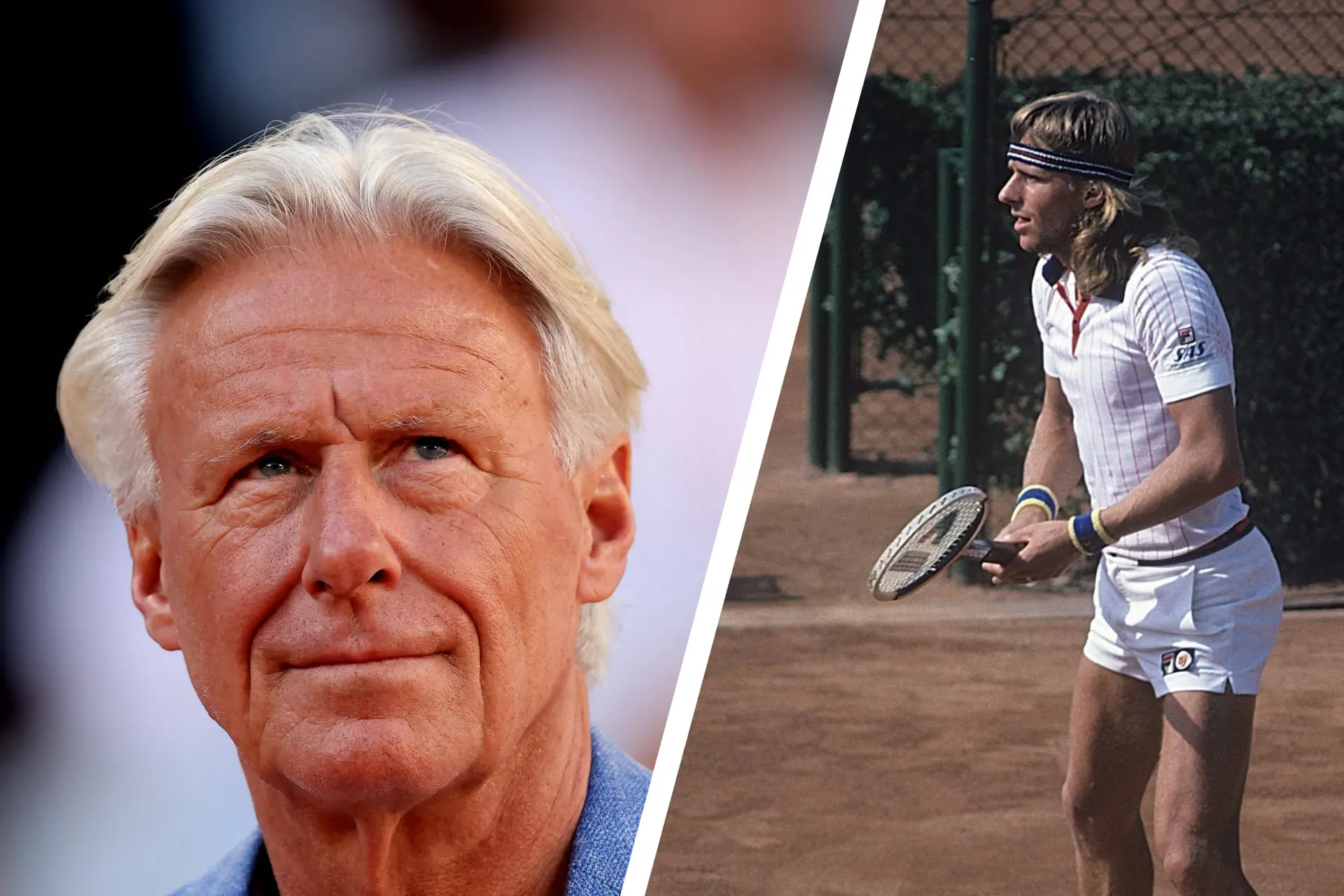
For the third time in four years, Federer bagged three Grand Slam titles in the 2007 season. The standout was a fifth consecutive title at Wimbledon, equalling Bjorn Borg’s Open Era record of Wimbledon titles in succession.
Read also
Nadal supplanted Federer as top dog
Federer's grip on men's tennis weakened in 2008. The Swiss legend didn't win either of the first two Grand Slams. He went to Wimbledon knowing Nadal had an opportunity to topple Federer at the world rankings summit.
The previous year's Wimbledon final saw Nadal push Federer to five sets. Their 2008 showpiece turned into a match for the ages. Nadal went two sets up before a rain delay allowed Federer to regroup. The next two sets went Federer's way in a pair of high quality tiebreaks. Due to another rain delay, the fifth set was played in the twilight of a July Sunday at SW19. Federer missed an opportunity to break at 4-3 in the deciding set and eventually, in near darkness, lost 9-7 to lose his Wimbledon run.
BBC commentator on the match Andrew Castle called it pertinently, “There's a new man at the head of men's tennis.” I regard this as the greatest sporting contest I've witnessed. It was the apex of the Federer/Nadal rivalry that captivated sports fans worldwide.
The 2009 season began with the new power shift being cemented when Nadal bested Federer in a five set Australian Open final.
A shock defeat for Nadal at the French Open to Robin Soderling in Round Four opened the door for Federer to complete the Career Grand Slam. The next day he survived a scare against Tommy Haas, but ultimately went on to beat Soderling in the final. He then followed this up by taking a sixth Wimbledon title in seven years with an epic final win over Andy Roddick, prevailing 16-14 in the fifth set.
Defeat in the US Open final to Juan Martin Del Potro ended his five year winning streak at Flushing Meadows. Four titles this term was a sign his pomp had faded but he remained a considerable force. The 2010 campaign kicked off superbly as he delivered a sublime display to defeat Andy Murray to win his fourth Australian Open crown. It was the highlight of a campaign that yielded a quintet of titles, including a fifth ATP Finals crown.
Federer drew a blank in the Grand Slams for the first time since 2002 during the 2011 term. He did enjoy a purple patch in November, winning three tournaments, one of which was a record-breaking sixth triumph at the ATP Finals.
Federer in seventh heaven at Wimbledon but then suffers Olympics heartbreak
The Fed Express ended a two and half year wait for major success when he clinched a record equalling 7th Wimbledon title, beating Andy Murray, on his home patch, in four sets.
A few weeks later and the pair met again, on the same Centre Court, but this time in the 2012 Olympics final. With a partisan crowd behind the Brit, Federer was outplayed by an inspired Murray. It was the closest he came to Olympic singles gold.
Federer's 2013 season was blighted by the impact of glandular fever. A shock exit at Wimbledon in round two ended a run of 36 consecutive Grand Slam record quarter-final appearances. He also exited the top ten for the first time in more than a decade.
The next three years saw Federer maintain a consistency in the Slams but fail to convert any of these runs into major glory. His nearest efforts were back-to-back finals at Wimbledon (2014 and 2015) and a 2015 US Open final. All these contests lost to Novak Djokovic.
Federer still accumulated a considerable number of ATP events in this period. Eleven titles were won across 2014-15 before a truncated 2016 campaign, injured after Wimbledon and didn't play until 2017, saw him go without a title for the first time since 2000.
2017-18: Renaissance period sees three majors garnered
Federer's return for the 2017 season witnessed a significant change in the face of the Swiss star's racquet. A bigger face allowed him to generate greater power on his backhand. This proved a key factor when beating Rafael Nadal in the Australian Open final just weeks into his comeback. It was his first major for over four years, and his first Grand Slam win over Nadal in almost a decade.
The renaissance gathered further validity later in the summer as Federer clinched a record-breaking eighth Wimbledon title over a stricken Marin Cilic. Of all the records he holds, winning Wimbledon the most times feels the most significant.
Federer made it three out of the last five majors when defending his Australian Open title at the outset of 2018. Civic again the beaten opponent. This was Federer's sixth title at the Melbourne major.
Eleven titles across these two years signalled Federer was once again now part of a genuine ‘big 3’ as opposed to being in the slipstream of Nadal and Djokovic.
Last Grand Slam final and then injuries force retirement in the 2020s
The 2019 season witnessed Federer pocket three titles leading into Wimbledon. In the showpiece at SW19, Federer squandered two matchpoints, at 8-7 in the deciding set, to beat Djokovic. The Serb eventually won in a tiebreak. This proved to be the last of Federer's 31 Grand Slam finals.
The 2020 and 2021 campaigns saw Federer’s involvement minimised due to Covid and injuries. A quarter-final loss to Hubert Hurkacz at the 2021 Wimbledon Championships turned out to be his last professional singles match.
Federer announced his retirement in 2022, accepting the battle with his body was over in competing at the highest level. As a public farewell, Federer opted for the Laver Cup later in 2022 to play his final match. Teaming up with old foe Nadal, they played a doubles rubber remembered more for the emotive speeches afterwards that left both greats tearful.
Davis Cup glory and Olympic doubles gold for Switzerland
Federer made his Davis Cup debut in 1999. It took fifteen years for Federer to lead Switzerland to overall glory. The 2014 final saw the Swiss face off with the French. Fittingly, Switzerland’s winning point came through Federer. After ticking off this milestone, Federer barely featured for the Swiss team again.
Although Olympic singles gold evaded Federer, he did manage to win a gold medal at the 2008 Olympics in Beijing alongside Stan Wawrinka.
Federer is a three-time winner of the Hopman Cup, partnering Martina Hingis in 2001 and Belinda Bencic to glory in 2018 and 2019.
Post tennis and personal life
He married partner Mirka in 2009. Due to a genetic pattern in the family, Federer has two sets of twins. Identical twin girls born in 2009 and twin boys in 2014. His sister also is mother to twin boys.
Federer has been engaged with several charitable causes including having his own foundation.
In 2006, he was appointed a Goodwill Ambassador for Unicef. He was the first tennis player, in 2020, to reach the summit of the Forbes list for Highest Paid Athletes.
Since retiring in 2022, Federer has attended tennis events but not undertaken any official media or coaching work. He can often be seen attending various sporting events around the world now he's hung up his racquet.
Legacy and recognition
Amassing 103 singles titles, Federer is second to Jimmy Connors in the Open Era for singles titles won.
A total of 310 weeks at World Number One is bettered only by Djokovic. His consistency at Grand Slam level and his longevity are exceptional. Federer competed in the main draw of Grand Slams within four separate decades.
What Federer brought to tennis can be measured in how he made you feel. A book called the Roger Federer Effect is based on the testimonies of various fans explaining how much joy he gave to tennis fans. At his best, Federer is unsurpassed for beauty on a tennis court.

Jay Brannon is a sports journalist from Sutton Coldfield, England, with a lifelong passion for athletic competition and storytelling. For the past 1.5 years, he has been a prominent voice at TennisUpToDate.com, where he has authored more than 3,000 articles, specializing in deep-dive columns, tactical analyses, liveblogs, and comprehensive match reports for the ATP and WTA tours.
Jay’s tennis reporting blends rigorous, real-time statistical analysis with on-the-ground coverage. He frequently travels to tournaments to cover the action firsthand from the press box and player press conferences. This direct access allows him to deliver sharp insight into player form and tour developments—a dedication sparked by his earliest sporting memory of the iconic 1991 Wimbledon final between Michael Stich and Boris Becker.
Beyond the court, Jay brings a versatile background in live broadcasting and media. His professional experience includes serving as a sports reporter for BHBN Hospital Radio—where he delivered live updates and analysis for West Bromwich Albion and Wolverhampton Wanderers matches—as well as working as a match reporter for Sutton Coldfield Town.
Jay holds a degree in Music Journalism and Broadcasting from Staffordshire University, a foundational training that shaped his voice as a thoughtful, authentic storyteller. Grounded in core journalistic ethics, he places a strict emphasis on careful sourcing, editorial accuracy, and swift, verified updates.
claps 0visitors 0
Just In

Popular News
Latest Comments
- Fight the Good Fight... Tennis (sports in general) need more Humans such as yourself.
 mandoist18-10-2026
 - When is WTA going to mandate Genetic Testing (DNA) ???mandoist18-10-2026
- Hey, Dan... you just wake up from a coma? Regardless -- Thanks for the comedy this morning!mandoist18-10-2026
- Two Things: 1. Stop allowing these Spoiled Trust-Fund Elitists to behave badly. Your little hand-slaps do not deter them. 2. STOP the incessantly annoying "towel wiping" nonsense!!!!mandoist15-10-2026
- A healthy Qinwen may be hard to stop next season. She was already scaring her opponents before her medical leave(s). Unfortunately, Zheng insisted on singing again. On the positive side -- Mirra did not sing!! ;~}mandoist11-10-2026
- Where is it written that athletes, entertainers... People in general... are mandated to keep looking at -- or even using [anti]Social Media? Public & private figures consistently complain and reveal their concerns about negativity and violence thrown at them -- yet they insist on participating. Avoid it, don't use it, don't read it. It's okay to occasionally look up at the World instead beating your eyes & thumbs to death on The Inventions out there.mandoist11-10-2026
- great articlestennisseserver07-10-2026
- Medvedev was leading Djokovic 7-5, 3-5 when an attempted return..' NO you ignorants, Djokovic was leading .weiss05-10-2026
- No more bullshit "Wildcards" to these two. Qualify like everyone else -- there will be cameras there, too. Time to scream... WTF ????!!!!mandoist29-09-2026
- Let's not BS the general public -- Sabalenka started showing cracks in her game last season. Her losses and near-losses started at about the same time she began being distracted by Fame (constant Selfies, making TV commercials, magazine shoots, endless Social Media nonsense, etc., etc.) One would think even Saba could recognize the parallels with others who failed before her -- Raducanu, Giorgi, Bouchard to name a few.mandoist25-09-2026

Loading