"52 weeks of really, really hard work”: Andy Murray explains why becoming ATP World No.1 was harder than winning Wimbledon
ATP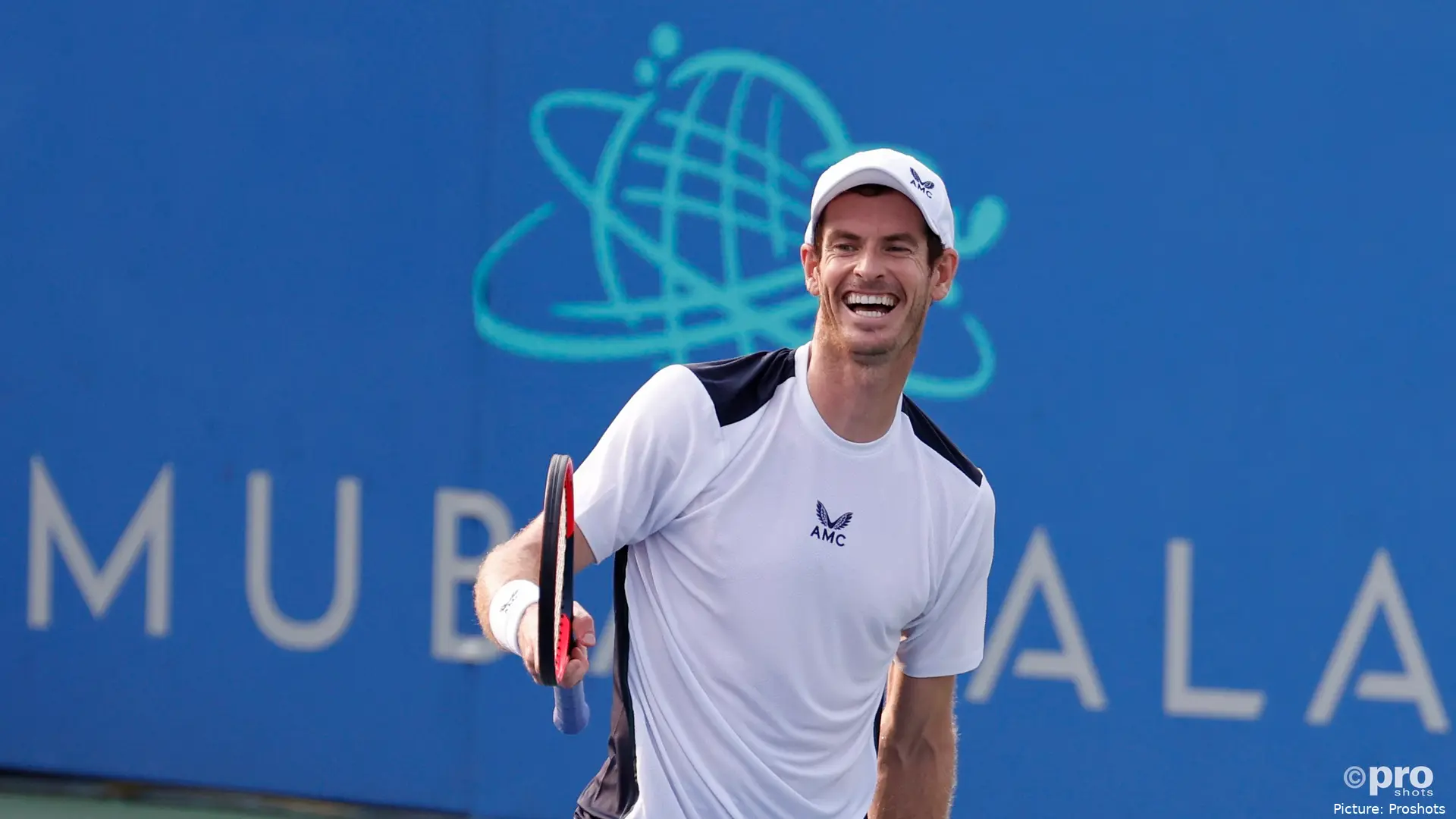
Andy Murray believes reaching the top of the ATP rankings represents one of the most difficult achievements in tennis — even harder than winning a Grand Slam title. The three-time major champion reflected on his career-defining moments in a recent feature for the ATP No.1 Club, explaining why becoming World No.1 required an unmatched level of consistency throughout an entire season.
Murray reached the summit of men’s tennis in November 2016 after one of the greatest seasons of his career, overtaking Novak Djokovic and becoming the first British man to finish the year as No.1. The achievement came during an era dominated by Federer, Nadal and Djokovic, making the consistency required even more remarkable.
The Briton’s path to the top was far from easy. Before finally winning his first Grand Slam title, Murray lost his opening four major finals, including defeats at the Australian Open and Wimbledon, before breaking through at the 2012 US Open against Djokovic. A year later, he ended Britain’s 77-year wait for a Wimbledon men’s singles champion by defeating Djokovic at the All England Club.
Now retired from professional tennis, Murray is beginning a new chapter from the coaching box. The former World No.1 is currently working with Jack Draper, although their planned Wimbledon campaign ended before it started after Draper withdrew due to injury. It is Murray’s second major coaching role after his partnership with Djokovic at the start of the 2025 season, a collaboration between two former rivals who both reached the top of the sport.
“A lot harder to achieve than winning a Grand Slam”
Murray’s argument becomes even more significant when looking at how exclusive reaching World No.1 truly is. Since the introduction of the ATP rankings in 1973, only 29 players have reached the top spot, joining an elite list that includes legends such as Federer, Nadal, Djokovic, Sampras and Agassi.
By comparison, more players have won at least one Grand Slam singles title. The difference highlights why Murray values his No.1 achievement so highly: a major title requires two exceptional weeks, while becoming No.1 demands excellence across an entire calendar year.
The only player in ATP history to reach World No.1 without winning a Grand Slam singles title remains Marcelo Ríos, who became the top-ranked player in 1998 despite never lifting a major trophy.

Murray spent 41 weeks at World No. 1 in the ATP Rankings. He first claimed the top spot on November, 2016, ending Novak Djokovic's 122-week reign
For Murray, that sustained excellence was the ultimate test. “To get to No.1 in the world when you’re surrounded by, you know, the greatest players of all time, that’s 52 weeks of really, really hard work and top performances to get there.”
The Briton believes maintaining that level over 12 months is a greater challenge than producing one perfect Grand Slam run. “I would argue is a lot harder to achieve than winning a Grand Slam.”
Murray’s 2016 season proved that point. He won Wimbledon, Olympic gold and the ATP Finals while finishing ahead of Djokovic in the rankings, becoming only the 17th player at the time to achieve the year-end No.1 milestone.
“Nothing came easily for me”
Murray’s career was built around overcoming setbacks. Despite becoming one of the best players of his generation, he spent years chasing his first major title while repeatedly falling short against the sport’s greatest champions.
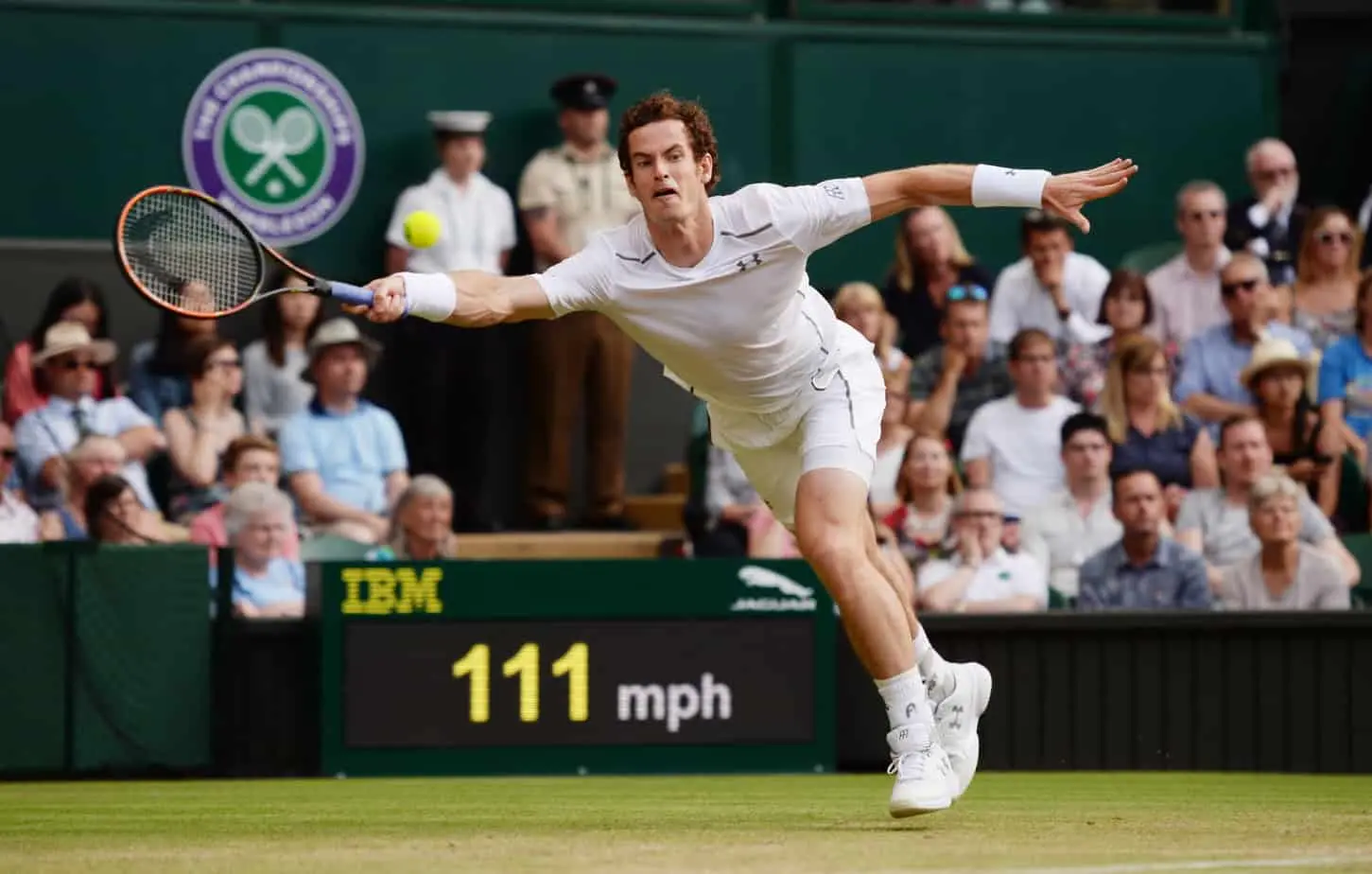
His first four Grand Slam finals ended in defeat before he finally broke through in New York in 2012, defeating Djokovic in a five-set battle at the US Open. The following year, Wimbledon provided the defining moment of his career.

Andy Murray played 14 finals at Grand Slam level, but 'just' won three titles.
For Murray, the importance of that title went beyond the trophy itself because of the expectations placed on him as Britain’s leading male player. “If I hadn’t won Wimbledon, certainly from a British sporting public perspective, my career would have been a failure.”
Winning Wimbledon removed the biggest unanswered question surrounding his career. “The main feeling at the time was just relief. I wouldn’t have to spend the rest of my life thinking about, you know, what if, what could have been.”
More than the trophies, Murray’s legacy was defined by the difficulty of his journey. Competing during the golden era of Federer, Nadal and Djokovic forced him to constantly find another level — something he believes shaped his entire career. “It’s one of the things in my career that I’m proud of, that nothing came easily for me.”
Now trying to help Draper from the coaching box, Murray is passing on lessons learned from one of the toughest eras tennis has ever seen. His career remains a reminder that greatness is not only measured by titles, but by the ability to keep fighting until the biggest goals finally become reality.

Cristhián AvilaTennis Journalist
Cristhián Ávila is a tennis journalist based in Santiago, Chile, and has been part of the TennisUpToDate team since early 2023. He covers the ATP and WTA Tours as well as all four Grand Slams, producing breaking news, match reports, analysis, and regular liveblogs from major tournaments.
His reporting combines statistical analysis with clear explanation, helping readers understand tactical developments, player form, and broader storylines across the tour. Working fluently in both Spanish and English, Cristhián collaborates with an international editorial team and contributes to comprehensive global coverage. As part of his work, he has conducted interviews and media interactions with leading figures in the sport, including Caroline Wozniacki and John McEnroe.
In his journalism, Cristhián places strong emphasis on careful sourcing, editorial accuracy, and updating articles promptly when new, verified information becomes available. His coverage is grounded in research, context, and direct engagement with professional tennis.
claps 0visitors 0
Just In

Popular News
Latest Comments
- A healthy Qinwen may be hard to stop next season. She was already scaring her opponents before her medical leave(s). Unfortunately, Zheng insisted on singing again. On the positive side -- Mirra did not sing!! ;~}
 mandoist11-10-2026
 - Where is it written that athletes, entertainers... People in general... are mandated to keep looking at -- or even using [anti]Social Media? Public & private figures consistently complain and reveal their concerns about negativity and violence thrown at them -- yet they insist on participating. Avoid it, don't use it, don't read it. It's okay to occasionally look up at the World instead beating your eyes & thumbs to death on The Inventions out there.mandoist11-10-2026
- great articlestennisseserver07-10-2026
- Medvedev was leading Djokovic 7-5, 3-5 when an attempted return..' NO you ignorants, Djokovic was leading .weiss05-10-2026
- No more bullshit "Wildcards" to these two. Qualify like everyone else -- there will be cameras there, too. Time to scream... WTF ????!!!!mandoist29-09-2026
- Let's not BS the general public -- Sabalenka started showing cracks in her game last season. Her losses and near-losses started at about the same time she began being distracted by Fame (constant Selfies, making TV commercials, magazine shoots, endless Social Media nonsense, etc., etc.) One would think even Saba could recognize the parallels with others who failed before her -- Raducanu, Giorgi, Bouchard to name a few.mandoist25-09-2026
- Gross!! Hey Raducanu, Giorgi, and Bouchard -- reserve a seat at your Social Media Selfie table for Saba + Naomi. They're heading in your direction soon enough.mandoist24-09-2026
- And then these same players will complain about how lengthy their season’s were and need more time-off. I’m all for more tennis but the amount of tennis we get now is actually kind of crazy! We all need a break, especially the players.DaveyWavey23-09-2026
- You should do a comparison article for "different kinds of justice" the courts decide for tennis players. I can think of at least three players who received very small bans of a few months, however Tara Moore has been fighting for her literal survival the past few years. It seems odd considering she is not a "name" player, unlike the other cases.DaveyWavey22-09-2026
- PRIZE MONEY & POINTS Winner - $185,500 Finalist - $114,500 Semi-Finalist - $66,003 Quarter-Finalist - $35,000 Round of 16 - $18,045 Round of 32 - $13,005 Winner - 500 Finalist - 325 Semi-Finalist - 195 Quarter-Finalist - 108 Round of 16 - 60 Round of 32 - 1DaveyWavey20-09-2026

Loading