Alexander Zverev is set to become world No. 1 on Monday - The season of two Grand Slams that changed everything
ATP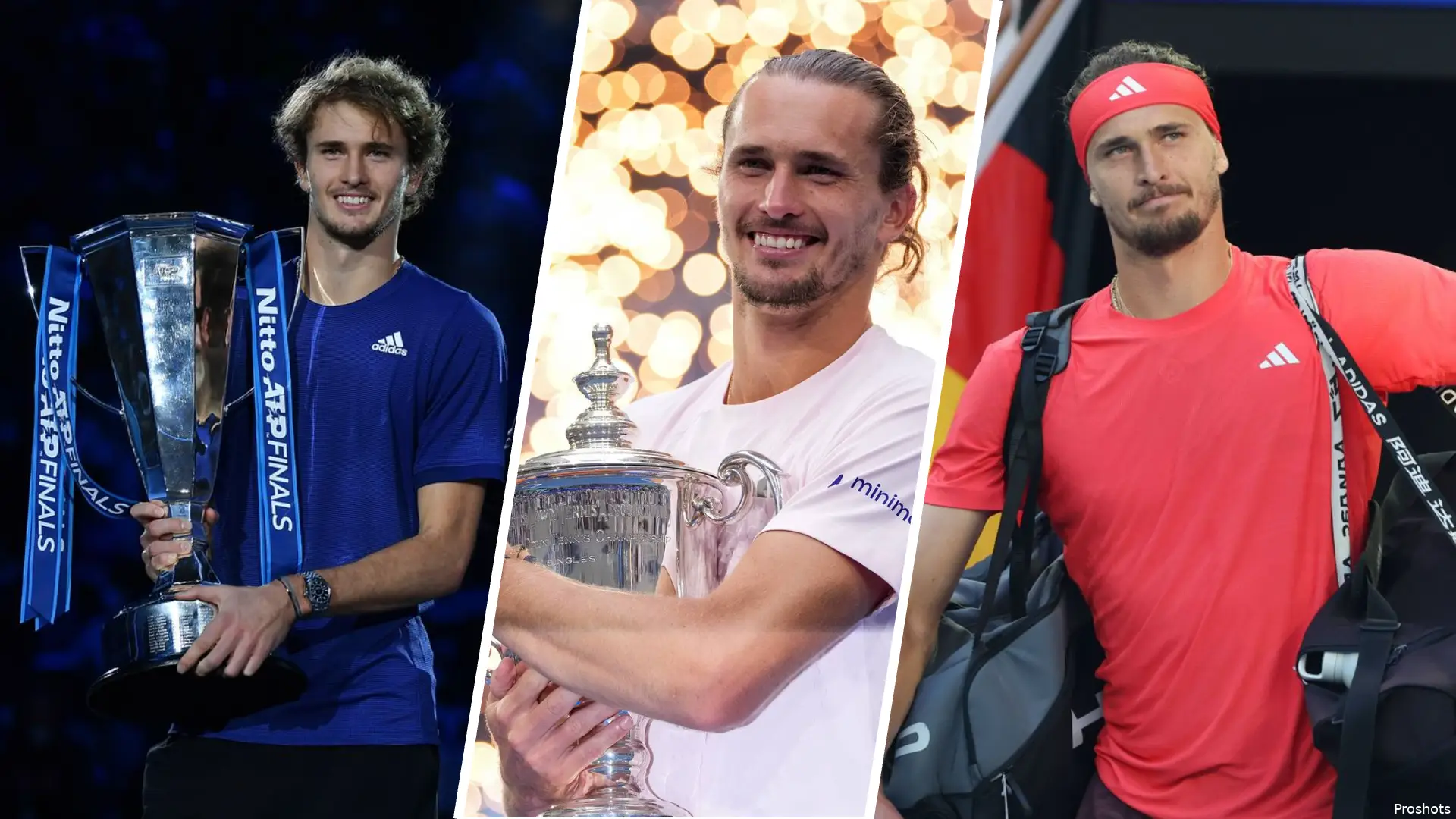
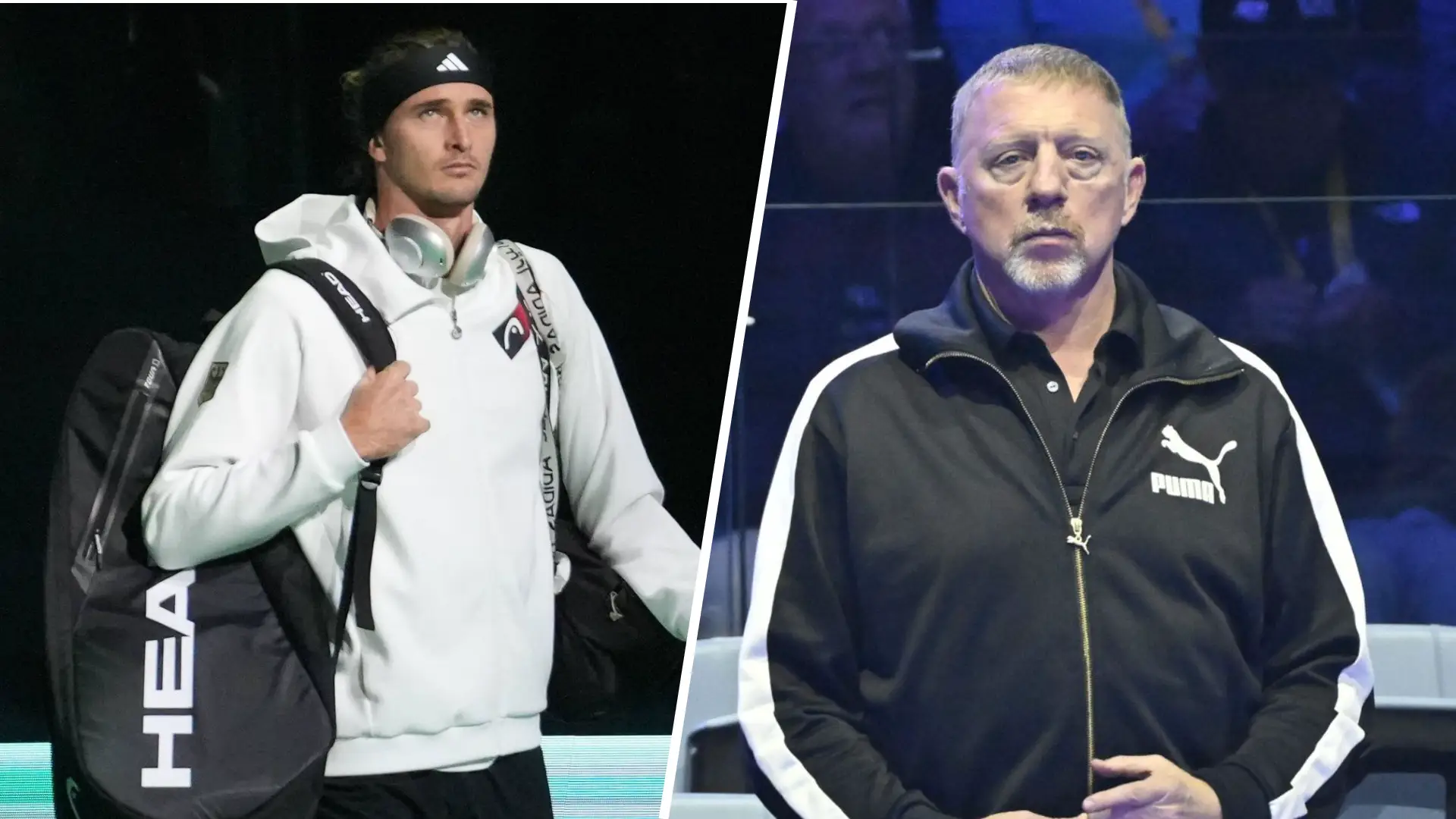
Alexander Zverev will be the world No. 1 on Monday, November 2, after beating Tallon Griekspoor 6-4, 7-5 in the round of 16 in Vienna. The 29-year-old becomes the 30th man to hold the top spot in the ATP rankings and only the second German, after Boris Becker in 1991. Reaching the Vienna quarterfinal was enough, and he had already clinched the year-end No. 1 a few weeks earlier.
It is a title that took a long time to arrive. Zverev reached the No. 2 back in June 2022, the highest ranking of his career until now, and since then, he was known as the best player without a Grand Slam. In 2026 that label disappeared. This is how he reached the top, which moments mattered most and what his career before this season looked like.
How he got there
Zverev's rise was built on results, but circumstances also played a significant role. Jannik Sinner won five consecutive Masters 1000 titles, setting a historic record in the category and extending his winning streak at that level to 31 matches. He then won Wimbledon in July but did not compete again.
He skipped the Canadian Open, withdrew from Cincinnati and the US Open, and announced on October 6 that knee inflammation would keep him out for the remainder of the 2026 season.
While Sinner held the world No. 1 position for much of the year thanks to his outstanding results, Zverev gradually closed the gap. Sinner compiled a 44-3 record and won six titles, but his absence from the tour left him unable to defend the points he had accumulated. Zverev remained at No. 3 during the first half of the season before climbing to No. 2 following his Wimbledon final appearance, displacing the injured Carlos Alcaraz. Several months later, he has finally reached the top of the rankings.

Alcaraz's injury was another key factor in the season's ranking battle. The Spaniard completed the career Grand Slam at the Australian Open early in the year, but a subsequent injury sidelined him for four months. Sinner took advantage of his absence to establish himself at the top, particularly through the points he carried over from 2025 and his remarkable run of five consecutive Masters 1000 titles.
His Wimbledon triumph further extended his lead, while Alcaraz continued to lose ranking points as the weeks passed.
The ATP rankings operate on a rolling 52-week basis, meaning Sinner's lead of 11,000 points over Zverev's 9,720 on October 7 was misleading. Sinner was set to lose approximately 3,050 points without having an opportunity to replace them, while Zverev's minimum total stood at around 9,140 even if he lost every remaining match.
When Alcaraz lost to Zizou Bergs in the third round in Shanghai, the year-end No. 1 race was effectively decided. Zverev will become the first German man to finish a season at No. 1 and, when the rankings close on November 23, will be 29 years and 217 days old, making him the oldest player to achieve the feat, ahead of Andre Agassi and Andy Murray.
| Date | Milestone |
| June 7 | Wins Roland Garros, first major title |
| July 12 | Loses the Wimbledon final to Sinner |
| September | Wins the US Open, second major of the year |
| October 6-15 | Sinner is ruled out; Zverev clinches year-end No. 1 |
| October 29 | Zverev beats Griekspoor in Vienna, No. 1 from November 2 |
The great moments of 2026
The defining one came in Paris. Zverev beat Flavio Cobolli 6-1, 4-6, 6-4, 6-7(5), 6-1 in 4 hours and 16 minutes in the Roland Garros final to win his first Grand Slam title in his fourth final. He was the first German man to win a major since Becker and the first man to win a maiden Slam at Roland Garros since Rafael Nadal 21 years earlier. It was also his 125th Grand Slam match win, more than any player had before a first major. He led 3-1 in the fourth-set tiebreak, lost it and still broke twice in the fifth set.

Wimbledon brought a surprise. Zverev had never reached a quarterfinal there in nine previous visits, and in 2026 he reached the final on a 13-match winning streak at the majors. He lost to Sinner 6-7(7), 7-6(2), 6-3, 6-4 in 3 hours and 46 minutes after winning the first set, but the run showed a version of him that had not existed on grass.
The third came at the US Open, where he was top seed in a draw without Sinner. He beat Ben Shelton 6-3, 7-6(2), 5-7, 6-2 in 3 hours and 33 minutes for his second major of the year, which made him the fourth man in the Open Era to win his first two Grand Slam titles in the same season. Not everything was easy, though: in his Vienna opener he needed 7-5, 3-6, 7-6(11) to beat Martin Landaluce, saving four match points.
The German was repeatedly outperformed by Alcaraz and Sinner in previous seasons, while Djokovic also appeared to remain a step ahead of him whenever he was on court, despite being 39 years old. However, among the four players, Zverev was the only one to remain consistently active throughout the season, maintaining his presence on the tour and making deep runs at smaller tournaments.
Zverev has played 18 tournaments so far this season, including the Vienna Open. Sinner is well behind him with nine events, while Alcaraz and Djokovic have each competed in 10 tournaments. As his rivals took time off between major events, Zverev focused on staying fit, building momentum through consistent results and taking advantage of the opportunities that came his way.
Despite a handful of early and unexpected defeats, his 64 victories in 80 matches this season have earned him the long-awaited opportunity to reach the top of the rankings. He won two Grand Slam titles, in addition to reaching the Wimbledon final and the Australian Open semifinals. Without needing to defeat Djokovic, Sinner or Alcaraz, Zverev recorded the most Grand Slam match wins among the four, winning 25 of his 27 matches at the majors.
| Tournament | Category | Result | Lost to / Final opponent |
| Australian Open | Grand Slam | Semifinals | Carlos Alcaraz |
| Mexican Open | ATP 500 | Second round | Miomir Kecmanović |
| Indian Wells | Masters 1000 | Semifinals | Jannik Sinner |
| Miami Open | Masters 1000 | Semifinals | Jannik Sinner |
| Monte-Carlo Masters | Masters 1000 | Semifinals | Jannik Sinner |
| BMW Open Munich | ATP 500 | Semifinals | Flavio Cobolli |
| Madrid Open | Masters 1000 | Final | Jannik Sinner |
| Italian Open (Rome) | Masters 1000 | Round of 16 | Luciano Darderi |
| Roland Garros | Grand Slam | Champion | Defeated Flavio Cobolli |
| Halle Open | ATP 500 | Semifinals | Taylor Fritz |
| Wimbledon | Grand Slam | Runner-up | Jannik Sinner |
| Canadian Open | Masters 1000 | Second round | Tallon Griekspoor |
| Cincinnati Open | Masters 1000 | Round of 16 | Tommy Paul |
| US Open | Grand Slam | Champion | Defeated Ben Shelton |
| China Open | ATP 500 | Quarterfinals | Novak Djokovic |
| Shanghai Masters | Masters 1000 | Semifinals | Novak Djokovic |
| Vienna Open | ATP 500 | Quarterfinals | Defeated Tallon Griekspoor; next opponent: Arthur Fery |
Before 2026: the career behind the No. 1
Zverev did not arrive here from nowhere. He was the 2014 Australian Open boys' champion and a junior No. 1, won his first ATP title in St. Petersburg in 2016 and in 2017 won the Rome Masters, becoming the youngest Masters 1000 champion since Novak Djokovic in 2007.

In 2018 he won the ATP Finals in London, and in 2021 he took Olympic singles gold in Tokyo, the first German man to do so, and a second ATP Finals in Turin. He has seven Masters 1000 titles: Rome and Montreal in 2017, Madrid in 2018 and 2021, Cincinnati in 2021, and Paris and Rome in 2024.
The Slams were harder. He lost the 2020 US Open final to Dominic Thiem after leading by two sets, the 2024 Roland Garros final to Alcaraz after leading two sets to one, and the 2025 Australian Open final to Sinner in straight sets. In 2022 he tore ankle ligaments in the Roland Garros semifinal against Nadal, which required surgery, and returned to the top 10 after one year.
| Career achievement | Detail |
| Singles titles | 26 (as of the US Open win) |
| Grand Slams | Roland Garros 2026, US Open 2026 |
| Grand Slam finals | 2-4 (lost 2020 US Open, 2024 Roland Garros, 2025 Australian Open, 2026 Wimbledon) |
| Masters 1000 titles | 7 |
| ATP Finals | 2018, 2021 |
| Olympic gold | Tokyo 2020 (played 2021) |
| Previous career-high ranking | No. 2 (June 2022) |
A No. 1 with questions
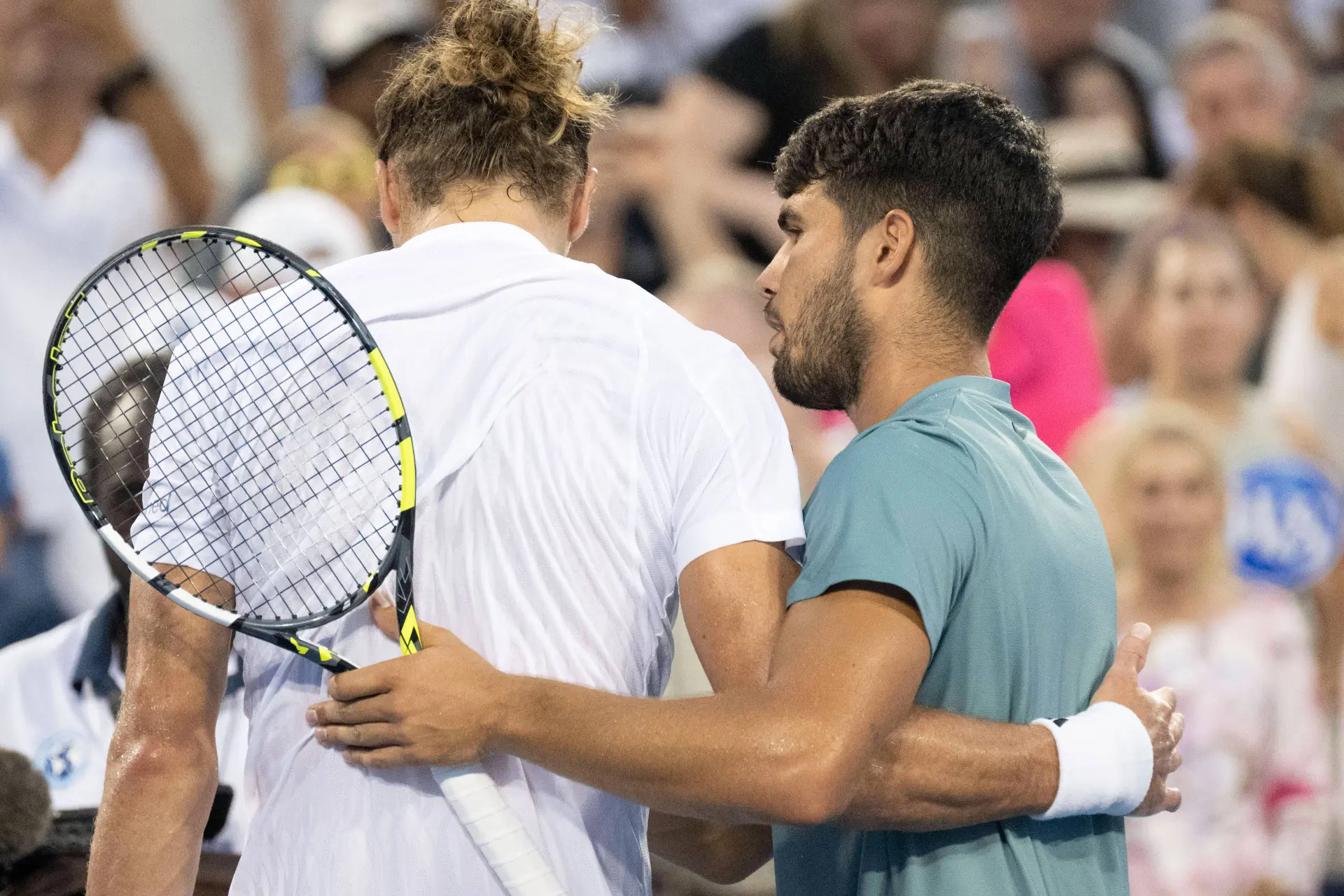
The ranking comes with caveats. Zverev has not won an ATP 250, ATP 500 or Masters 1000 title in 2026, with his two Grand Slam victories accounting for his biggest achievements of the season. As of October 7, he had a 0-7 record against Sinner, Alcaraz and Djokovic this year and had lost 13 consecutive matches against the trio, including his quarterfinal defeat to Djokovic in Beijing. His career head-to-head records stand at 4-11 against Sinner, 5-10 against Djokovic and 6-7 against Alcaraz.
That does not diminish the significance of reaching No. 1. The ATP rankings account for results over a rolling 52-week period and reward consistency, including Zverev's semifinal appearances at the Australian Open, Indian Wells, Miami, Monte Carlo and Halle, his Madrid final and his two Grand Slam titles.
However, the next challenge is clear. When Sinner returns in 2027, Zverev will have to demonstrate that he can defend the top position against the players he has struggled to beat.

Some may argue that Zverev is an undeserving No. 1 who benefited primarily from his rivals' injuries. However, the rest of the tour continues to compete, and players can only defeat the opponents standing across the net. Sacrificing rest time, travelling more frequently and playing additional tournaments to accumulate victories week after week also deserves recognition.
Even when Zverev has been unable to overcome his biggest rivals in direct encounters, his ability to produce stronger results consistently across the season has ultimately paid off.
Read also
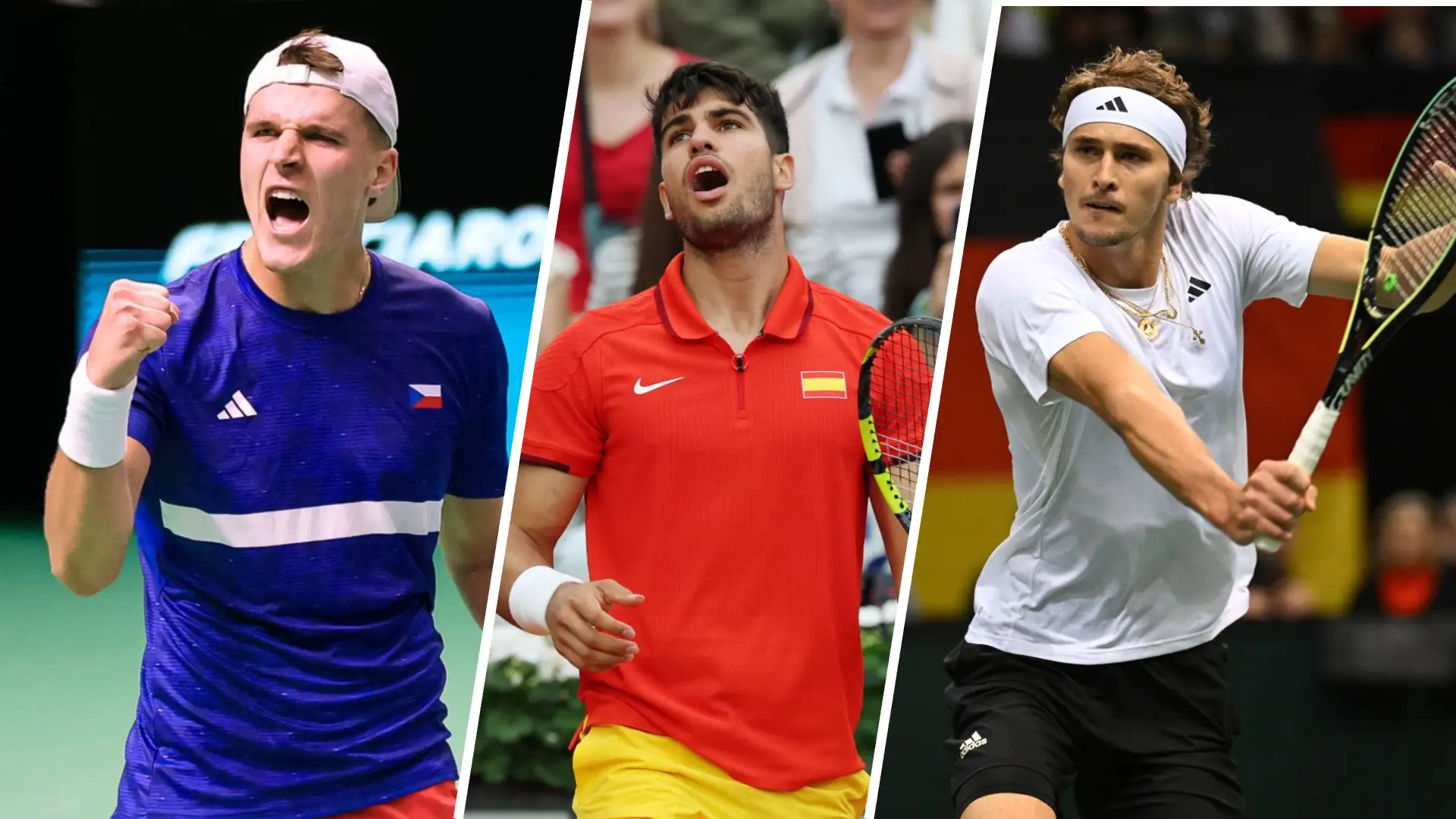
His career résumé can also be compared favourably with those of several former world No. 1s. Players such as Patrick Rafter, Carlos Moyá, Yevgeny Kafelnikov, Marcelo Ríos, Thomas Muster, Juan Carlos Ferrero, John Newcombe, Marat Safin, Andy Roddick and Daniil Medvedev have all reached the top of the rankings, but none of them can match the breadth of Zverev's achievements.
His honours include two Grand Slam titles and four runner-up finishes, seven Masters 1000 titles, Olympic gold, two ATP Finals crowns and a total of 26 titles from 44 finals.
Zverev was repeatedly held back by the dominance of Nadal and Djokovic during his earlier years on tour before facing a new generation led by Sinner and Alcaraz. Nevertheless, at 29, he has finally reached the summit of the ATP rankings. Questions will remain about his record against his biggest rivals, but his trophy collection and longevity at the highest level establish him as one of the most successful players of his generation.

Cristhián AvilaTennis Journalist
Cristhián Ávila is a tennis journalist based in Santiago, Chile, and has been part of the TennisUpToDate team since early 2023. He covers the ATP and WTA Tours as well as all four Grand Slams, producing breaking news, match reports, analysis, and regular liveblogs from major tournaments.
His reporting combines statistical analysis with clear explanation, helping readers understand tactical developments, player form, and broader storylines across the tour. Working fluently in both Spanish and English, Cristhián collaborates with an international editorial team and contributes to comprehensive global coverage. As part of his work, he has conducted interviews and media interactions with leading figures in the sport, including Caroline Wozniacki and John McEnroe.
In his journalism, Cristhián places strong emphasis on careful sourcing, editorial accuracy, and updating articles promptly when new, verified information becomes available. His coverage is grounded in research, context, and direct engagement with professional tennis.
claps 0visitors 0
Just In



Popular News
Latest Comments
- Osaka's mental state apparently does not allow her to reach any more Quarter Finals? I mean, she doesn't really have the time for tennis with all the pre-planning that must go into her 12 year-old "fashion" goals.
 mandoist29-10-2026
- With her money one would think she could afford a better team of Psychiatrists?mandoist29-10-2026
- Boss move, Sinner !Rapunzel27-10-2026
- Apparently still refusing to seek 'help' ...and still playing Dress-Up like a 10 year-old.mandoist27-10-2026
- Lena... Takin' care of businessmandoist25-10-2026
- Can you please stop publishing this nonsense? Stick to Tennis.mandoist25-10-2026
- Does Sinner need that 4.5 mil? I doubt it. He can make that with three modelling gigs!😅🤣Rapunzel21-10-2026
- Did "People Magazine" purchase this website? This nonstop storyline is bullshit.mandoist21-10-2026
- Listen... this is of no concern to anyone but these two. Deal with your own issues -- most of us have our own. Thanks, media, for these insignificant follow-ups which are meaningless.mandoist21-10-2026
- This is so very very sad, for all three of them. I truly thought they had an unbreakable bond, but life throws up so many differing challenges. Having your homeland suffering in such a terrible way, makes happiness lose out to guilt as well. Our thoughts are with them. X💔bjsexton20-10-2026

Loading