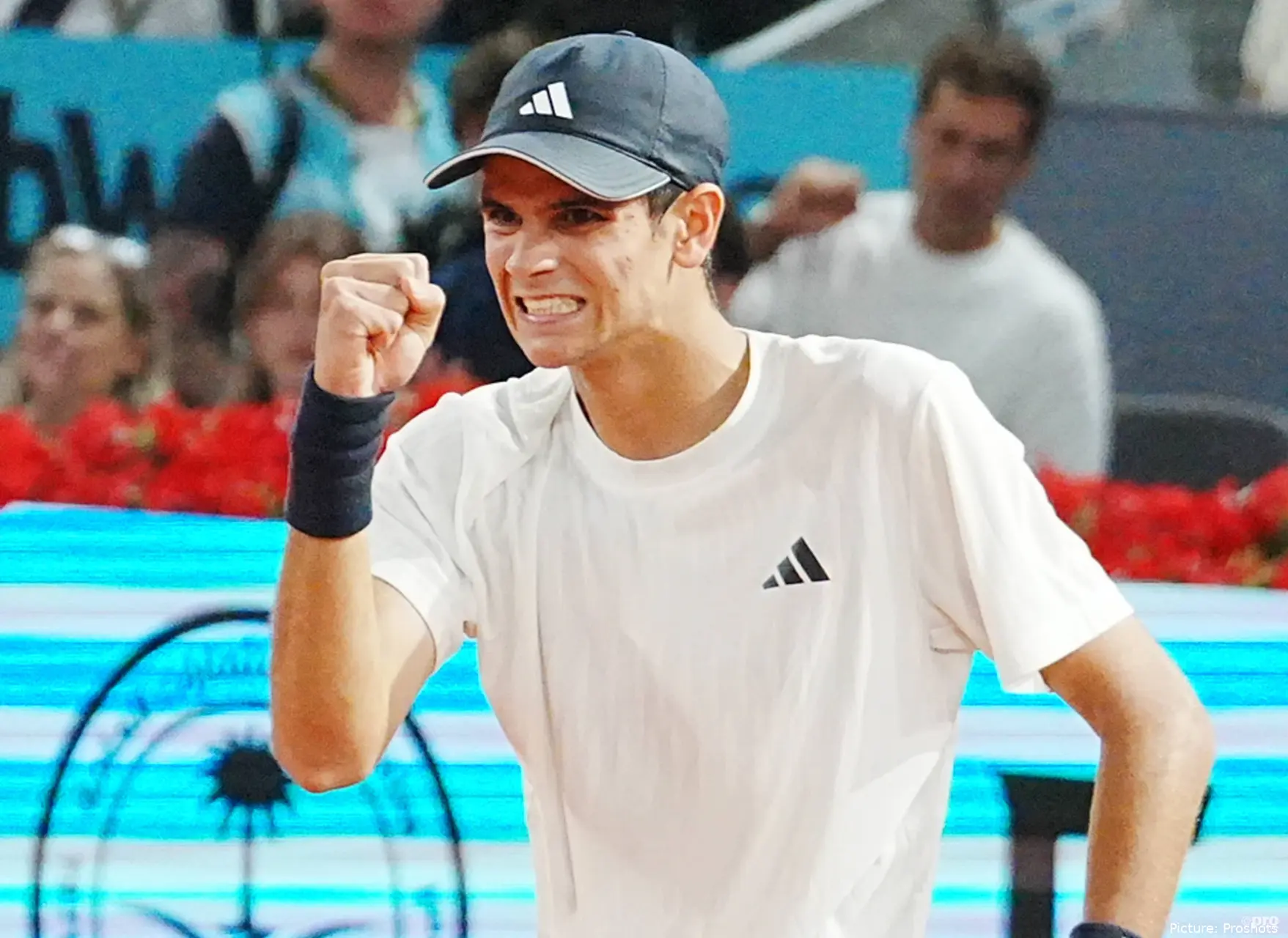
Toni Nadal has delivered strong praise for emerging Spanish talent Rafael Jódar, highlighting the teenager’s rapid rise on clay and his increasingly visible presence on the ATP Tour. The 19-year-old has recorded 12 wins in his last 14 matches on clay, a run that has propelled him into the Top 100 and established him as one of the most closely watched young players in men’s tennis.
Jódar only broke into the Top 200 in October of last year, before climbing into the Top 100 by late March following his first ATP Masters 1000 victories at the Miami Open, where he reached the third round. His progression has accelerated further during the European clay swing, where he has added consistent results and increased attention.
The Spanish teenager’s breakthrough season includes his first professional title in Marrakech, followed by a semifinal run at the ATP 500 Barcelona Open and a quarterfinal appearance in Madrid, where he lost to Jannik Sinner. In total, his clay-court record stands at 12 wins in 14 matches, including victories over established opponents such as Cameron Norrie, Alex de Minaur and João Fonseca.
Across the circuit, his rise has been framed as one of the fastest developments of the 2025–2026 transition period, with Toni Nadal among the most vocal observers of his progression.
“Best player of this new generation”: Toni Nadal’s assessment of Jódar
Toni Nadal, former coach of Rafael Nadal and long-time figure at the Rafa Nadal Academy, traced his first detailed observations of Jódar back to his emergence on the Challenger circuit. According to him, early internal reports already pointed to a player with unusual development speed, particularly in adapting to higher-level competition.
“The coaches at the Rafa Nadal Academy were passing on very positive comments about the rapid progress of a young Madrid tennis player," Nadal wrote in El País. "But it was not until the end of last year that I had the opportunity to watch Rafael Jódar on television competing in several matches at the Next Gen ATP Finals.”

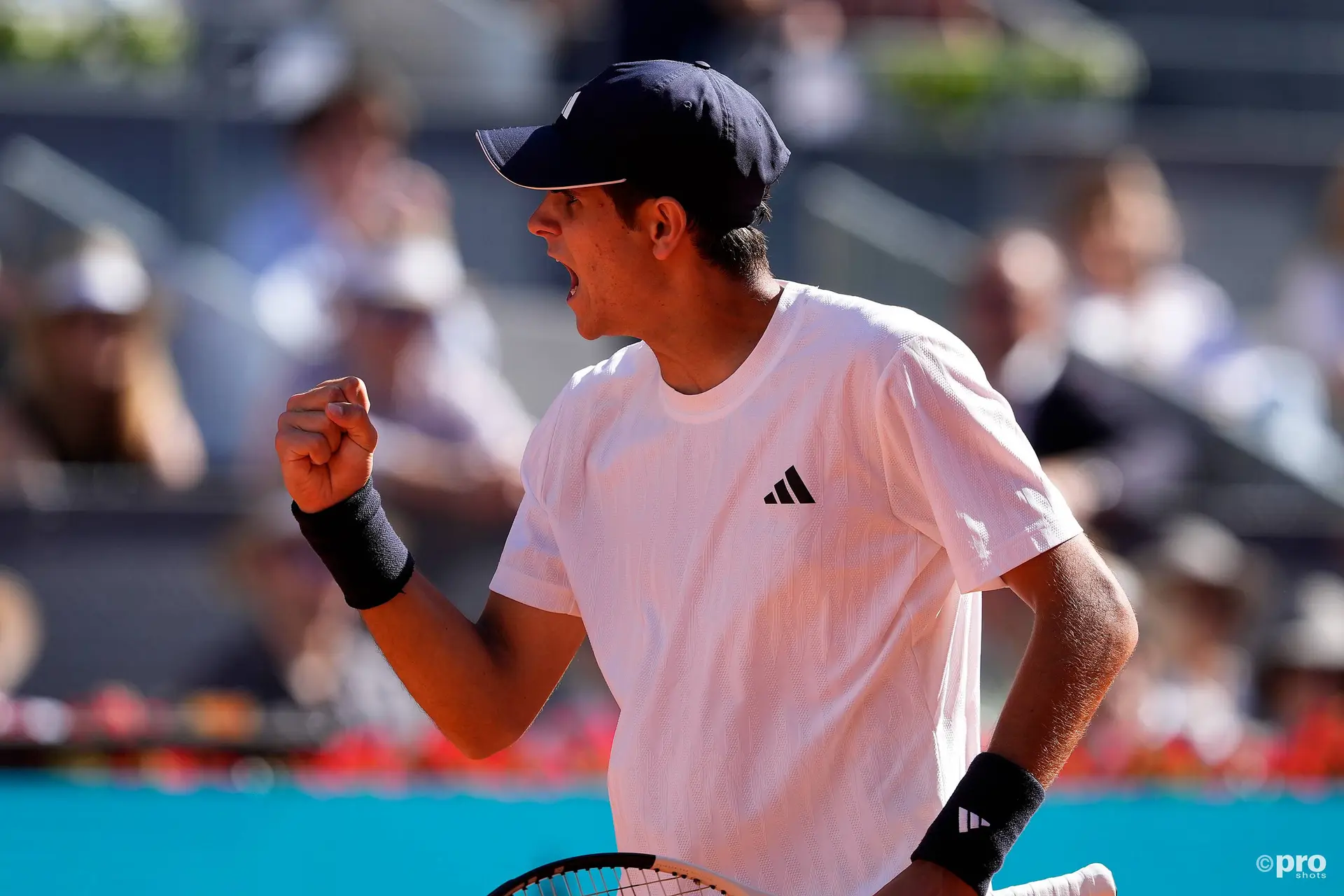
Rafael Jodar of Spain during the Mutua Madrid Open 2026
Nadal’s assessment became more definitive after reviewing his transition into ATP-level events, particularly during the clay season where results came in quick succession. The combination of title-winning form and deep runs in ATP 500 and Masters 1000 events has, in his view, separated Jódar from other players of his generation.
“His progression has been fulminant in a very short period of time and he has become, in my opinion, the best player of this new generation and the one with the greatest projection. I believe that, in a few years, and almost certainly I will be wrong and it will be a few months, Rafa will become one of the best players in the world, a strong candidate to trouble the best players of the moment and to fight for the most important titles.”
The broader context of Spanish tennis adds further relevance to his emergence. With Carlos Alcaraz already established as the leading figure of the post-Rafael Nadal era, Jódar’s rise introduces another potential top-level contender from Spain, albeit three years younger than Alcaraz and still in the earliest phase of his professional development.
“Resolutive and audacious”: technical profile and Grand Slam debate
Toni Nadal’s evaluation also focused on Jódar’s playing style and its alignment with modern ATP standards. Among players under 21, including Learner Tien, Jakub Mensik and João Fonseca, Nadal suggested that Jódar stands out for his ability to finish points aggressively, while still acknowledging structural weaknesses in his defensive game.
“The question that fans, especially Spanish fans, ask ourselves is whether Rafa is a potential Grand Slam winner and a future world number one. Before attempting to answer, I would like to mention some common characteristics of players who have achieved this, and of whom Alcaraz and Sinner are, today, the main exponents.”

He expanded on that comparison by identifying the core traits shared by elite players, particularly their ability to generate winners from difficult positions and force opponents into risk-heavy responses.
“They are very resolutive when they decide to go and win the point, they are capable of producing winning shots from any position and, at the same time, they force their opponents to take many risks in order to win the point.”
Within that framework, Nadal placed Jódar in a transitional category: already capable of elite-level shot execution, but still developing defensive consistency. He described the Madrid teenager as “tremendously resolutive and audacious” when attacking, while noting that his defensive phase remains the key area requiring improvement.
“The Madrid-born player, like them, is tremendously resolutive and audacious when he wants to finish the points. However, he is still somewhat fragile when it comes to defending them. This will be the aspect of his game that he will have to improve the most in the coming months.”
Despite those limitations, Nadal’s overall assessment remains strongly positive, particularly given the speed of Jódar’s progression across multiple levels of competition in a compressed timeframe.
“However, after having seen his evolution tournament after tournament, in a very short time and in an unstoppable rise, nothing leads me to think that he cannot do it. I must and want to believe, therefore, that he can aspire to both things.”
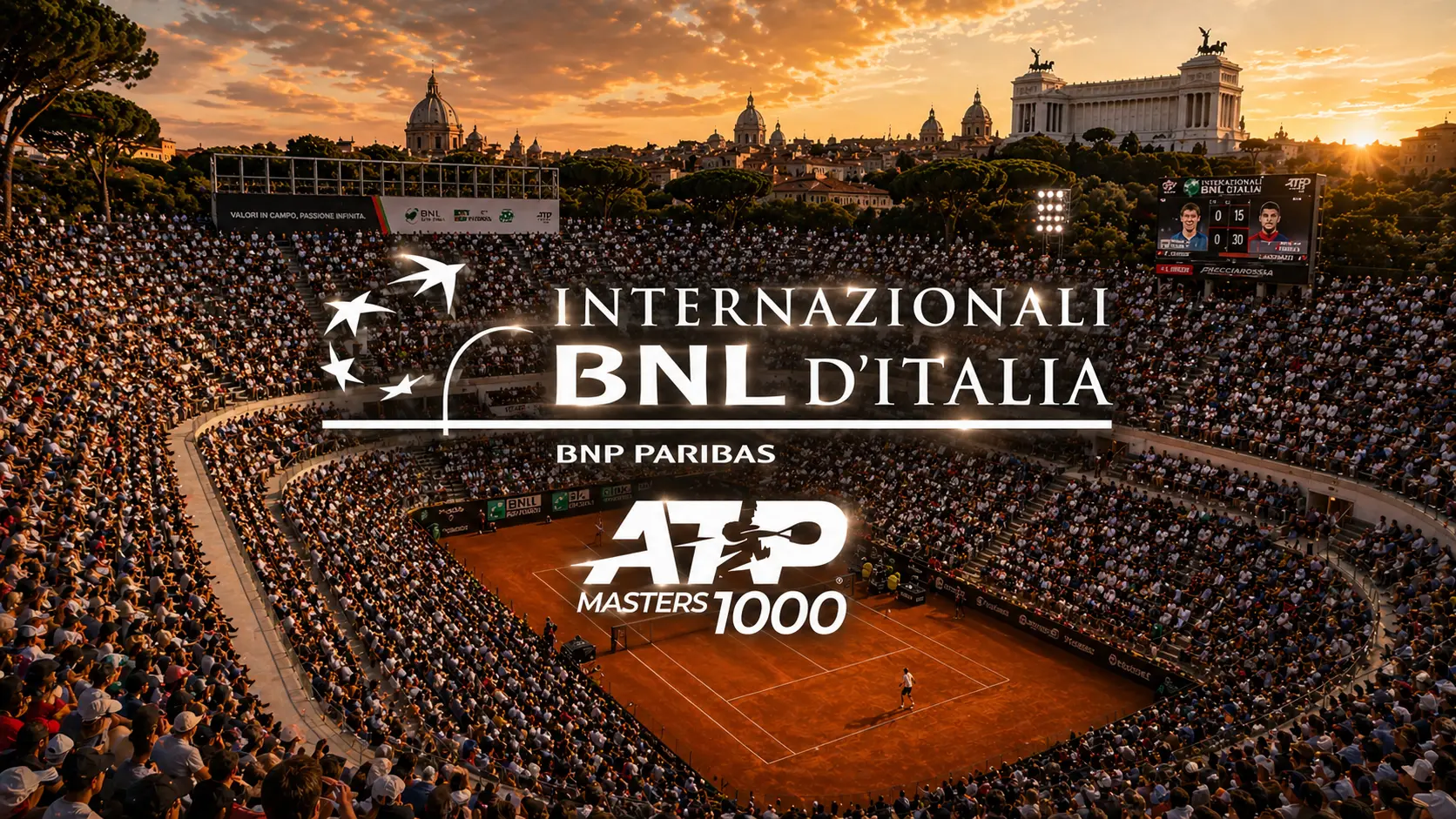
Jódar is expected to continue his Madrid-to-Rome clay swing progression, with a first-round matchup against Portugal’s Nuno Borges scheduled for his latest appearance. Entering Rome as a seeded player for the first time in a Masters 1000 event, he continues to climb both in ranking and seasonal Race standings, positioning himself among the most notable young movers of the season.

Cristhián AvilaTennis Journalist
Cristhián Ávila is a tennis journalist based in Santiago, Chile, and has been part of the TennisUpToDate team since early 2023. He covers the ATP and WTA Tours as well as all four Grand Slams, producing breaking news, match reports, analysis, and regular liveblogs from major tournaments.
His reporting combines statistical analysis with clear explanation, helping readers understand tactical developments, player form, and broader storylines across the tour. Working fluently in both Spanish and English, Cristhián collaborates with an international editorial team and contributes to comprehensive global coverage. As part of his work, he has conducted interviews and media interactions with leading figures in the sport, including Caroline Wozniacki and John McEnroe.
In his journalism, Cristhián places strong emphasis on careful sourcing, editorial accuracy, and updating articles promptly when new, verified information becomes available. His coverage is grounded in research, context, and direct engagement with professional tennis.
claps 0visitors 0
Just In



Popular News

Latest Comments
- Does Sinner need that 4.5 mil? I doubt it. He can make that with three modelling gigs!😅🤣Rapunzel21-10-2026
- Did "People Magazine" purchase this website? This nonstop storyline is bullshit.
 mandoist21-10-2026
 - Listen... this is of no concern to anyone but these two. Deal with your own issues -- most of us have our own. Thanks, media, for these insignificant follow-ups which are meaningless.mandoist21-10-2026
- This is so very very sad, for all three of them. I truly thought they had an unbreakable bond, but life throws up so many differing challenges. Having your homeland suffering in such a terrible way, makes happiness lose out to guilt as well. Our thoughts are with them. X💔bjsexton20-10-2026
- I have lost all respect for Svitolina! Could she not have waited until he had played at the Paris Masters!!! She is selfish and don't give a damn about Gael. That is NOT how love is demonstrated Elina!!Rapunzel19-10-2026
- Perhaps convenient tennis tour sex is not a strong enough experience in which to base a marriage?mandoist19-10-2026
- Fight the Good Fight... Tennis (sports in general) need more Humans such as yourself.mandoist18-10-2026
- When is WTA going to mandate Genetic Testing (DNA) ???mandoist18-10-2026
- Hey, Dan... you just wake up from a coma? Regardless -- Thanks for the comedy this morning!mandoist18-10-2026
- Two Things: 1. Stop allowing these Spoiled Trust-Fund Elitists to behave badly. Your little hand-slaps do not deter them. 2. STOP the incessantly annoying "towel wiping" nonsense!!!!mandoist15-10-2026

Loading