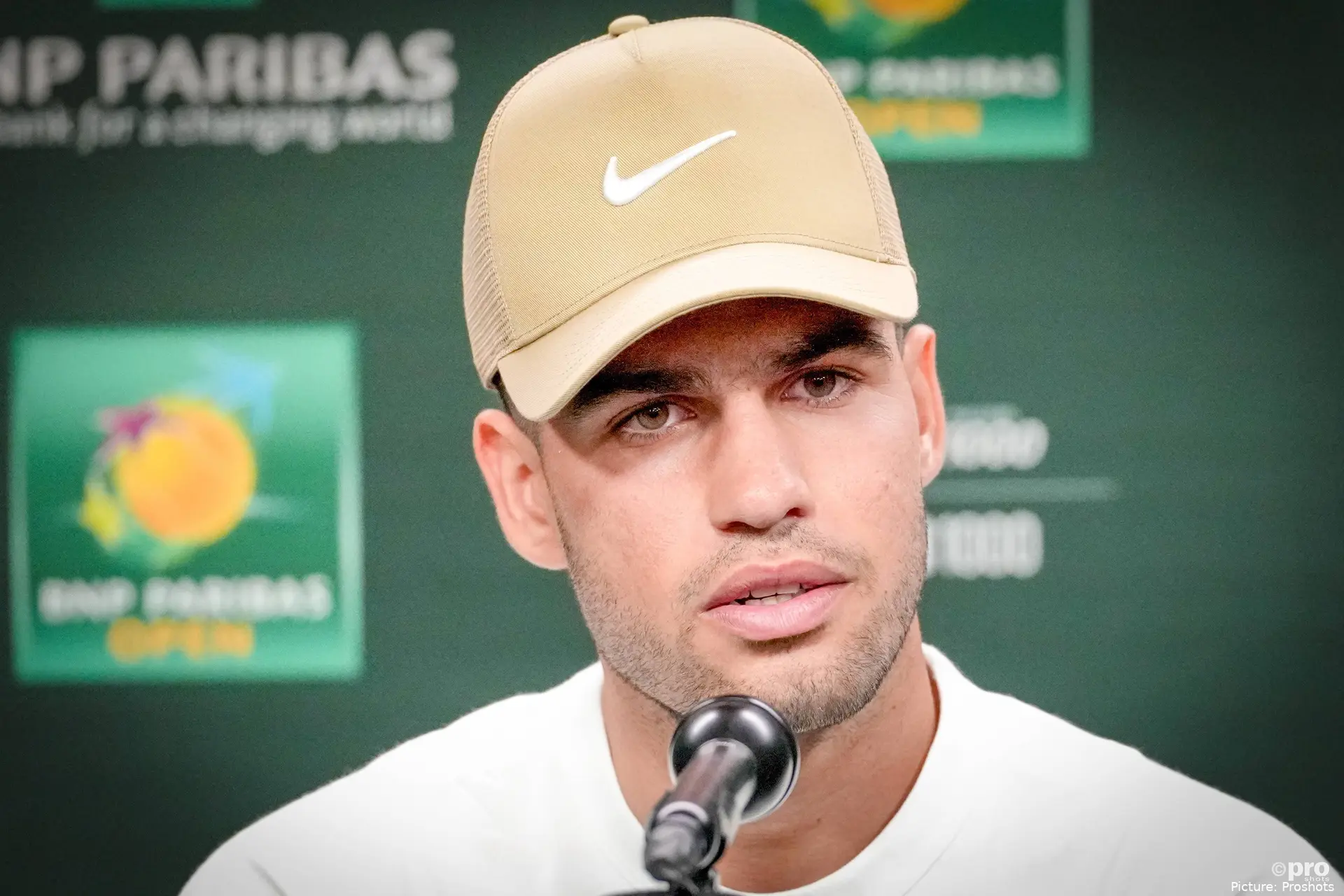
Carlos Alcaraz withdrew from the 2026 Barcelona Open (ATP 500) due to a right wrist injury, ending his campaign in the early stages and sending Tomas Machac into the quarter-finals. The Spaniard had opened his tournament with a 6-4, 6-2 win over Otto Virtanen but was unable to continue, halting his attempt to secure a third title in Barcelona and defend last year’s final result.
The withdrawal follows a condensed transition from Monte-Carlo, where Alcaraz finished runner-up after a straight-sets defeat to Jannik Sinner. The turnaround between events left limited recovery time, with Barcelona presenting different clay conditions that required immediate adaptation. After progressing through his opening match, physical discomfort became a decisive factor, preventing him from continuing in the draw.
Alcaraz arrived in Barcelona with strong recent form, having reached the Monte-Carlo Masters final and maintaining consistency across the early clay swing. However, the inability to continue interrupts that trajectory and removes a key opportunity to build momentum ahead of the next Masters events.
The broader impact centres on the ATP rankings, where Alcaraz entered the week with a pathway to reclaim the World No.1 position. As defending finalist, he was set to defend significant points, and a title run would have allowed him to overtake Sinner. Instead, the withdrawal results in a loss of 280 ranking points, confirming his position at No.2 while extending Sinner’s hold on the top ranking for at least another week.
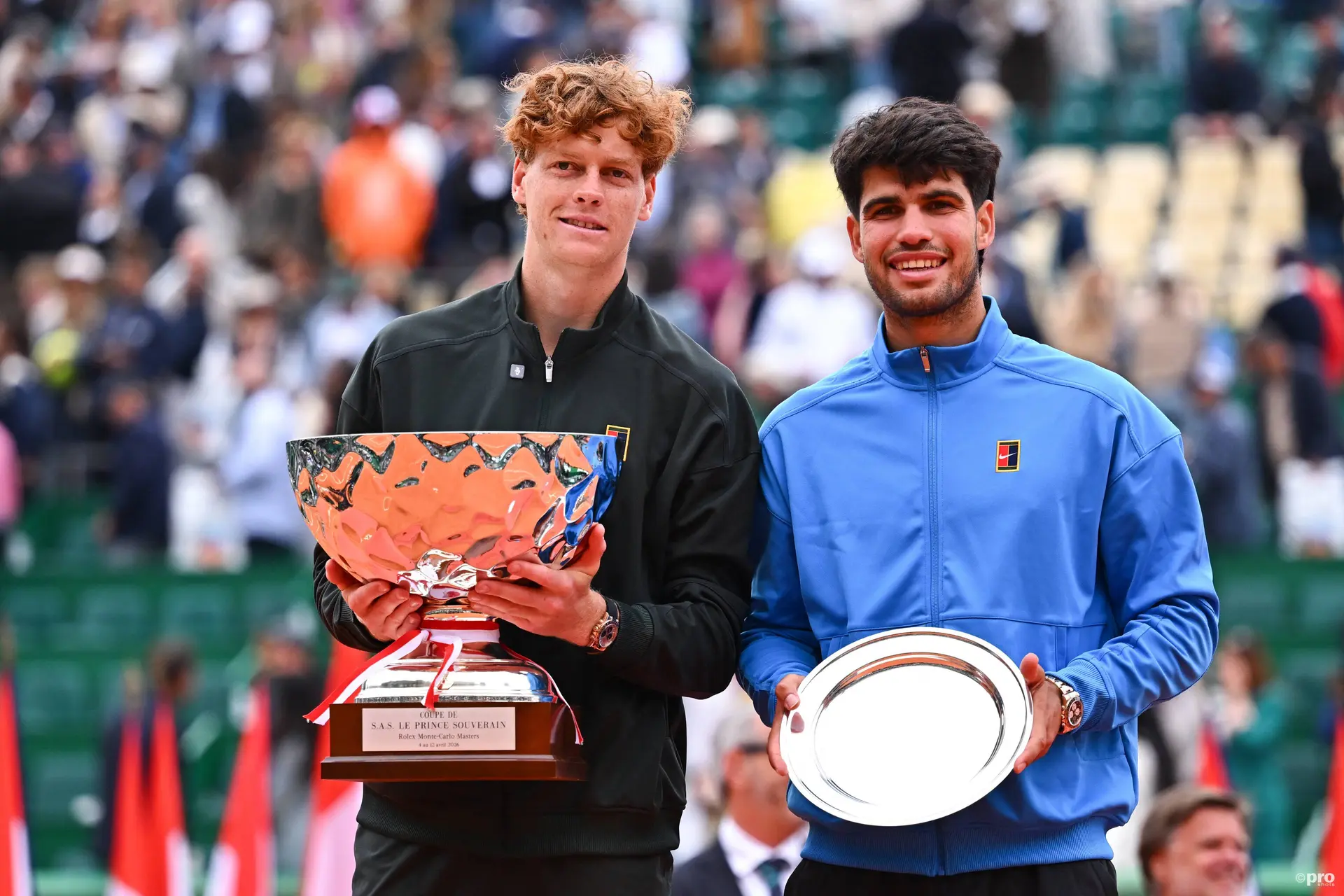
Early withdrawal halts Alcaraz’s Barcelona campaign
Alcaraz’s tournament ended after limited court time, with only one completed match following his arrival from Monte-Carlo. In his opening-round win over Virtanen, he maintained a solid baseline level, converting three break points and controlling rallies through consistent depth. His serve efficiency remained stable, winning over 70% of first-serve points, which allowed him to manage the match without extended physical strain.
However, the quick turnaround between tournaments appears to have contributed to the physical issue. The shift from Monte-Carlo’s slower clay conditions to Barcelona’s slightly faster surface requires adjustments in movement and timing, increasing physical demands.
“As I said yesterday, I stand by my words. It’s a situation I thought I had already felt before and that it wouldn’t go any further, that it was simply soreness from the demands of the whole week," the world No. 2 said in press conference. "But after seeing today’s tests, it’s an injury that’s a bit more serious than we all expected, and honestly, as I’ve already said, in the end I have to listen to my body, listen to what’s best for me so it doesn’t affect me later on, and that’s why I have to withdraw from this tournament.”
“For me, it has always been an exceptional tournament, a very special one, and personally, I never like to pull out of any event, but especially not this one. So, with a lot of sadness, I have to go back home to start recovery as soon as possible with my team, with the doctors, with the physio, and try to be as healthy as possible as soon as I can for the tournaments I have coming up. So, well, I hope you’ll be able to see me back on a tennis court again very soon.”
Machac advances to the quarter-finals without contest and moves into a section of the draw that remains open. He awaits the winner between Andrey Rublev and Lorenzo Sonego, with the withdrawal removing one of the top seeds from that half. The Czech player benefits from reduced court time while maintaining position within a competitive section of the tournament.
Ranking implications reshape ATP No.1 race
The withdrawal has immediate consequences in the ATP rankings, particularly in the ongoing contest between Alcaraz and Sinner. By failing to match his 2025 Barcelona final result, Alcaraz drops 280 points, eliminating any possibility of regaining the top position during this week. The ranking gap, therefore, stabilises in Sinner’s favour following his Monte-Carlo title run.
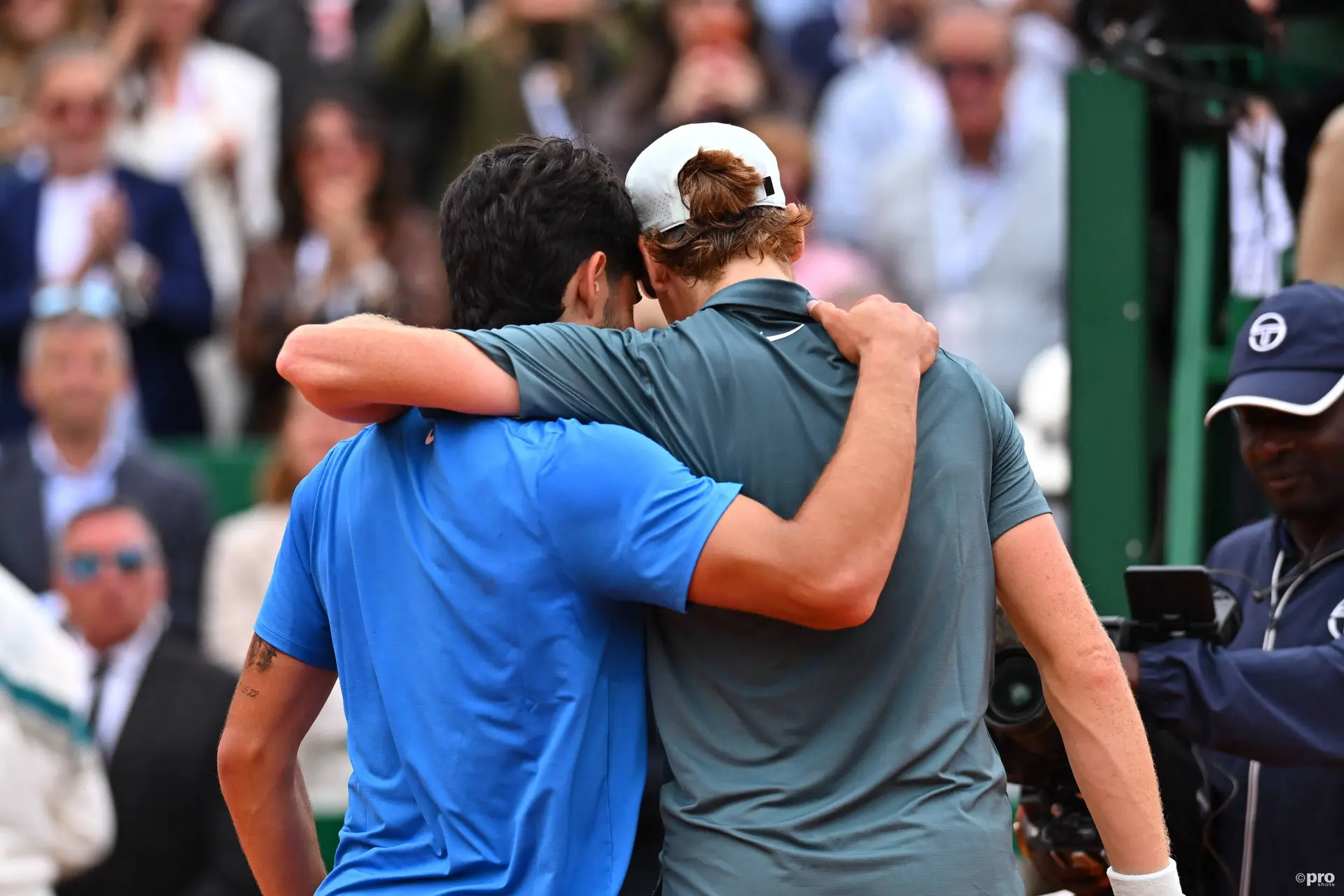
Sinner’s position is further reinforced by the calendar structure, as he carries limited points to defend in the early part of the clay season. This creates a short-term advantage in the rankings dynamic, allowing him to extend his lead while Alcaraz absorbs point losses from previous results. The Barcelona outcome becomes a critical pivot in that sequence.
From a seasonal perspective, the interruption affects Alcaraz’s continuity on clay, where he had been building form through consistent results. The focus now shifts toward recovery and readiness for the upcoming Masters 1000 events in Madrid and Rome, where ranking points and momentum remain in play.

Cristhián AvilaTennis Journalist
Cristhián Ávila is a tennis journalist based in Santiago, Chile, and has been part of the TennisUpToDate team since early 2023. He covers the ATP and WTA Tours as well as all four Grand Slams, producing breaking news, match reports, analysis, and regular liveblogs from major tournaments.
His reporting combines statistical analysis with clear explanation, helping readers understand tactical developments, player form, and broader storylines across the tour. Working fluently in both Spanish and English, Cristhián collaborates with an international editorial team and contributes to comprehensive global coverage. As part of his work, he has conducted interviews and media interactions with leading figures in the sport, including Caroline Wozniacki and John McEnroe.
In his journalism, Cristhián places strong emphasis on careful sourcing, editorial accuracy, and updating articles promptly when new, verified information becomes available. His coverage is grounded in research, context, and direct engagement with professional tennis.
claps 0visitors 0
Just In


Popular News

Latest Comments
- Fight the Good Fight... Tennis (sports in general) need more Humans such as yourself.
 mandoist18-10-2026
 - When is WTA going to mandate Genetic Testing (DNA) ???mandoist18-10-2026
- Hey, Dan... you just wake up from a coma? Regardless -- Thanks for the comedy this morning!mandoist18-10-2026
- Two Things: 1. Stop allowing these Spoiled Trust-Fund Elitists to behave badly. Your little hand-slaps do not deter them. 2. STOP the incessantly annoying "towel wiping" nonsense!!!!mandoist15-10-2026
- A healthy Qinwen may be hard to stop next season. She was already scaring her opponents before her medical leave(s). Unfortunately, Zheng insisted on singing again. On the positive side -- Mirra did not sing!! ;~}mandoist11-10-2026
- Where is it written that athletes, entertainers... People in general... are mandated to keep looking at -- or even using [anti]Social Media? Public & private figures consistently complain and reveal their concerns about negativity and violence thrown at them -- yet they insist on participating. Avoid it, don't use it, don't read it. It's okay to occasionally look up at the World instead beating your eyes & thumbs to death on The Inventions out there.mandoist11-10-2026
- great articlestennisseserver07-10-2026
- Medvedev was leading Djokovic 7-5, 3-5 when an attempted return..' NO you ignorants, Djokovic was leading .weiss05-10-2026
- No more bullshit "Wildcards" to these two. Qualify like everyone else -- there will be cameras there, too. Time to scream... WTF ????!!!!mandoist29-09-2026
- Let's not BS the general public -- Sabalenka started showing cracks in her game last season. Her losses and near-losses started at about the same time she began being distracted by Fame (constant Selfies, making TV commercials, magazine shoots, endless Social Media nonsense, etc., etc.) One would think even Saba could recognize the parallels with others who failed before her -- Raducanu, Giorgi, Bouchard to name a few.mandoist25-09-2026

Loading