French Open Roland Garros ATP Day Five Round-up | Jannik Sinner shock exit, Ben Shelton collapse & Tsitsipas fall define day of upsets
ATP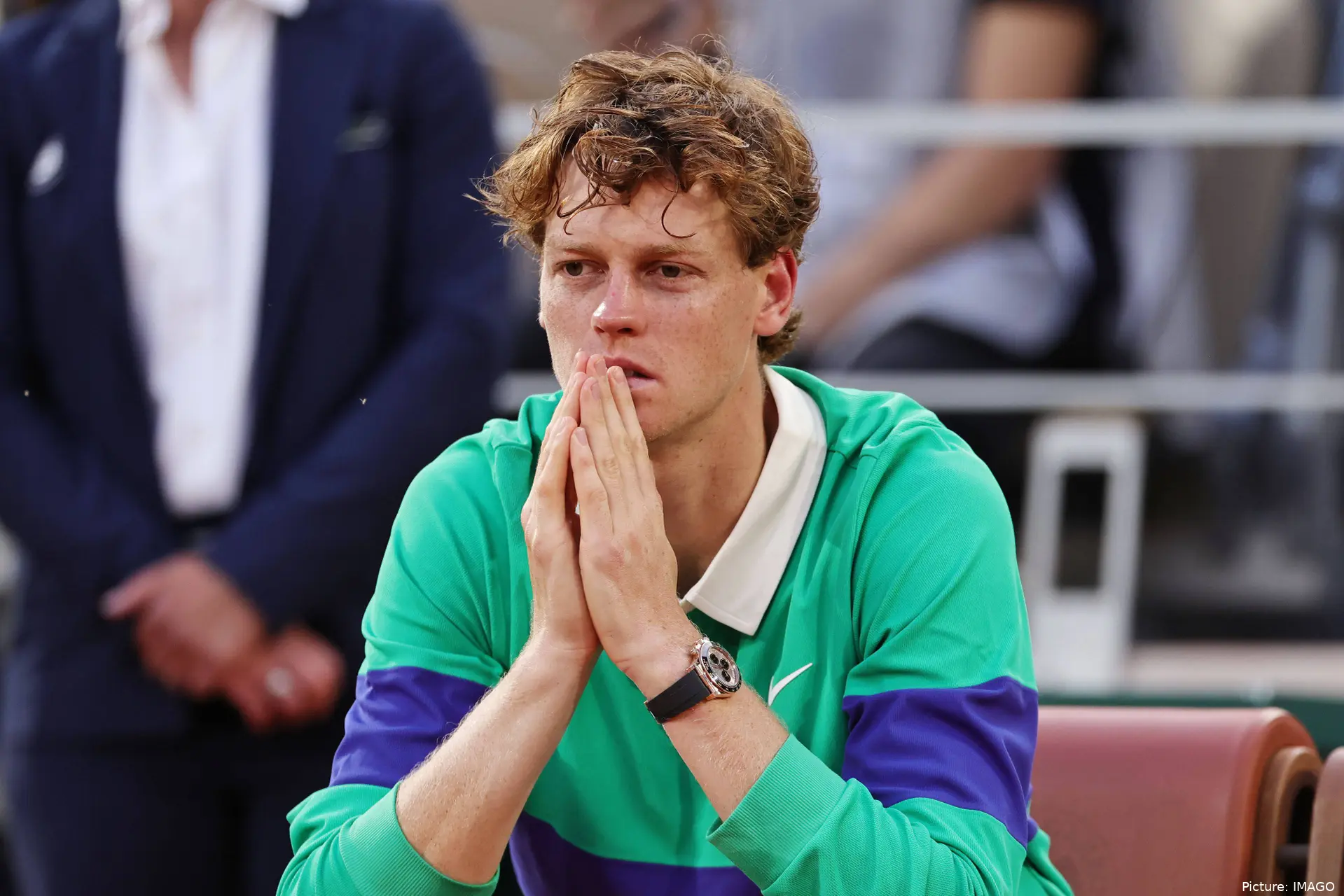
The Roland Garros second round on Day Five produced major movement across the men’s draw, with Matteo Berrettini, Frances Tiafoe and Felix Auger-Aliassime all advancing through demanding contests, while Raphael Collignon and Juan Manuel Cerundolo delivered significant upsets. The biggest shock came on Court Philippe-Chatrier, where Cerundolo overturned a two-set deficit to eliminate World No. 1 Jannik Sinner.
Beyond the headline upset, the day also saw further instability among seeded players as Matteo Arnaldi removed Stefanos Tsitsipas in four sets and Francisco Comesaña outlasted Luciano Darderi in a five-set battle. Several sections of the draw have now opened considerably heading into the third round, particularly in the top half after multiple seeded exits.
Cerundolo overturns Sinner collapse in major upset
Juan Manuel Cerundolo def. Jannik Sinner 3-6, 2-6, 7-5, 6-1, 6-1
Sinner appeared in complete control through the opening two sets, dominating behind serve and repeatedly exposing Cerundolo’s defensive positioning from the baseline. The Italian conceded just six service points in the first set and built a 5-1 lead in the third, seemingly moving toward another routine straight-sets victory.
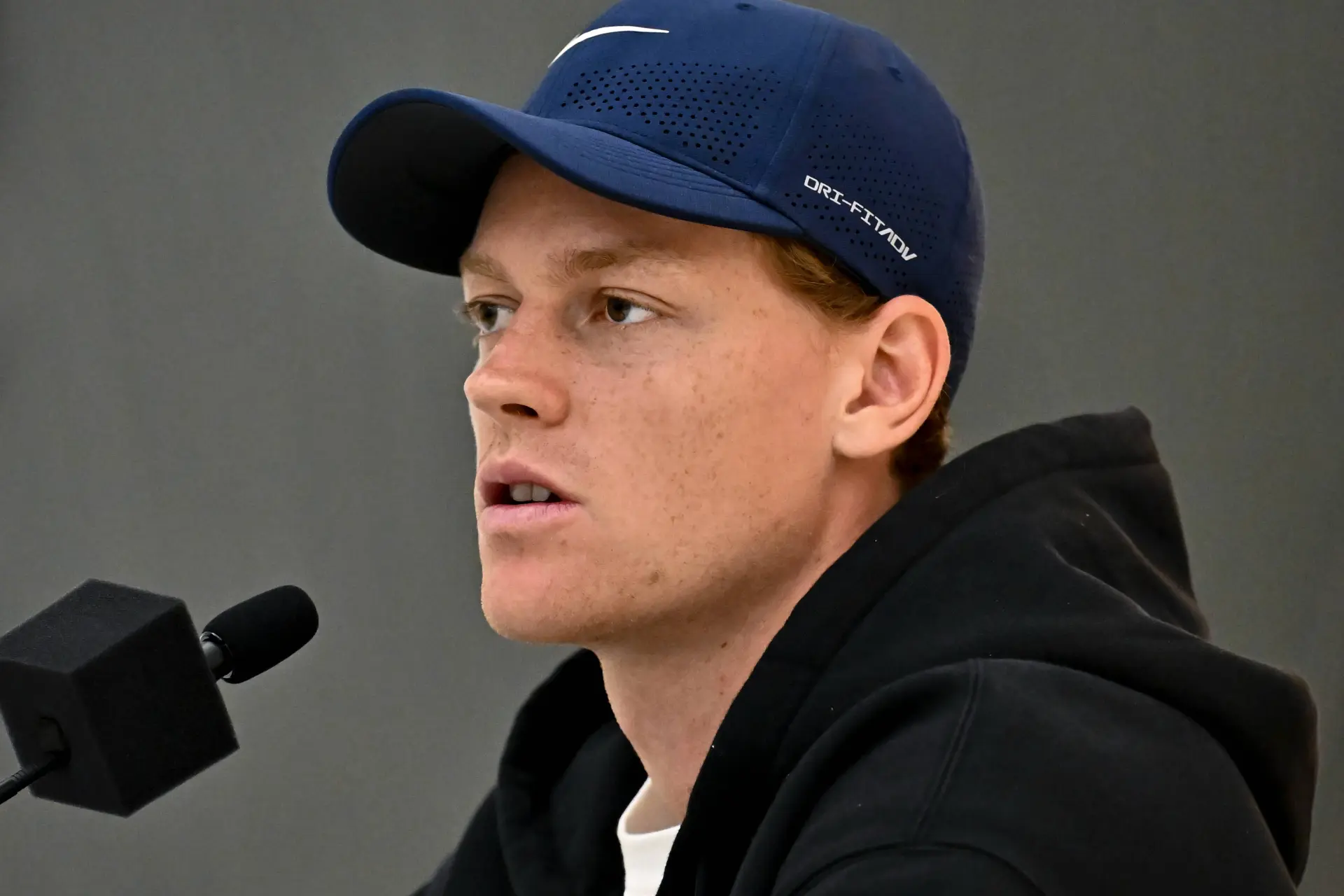
The match shifted dramatically once Sinner’s physical movement declined midway through the third set. Cerundolo extended rallies, forced the world No. 1 into uncomfortable lateral movement and capitalised after a medical timeout interrupted Sinner’s rhythm. From 5-1 down in the third, the Argentine won 12 of the next 13 games.
Sinner’s serving level and court coverage dropped sharply after the physical issues emerged, while Cerundolo increasingly controlled neutral exchanges through consistency and depth. The result blows open the top section of the Roland Garros draw, with Cerundolo advancing to the third round after the biggest win of his career.

Tiafoe survives Hurkacz after five-set battle
Frances Tiafoe def. Hubert Hurkacz 6-7, 7-6, 6-4, 6-7, 6-4
Frances Tiafoe advanced to the third round of Roland Garros after a physically draining 4-hour 42-minute victory over Hubert Hurkacz, in a match defined by elite serving output and minimal separation across extended stretches. The American recovered from losing the opening set and managed two tiebreaks before closing out the fifth set under sustained pressure on Court 14.
The statistical contrast highlighted the nature of the contest. Hurkacz produced 43 aces to Tiafoe’s 15 and finished with more winners (88 to 68), but also accumulated significantly more unforced errors (59 to 32), particularly in longer rallies as the match progressed. Tiafoe’s efficiency in service phases proved decisive, winning 83% of first-serve points and 55% behind the second, which allowed him to remain stable through high-frequency hold games.
The American also maximised break opportunities, converting 4 of 11 chances compared to Hurkacz’s 2 breaks, a differential that proved decisive in two tight sets. Tiafoe’s ability to absorb pace and extend neutral rallies in the fifth set ultimately tilted the match, securing a hard-fought progression into the Round of 32 after a high-load physical battle.

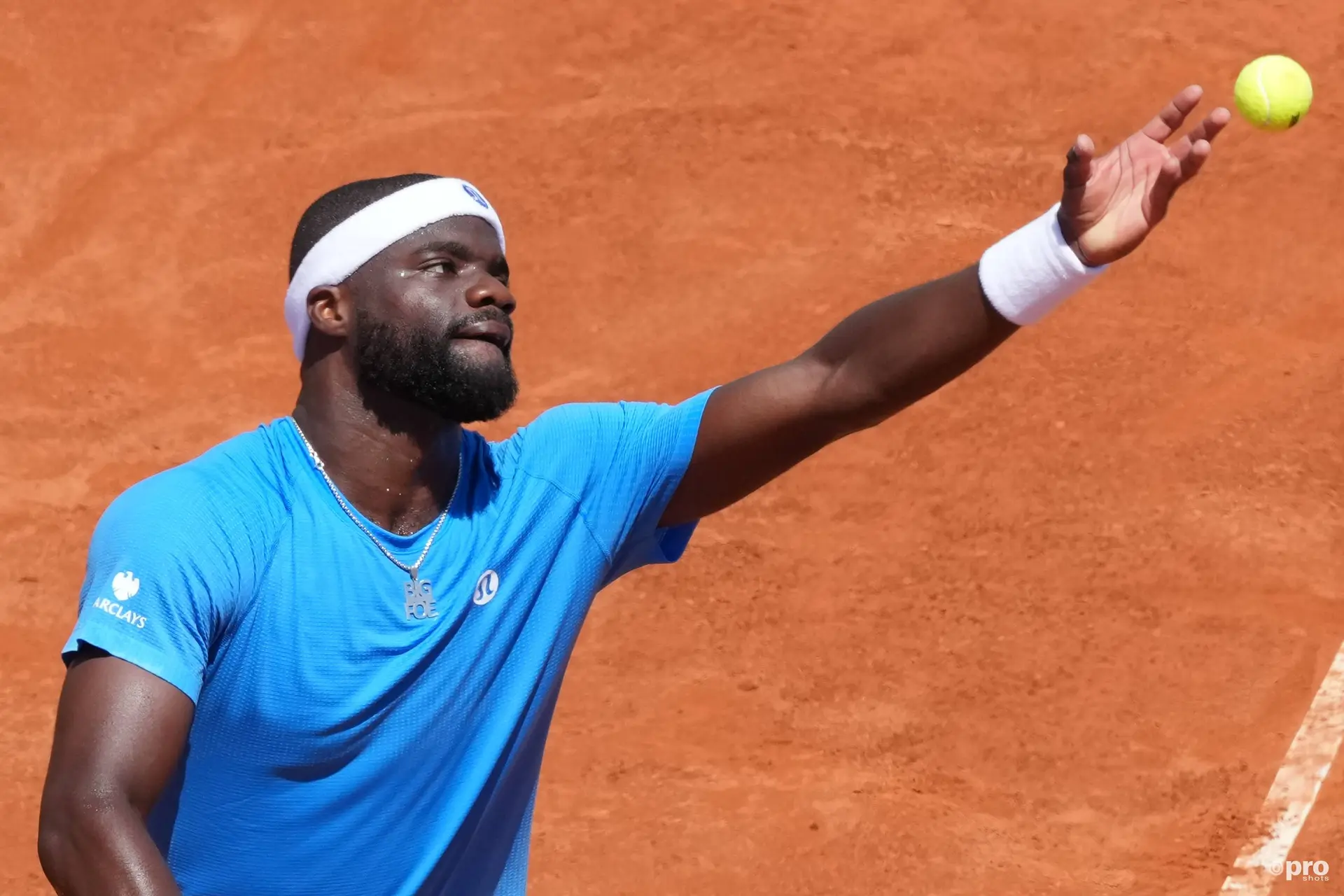
Frances Tiafoe of United States serves during the match against Andrea Pellegrino
Collignon stuns Shelton with composed display
Raphael Collignon def. Ben Shelton 6-4, 7-5, 6-4
Collignon produced one of the cleanest upsets of the day, eliminating Shelton in straight sets through consistent baseline stability and disciplined returning. The Belgian absorbed Shelton’s early power without allowing the American to dictate service games.
The match turned through Collignon’s composure in pressure moments, particularly late in the opening two sets where Shelton’s error count increased under sustained rally pressure. The Belgian repeatedly forced neutral exchanges and prevented Shelton from shortening points.
Collignon remained structurally solid throughout the match, avoiding momentum swings and protecting his own service games effectively. The result removes another seeded player from the draw and sends the Belgian into the third round with growing confidence.

Nakashima recovers after Van Assche surge
Brandon Nakashima def. Luca van Assche 6-7, 6-4, 5-7, 6-1, 6-3
Nakashima completed a five-set comeback after trailing two sets to one against Van Assche in a match that initially favoured the Frenchman’s variation and defensive coverage. Van Assche disrupted rhythm effectively through the opening stages and edged the third set to move close to victory.
The match shifted physically in the fourth set as Nakashima increased baseline intensity and began dictating more consistently off both wings. Van Assche’s resistance declined as the American repeatedly gained control of longer exchanges.
Nakashima dominated the final two sets through improved depth and greater physical consistency, allowing him to overturn the deficit without facing sustained pressure late. He advances after one of the more demanding recoveries of the round.
Comesaña outlasts Darderi in four-hour battle
Francisco Comesaña def. Luciano Darderi 7-6, 4-6, 6-4, 2-6, 6-4
Comesaña advanced after a physically demanding five-set battle that lasted more than four hours, with both clay-court specialists trading momentum repeatedly. Long baseline exchanges and extended service games defined the structure of the match throughout.
The Argentine regained control by increasing return depth in the fifth set, forcing Darderi further behind the baseline during critical service games. After splitting the opening four sets, the deciding set was shaped by marginal differences in rally tolerance and shot selection.
Comesaña remained steadier in the final stages, closing the match through disciplined baseline construction rather than outright aggression. He now faces Berrettini in the third round after eliminating the 14th seed.

Berrettini dominates Rinderknech in straight sets
Matteo Berrettini def. Arthur Rinderknech 6-4, 6-4, 6-4
Berrettini advanced to the third round with a controlled performance built around serve efficiency and first-strike baseline patterns. The Italian established scoreboard pressure early in each set and consistently denied Rinderknech extended return opportunities.
The decisive factor came through Berrettini’s ability to shorten points behind his first serve while applying steady pressure in return games. Rinderknech struggled to create rhythm from the baseline as Berrettini repeatedly forced shorter defensive replies.
Berrettini maintained control across all three sets without facing sustained scoreboard pressure and now moves into an increasingly open section of the draw. He will face Francisco Comesaña next, with a potential quarter-final pathway no longer containing another seeded player.
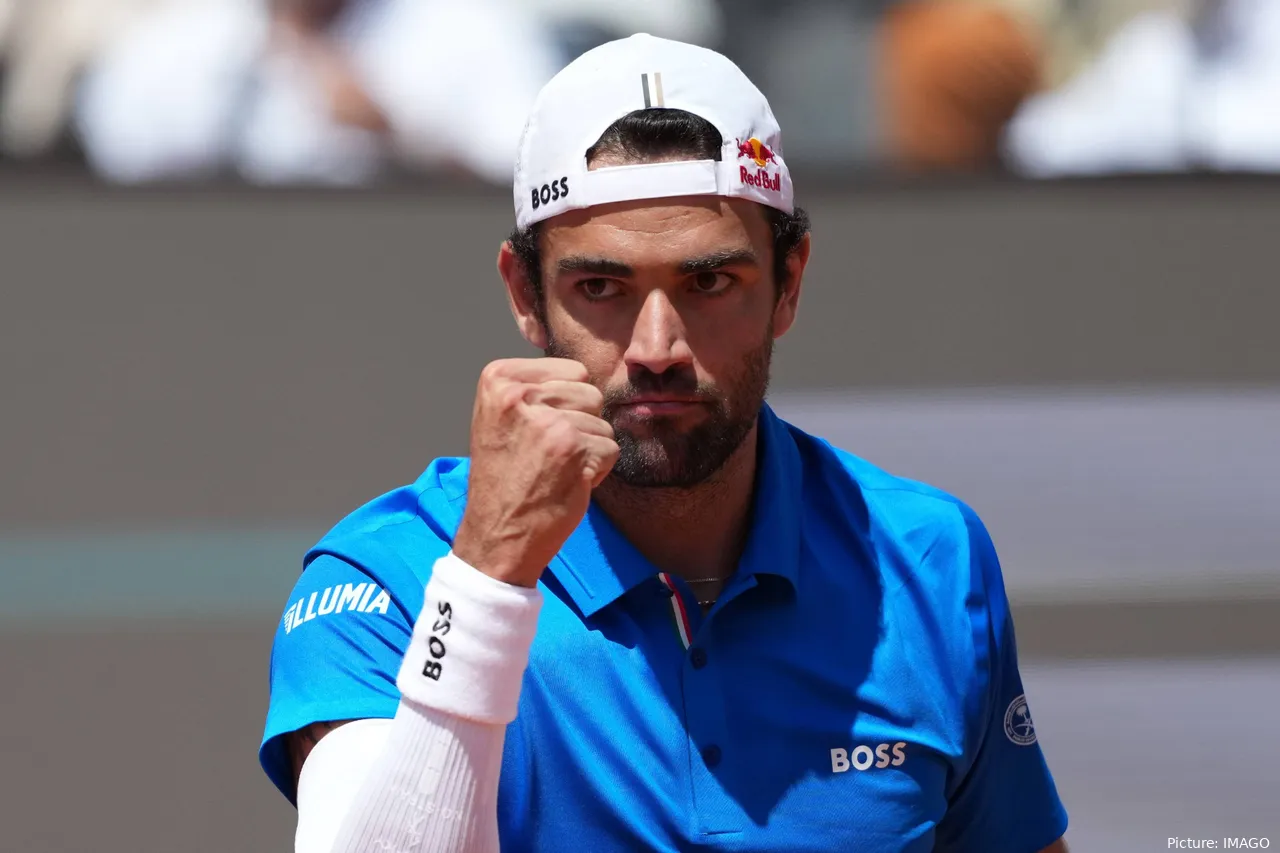
Arnaldi outlasts Tsitsipas in tactical baseline battle
Matteo Arnaldi def. Stefanos Tsitsipas 7-6, 5-7, 6-3, 6-4
Matteo Arnaldi advanced to the third round after overcoming Stefanos Tsitsipas in a match shaped by extended baseline exchanges and fluctuating momentum. The Italian edged a tight opening-set tiebreak before Tsitsipas responded late in the second set, capitalising on a slight dip in Arnaldi’s first-serve efficiency to level the contest.
The decisive shift came through Arnaldi’s return positioning and ability to pressure Tsitsipas’ backhand wing during longer rallies. After dropping the second set, the Italian raised the intensity on return games and consistently prevented Tsitsipas from shortening points behind his first serve. Arnaldi also absorbed pace effectively from deeper court positions, forcing the Greek into lower-percentage attacking patterns.
Tsitsipas struggled to maintain control behind his second serve in the latter stages, while Arnaldi remained more stable in the extended exchanges that increasingly defined the match. The result marks another early exit for Tsitsipas at Roland Garros and further opens this section of the draw heading into the Round of 32.

Stefanos Tsitsipas carefully picking out the perfect ball at the 2025 Rome Open

Samuel GillEditor-in-Chief
Samuel Gill is the Chief Content Officer (CCO) of TennisUpToDate.com, a role he has held since 2020. He is responsible for editorial governance across the platform, including setting content standards, overseeing accuracy and consistency, and guiding long-term editorial strategy. Since joining, he has contributed more than 10,000 articles and editorial pieces across the TennisUpToDate network, playing a central role in the daily operation and development of the site.
Based in Leicester, Samuel has a broad background in tennis media. In his current role, he works closely with editors and writers to ensure coverage meets clear journalistic standards, with particular attention to verification, consistency, and timely updates when new information becomes available.
claps 0visitors 0
Just In

Popular News
Latest Comments
- Does Sinner need that 4.5 mil? I doubt it. He can make that with three modelling gigs!😅🤣Rapunzel21-10-2026
- Did "People Magazine" purchase this website? This nonstop storyline is bullshit.
 mandoist21-10-2026
 - Listen... this is of no concern to anyone but these two. Deal with your own issues -- most of us have our own. Thanks, media, for these insignificant follow-ups which are meaningless.mandoist21-10-2026
- This is so very very sad, for all three of them. I truly thought they had an unbreakable bond, but life throws up so many differing challenges. Having your homeland suffering in such a terrible way, makes happiness lose out to guilt as well. Our thoughts are with them. X💔bjsexton20-10-2026
- I have lost all respect for Svitolina! Could she not have waited until he had played at the Paris Masters!!! She is selfish and don't give a damn about Gael. That is NOT how love is demonstrated Elina!!Rapunzel19-10-2026
- Perhaps convenient tennis tour sex is not a strong enough experience in which to base a marriage?mandoist19-10-2026
- Fight the Good Fight... Tennis (sports in general) need more Humans such as yourself.mandoist18-10-2026
- When is WTA going to mandate Genetic Testing (DNA) ???mandoist18-10-2026
- Hey, Dan... you just wake up from a coma? Regardless -- Thanks for the comedy this morning!mandoist18-10-2026
- Two Things: 1. Stop allowing these Spoiled Trust-Fund Elitists to behave badly. Your little hand-slaps do not deter them. 2. STOP the incessantly annoying "towel wiping" nonsense!!!!mandoist15-10-2026

Loading