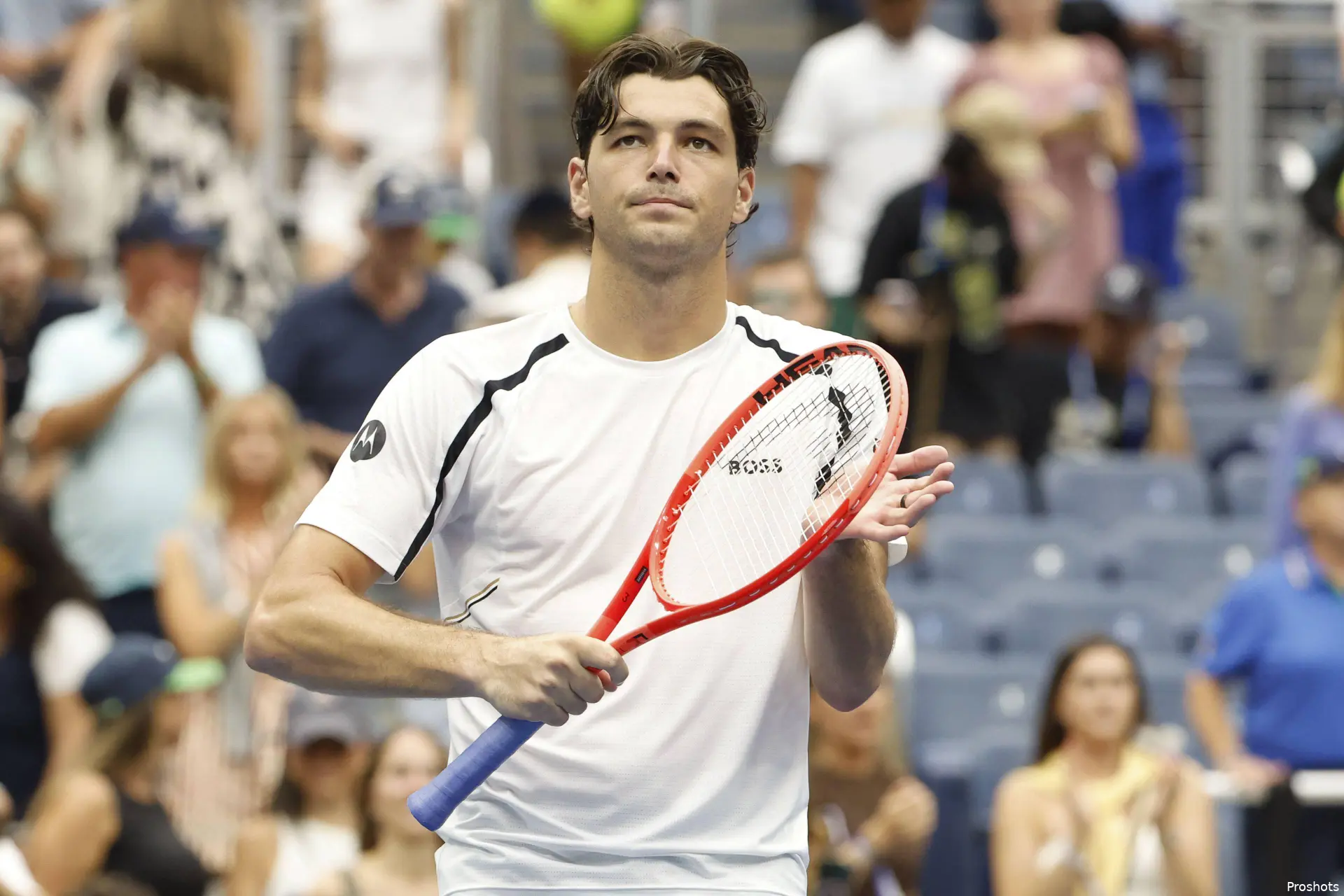
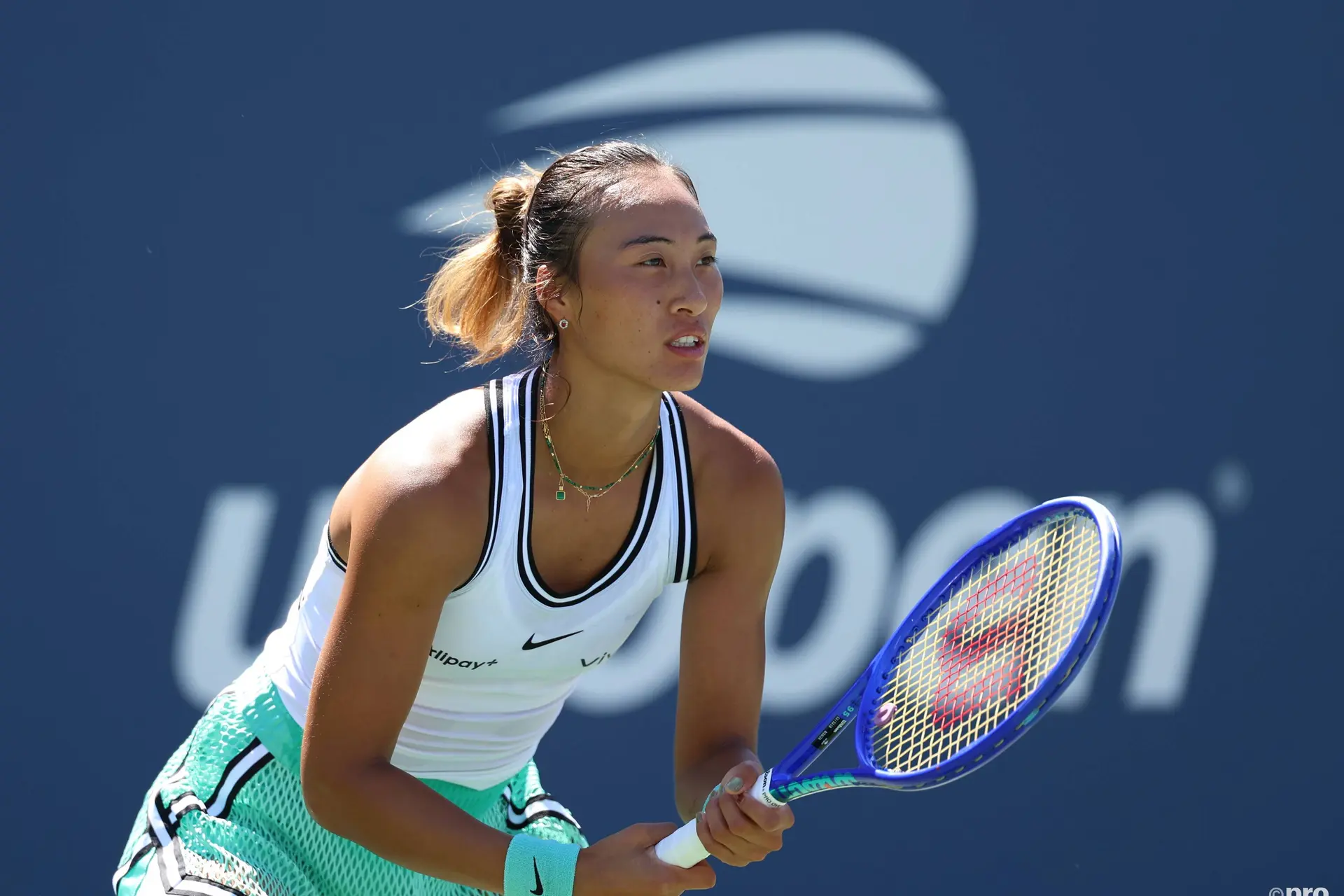
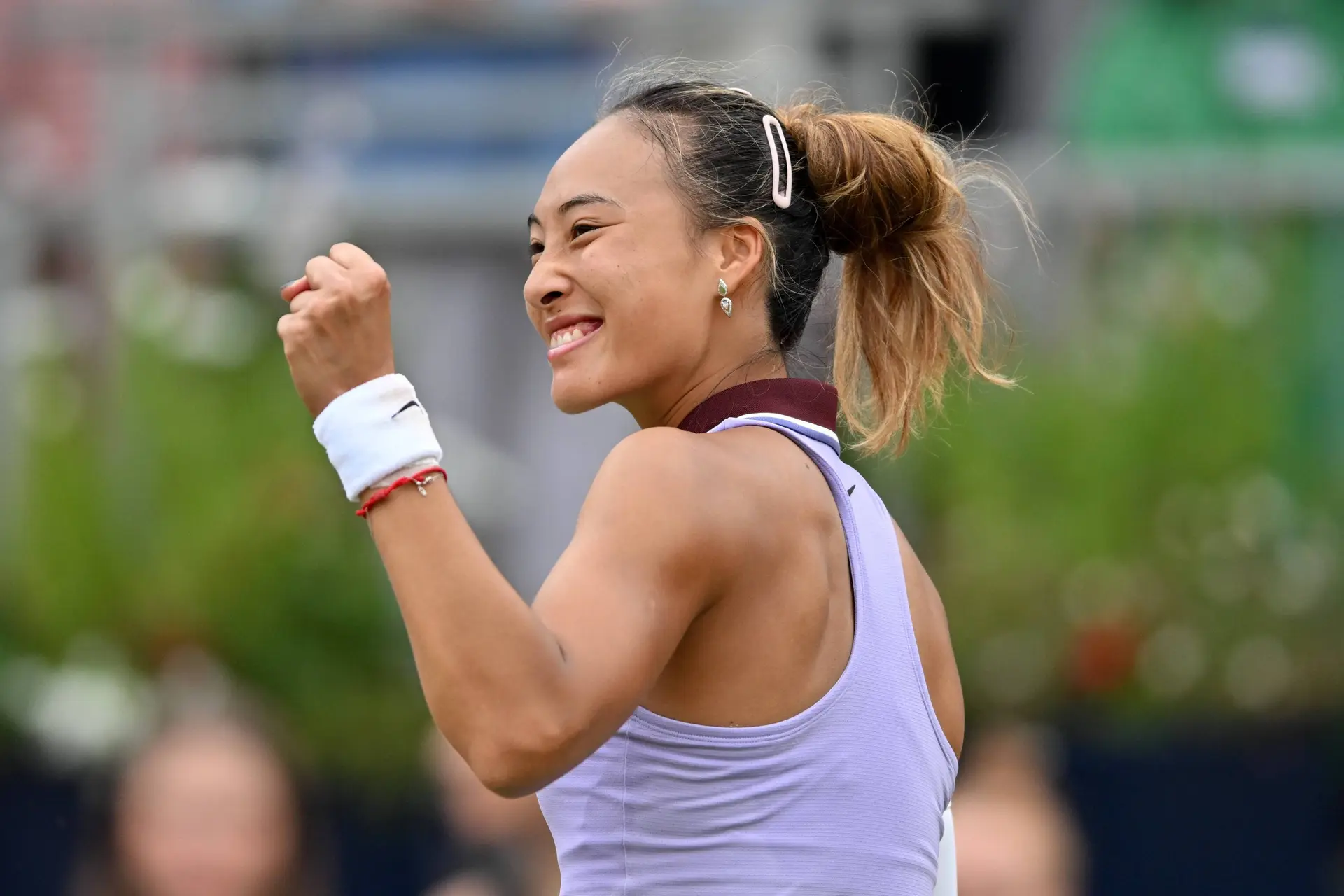
There were two remarkably intense press conferences at the US Open on Saturday. Taylor Fritz looked devastated after losing to Francisco Cerundolo in five sets after leading by two. Madison Keys had to explain how she had somehow lost to Zheng Qinwen after leading 5-0 in the third set and holding a match point. Watch those press conferences without context and you might wonder why the emotions are so enormous.
These are extraordinarily successful professional athletes. They have played hundreds of matches. They have lost before. They will lose again. But that misses something fundamental about the US Open. This tournament is a very, very big deal.
Not simply because it is a Grand Slam. Not simply because of the ranking points or the trophy or the history attached to winning in New York. For a professional tennis player, seven matches here can quite literally change the trajectory of an entire life.
Financial rewards tantalising for all players
Consider Anastasia Potapova. Potapova is 25 years old and has already been a professional tennis player for roughly a decade. She was the No. 1 junior in the world. She won the Wimbledon girls’ title. She has beaten some of the best players alive and built the kind of career virtually every junior tennis player on earth would happily take.
On Saturday, she deservedly beat Amanda Anisimova to reach the fourth round of the US Open for the first time. She is having an outstanding tournament. And she is still four victories away from winning it.
That distance matters. Because if Potapova somehow navigates those four matches and lifts the trophy, she receives $5.5 million.
Think about that number for a moment. This is not an unknown player suddenly stumbling into professional tennis. Potapova has been doing this for ten years. She is already an enormously successful athlete. And one extraordinary week in New York can transform the financial dimensions of her entire career.
Huge opportunity for Jovic - not just in tennis
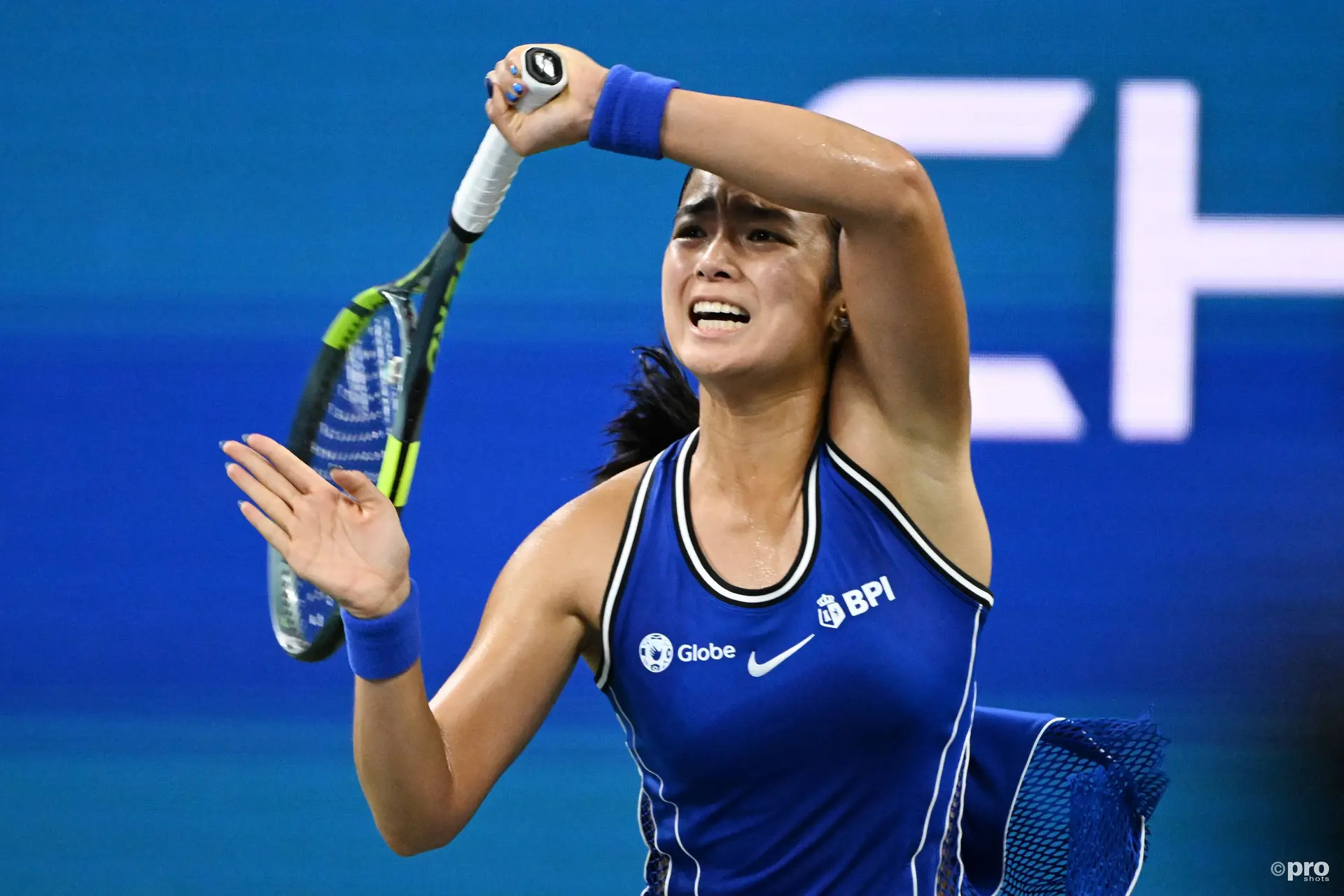
Now consider Iva Jovic. Jovic is 18. On Saturday night, she survived a three-hour match against Alexandra Eala, winning 7-5 in the third set to reach the fourth round of the US Open for the first time. She now gets Coco Gauff.
That is an enormous tennis challenge. But imagine, just for a moment, that she keeps winning. Four more matches.
If Jovic wins them, an 18-year-old leaves New York with a $5.5 million winner’s check. And potentially something considerably more valuable. Because winning the US Open doesn’t simply produce prize money. It produces fame.

Iva Jovic is in the fourth round of her home Grand Slam for the first time
Jovic is American, young, immensely talented and unusually marketable. A teenage American US Open champion doesn’t just acquire a trophy. She becomes one of the faces of American sports. Sponsors notice. Brands notice. Television notices.
Casual sports fans who had never heard her name two weeks earlier suddenly know exactly who she is. The lifetime commercial implications could dwarf the winner’s check.
Would that ultimately mean? Nobody can know for sure, but my best guess is north of $100 million. And this is what I think we sometimes forget when watching tennis. We sit at home and see a forehand. The player hitting it may see their life.
The disheartening side of tennis - Fritz and Keys swallow painful defeats
When Fritz is trying to close out Cerundolo, he isn’t playing some interchangeable Saturday afternoon match on the ATP Tour. He knows exactly where he is. He knows the draw. He knows what reaching the second week means. He knows how few opportunities anyone gets to win a Grand Slam, particularly their home Grand Slam.
When Keys gets to 5-0 against Zheng, she knows exactly how close she is to the fourth round. Then 5-0 becomes 5-1. Then 5-2. And suddenly the thing that looked inevitable becomes something she can feel slipping away.
We tend to discuss those moments almost entirely through the language of sports psychology. Choking. Nerves. Mental toughness. Pressure. Those things are real. But sometimes I think the language is much too small for what is actually happening.
Professional tennis is unusual because the consequences are so individualized. There is no guaranteed team contract cushioning the result. There is no teammate who can rescue you. There is no coach calling timeout when you begin to unravel. There is a court, an opponent and you.
And at the biggest tournaments, the difference between winning and losing a handful of points can mean hundreds of thousands of dollars immediately and potentially millions more over a career.
At this year’s US Open, simply reaching the fourth round pays $480,000. A quarterfinalist earns $780,000. A semifinalist gets $1.45 million. The runner-up receives $2.8 million. The champion gets $5.5 million.
Read those numbers again and then tell me a player should treat break point like any other point. This doesn’t mean every player is standing at the baseline calculating endorsement contracts before a second serve. Of course they aren’t.
Elite athletes become elite partly because they learn to narrow their universe down to the next ball. But they are human beings.
Read also

They know. They know what winning the next match means. They know what tournament they are playing. They know that Grand Slam opportunities are finite. And they know that somewhere between the first round and championship Sunday, a tennis tournament can become something much bigger.
It can become generational wealth. It can become celebrity. It can turn a very good career into a famous one. It can change how a player is perceived for the rest of their life.
That is why I don’t look at the emotion we saw from Fritz and Keys and wonder why losing hurt so much. I wonder how anyone handles these moments as well as professional tennis players usually do.
Because the remarkable thing about Grand Slam tennis isn’t that players sometimes crack under the pressure. It’s that with this much sitting on the other side of the net, they can somehow toss the ball into the air and serve at all.

Aron SolomonGuest Author
A Pulitzer Prize-nominated journalist for his groundbreaking op-ed in The Independent exposing the NFL’s “race-norming” policies, Aron Solomon, JD, is a globally recognized thought leader in law, media, and strategy.
As Chief Strategy Officer for AMPLIFY, he leverages his deep expertise to shape the future of legal marketing. Aron has taught entrepreneurship at McGill University and the University of Pennsylvania and was honored as a Fastcase 50 recipient, recognizing him among the world’s top legal innovators. A prolific commentator on law, business, and culture, his insights regularly appear in Newsweek, The Hill, Crunchbase News, and Literary Hub.
He has also been featured in The New York Times, Fast Company, Fortune, Forbes, CBS News, CNBC, USA Today, ESPN, TechCrunch, BuzzFeed, Venture Beat and countless other leading global media outlets. We are proud to have Aron on board at TennisUpToDate, where his deep tennis expertise enriches the site with sharp, original columns that connect the sport to wider cultural debates.
claps 1visitors 1
Just In



Popular News

Latest Comments
- Fight the Good Fight... Tennis (sports in general) need more Humans such as yourself.
 mandoist18-10-2026
 - When is WTA going to mandate Genetic Testing (DNA) ???mandoist18-10-2026
- Hey, Dan... you just wake up from a coma? Regardless -- Thanks for the comedy this morning!mandoist18-10-2026
- Two Things: 1. Stop allowing these Spoiled Trust-Fund Elitists to behave badly. Your little hand-slaps do not deter them. 2. STOP the incessantly annoying "towel wiping" nonsense!!!!mandoist15-10-2026
- A healthy Qinwen may be hard to stop next season. She was already scaring her opponents before her medical leave(s). Unfortunately, Zheng insisted on singing again. On the positive side -- Mirra did not sing!! ;~}mandoist11-10-2026
- Where is it written that athletes, entertainers... People in general... are mandated to keep looking at -- or even using [anti]Social Media? Public & private figures consistently complain and reveal their concerns about negativity and violence thrown at them -- yet they insist on participating. Avoid it, don't use it, don't read it. It's okay to occasionally look up at the World instead beating your eyes & thumbs to death on The Inventions out there.mandoist11-10-2026
- great articlestennisseserver07-10-2026
- Medvedev was leading Djokovic 7-5, 3-5 when an attempted return..' NO you ignorants, Djokovic was leading .weiss05-10-2026
- No more bullshit "Wildcards" to these two. Qualify like everyone else -- there will be cameras there, too. Time to scream... WTF ????!!!!mandoist29-09-2026
- Let's not BS the general public -- Sabalenka started showing cracks in her game last season. Her losses and near-losses started at about the same time she began being distracted by Fame (constant Selfies, making TV commercials, magazine shoots, endless Social Media nonsense, etc., etc.) One would think even Saba could recognize the parallels with others who failed before her -- Raducanu, Giorgi, Bouchard to name a few.mandoist25-09-2026

Loading