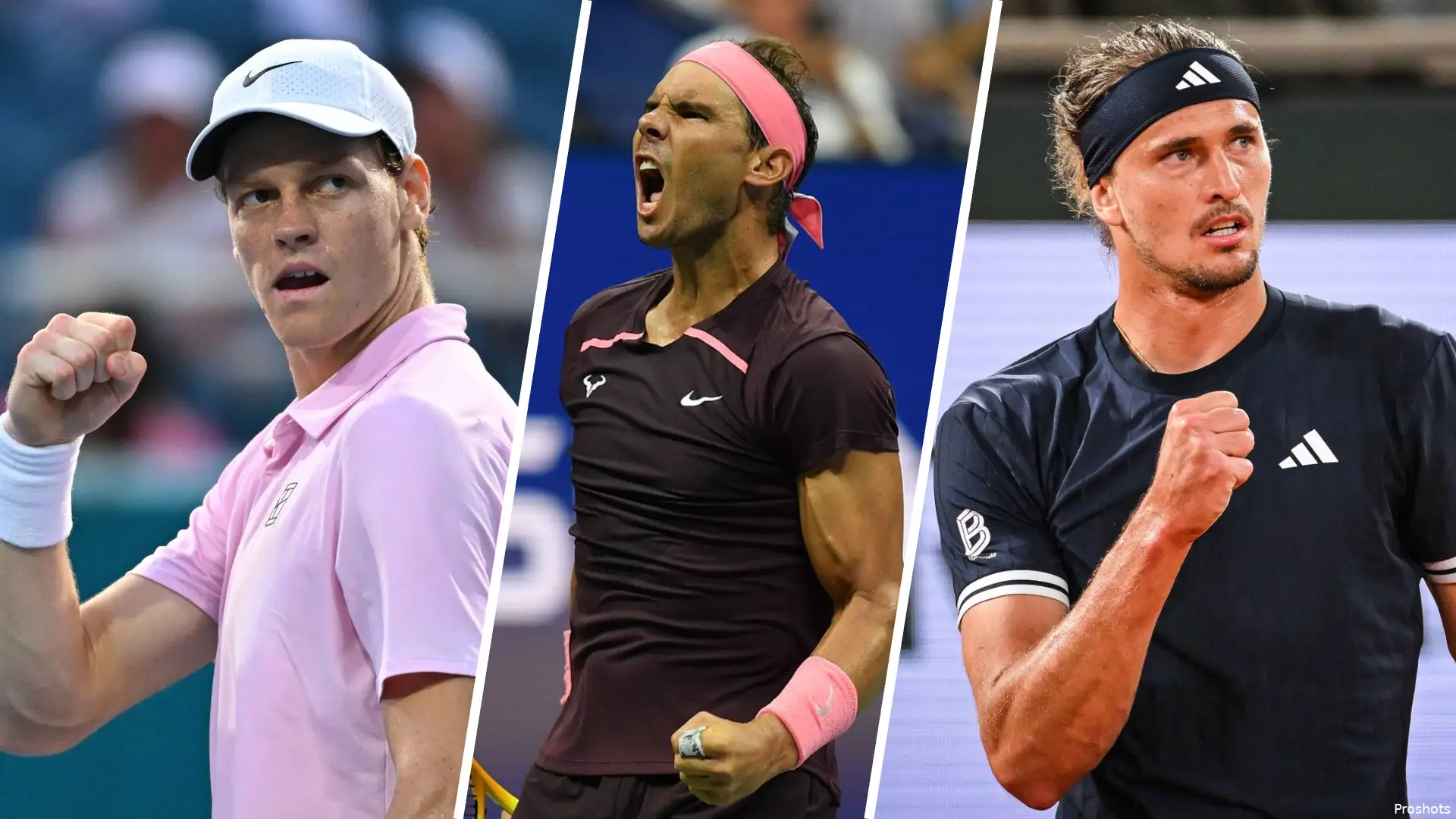
Only six players have reached at least the semifinals at all nine Masters 1000 events since the format began in 1990, and Alexander Zverev is one of them. Indian Wells was the last piece of his set: in March 2026 he beat Arthur Fils 6-2, 6-3 in the quarterfinals and reached his first semifinal in the desert.
He was the first player born in 1990 or later to do it, and Jannik Sinner completed his own set in Madrid in April. The feat is now part of the context of Zverev's best season, which included two Grand Slam titles and the year-end No. 1 ranking, clinched on October 12.
The list matters because of how rarely the nine events line up. Players tend to be strong on one surface or in one part of the calendar. Reaching a semifinal in Monte-Carlo and Paris, in Indian Wells and Rome, in Shanghai and Cincinnati, requires winning matches on clay, hard courts, indoors, at altitude, in heat and in cold. Until 2026, four men had done it, and all four were Grand Slam champions who will be remembered among the best of the Open Era.
| Player | Completed at | Year | Masters 1000 titles | Masters match record |
| Rafael Nadal | Shanghai | 2009 | 36 | 410-90 |
| Novak Djokovic | Paris | 2009 | 40 | 420-97 |
| Roger Federer | Paris | 2010 | 28 | 381-108 |
| Andy Murray | Paris | 2015 | 14 | 230-101 |
| Alexander Zverev | Indian Wells | 2026 | 7 | 190-79 |
| Jannik Sinner | Madrid | 2026 | 10 | 123-29 |
Rafael Nadal: the first to finish the set, still without Miami
Nadal completed the set in Shanghai in 2009, when he was 23. He leads the Masters 1000 with the highest winning percentage in the format, 82.0%, and finished his career with 36 titles and a 410-90 record.
The record has one hole: Miami. He reached five finals there and lost all five, which means the only Masters 1000 he never won is also an event where his consistency was never in question. His entry in this club is the least surprising, because his clay-court dominance, hard-court finals and indoor semifinals fit the profile of a player who could win everywhere.
There is also a timing detail that makes his place in the list stand out. Shanghai only became a Masters 1000 event in 2009, and Nadal needed just that first year to complete the set there. For a player who spent so much of his career being described by one surface, that is the strongest counter-argument: the nine-event standard is not about clay, and he met it in the first season that the full nine-tournament calendar existed in its current form.
His 410-90 record and his 82.0% winning percentage, the best in Masters history, also show that he did not complete the set by accident.
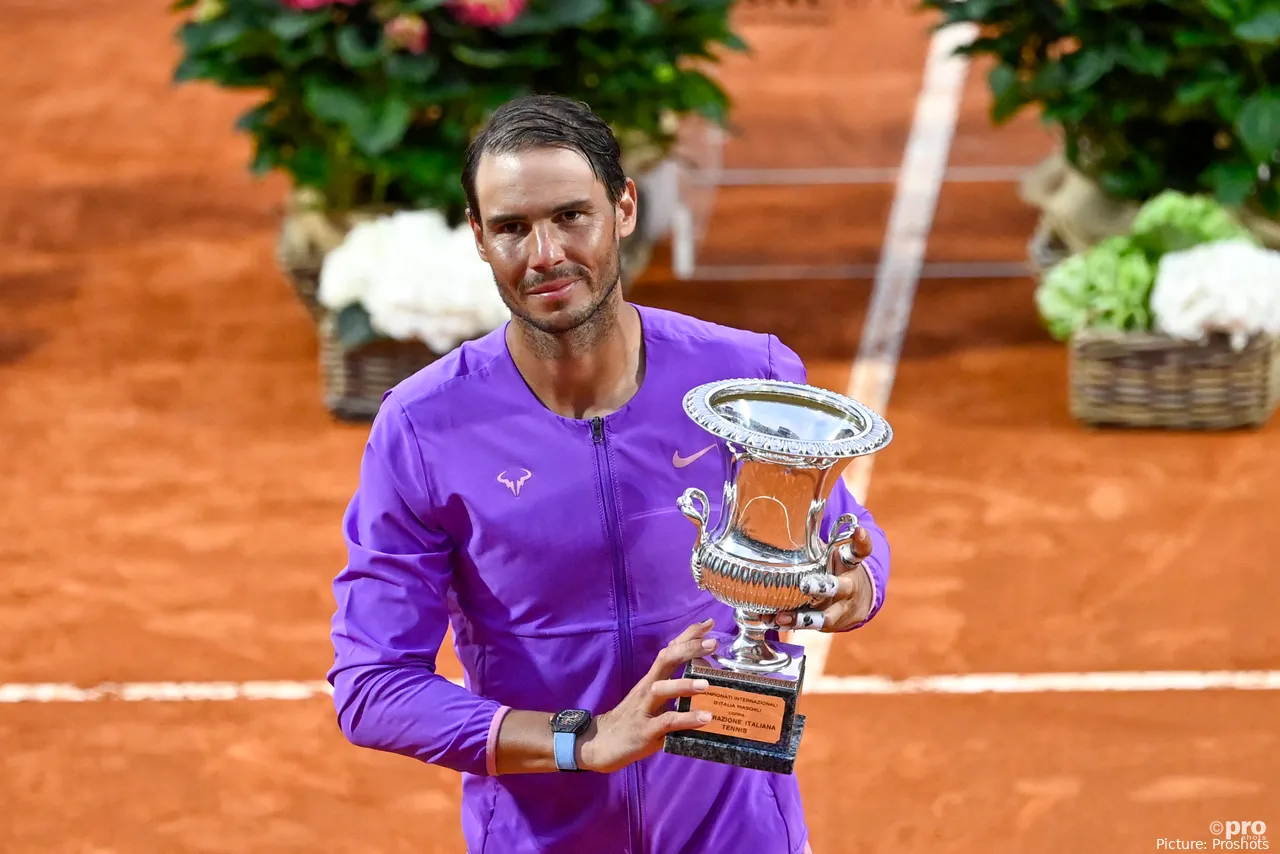
Novak Djokovic: the player who did it all, and then won every title
Djokovic completed the set in Paris in 2009. Today he leads all players with 40 Masters 1000 titles and a 420-97 record, which gives him an 81.4% winning percentage, second to Nadal. He is also one of only two men to have won all nine titles, with Sinner as the other. His entry in the club is the one that matters most as a benchmark: it shows that reaching every semifinal and winning every title can be done by the same player and that it takes more than a decade.
The comparison with the rest of the club is useful. Djokovic completed the semifinal set in 2009, the same year as Nadal, and then needed years to turn that consistency into the nine titles. His 420-97 record means he has won more Masters matches than any other player on the list, and his 40 titles are four more than Nadal's 36.
It also explains why he sits at the top of every ranking of Masters 1000 success: he did not just reach the last four everywhere, he kept winning once he got there. Of the six names in the club, he is the one whose numbers remain the benchmark for the other five.

Roger Federer: no Monte-Carlo, no Rome, but semifinals everywhere
Federer finished the set in Paris in 2010. His 28 Masters titles and 381-108 record are the clearest evidence that a player can be dominant without winning every event. He never won Monte-Carlo or Rome, losing four finals at each. The semifinals, though, were always there. For a player who was at his best on fast surfaces and indoors, the clay Masters were the real test, and his consistency on them is what put him in this list.
His record also shows how thin the margin can be. Four lost finals in Monte-Carlo and four more in Rome mean that he reached the biggest matches of the clay swing eight times without winning either title, which is one of the more unusual statistics of a career with 28 Masters titles and a 381-108 record.
Federer completed the set in Paris in 2010, one year after Nadal and Djokovic, and joined a group that was becoming defined by players who could win on every surface. His winning percentage in Masters events (about 78%) is lower than Nadal's 82.0% and Djokovic's 81.4%, which is a reminder that the club is about breadth, not only about dominance.

Roger Federer with the Shanghai title.
Andy Murray: the member that proves the feat is not only about titles
Murray completed the set in Paris in 2015, with 14 Masters 1000 titles and a 230-101 record. His name is the one that most clearly changes how the club is understood. Murray played in the era of Federer, Nadal and Djokovic, and he still reached the last four at every Masters event. That is what separates the six from players who have simply won many titles: the semifinal standard rewards longevity, adaptability and the ability to win matches in all conditions.
The numbers behind the names put his place in perspective. His 14 Masters titles are well below the 28 to 40 of the other three, and his 230-101 record is the smallest of the first four members. But he is in the group because he completed the set in Paris in 2015, in a period when Djokovic was at his strongest and Federer and Nadal were still competing for titles. That makes his entry arguably the most demanding of the four: he did it while playing against all three, and his record shows that a player can be consistent without being the most decorated.

Alexander Zverev: why Indian Wells mattered
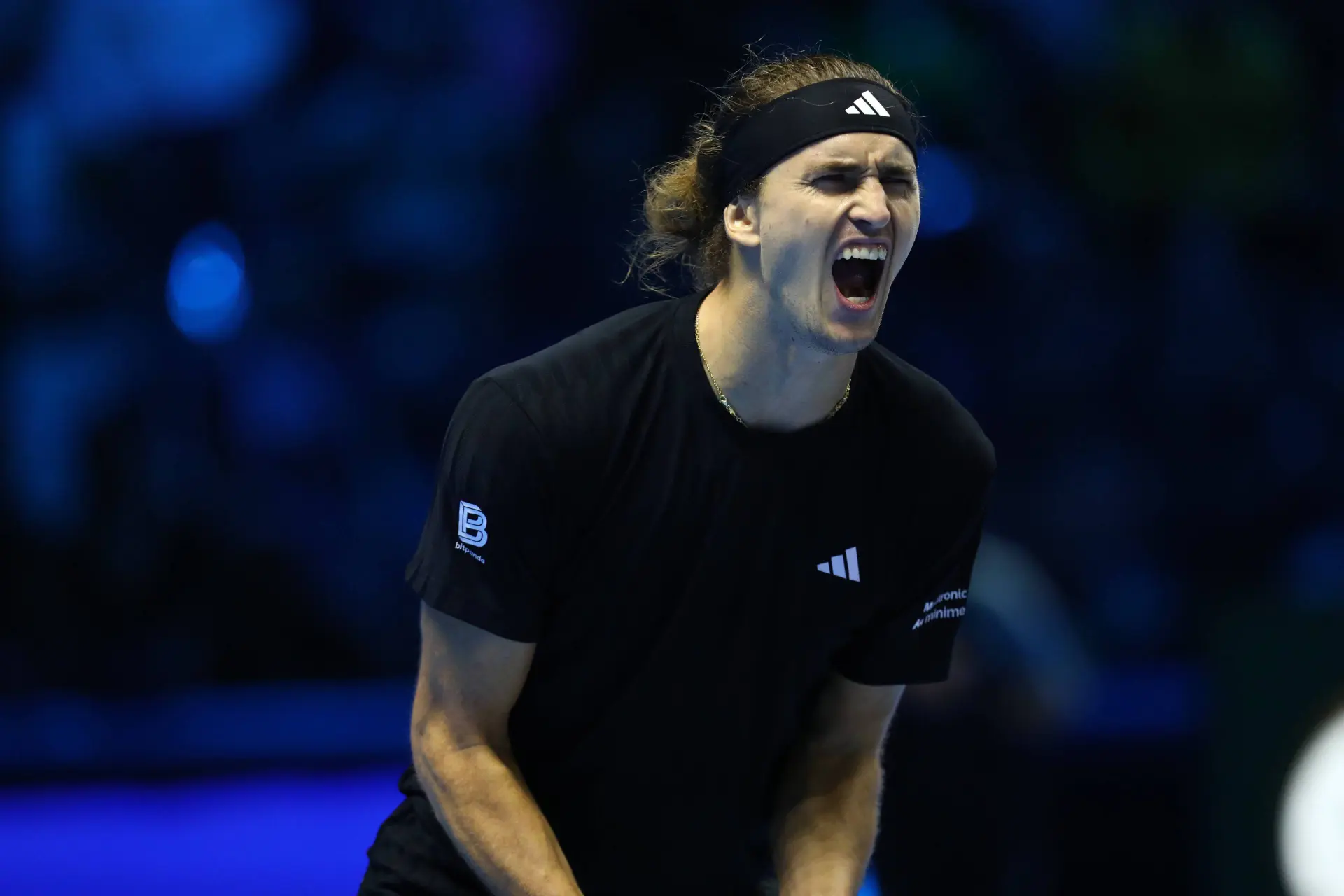
Zverev's route into the club was unusual because the missing event was not clay. He has won Rome (2017, 2024), Madrid (2018, 2021), Canada (2017), Cincinnati (2021) and Paris (2024), seven Masters titles in total, but he had never reached a semifinal in the desert until Indian Wells in 2026. The match that finished the set was a 6-2, 6-3 win over Fils in the quarterfinals.
What followed is the part that links the feat to his season. He reached at least the semifinals in the first four Masters events of the year (Indian Wells, Miami, Monte-Carlo and Madrid), and lost each time to Sinner, including a 6-1, 6-2 final in Madrid that he called "an awful tennis match."
Then came the part that changed the year: his first two Grand Slam titles, at Roland Garros and at the US Open, a Wimbledon final loss, a 25-2 record at the majors, and the year-end No. 1 ranking. He is the first German to finish the year at No. 1 and, at 29 years and 217 days, the oldest player to do it for the first time.
| Zverev's 2026 Masters 1000 events | Result |
| Indian Wells | Semifinal (first in the desert; lost to Sinner) |
| Miami | Semifinal (lost to Sinner) |
| Monte-Carlo | Semifinal (lost to Sinner) |
| Madrid | Final (lost to Sinner 6-1, 6-2) |
| Shanghai (in progress) | Semifinal (will play against Davidovich Fokina). |
Jannik Sinner: the youngest member, and the player who went further
Sinner reached his first Madrid semifinal on April 29 with a 6-2, 7-6(0) win over Rafael Jodar, which completed the set at 24. He then went further than the others. He beat Fils in the semifinals, which gave him a final at all nine Masters 1000 events at the age of 24, the youngest player to do it, after Djokovic (25), Nadal (27) and Federer (30). He beat Zverev in the final, won his fifth Masters title in a row, and later won Rome, making him the second man after Djokovic to win all nine.
His total is now 10 Masters 1000 titles, including Indian Wells, Miami (2024 and 2026), Monte-Carlo and Madrid in 2026, and Canada, Cincinnati, Shanghai and Paris before that. His 123-29 record through Madrid was the third-best winning percentage in Masters history, behind Nadal and Djokovic.
The comparison with Zverev is the sharpest in the group. They completed the set seven weeks apart and met in four Masters events this season, including the Indian Wells, Miami and Monte-Carlo semifinals and the Madrid final, with Sinner winning every one. Zverev then won the two majors and finished the year at No. 1, while Sinner's season ended early because of a knee injury. That is the contrast the club shows: both are in it, but the 2026 Masters results belong mostly to Sinner, and the year-end ranking belongs to Zverev.

Carlos Alcaraz: the name that is not on the list yet
Alcaraz is, by all accounts, the next contender, though he still lacks certain specific elements. Until March, he had not reached a single semifinal in Canada, Shanghai, or Paris. Since then, he withdrew from the tournament in Montreal and lost in the third round in Shanghai to Zizou Bergs—a result that put an end to any chance of him contending for the year-end world number one ranking and secured the top spot for Zverev.
| Missing semifinal | Best Result |
| Canada | Quarter-final (2023) |
| Shanghai | Quarter-final (2024) |
| Paris | Quarter-final (2022) |
That leaves Paris, the event where Djokovic, Federer and Murray all completed their own sets. He has won Madrid twice and has the level to do it, but the three missing events are also the ones played after the Grand Slam season, when his results have been less stable.
Read also
The reason the list matters for him is that he is the player most likely to join it next. At 23, he has already won majors and Masters titles, including Madrid twice, and he has reached the semifinals or better at the other six events.
What he needs is a deeper run in Paris, and then one in Canada and one in Shanghai, which can only happen in 2027. The season-ending Paris event is the next chance, and the feat would also make him the first player born after 2000 other than Sinner to do it.

Cristhián AvilaTennis Journalist
Cristhián Ávila is a tennis journalist based in Santiago, Chile, and has been part of the TennisUpToDate team since early 2023. He covers the ATP and WTA Tours as well as all four Grand Slams, producing breaking news, match reports, analysis, and regular liveblogs from major tournaments.
His reporting combines statistical analysis with clear explanation, helping readers understand tactical developments, player form, and broader storylines across the tour. Working fluently in both Spanish and English, Cristhián collaborates with an international editorial team and contributes to comprehensive global coverage. As part of his work, he has conducted interviews and media interactions with leading figures in the sport, including Caroline Wozniacki and John McEnroe.
In his journalism, Cristhián places strong emphasis on careful sourcing, editorial accuracy, and updating articles promptly when new, verified information becomes available. His coverage is grounded in research, context, and direct engagement with professional tennis.
claps 0visitors 0
Just In

Popular News
Latest Comments
- Two Things: 1. Stop allowing these Spoiled Trust-Fund Elitists to behave badly. Your little hand-slaps do not deter them. 2. STOP the incessantly annoying "towel wiping" nonsense!!!!
 mandoist15-10-2026
 - A healthy Qinwen may be hard to stop next season. She was already scaring her opponents before her medical leave(s). Unfortunately, Zheng insisted on singing again. On the positive side -- Mirra did not sing!! ;~}mandoist11-10-2026
- Where is it written that athletes, entertainers... People in general... are mandated to keep looking at -- or even using [anti]Social Media? Public & private figures consistently complain and reveal their concerns about negativity and violence thrown at them -- yet they insist on participating. Avoid it, don't use it, don't read it. It's okay to occasionally look up at the World instead beating your eyes & thumbs to death on The Inventions out there.mandoist11-10-2026
- great articlestennisseserver07-10-2026
- Medvedev was leading Djokovic 7-5, 3-5 when an attempted return..' NO you ignorants, Djokovic was leading .weiss05-10-2026
- No more bullshit "Wildcards" to these two. Qualify like everyone else -- there will be cameras there, too. Time to scream... WTF ????!!!!mandoist29-09-2026
- Let's not BS the general public -- Sabalenka started showing cracks in her game last season. Her losses and near-losses started at about the same time she began being distracted by Fame (constant Selfies, making TV commercials, magazine shoots, endless Social Media nonsense, etc., etc.) One would think even Saba could recognize the parallels with others who failed before her -- Raducanu, Giorgi, Bouchard to name a few.mandoist25-09-2026
- Gross!! Hey Raducanu, Giorgi, and Bouchard -- reserve a seat at your Social Media Selfie table for Saba + Naomi. They're heading in your direction soon enough.mandoist24-09-2026
- And then these same players will complain about how lengthy their season’s were and need more time-off. I’m all for more tennis but the amount of tennis we get now is actually kind of crazy! We all need a break, especially the players.DaveyWavey23-09-2026
- You should do a comparison article for "different kinds of justice" the courts decide for tennis players. I can think of at least three players who received very small bans of a few months, however Tara Moore has been fighting for her literal survival the past few years. It seems odd considering she is not a "name" player, unlike the other cases.DaveyWavey22-09-2026

Loading