One tournament from history: 2026 can become the first WTA 1000 season with nine different champions
WTA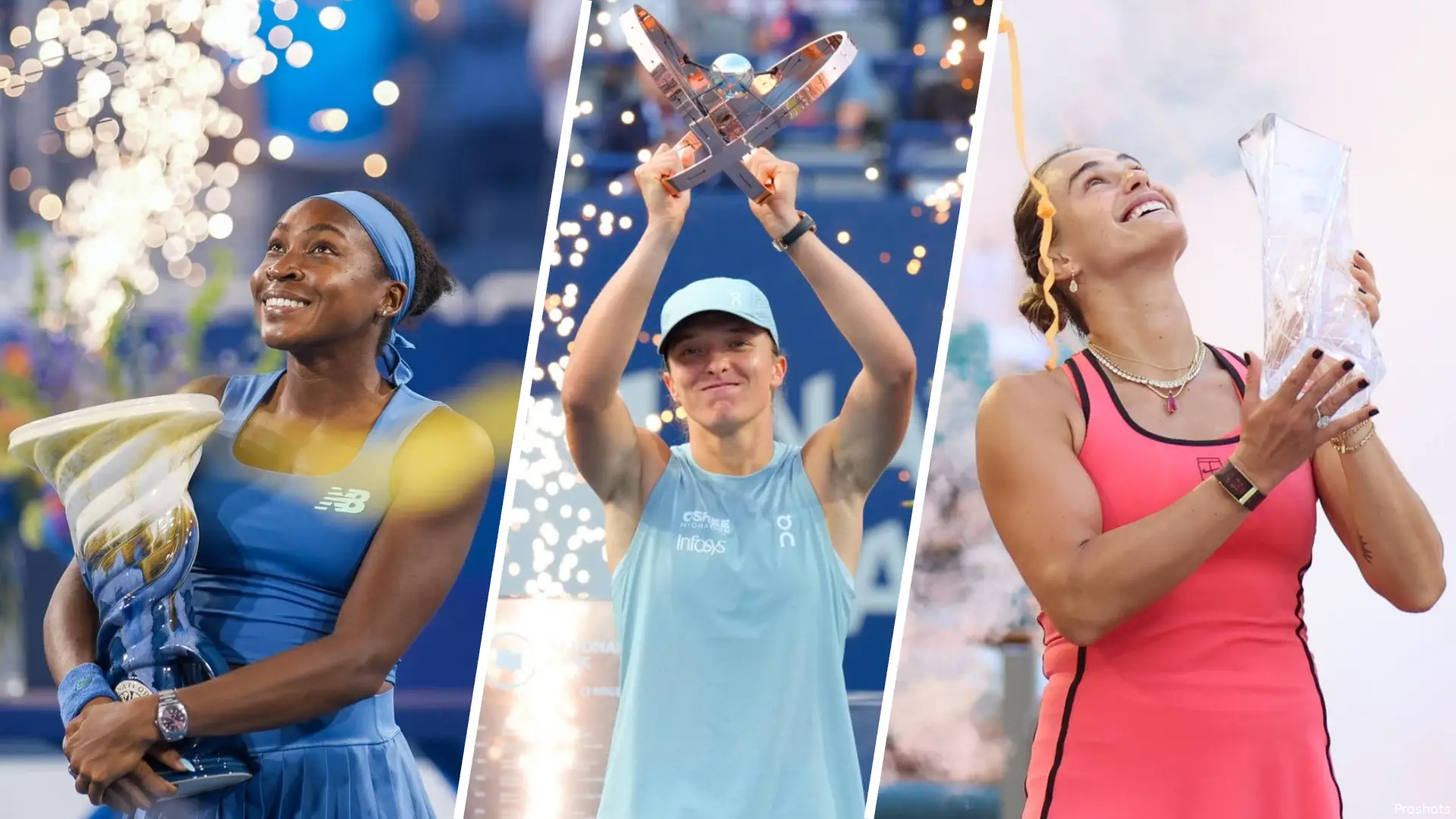
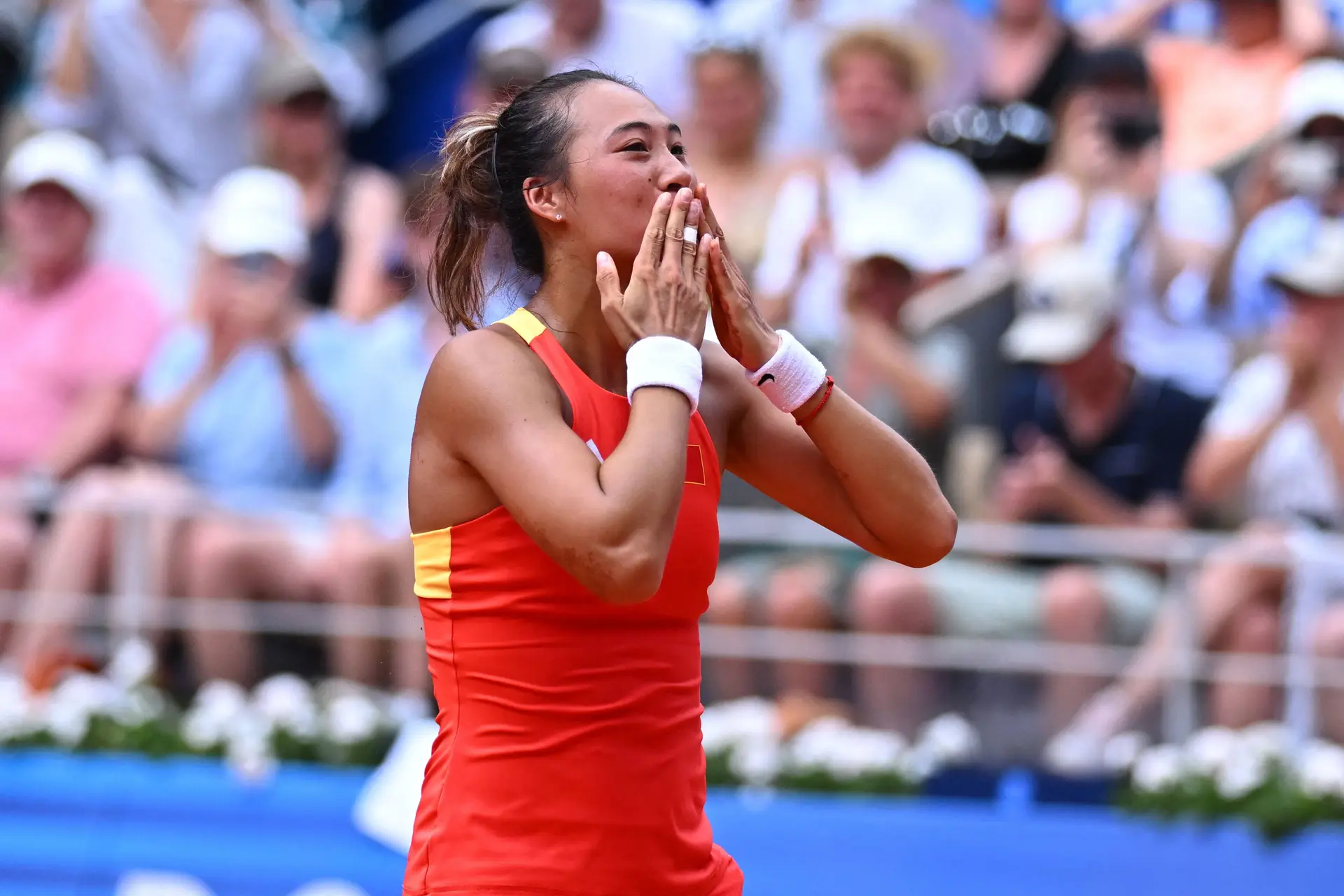
Qinwen Zheng's 7-5, 6-4 victory over Mirra Andreeva in the China Open final did more than end a two-year title drought and make her the first Chinese woman to win the Beijing tournament. It made her the eighth different champion across the nine WTA 1000 tournaments held so far this season.
Only Aryna Sabalenka has won more than once, claiming the titles at Indian Wells and Miami, with just one event remaining: the Wuhan Open, which begins on Monday.
That total matches the record for the most different champions in a single season at this level, previously achieved in 2002, 2007, 2009, 2018, 2019 and 2023.
If Wuhan produces a champion who has not yet won a WTA 1000 title this year, 2026 will become the first season in the series' history to feature nine different winners, reaching nine champions across ten tournaments. Even if that milestone is not reached, the season has already demonstrated an unusual level of competitive balance.
The 2026 season, one title at a time
The nine WTA 1000 tournaments so far have produced a varied list of champions, with no player establishing control of the entire series. Karolina Muchova won in Doha, Jessica Pegula triumphed in Dubai, Sabalenka claimed both Indian Wells and Miami, Marta Kostyuk won in Madrid, Elina Svitolina lifted the trophy in Rome, Iga Swiatek prevailed in Canada, Coco Gauff won in Cincinnati and Zheng completed the list in Beijing.

Coco Gauff of the United States holds the trophy and celebrates after defeating Jessica Pegula of the United States 6-2, 6-4 to win the women's singles final at the Cincinnati Open
Muchova opened the campaign by capturing her first WTA 1000 title in Doha. In Madrid, Kostyuk also claimed her maiden title at this level, doing so as the No. 26 seed. Her victory made her the fourth different champion in the first five tournaments of the season, underlining how difficult it had been for any player to build a sustained run of dominance.
Svitolina, Swiatek and Gauff then added their names to the 2026 winners' list, each securing a WTA 1000 title during the months that followed. Zheng's recent triumph in Beijing brought the number of different champions to eight, matching the highest total recorded in a single calendar year at this level.
| Event | Champion | Runner-up | Score |
| Doha | Karolína Muchova | Victoria Mboko | 6-4, 7-5 |
| Dubai | Jessica Pegula | Elina Svitolina | 6-2, 6-4 |
| Indian Wells | Aryna Sabalenka | Elena Rybakina | 3-6, 6-3, 7-6(6) |
| Miami | Aryna Sabalenka (2) | Coco Gauff | 6-2, 4-6, 6-3 |
| Madrid | Marta Kostyuk | Mirra Andreeva | 6-3, 7-5 |
| Rome | Elina Svitolina | Coco Gauff | 6-4, 6-7(3), 6-2 |
| Canada | Iga Swiatek | Elena Rybakina | 6-2, 6-3 |
| Cincinnati | Coco Gauff | Jessica Pegula | 6-2, 6-4 |
| Beijing | Zheng Qinwen | Mirra Andreeva | 7-5, 6-4 |
| Wuhan | - | - | - |
Several stories sit behind those results. Swiatek’s title in Toronto was her first of the season, ending a long drought. Gauff's Cincinnati win was her fourth WTA 1000 title and her second in that city, and she had already reached the finals in Miami and Rome. Zheng, who was ranked outside the top 100 this summer after elbow surgery, qualified at the US Open, reached the quarterfinals, and arrived in Beijing as a wild card ranked No. 54 before winning the title.
The runners-up tell a similar story. Rybakina, who holds the No. 1 ranking, has reached two finals at this level, at Indian Wells and in Canada, without winning either. Andreeva lost both of hers, in Madrid and Beijing, and Gauff lost two of her three. A season with so many close finalists is one in which any one result can change who ends up with the title count, which is part of why the total has grown so fast.

What the record is, and how it is counted
The record covers the highest tier of the WTA calendar since 1990. From 1990 to 2008 that was the Tier I category. From 2009 to 2020 it was the Premier Mandatory and Premier 5 events, and since 2021 the two have been merged into the WTA 1000, which awards 1000 points to the champion. The number of events has varied between 6 and 10 a year, so the cleanest comparison is the number of different champions and the share of events they represent.
The most different champions in a single season is eight. The table below shows each of the seasons that have reached it, and the share of events that eight winners represent.
| Season | Events | Different champions | Share | Champions |
| 2002 | 9 | 8 | 89% | Martina Hingis, Daniela Hantuchova, Serena Williams (2), Iva Majoli, Justine Henin, Amelia Mauresmo, Magdalena Maleeva, Patty Schnyder |
| 2007 | 10 | 8 | 80% | Martina Hingis, Daniela Hantuchova, Serena Williams, Jelena Jankovic (2), Ana Ivanovic, Maria Sharapova, Justine Henin (2), Elena Dementieva |
| 2009 | 9 | 8 | 89% | Venus Williams, Vera Zvonareva, Victoria Azarenka, Dinara Safina (2), Jelena Jankovic, Elena Dementieva, Maria Sharapova, Svetlana Kuznetsova |
| 2018 | 9 | 8 | 89% | Petra Kvitova (2), Naomi Osaka, Sloane Stephens, Elina Svitolina, Simona Halep, Kiki Bertens, Aryna Sabalenka, Caroline Wozniacki |
| 2019 | 9 | 8 | 89% | Belinda Bencic, Bianca Andreescu (2), Ash Barty, Kiki Bertens, Karolina Pliskova, Madison Keys, Aryna Sabalenka |
| 2023 | 9 | 8 | 89% | Barbora Krejcikova, Elena Rybakina (2), Petra Kvitobva, Aryna Sabalenka, Jessica Pegula, Coco Gauff, Maria Sakkari, Iga Swiatel |
| 2026 (through Beijing) | 9 | 8 | 89% | Muchova, Pegula, Sabalenka (2), Kostyuk, Svitolina, Swiatek, Gauff, Zheng |
Seven different seasons now stand at 8 champions, and six of them did it in nine events. No season has had nine different champions, and none has had a different winner at every event except 2020, which had only three events because of the pandemic. In other words, 2026 has the same ratio as the most balanced full seasons in the series, with one tournament still to play.
The last five seasons
The recent comparison is the most relevant one, because the calendar has been stable at nine or ten events since 2023.
| Season | Events | Champions |
| 2026 (through Beijing) | 9 (1 remain) | Muchova, Pegula, Sabalenka (2), Kostyuk, Svitolina, Swiatek, Gauff, Zheng |
| 2025 | 10 | Anisimova (2), Andreeva (2), Sabalenka (2), Paolini, Mboko, Swiatek, Gauff |
| 2024 | 10 | Swiatek (4), Sabalenka (2), Paolini, Collins, Pegula, Gauff |
| 2023 | 9 | Rybakina (2), Krejčíková, Kvitová, Sabalenka, Pegula, Gauff, Sakkari, Swiatek |
| 2022 | 8 | Swiatek (4), Jabeur, Halep, Garcia, Pegula |
Last year was already a year of change, with seven different winners in ten events, including Andreeva's wins in Dubai and Indian Wells, Anisimova's wins in Doha and Beijing, and Mboko's title in Canada. But 2026 has gone further. This year the only double champion is Sabalenka, who won back-to-back in Indian Wells and Miami.
What Wuhan has to do
The Wuhan Open runs from October 12 to 18, and its field is shaped by absences. Rybakina (foot), Gauff (fatigue), Anisimova, Osaka, Navarro and Keys are out, and Sabalenka is the top seed, going for a fourth Wuhan title. Pegula, Andreeva, Linda Nosková, Svitolina, Muchová, Swiatek and Kostyuk complete the top eight seeds, and Zheng is in the main draw without a seed.
The arithmetic is simple. The eight players who have already won a WTA 1000 this year are Muchova, Pegula, Sabalenka, Kostyuk, Svitolina, Swiatek, Gauff and Zheng. Gauff has withdrawn, so seven of them are in the field.
| Wuhan champion | Different champions in 2026 | Verdict |
| One of the eight players who already won this year | 8 in 10 events (80%) | Ties the record for different champions, but with a lower share than 2002, 2009, 2018, 2019 or 2023 |
| A player who has not won a WTA 1000 in 2026 | 9 in 10 events (90%) | Outright record, in total and in share of a full season |
Two of the top eight seeds fit the second category: Andreeva, who was runner-up in Madrid and Beijing, and Nosková.
So do the seeds from 9 to 16, a group that includes Belinda Bencic, Iva Jovic, Diana Shnaider, Sorana Cirstea, Alexandra Eala, Elise Mertens, Jasmine Paolini and Maja Chwalińska. The draw is a 56-player field, and a champion from outside the group of eight would be a ninth name in a season in which only one title has been a repeat.
What it says about the tour
The numbers do not mean the tour has become weaker or that the best players have stopped winning. Elena Rybakina has won two Grand Slam titles this year and holds the top ranking, Aryna Sabalenka has two WTA 1000 titles, and Iga Swiatek and Coco Gauff have each won one. Instead, they show how narrow the margins have become at the top: Rybakina, Mirra Andreeva and Gauff have reached seven WTA 1000 finals between them but won only one.
If Wuhan produces a ninth different champion, 2026 will be remembered as the season in which no single player dominated the WTA 1000 events. If it does not, the year will still rank among the most balanced in the tour's history.
The same pattern can be seen at Grand Slam level this season, with three champions - neither of them owning a WTA 1000 title. Rybakina added two major titles, while Noskova and Andreeva claimed the other two titles. They are the only top-10 players yet to win a WTA 1000 title this season, although they can take pride in an even greater achievement..
Across the four Grand Slams and nine WTA 1000 tournaments, we have seen 11 different champions in 13 major events this season. The immediate conclusion might be that anyone can win on the WTA Tour, but the reality is more nuanced. Each of this year's champions has proven her credentials at the biggest tournaments, with several having demonstrated an elite level of consistency over multiple years.
Perhaps the main takeaway is that the leading players have become more evenly matched, while a clear distinction remains between the established elite — the coveted top 10 — and those just below them.
WTA Race to the Finals 2026
| Position | Player | Points |
| 1 | Elena Rybakina | 7,502 |
| 2 | Aryna Sabalenka | 6,560 |
| 3 | Mirra Andreeva | 6,371 |
| 4 | Jessica Pegula | 5,835 |
| 5 | Coco Gauff | 5,774 |
| 6 | Elina Svitolina | 5,024 |
| 7 | Karolina Muchova | 4,625 |
| 8 | Linda Noskova | 4,354 |
| 9 | Marta Kostyuk | 3,920 |
| 10 | Iga Swiatek | 3,809 |
| 11 | Iva Jovic | 2,841 |
| 12 | Elise Mertens | 2,540 |
The WTA Race illustrates this divide: six places at the WTA Finals have already been secured, with two still to be decided. However, the battle becomes much more difficult once we look beyond the top 10. The gap separating Marta Kostyuk and Swiatek from the players chasing them makes significant changes to the upper part of the standings unlikely, at least during the final weeks of this season.
Read also
Even if we deducted the points earned for a major title — a WTA 1000 or Grand Slam victory — from each player currently inside the top 10, the group would remain intact, with one exception: Swiatek would fall to No. 11, just 32 points behind the player in 10th.
The leading players are not inside the top 10 because of a single major title or one deep Grand Slam run. They have earned their positions through consistency throughout the season, repeatedly reaching the latter stages of major tournaments and facing one another along the way.

Cristhián AvilaTennis Journalist
Cristhián Ávila is a tennis journalist based in Santiago, Chile, and has been part of the TennisUpToDate team since early 2023. He covers the ATP and WTA Tours as well as all four Grand Slams, producing breaking news, match reports, analysis, and regular liveblogs from major tournaments.
His reporting combines statistical analysis with clear explanation, helping readers understand tactical developments, player form, and broader storylines across the tour. Working fluently in both Spanish and English, Cristhián collaborates with an international editorial team and contributes to comprehensive global coverage. As part of his work, he has conducted interviews and media interactions with leading figures in the sport, including Caroline Wozniacki and John McEnroe.
In his journalism, Cristhián places strong emphasis on careful sourcing, editorial accuracy, and updating articles promptly when new, verified information becomes available. His coverage is grounded in research, context, and direct engagement with professional tennis.
claps 0visitors 0
Just In

Popular News
Latest Comments
- A healthy Qinwen may be hard to stop next season. She was already scaring her opponents before her medical leave(s). Unfortunately, Zheng insisted on singing again. On the positive side -- Mirra did not sing!! ;~}
 mandoist11-10-2026
 - Where is it written that athletes, entertainers... People in general... are mandated to keep looking at -- or even using [anti]Social Media? Public & private figures consistently complain and reveal their concerns about negativity and violence thrown at them -- yet they insist on participating. Avoid it, don't use it, don't read it. It's okay to occasionally look up at the World instead beating your eyes & thumbs to death on The Inventions out there.mandoist11-10-2026
- great articlestennisseserver07-10-2026
- Medvedev was leading Djokovic 7-5, 3-5 when an attempted return..' NO you ignorants, Djokovic was leading .weiss05-10-2026
- No more bullshit "Wildcards" to these two. Qualify like everyone else -- there will be cameras there, too. Time to scream... WTF ????!!!!mandoist29-09-2026
- Let's not BS the general public -- Sabalenka started showing cracks in her game last season. Her losses and near-losses started at about the same time she began being distracted by Fame (constant Selfies, making TV commercials, magazine shoots, endless Social Media nonsense, etc., etc.) One would think even Saba could recognize the parallels with others who failed before her -- Raducanu, Giorgi, Bouchard to name a few.mandoist25-09-2026
- Gross!! Hey Raducanu, Giorgi, and Bouchard -- reserve a seat at your Social Media Selfie table for Saba + Naomi. They're heading in your direction soon enough.mandoist24-09-2026
- And then these same players will complain about how lengthy their season’s were and need more time-off. I’m all for more tennis but the amount of tennis we get now is actually kind of crazy! We all need a break, especially the players.DaveyWavey23-09-2026
- You should do a comparison article for "different kinds of justice" the courts decide for tennis players. I can think of at least three players who received very small bans of a few months, however Tara Moore has been fighting for her literal survival the past few years. It seems odd considering she is not a "name" player, unlike the other cases.DaveyWavey22-09-2026
- PRIZE MONEY & POINTS Winner - $185,500 Finalist - $114,500 Semi-Finalist - $66,003 Quarter-Finalist - $35,000 Round of 16 - $18,045 Round of 32 - $13,005 Winner - 500 Finalist - 325 Semi-Finalist - 195 Quarter-Finalist - 108 Round of 16 - 60 Round of 32 - 1DaveyWavey20-09-2026

Loading