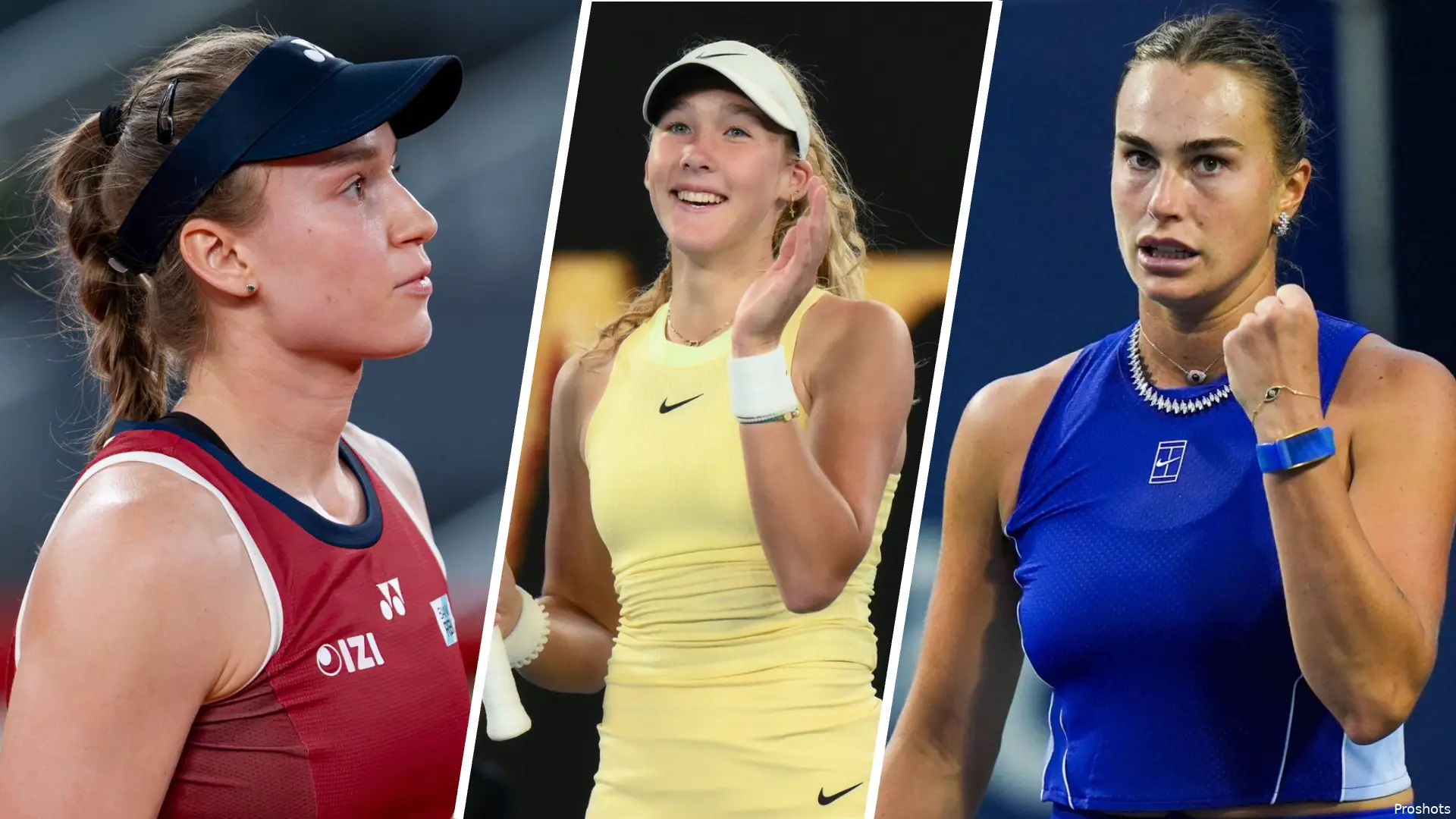
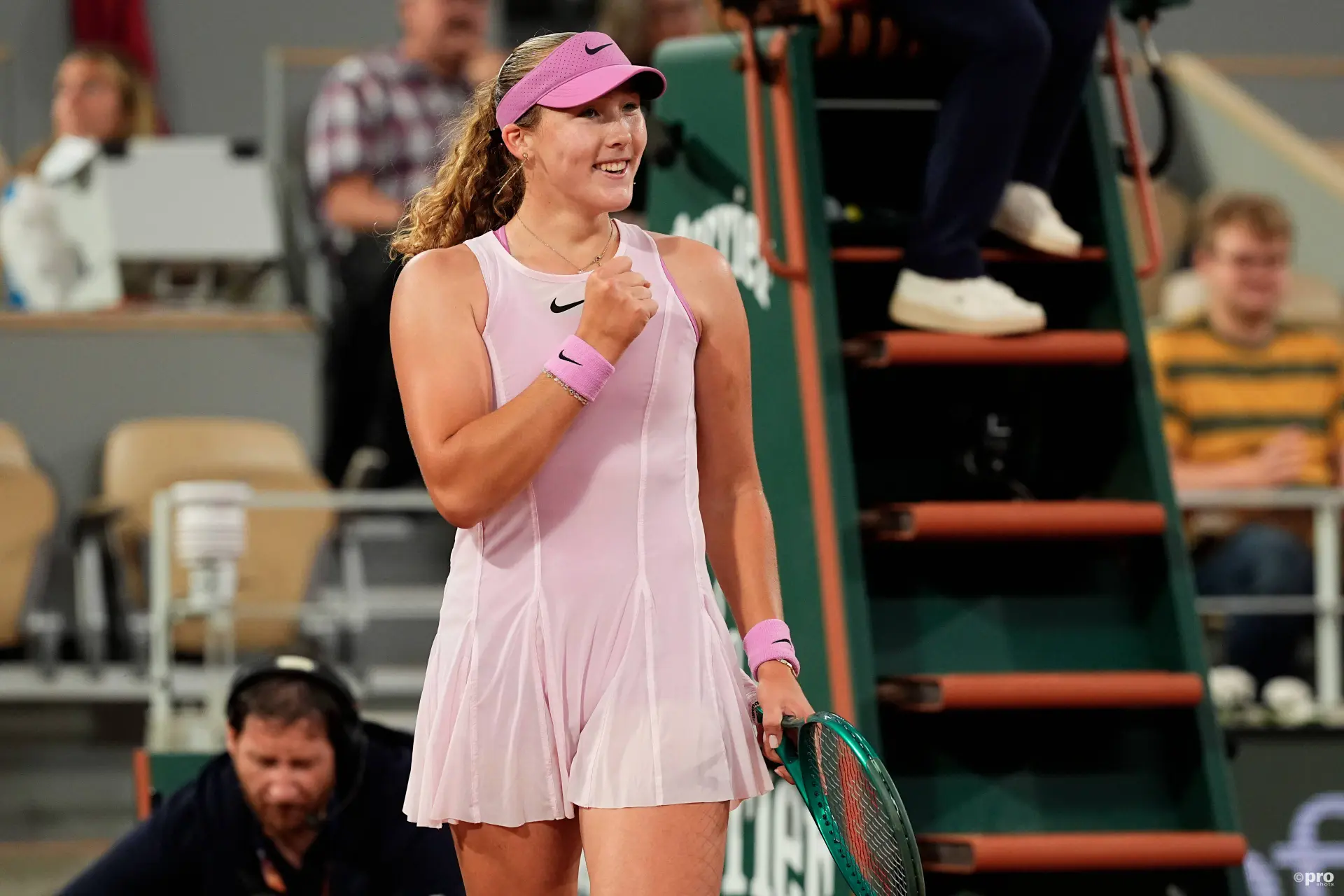
Mirra Andreeva needed two tie-breaks and a moment of real danger to beat Ekaterina Alexandrova 7-6(4), 7-6(3) on Thursday and reach the China Open semifinal. Alexandrova came back from 4-1 down in the second set and from 5-3 down with Andreeva serving for the match, but the 19-year-old held her nerve in the tie-break and collected her first win over a player who had beaten her in both previous meetings.
It was her 49th victory of 2026, and it left her as the only member of the Race's top five still in action this week. That detail matters more than it sounds. Elena Rybakina and Aryna Sabalenka, first and second in the Race, both went out early in Beijing, and Rybakina has since withdrawn from Wuhan with a foot injury.
The usual framing is that those two will fight for the year-end No. 1 until the final day, and as a description of today's ranking, that is accurate. It also leaves out the player sitting third, who led this same Race in June and now has a clear mathematical route to closing the gap.
There is some unfinished business, too. A year ago, Rybakina's late-season surge took Andreeva's place at the WTA Finals. This October, the roles are reversed: Rybakina is the one managing a physical problem, and Andreeva is the one arriving in form. Here is the case for taking her seriously.
Where the Race stands today
There is little debate over the current WTA ranking. Rybakina has more than 2,000 points on Sabalenka and nearly 3,500 on both Jessica Pegula and Andreeva. However, she also has the most points to defend during the closing weeks of the season. For now, she remains No. 1, but the WTA Finals could put her under pressure, with both Sabalenka and Andreeva having serious chances to challenge for the top spot.
For that reason, the WTA Race is the better metric here. It considers only points earned during the 2026 season and therefore provides a clearer picture of how each player could arrive at the WTA Finals.
| Rank | Player | 2026 Race points | Gap to Rybakina | Beijing |
| 1 | Elena Rybakina | 7,502 | n/a | Lost first match |
| 2 | Aryna Sabalenka | 6,550 | -952 | Lost in R32 |
| 3* | Mirra Andreeva* | 6,111 | -1,391 | Semifinal (TBD) |
| 4 | Jessica Pegula | 5,825 | -1,677 | Not in action |
| 5 | Coco Gauff | 5,774 | -1,728 | Not in action |
*Mirra Andreeva has secured 6,111 points with her run to the semifinals. If she advances to the final, she will reach 6,371, and if she wins the title, 6,721.
Rybakina still leads the Race by a wide margin, but the picture has changed in a single week. She added just 10 points in Beijing and Sabalenka 65, while Andreeva has already banked 389. If Andreeva wins the title, she will move past Sabalenka into second place and cut Rybakina's lead to just 780 points.
Both Sabalenka and Andreeva will then head to Wuhan, with 1,000 points on offer at the final WTA 1000 of the season. The tournament will be their last before several weeks of preparation for the WTA Finals. Rybakina, meanwhile, is scheduled to play the WTA 500 events in Ningbo and Tokyo. Given her current physical concerns, however, it remains unclear whether she will play both.
Tokyo would be particularly demanding. The tournament comes only one week before the WTA Finals, leaving Rybakina with a long trip from Japan to Indian Wells and less preparation time than her main rivals. That could become an important consideration if she decides how much tennis she wants to play before the season finale.
Andreeva's position is therefore becoming increasingly interesting. She has already guaranteed her place at the WTA Finals, but a title in Beijing would move her to within 780 points of Rybakina in the Race. Wuhan would then provide another 1,000-point opportunity before the final calculations are made in Indian Wells.
The gap remains significant, and Rybakina is still in control of the Race. But with Beijing changing the numbers, Wuhan offering another major points haul and the WTA Finals still to come, Andreeva has moved from an outside consideration to a legitimate part of the year-end No. 1 conversation.
What a Beijing title is worth
| Beijing result | Andreeva's Race points | Gap to Rybakina (7,502) | Gap to Sabalenka (6,550) |
| Loses the semifinal | 6,111 | −1,391 | −439 |
| Reaches the final | 6,371 | −1,131 | −179 |
| Wins the title | 6,721 | −781 | +171 |
With both top seeds gone, the title is genuinely up for grabs, although Nikola Bartunkova represents a serious obstacle in the semifinal. The 20-year-old Czech has beaten Sabalenka and then Karolina Muchova 6-3, 6-0, and is playing in her first WTA 1000 semifinal. Andreeva is the favorite on paper, but nothing about this draw has gone to script. In the final, Iga Swiatek or Elina Svitolina are the most likely opponents.
If she gets through, winning the title would put Andreeva 171 points ahead of Sabalenka and 781 behind Rybakina. That deficit is still significant, but it is no longer distant when Wuhan alone offers 1,000 points. Even reaching the final would matter: at 6,371 points, she would sit just 179 behind Sabalenka and within 1,131 points of Rybakina.
Wuhan is where the equation changes
The Wuhan Open (October 12-18) is the last WTA 1000 of the season, and its field has been reshaped by withdrawals. Rybakina is out with her foot injury, Gauff has pulled out with fatigue, and Anisimova, Keys, Navarro and Osaka are missing as well. Sabalenka is the top seed and the only past champion in the draw, seeking a fourth title. Andreeva is a top-eight seed with a first-round bye, alongside Pegula, who returns for the first time since the US Open.
| Andreeva's Race points after Beijing and Wuhan | Wuhan semifinal (+390) | Wuhan final (+650) | Wuhan title (+1,000) |
| Beijing title (6,721) | 7,111 | 7,371 | 7,721 |
| Beijing final (6,371) | 6,761 | 7,021 | 7,371 |
| Beijing semifinal (6,111) | 6,501 | 6,761 | 7,111 |
Only one cell passes Rybakina's current 7,502: winning both tournaments, which would leave Andreeva 219 points ahead. Winning Beijing and reaching the Wuhan final, or losing the Beijing final and winning Wuhan, would put her at 7,371, just 131 short. The table assumes Rybakina adds nothing, which makes it a scenario rather than a forecast.
There is a twist that cuts the other way. If Sabalenka wins Wuhan, she moves to 7,550, 48 points ahead of Rybakina, and takes the Race lead without Rybakina playing a match. That makes Wuhan a three-way contest in which Sabalenka is the favorite, and the opponent Andreeva most needs to beat, both are fighting for the chance to finish the year at world number one, while Rybakina waits before returning to the court.

Aryna Sabalenka and Elena Rybakina pictured after Elena Rybakina wins the 2026 Women’s U.S. Open
A year after Rybakina edged Andreeva out
There is some unfinished business between Elena Rybakina and Mirra Andreeva when it comes to the WTA Finals. A year ago, Rybakina produced a late surge during the Asian swing to overtake Andreeva for the final qualification spot by just 14 points in the Race. She won the title in Ningbo and reached the semifinals in Tokyo, while Andreeva was left just outside the field and had to wait another year for her singles debut.
Twelve months later, both players will be in Indian Wells, but the significance of their positions is very different. After the US Open, Rybakina appeared to be moving toward the year-end No. 1 position with a clear advantage, with Sabalenka the main threat behind her. Andreeva has since changed that picture, using her Beijing run to close the gap and put herself into the conversation at the very top of the Race.
That makes the WTA Finals particularly important. The event offers 1,500 ranking points to an undefeated champion, meaning the final week of the season can still produce a major swing at the summit. Rybakina is almost certain to be the No. 1 or No. 2 seed and will therefore lead one of the two round-robin groups, while Andreeva or Sabalenka will lead the other.
That guarantees at least one meeting between two of those three players in the group stage. By then, Wuhan and the weeks that follow will have determined how close the Race has become, but the stakes in that match could be enormous. A victory could push one player significantly closer to No. 1, while an early defeat could leave another with little margin for error in the remaining rounds.
Read also
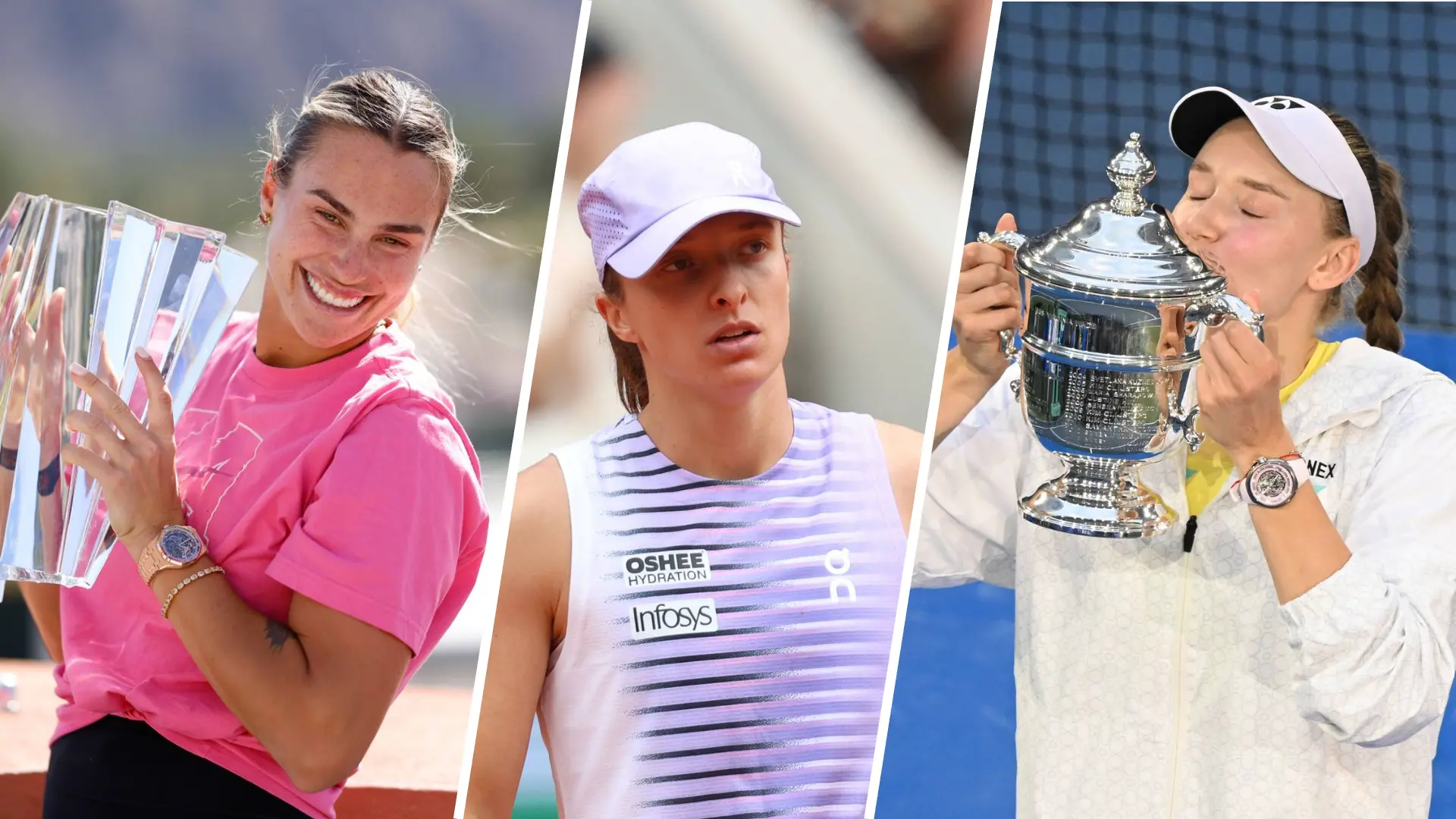
For Rybakina, that creates an intriguing twist. A year ago, she was the player who used a late Asian-swing charge to take something away from Andreeva. This year, Andreeva is the one with the opportunity to make Rybakina's path to the top far more complicated than it appeared only a few weeks ago.
The story is not yet one of complete reversal, because Rybakina remains firmly in control of the Race. But Andreeva has put herself close enough to make the final weeks genuinely relevant, and the two will now have the chance to settle part of that battle on the same court in Indian Wells.

Cristhián AvilaTennis Journalist
Cristhián Ávila is a tennis journalist based in Santiago, Chile, and has been part of the TennisUpToDate team since early 2023. He covers the ATP and WTA Tours as well as all four Grand Slams, producing breaking news, match reports, analysis, and regular liveblogs from major tournaments.
His reporting combines statistical analysis with clear explanation, helping readers understand tactical developments, player form, and broader storylines across the tour. Working fluently in both Spanish and English, Cristhián collaborates with an international editorial team and contributes to comprehensive global coverage. As part of his work, he has conducted interviews and media interactions with leading figures in the sport, including Caroline Wozniacki and John McEnroe.
In his journalism, Cristhián places strong emphasis on careful sourcing, editorial accuracy, and updating articles promptly when new, verified information becomes available. His coverage is grounded in research, context, and direct engagement with professional tennis.
claps 0visitors 0
Just In

Popular News
Latest Comments
- great articlestennisseserver07-10-2026
- Medvedev was leading Djokovic 7-5, 3-5 when an attempted return..' NO you ignorants, Djokovic was leading .weiss05-10-2026
- No more bullshit "Wildcards" to these two. Qualify like everyone else -- there will be cameras there, too. Time to scream... WTF ????!!!!
 mandoist29-09-2026
 - Let's not BS the general public -- Sabalenka started showing cracks in her game last season. Her losses and near-losses started at about the same time she began being distracted by Fame (constant Selfies, making TV commercials, magazine shoots, endless Social Media nonsense, etc., etc.) One would think even Saba could recognize the parallels with others who failed before her -- Raducanu, Giorgi, Bouchard to name a few.mandoist25-09-2026
- Gross!! Hey Raducanu, Giorgi, and Bouchard -- reserve a seat at your Social Media Selfie table for Saba + Naomi. They're heading in your direction soon enough.mandoist24-09-2026
- And then these same players will complain about how lengthy their season’s were and need more time-off. I’m all for more tennis but the amount of tennis we get now is actually kind of crazy! We all need a break, especially the players.DaveyWavey23-09-2026
- You should do a comparison article for "different kinds of justice" the courts decide for tennis players. I can think of at least three players who received very small bans of a few months, however Tara Moore has been fighting for her literal survival the past few years. It seems odd considering she is not a "name" player, unlike the other cases.DaveyWavey22-09-2026
- PRIZE MONEY & POINTS Winner - $185,500 Finalist - $114,500 Semi-Finalist - $66,003 Quarter-Finalist - $35,000 Round of 16 - $18,045 Round of 32 - $13,005 Winner - 500 Finalist - 325 Semi-Finalist - 195 Quarter-Finalist - 108 Round of 16 - 60 Round of 32 - 1DaveyWavey20-09-2026
- Pegula withdrew from this Singapore event
 tennishappens19-09-2026
 - Serena Williams chose her tournaments. It's not such a bad idea.MuswellHillbilly17-09-2026

Loading