Back to the first Shanghai Masters: The unexpected champion who beat Djokovic and Nadal on the way
ATP
Until October 2009, no city in Asia had ever hosted a Masters 1000. Then Shanghai, which had spent four years staging the sport's year-end finale, got a tournament of its own at the level just below the Grand Slams. It was the first event of its kind on Asian soil, and it is still the only one outside Europe and North America.
It arrived as part of a shake-up of the calendar. Madrid's Masters moved to May and onto clay, and Shanghai took over its old October slot, on outdoor hard courts. The new tournament had no history to lean on, only a brand-new idea: that the sport's biggest events no longer had to be played in Europe or the United States.
What it got was a script nobody had written. The draw fell apart under withdrawals and retirements, and the title went to a player almost nobody had pencilled in. Nikolay Davydenko, the sixth seed, outlasted Novak Djokovic in a three-hour semifinal and then beat Rafael Nadal 7-6(3), 6-3 in the final. This is how the first Shanghai Masters found its unexpected champion.
How Shanghai got its Masters 1000
The first edition belongs to the 2009 reshuffle of the ATP calendar, when the Masters Series became the Masters 1000. Madrid moved to May and onto clay, taking the spot of the downgraded Hamburg event. Shanghai inherited Madrid's old October slot, but with one change: it would be played on outdoor hard courts, which left Paris as the only indoor Masters 1000 on tour.
The venue was not new. The Qizhong Tennis Center was built in 2004 and 2005 to host the Tennis Masters Cup, the year-end championship that Shanghai held from 2005 to 2008 after the ATP extended its original three-year deal by a year. When the season-ending event moved to London's O2 Arena in 2009, Shanghai got a Masters 1000 of its own as the replacement.
There was a neat bit of history hiding in that handover. The last Masters Cup in the arena, in November 2008, ended with Djokovic beating Davydenko 6-1, 7-5 in the final. Eleven months later, the same two men were back under the same roof, and this time the Russian had the last word.
A draw full of empty chairs
The first edition ran from October 11 to 18, and it was missing its biggest names before a ball was hit. Federer, then the world No. 1, withdrew citing fatigue; it had been a long year, and he and his wife Mirka had become parents of twin girls that July. Murray, the No. 3, pulled out with a wrist injury. That is why Nadal, ranked second, arrived as the top seed and Djokovic as the second seed.
The attrition did not stop there. Juan Martín del Potro (third seed) retired in the second round with a right wrist injury, and Andy Roddick (fourth seed) retired in the same round with a left knee problem. Gaël Monfils and Tommy Haas also retired, and Nadal himself advanced to the final with only two completed matches: Ivan Ljubičić retired in their quarterfinal and Feliciano López retired in the semifinal.
| Seed | Player | Result |
| 1 | Rafael Nadal | Runner-up |
| 2 | Novak Djokovic | Semifinals (lost to Davydenko) |
| 3 | Juan Martín del Potro | Second round (retired) |
| 4 | Andy Roddick | Second round (retired) |
| 5 | Jo-Wilfried Tsonga | Third Round |
| 6 | Nikolay Davydenko | Champion |
| 7 | Fernando Verdasco | Second Round |
| 8 | Gilles Simon | Quarterfinals |
| 9 | Robin Soderling | Quarterfinals |
| 10 | Fernando Gonzalez | Third round |
| 11 | Gael Monfils | Third round (retired) |
| 12 | Marin Cilic | First round |
| 13 | Radek Stepanek | Quarterfinals |
| 14 | Tommy Robredo | Third Round |
| 15 | Tommy Haas | Second round (retired) |
| 16 | David Ferrer | Second round |
Davydenko's route: three rounds that settled it
Davydenko arrived in form. He had won Kuala Lumpur the week before, beating Monfils, Söderling and Verdasco along the way, and received a first-round bye in Shanghai as the sixth seed.
He opened his campaign against Russian Igor Kunitsyn, defeating him in straight sets, before facing 10th seed Fernando González in the third round. The Russian also beat the Chilean in straight sets, 6-3, 7-5. In the quarterfinals, he defeated 13th seed Radek Štěpánek of the Czech Republic 6-1, 4-6, 6-1 to set up the match that defined his week.
The semifinal against Djokovic lasted just over three hours and finished 4-6, 6-4, 7-6(1). The numbers show how thin the margin was: Davydenko saved six of the seven break points he faced and converted only one of the nine he created, winning just three more points than Djokovic over the entire match. Djokovic won the first set and had a chance to go a break up early in the second, but Davydenko escaped by winning four straight points before taking the deciding tiebreak 7-1.
Then came Nadal, who had reached the final after two retirements in his previous two matches and had not been tested in the same way as Davydenko.
Davydenko's path
| Round | Opponent | Ranking | Score |
| First Round | BYE | - | - |
| Round of 32 | Igor Kunitsyn | 116 | 6-4, 6-2 |
| Round of 16 | Fernando Gonzalez | 12 | 6-3, 7-5 |
| Quarterfinal | Radek Štěpánek | 16 | 6-1, 4-6, 6-1 |
| Semifinal | Novak Djokovic | 4 | 4-6, 6-4, 7-6(1) |
| Final | Rafael Nadal | 2 | 7-6(3), 6-3 |
The final: playing from inside the court
The final was a high-quality match, and Davydenko was not intimidated by a confident Nadal, who had won his first Australian Open earlier that season as well as three Masters 1000 titles at Indian Wells, Monte Carlo and Rome.
The Russian rose to the occasion in Shanghai, where he had played the final of the Tennis Masters Cup, now known as the ATP Finals, 11 months earlier. In 2009, Davydenko had won all three finals he contested and was looking to claim his fourth title of the season and the third Masters 1000 crown of his career.
The opening set was closely contested. Davydenko recovered from a break down to force a tiebreak, even saving a set point along the way. He then held firm in the decider to take the set. The second was more controlled, with the Russian protecting his serve after securing an early break.
Coming off a three-hour marathon in the semifinal, Davydenko managed to close out the match in straight sets, which proved crucial given that he later admitted he did not have enough energy for a longer contest.
“I was so tired at the beginning in the first set,” he told Sky Sports at the time. “At 4-4 I was thinking I have no chance to win. I cannot believe it. I'm enjoying this. Beating Djokovic and Nadal is something amazing.”
The victory gave Davydenko his third Masters title, following his triumph in Miami in 2008, and preserved his perfect record in Masters finals at 3-0. It also secured his qualification for the ATP Finals at the end of the season.
What came next
London turned out to be the real payoff. Davydenko beat Nadal in the round-robin stage, defeated Söderling and then ended a run of 12 consecutive losses to Federer by beating the Swiss in the semifinals. He went on to claim the title against Del Potro. By the end of 2009, the Russian had won five titles, including a Masters 1000 and the season-ending championship. He also continued to trouble Nadal, winning four consecutive matches against the Spaniard between Shanghai and the 2011 Qatar Open.
Read also
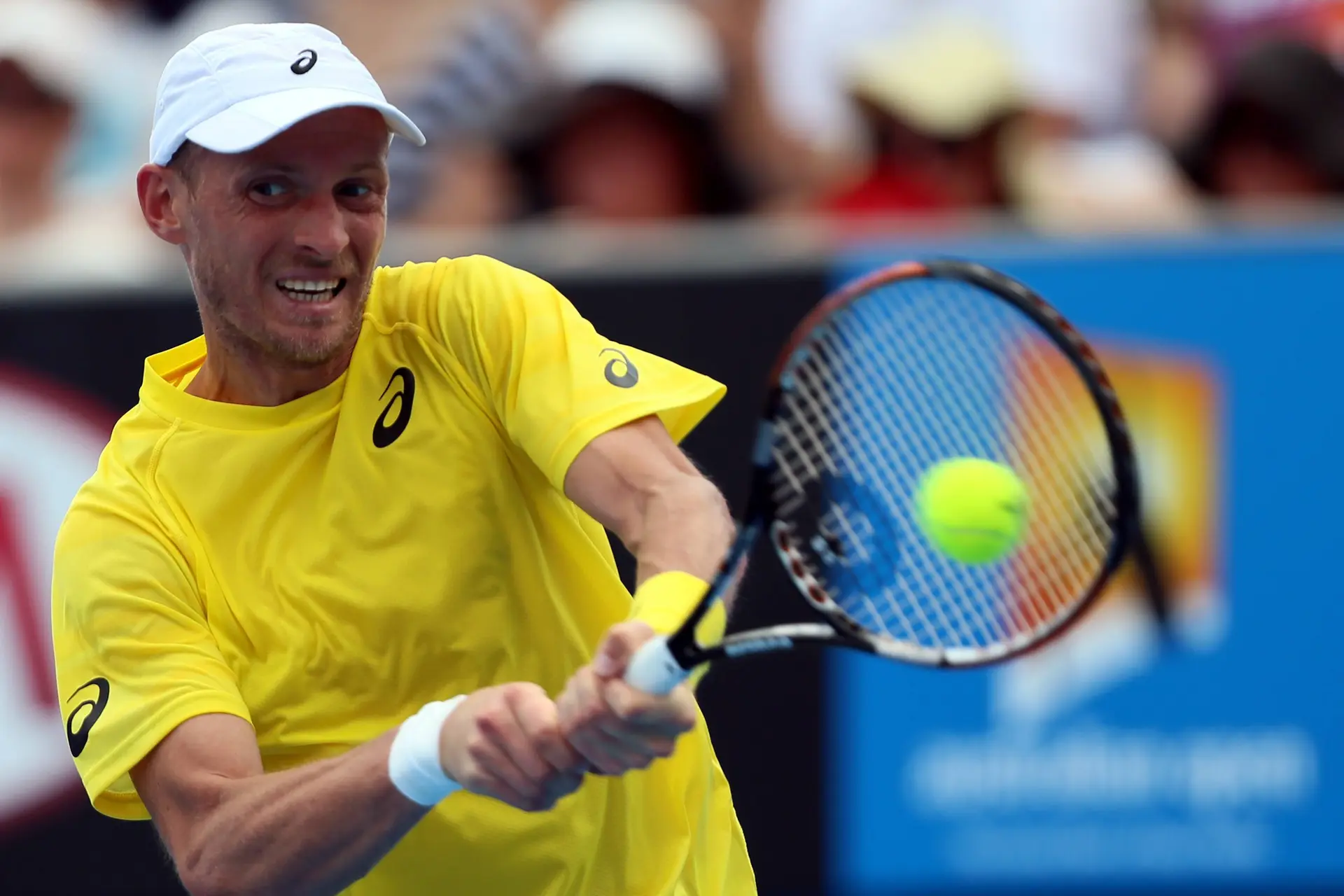
Repeating his success in Shanghai proved harder. As defending champion in 2010, Davydenko lost in the second round to Mischa Zverev, the older brother of Alexander Zverev. Murray won the title that year, and the tournament's roll of champions has since been dominated by Djokovic, who holds the record with four titles.
That list also illustrates Shanghai's capacity for surprises. Davydenko was the first name on it, and an unexpected one given the players who were missing. Sixteen years later, Valentin Vacherot, a qualifier ranked No. 204, became the lowest-ranked Masters 1000 champion in history in the same city. Shanghai, it turns out, has always been a place where the draw can open up and the least predictable player in it can walk through.

Cristhián AvilaTennis Journalist
Cristhián Ávila is a tennis journalist based in Santiago, Chile, and has been part of the TennisUpToDate team since early 2023. He covers the ATP and WTA Tours as well as all four Grand Slams, producing breaking news, match reports, analysis, and regular liveblogs from major tournaments.
His reporting combines statistical analysis with clear explanation, helping readers understand tactical developments, player form, and broader storylines across the tour. Working fluently in both Spanish and English, Cristhián collaborates with an international editorial team and contributes to comprehensive global coverage. As part of his work, he has conducted interviews and media interactions with leading figures in the sport, including Caroline Wozniacki and John McEnroe.
In his journalism, Cristhián places strong emphasis on careful sourcing, editorial accuracy, and updating articles promptly when new, verified information becomes available. His coverage is grounded in research, context, and direct engagement with professional tennis.
claps 0visitors 0
Just In

Popular News
Latest Comments
- great articlestennisseserver07-10-2026
- Medvedev was leading Djokovic 7-5, 3-5 when an attempted return..' NO you ignorants, Djokovic was leading .weiss05-10-2026
- No more bullshit "Wildcards" to these two. Qualify like everyone else -- there will be cameras there, too. Time to scream... WTF ????!!!!
 mandoist29-09-2026
 - Let's not BS the general public -- Sabalenka started showing cracks in her game last season. Her losses and near-losses started at about the same time she began being distracted by Fame (constant Selfies, making TV commercials, magazine shoots, endless Social Media nonsense, etc., etc.) One would think even Saba could recognize the parallels with others who failed before her -- Raducanu, Giorgi, Bouchard to name a few.mandoist25-09-2026
- Gross!! Hey Raducanu, Giorgi, and Bouchard -- reserve a seat at your Social Media Selfie table for Saba + Naomi. They're heading in your direction soon enough.mandoist24-09-2026
- And then these same players will complain about how lengthy their season’s were and need more time-off. I’m all for more tennis but the amount of tennis we get now is actually kind of crazy! We all need a break, especially the players.DaveyWavey23-09-2026
- You should do a comparison article for "different kinds of justice" the courts decide for tennis players. I can think of at least three players who received very small bans of a few months, however Tara Moore has been fighting for her literal survival the past few years. It seems odd considering she is not a "name" player, unlike the other cases.DaveyWavey22-09-2026
- PRIZE MONEY & POINTS Winner - $185,500 Finalist - $114,500 Semi-Finalist - $66,003 Quarter-Finalist - $35,000 Round of 16 - $18,045 Round of 32 - $13,005 Winner - 500 Finalist - 325 Semi-Finalist - 195 Quarter-Finalist - 108 Round of 16 - 60 Round of 32 - 1DaveyWavey20-09-2026
- Pegula withdrew from this Singapore event
 tennishappens19-09-2026
 - Serena Williams chose her tournaments. It's not such a bad idea.MuswellHillbilly17-09-2026

Loading