“Did I believe I’d be third in the world or win 21 ATP titles?”: How Davydenko’s hardest years shaped his career
ATP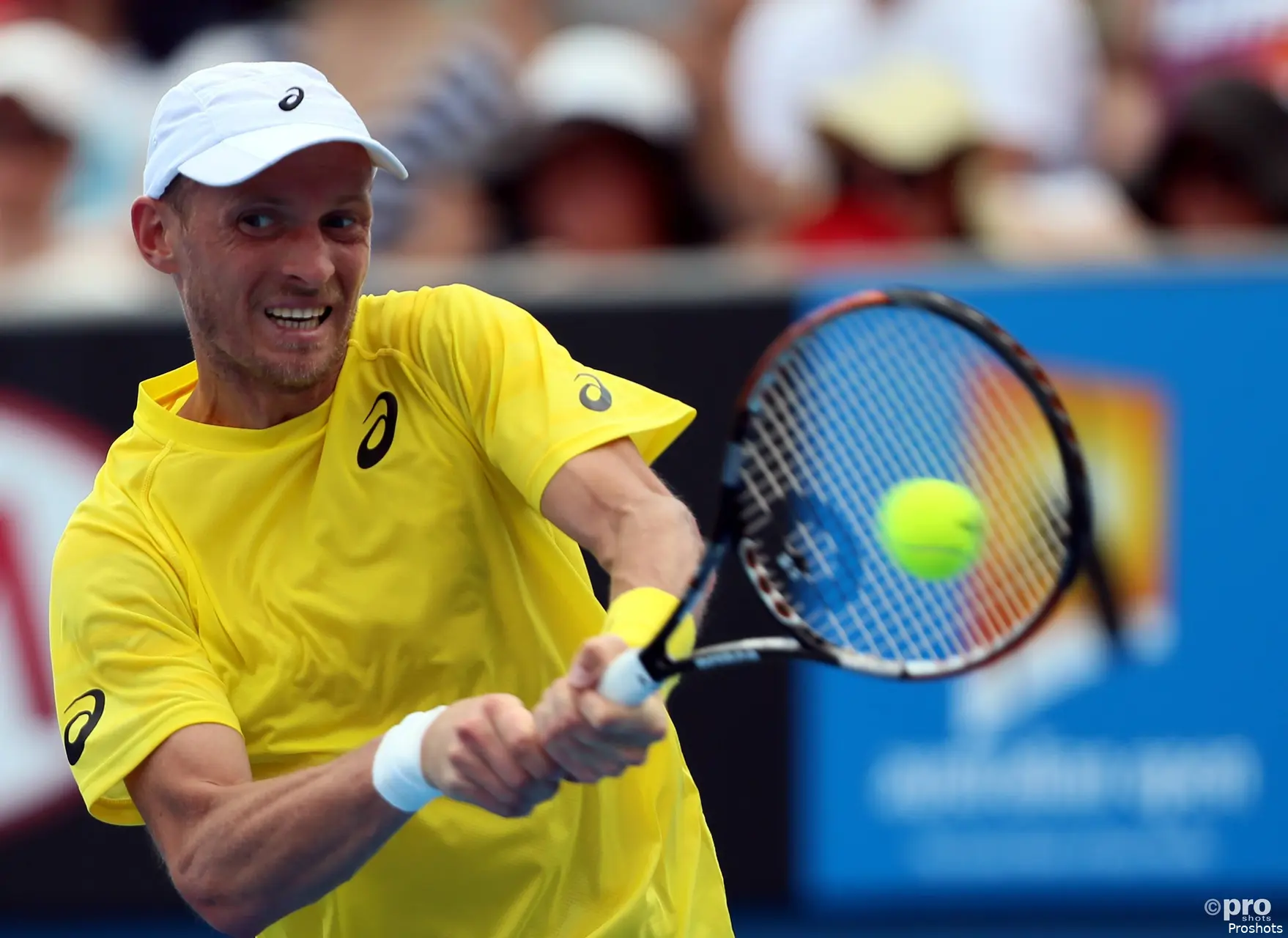
Nikolay Davydenko’s career has often been remembered through the prism of quiet excellence rather than grand theatrics. In an era dominated by Roger Federer, Rafael Nadal and Novak Djokovic, the Russian carved out a place among the elite through relentless consistency, tactical intelligence and an understated competitiveness that rarely sought the spotlight.
Born in Severodvinsk and later relocating to Germany to pursue his professional ambitions, Davydenko did not enjoy the linear rise commonly associated with top-tier champions. Unlike prodigies who announced themselves early, his development unfolded gradually, shaped as much by setbacks as by breakthroughs. Physical limitations, modest resources and the challenge of finding his footing on the professional circuit all played a role in delaying his ascent.
Reflecting on that period now, more than a decade removed from his retirement, Davydenko frames those struggles as foundational rather than limiting. Speaking to Championat, the former world No. 3 offered a candid assessment of the obstacles he faced early on, and how perseverance ultimately shaped the trajectory of his career.
“Ten years was a difficult period for me, a transitional one. I moved to Germany, wasn't achieving much, and was physically weak. Did I dream of great victories back then? Of course, like any kid.,” the 44-year-old told Championat. “Did I believe I'd be third in the world or win 21 ATP titles? It was a tough one. But perhaps my tennis journey only proves that not everything is smooth sailing.”
Those formative years were especially testing, as Davydenko attempted to establish himself on the ATP Tour while navigating a changing personal and sporting landscape. The move to Germany offered opportunities, but success was far from immediate. Tournament wins were scarce, confidence fluctuated, and the physical demands of the tour exposed weaknesses that required time and patience to overcome. “If you really want something, it's important to keep working, and the results will come, sooner or later. It would have been better sooner, of course, but things can be different.”
From late bloomer to elite contender
Davydenko’s rise into the upper echelons of men’s tennis came not through explosive athleticism, but through precision, court awareness and an ability to absorb and redirect pace. Standing just 1.78 metres tall, he was often at a physical disadvantage against the tour’s biggest hitters, yet compensated with foot speed, early ball striking and exceptional baseline consistency.
His breakthrough seasons in the mid-2000s saw him become a fixture in the ATP top 10, culminating in a career-high ranking of world No. 3 in 2006. That same year, he reached the semifinals of the US Open, signalling his capacity to challenge the very best on the sport’s biggest stages. Over the course of his career, Davydenko collected 21 ATP singles titles, a tally that reflected both longevity and adaptability across surfaces.
Perhaps his most defining achievement came in 2009, when he claimed the ATP Finals title, defeating Nadal and Soderling in the Round Robin, Roger Federer in the semifinals and Juan Martin Del Potro in the final. The victory served as a validation of years spent refining his game away from the spotlight, proving that persistence could still yield major rewards even in the shadow of generational icons.
That experience, Davydenko suggests, shaped his perspective on success and improvement. Rather than viewing milestones as endpoints, he came to see them as part of an ongoing process — a mindset he now seeks to pass on to younger players navigating their own uncertain paths on tour.
“I would advise not to rest on your laurels. Keep fighting and look for opportunities to improve your game in training and tournaments. Try to seize every opportunity to break into the elite of world tennis. You always have (at least) two doors; it's up to you to decide which one you'll enter.”

Cristhián AvilaTennis Journalist
Cristhián Ávila is a tennis journalist based in Santiago, Chile, and has been part of the TennisUpToDate team since early 2023. He covers the ATP and WTA Tours as well as all four Grand Slams, producing breaking news, match reports, analysis, and regular liveblogs from major tournaments.
His reporting combines statistical analysis with clear explanation, helping readers understand tactical developments, player form, and broader storylines across the tour. Working fluently in both Spanish and English, Cristhián collaborates with an international editorial team and contributes to comprehensive global coverage. As part of his work, he has conducted interviews and media interactions with leading figures in the sport, including Caroline Wozniacki and John McEnroe.
In his journalism, Cristhián places strong emphasis on careful sourcing, editorial accuracy, and updating articles promptly when new, verified information becomes available. His coverage is grounded in research, context, and direct engagement with professional tennis.
claps 0visitors 0
Just In

Popular News

Latest Comments
- Does Sinner need that 4.5 mil? I doubt it. He can make that with three modelling gigs!😅🤣Rapunzel21-10-2026
- Did "People Magazine" purchase this website? This nonstop storyline is bullshit.
 mandoist21-10-2026
 - Listen... this is of no concern to anyone but these two. Deal with your own issues -- most of us have our own. Thanks, media, for these insignificant follow-ups which are meaningless.mandoist21-10-2026
- This is so very very sad, for all three of them. I truly thought they had an unbreakable bond, but life throws up so many differing challenges. Having your homeland suffering in such a terrible way, makes happiness lose out to guilt as well. Our thoughts are with them. X💔bjsexton20-10-2026
- I have lost all respect for Svitolina! Could she not have waited until he had played at the Paris Masters!!! She is selfish and don't give a damn about Gael. That is NOT how love is demonstrated Elina!!Rapunzel19-10-2026
- Perhaps convenient tennis tour sex is not a strong enough experience in which to base a marriage?mandoist19-10-2026
- Fight the Good Fight... Tennis (sports in general) need more Humans such as yourself.mandoist18-10-2026
- When is WTA going to mandate Genetic Testing (DNA) ???mandoist18-10-2026
- Hey, Dan... you just wake up from a coma? Regardless -- Thanks for the comedy this morning!mandoist18-10-2026
- Two Things: 1. Stop allowing these Spoiled Trust-Fund Elitists to behave badly. Your little hand-slaps do not deter them. 2. STOP the incessantly annoying "towel wiping" nonsense!!!!mandoist15-10-2026

Loading