“I don’t care at all, to be honest”: Alexander Zverev shuts down draw debate as Roland-Garros pressure questions intensify
ATPTuesday, 02 June 2026 at 22:30
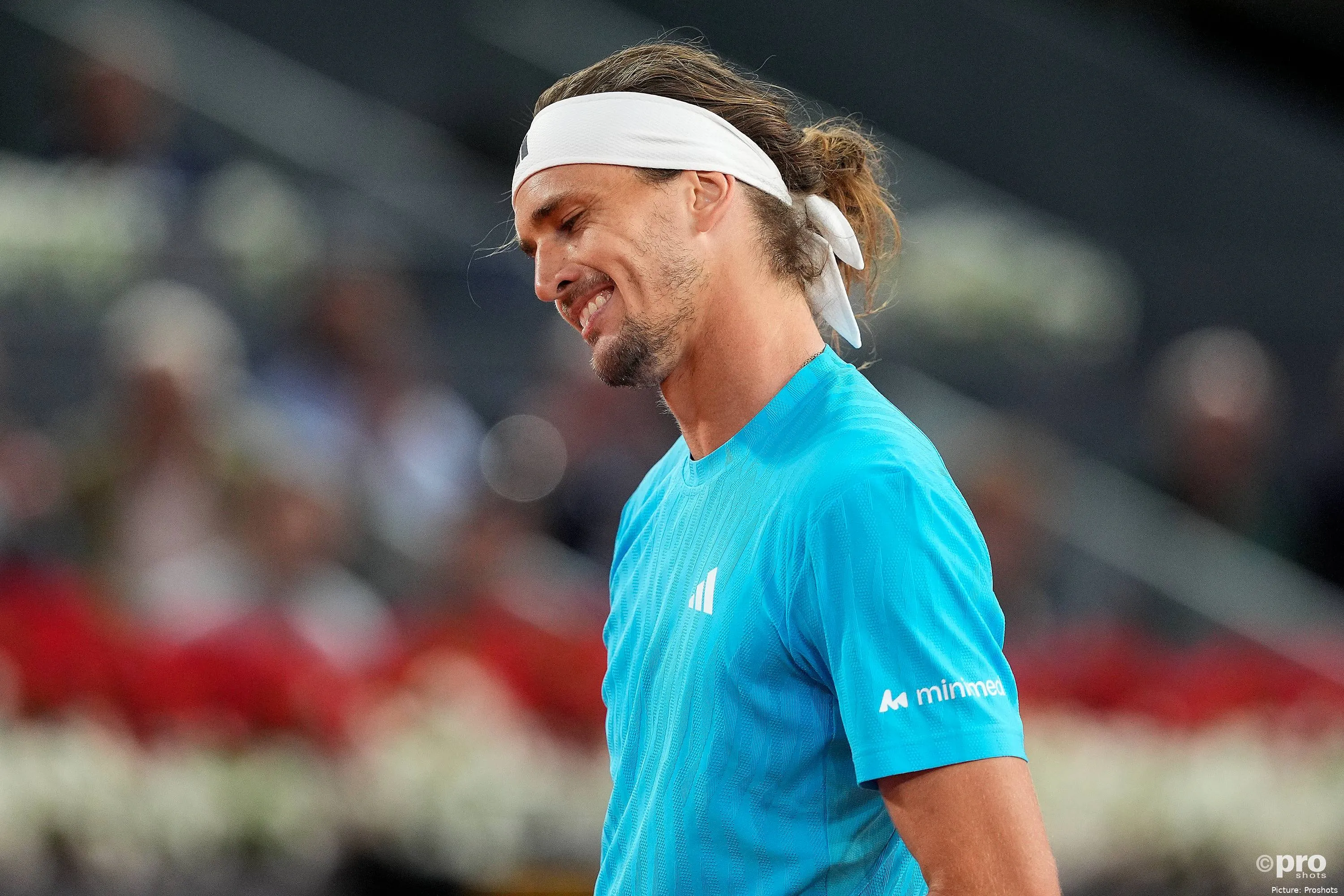
Alexander Zverev advanced to the Roland-Garros semi-finals after a straight-forward but tactically uneven quarter-final performance, defined by a slow start and a mid-match adjustment in conditions. The German acknowledged that early rhythm issues left him trailing before he found stability on court.
The world No. 3 described the opening phase as dictated by adaptation, stating that “it was very different conditions today” and that his opponent initially settled faster. Zverev recovered after losing early control, eventually reasserting dominance as his timing improved.
Beyond the match itself, the press conference expanded into broader themes around generational shifts, tactical evolution, and the value hierarchy in elite tennis. Zverev was repeatedly drawn into comparisons involving younger players and alternative career achievements.
He consistently rejected external framing, emphasising control and execution over narrative. “It doesn’t matter,” he said more than once when pressed on draw scenarios and opponent preferences.
Early struggles and tactical reset
Zverev’s quarter-final began with visible instability, as he fell behind 5-2 in the opening set before reversing momentum. He attributed the shift to environmental and timing adjustments rather than structural changes in his game, noting that his opponent “found his rhythm a lot quicker than I did.”
Once he adapted, Zverev described a noticeable change in his baseline comfort and shot selection. “It was very different conditions today,” the 3-time Grand Slam finalist said. “I had to find my rhythm. He was playing a lot better than me in the beginning because he found his rhythm a lot quicker than I did. But once I did, I felt quite well on the court and felt like it was a good match from my end.”
The German also referenced consistency in his recent Roland-Garros performances, pointing to five semi-finals in the last six years as evidence of sustained clay-court competitiveness.
Power, control and competitive hierarchy
A significant portion of Zverev’s press conference centred on tactical maturity and the balance between raw power and controlled decision-making. He suggested that physical development naturally expands offensive options, but that experience determines when those options should be used.
He highlighted the evolution process as gradual and opponent-dependent, stressing that excessive aggression often diminishes efficiency. In his view, time on tour is the decisive factor in refining shot selection under pressure situations.

“When you’re young and you grow, when you become physically stronger, you automatically have more weapons,” the 28-year-old player said. “And those weapons all of a sudden surprise yourself a little bit… sometimes you want to use that all the time. I think it takes time, just years on tour, to realise that you don’t always have to.”
Zverev also referenced Roger Federer as the benchmark for variety and tactical unpredictability, arguing that elite-level disruption comes from variation rather than pure force. “Roger was probably the best ever to change things up… he could hit a forehand 110 miles an hour and then a drop shot the next point. It was always very confusing to play him.”
"I focus on the things that I can control”
Zverev was firm when questioned about tournament narratives, opponent selection, and draw dynamics, repeatedly rejecting any preference-based framing. He insisted that such considerations do not influence his preparation or mindset.
When asked about potential opponents emerging from a disrupted draw, he was explicit in his detachment from the discussion. The German stated that external variables are secondary to performance execution and internal consistency.
He also addressed the broader competitive field, including younger players and emerging Italian names, without assigning disproportionate significance to individual surprises. “I think it shows that we have a great group of young players that are playing fantastic tennis… it doesn’t matter. I focus on the next match. I focus on the things that I can control.”
Zverev closed the press conference by returning to his core competitive principle: performance quality as the primary determinant of outcomes. He reduced the equation to execution rather than scenario management, summarising his position in blunt terms.
“For me, it’s quite simple. It’s me playing well. I really have to trust my game, trust my tennis and trust myself. And if I play well, then I think that’s 99% of the work.”

claps 0visitors 0
Just In
Popular News
Latest Comments
- Pathetic -- both for her and especially The Sport of Tennis. Wealthy bored people with hopelessly inflated EGO's need to settle for a Hobby. Stop interfering with promising young players' rights to compete!!
 mandoist01-06-2026
 - With the non-stop back-to-back WTA tourneys how does one find time for enlargements?mandoist01-06-2026
- People like Tiafoe, who lose sight of their roots, need to be reminded of who they once were! It's almost too late...mandoist31-05-2026
- She gonna dress like a Tennis Player or Minnie Mouse this time? Unserious brain.mandoist31-05-2026
- "...that way I can talk through my clothes" Wow! Ironically 'mentality' is mentioned in this needless article. Geez.mandoist27-05-2026
- I did the common sense thing... turned it off.mandoist27-05-2026
- Osaka seems to have 'lost the plot' some time ago. Distraction, distraction, distraction.. WTA lost The Plot quite some time ago as well.mandoist27-05-2026
- This one continues to find ways to distract herself from The Game; more than anyone since her "heroes" The Williams. Hope she's not turning into her 'unnecessarily opinionated' father.mandoist27-05-2026
- How unfortunate. Martinez stands far & above these others in effective coaching (and personality).mandoist26-05-2026
- What a Simp.mandoist26-05-2026

Loading