French Open Roland Garros ATP Day Nine Round-Up | Felix Auger-Aliassime and Matteo Berrettini secure strong wins as Tiafoe lets quarterfinal slip
ATP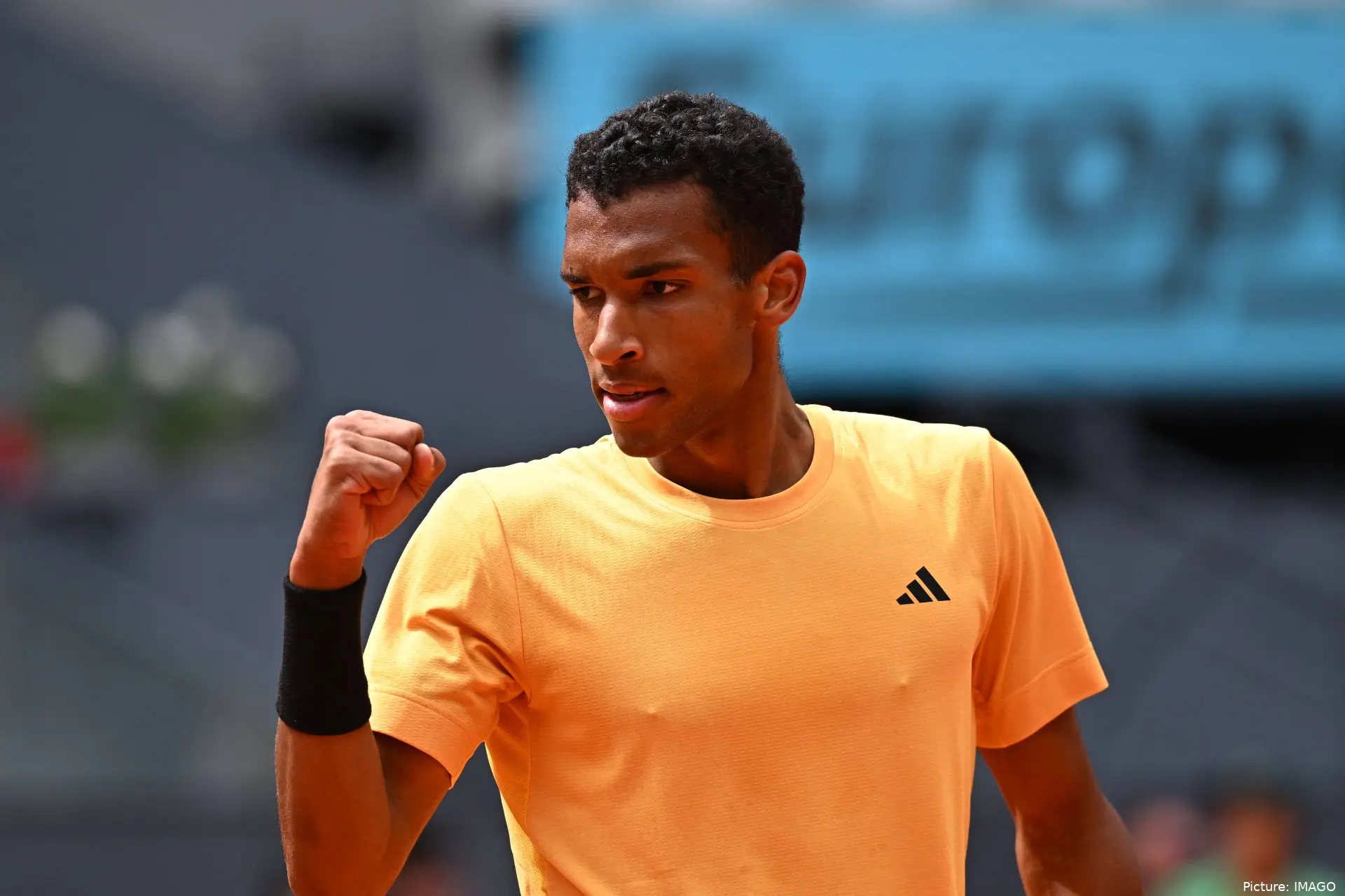
The Roland Garros Round of 16 produced a blend of controlled wins and extended tactical matches, with Matteo Arnaldi’s comeback victory over Frances Tiafoe standing out as the defining contest of the day alongside quarterfinal qualifications for Matteo Berrettini and Félix Auger-Aliassime. The French Open Round of 16 also included Flavio Cobolli surviving a four-set test, reinforcing the physical and structural demands of the clay-court draw in Paris.
Across the Roland Garros draw, higher-seeded players largely held form, although multiple matches were shaped by extended tiebreaks and major momentum reversals rather than straight-set dominance, most notably Arnaldi overturning a double-break deficit in the fourth set before closing in five.
Cobolli withstands Svajda comeback before closing in tiebreaks
Flavio Cobolli def. Zachary Svajda 6-2, 6-3, 6-7, 7-6
Flavio Cobolli advanced to the Roland Garros quarterfinals after a four-set contest that shifted from early structural control to extended volatility across the final sets. The Italian established immediate dominance through two sets built on early breaks and consistent baseline depth, limiting Zachary Svajda’s ability to construct neutral rally patterns on clay.
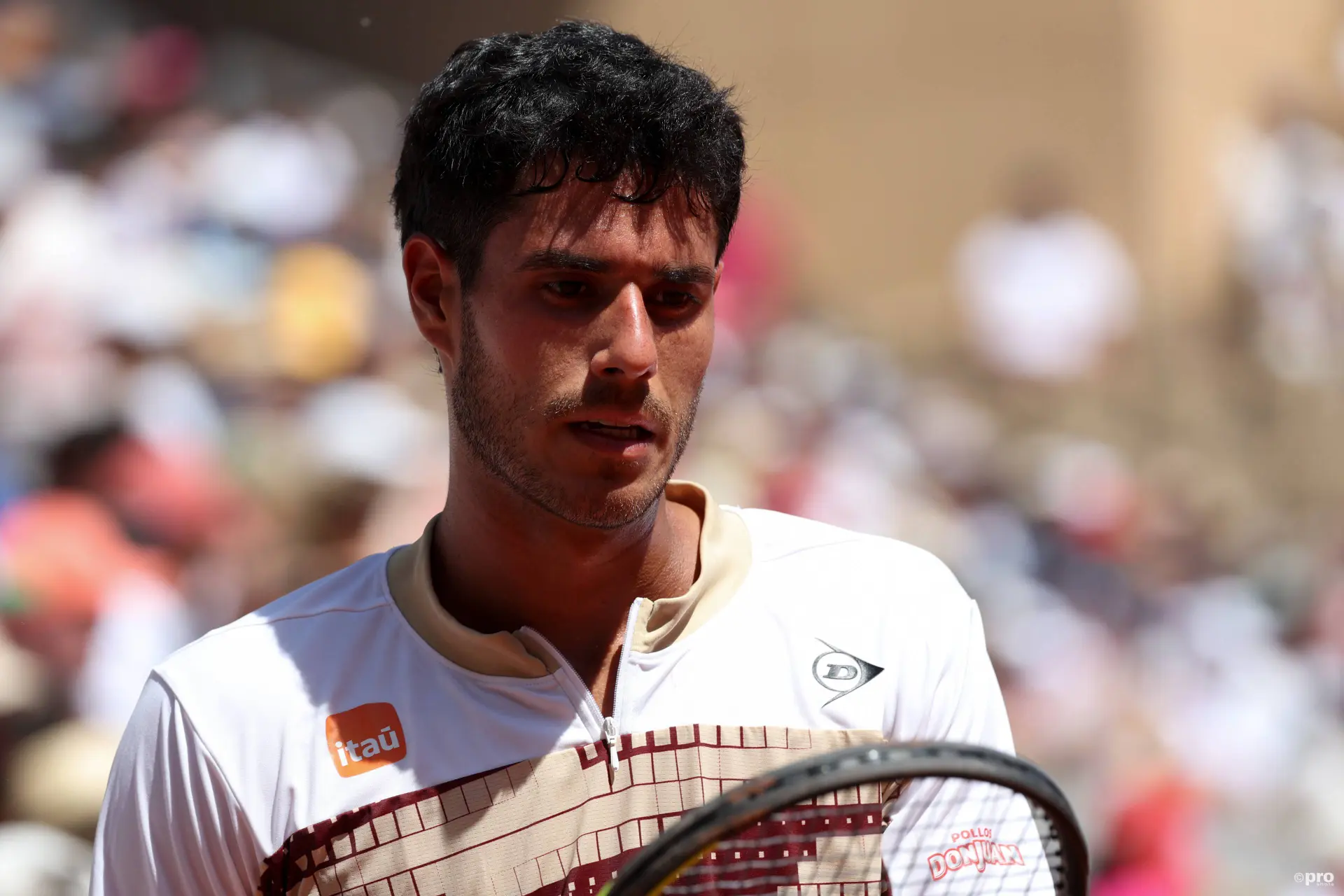
The match changed when Svajda increased return aggression and began targeting Cobolli’s second serve, forcing a third-set tiebreak and extending the match into a fourth-set decider. Cobolli responded by reducing risk in baseline exchanges and prioritising first-serve efficiency, which stabilised his service games under pressure.
Cobolli’s early break conversion rate and superior hold percentage across the first two sets ultimately created enough margin to survive Svajda’s late surge. The Italian now progresses into the Roland Garros quarterfinals with a high physical load but improved resilience in extended tiebreak scenarios.

Berrettini survives Cerúndolo pressure in two-set tiebreak structure
Matteo Berrettini def. Juan Manuel Cerúndolo 6-3, 7-6, 7-6
Matteo Berrettini moved into the Roland Garros quarterfinals after a straight-sets win that was defined less by scoreline comfort and more by sustained pressure across extended service games. The Italian began with early control in the first set, using first-serve penetration to establish scoreboard separation before Juan Manuel Cerúndolo adjusted his return positioning and extended baseline exchanges.
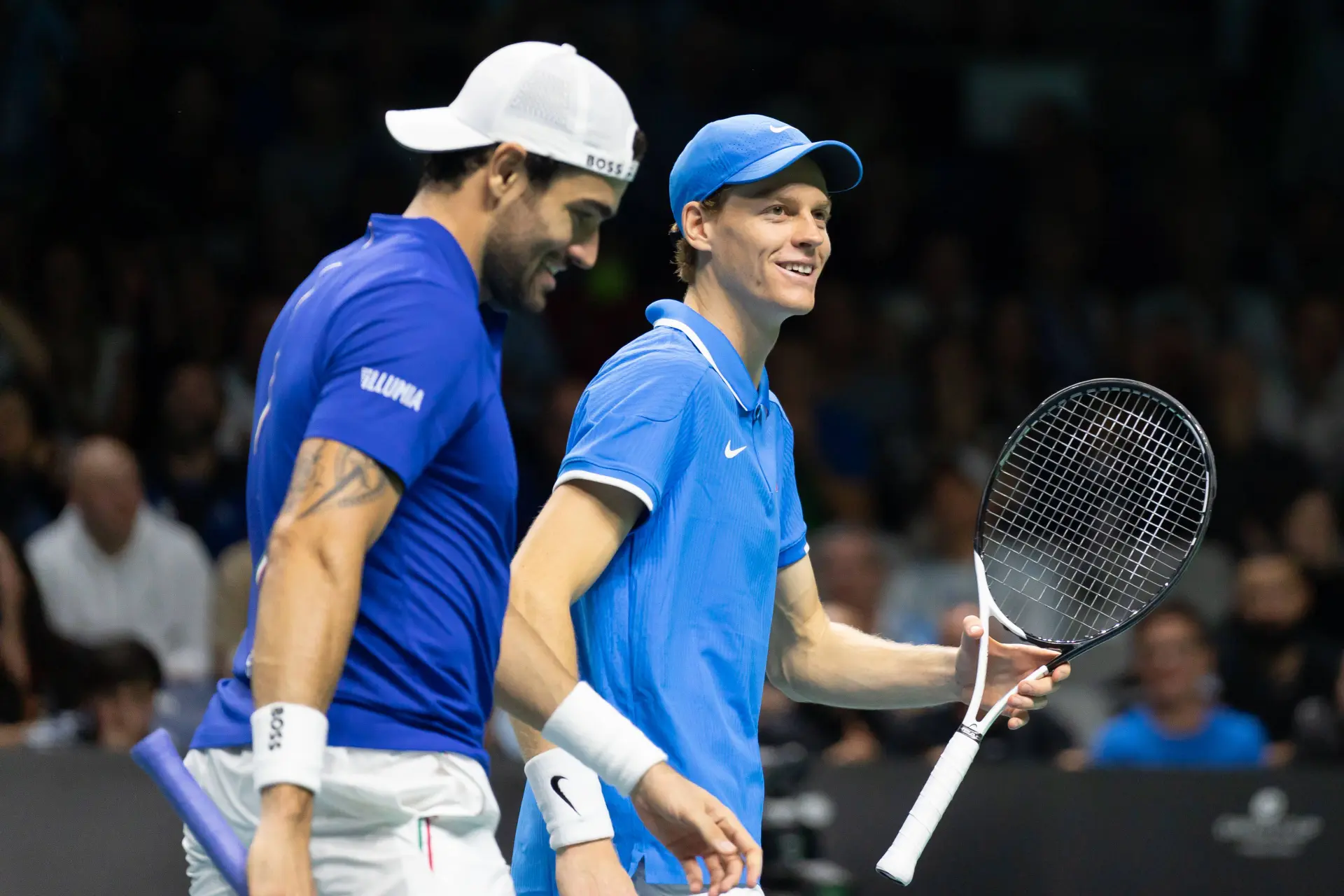
From the second set onwards, Cerúndolo increased return depth and forced Berrettini into longer service holds, resulting in two consecutive tiebreaks. Berrettini’s response was structurally significant: he increased first-serve percentage in high-pressure points and reduced second-serve exposure, limiting Cerúndolo’s ability to initiate aggressive return positions during key moments.
Statistically, Berrettini’s ability to maintain high first-serve points won and avoid extended second-serve rallies was decisive, particularly as both sets two and three were decided in tiebreaks where he prevented Cerúndolo from converting sustained return pressure into breaks. The Italian’s efficiency under pressure ensures a controlled progression into the Roland Garros quarterfinals, with minimal deviation from his serve-first clay strategy despite extended match duration.
Auger-Aliassime builds controlled progression after early break structure
Félix Auger-Aliassime def. Alejandro Tabilo 6-3, 7-5, 6-1
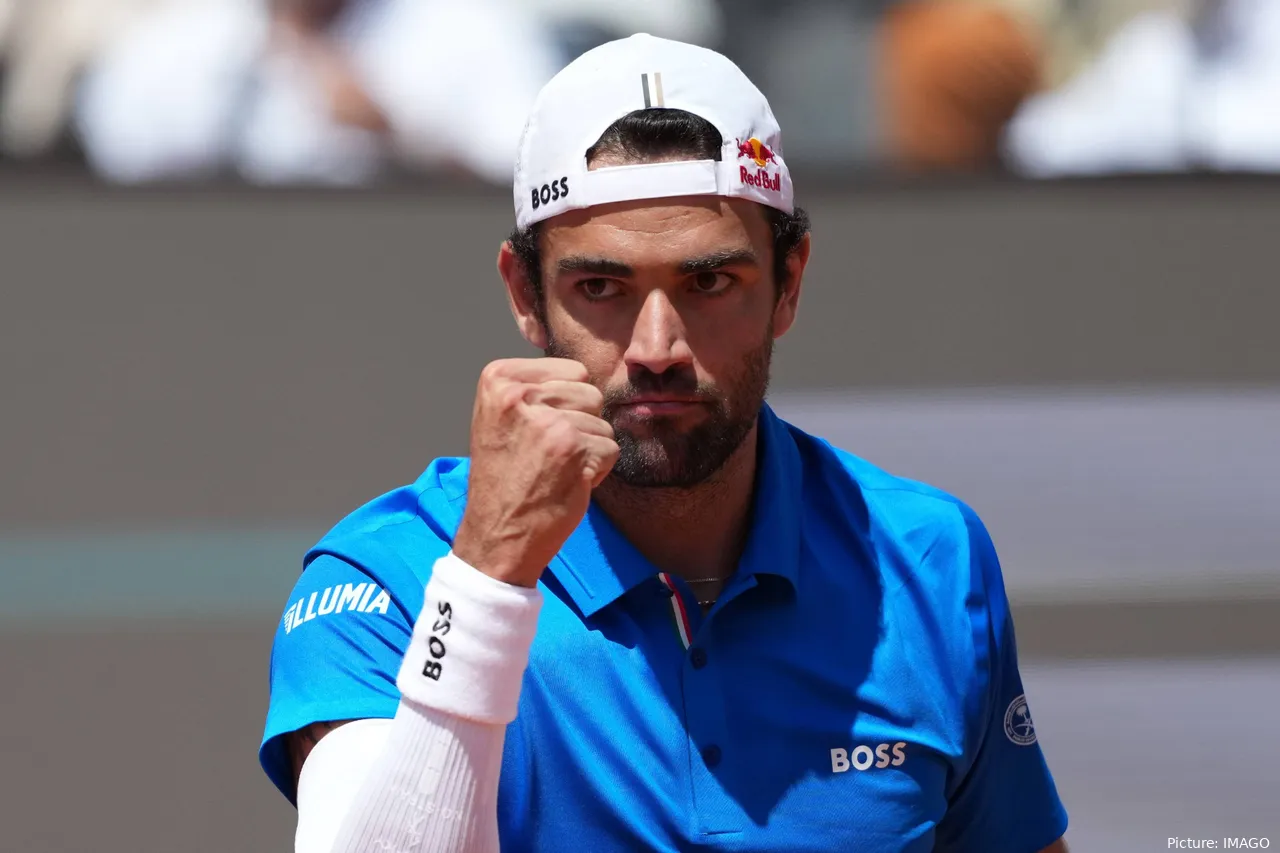
Félix Auger-Aliassime secured his place in the Roland Garros quarterfinals with a performance structured around early break establishment and sustained service dominance. The Canadian opened the match by immediately applying return pressure, breaking early and consolidating service games through a high first-serve percentage that prevented Alejandro Tabilo from constructing consistent baseline rhythm.

The second set represented the only competitive phase of the match, with Tabilo increasing second-serve return aggression and generating multiple break-point opportunities. Auger-Aliassime’s key adjustment came in neutral rallies, where he shortened points through earlier ball striking and improved serve placement under pressure, allowing him to save critical break points and prevent momentum reversal.
Across the match, Auger-Aliassime’s statistical edge in first-serve points won and his ability to neutralise return pressure after extended baseline exchanges were decisive factors, particularly as Tabilo’s effectiveness dropped sharply in the third set. The Canadian now advances into the Roland Garros quarterfinals with a relatively controlled physical load and a service game operating at high efficiency across all three sets.

Matteo Arnaldi outlasts Frances Tiafoe in 5h 24m Roland Garros marathon
Matteo Arnaldi def. Frances Tiafoe 7-6(5), 6-7(5), 3-6, 7-6(3), 6-4
Matteo Arnaldi survived a dramatic Roland Garros Round of 16 encounter, defeating Frances Tiafoe after 5 hours and 24 minutes in a match defined by two major momentum reversals across the final sets. The Italian edged the opening set in a tiebreak before Tiafoe responded in kind in the second, with both players stabilising service patterns before the American moved ahead by taking the third set 6-3 through improved return depth and more efficient baseline control.
The decisive structural shift came in the fourth set, where Tiafoe moved into a commanding position at 4-1 with a double-break advantage and appeared close to closing the match when he later served at 5-4. However, Arnaldi extended return pressure, consistently targeting second serves and forcing extended baseline exchanges to break back and push the set into a tiebreak. That sequence fully reversed the momentum, with Arnaldi taking the breaker 7-3 to level the match and force a fifth set under significantly altered psychological conditions.
In the decider, Tiafoe again regained control by recovering from 2-4 down, re-entering the match through improved first-serve accuracy and higher return aggression in neutral rallies. Despite that response, Arnaldi maintained structural stability in service games under pressure and secured the decisive break late in the set before closing 6-4. The Italian’s win was ultimately defined by his ability to survive two separate match-control phases from Tiafoe, converting marginal gains in return games into decisive momentum shifts across both the fourth-set recovery and fifth-set resolution.

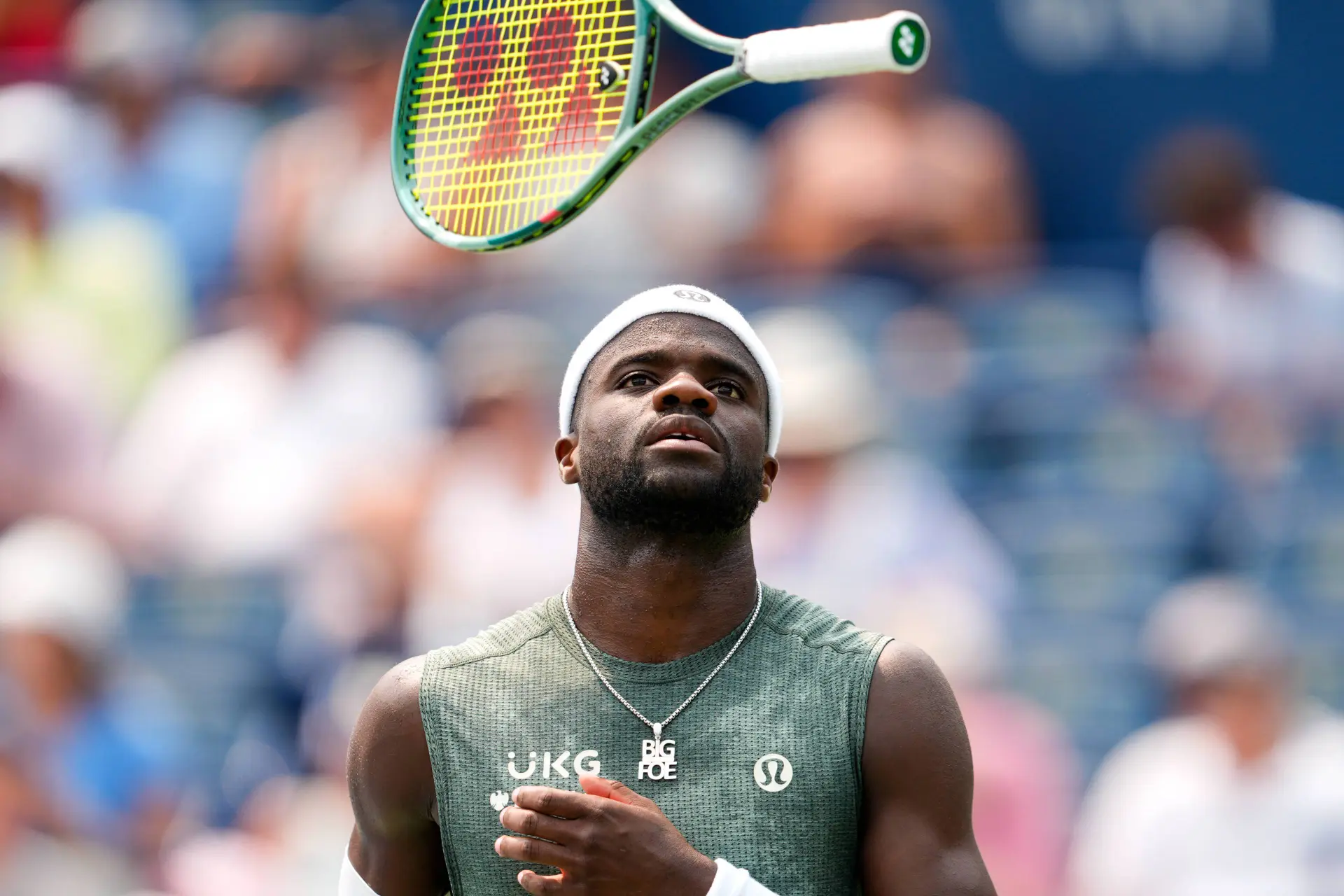
Frances Tiafoe of United States serves during the match against Andrea Pellegrino
Lucas MichaelTennis Journalist
Lucas Michael is a tennis journalist based in Cambridge, UK, specializing in comprehensive coverage of the ATP and WTA tours. For the past 1.5 years, he has been a core contributor to TennisUpToDate, where he has authored more than 3,000 data-driven match reports, deep-dive analysis pieces, and engaging liveblogs.
Lucas pairs real-time statistical analysis with on-the-ground reporting, frequently traveling to tournaments to cover the action firsthand from the press box and player press conferences. This blend of advanced metrics and direct access allows him to provide sharp context regarding player form, tactical trends, and breaking tour developments.
He holds a BA (Hons) in Sports Journalism. Grounded in core journalistic ethics, Lucas places a strict emphasis on meticulous sourcing, editorial accuracy, and a commitment to updating live content swiftly as verified information emerges.
claps 0visitors 0
Just In


Popular News

Latest Comments
- Lena... Takin' care of business
 mandoist25-10-2026
 - Can you please stop publishing this nonsense? Stick to Tennis.mandoist25-10-2026
- Does Sinner need that 4.5 mil? I doubt it. He can make that with three modelling gigs!😅🤣Rapunzel21-10-2026
- Did "People Magazine" purchase this website? This nonstop storyline is bullshit.mandoist21-10-2026
- Listen... this is of no concern to anyone but these two. Deal with your own issues -- most of us have our own. Thanks, media, for these insignificant follow-ups which are meaningless.mandoist21-10-2026
- This is so very very sad, for all three of them. I truly thought they had an unbreakable bond, but life throws up so many differing challenges. Having your homeland suffering in such a terrible way, makes happiness lose out to guilt as well. Our thoughts are with them. X💔bjsexton20-10-2026
- I have lost all respect for Svitolina! Could she not have waited until he had played at the Paris Masters!!! She is selfish and don't give a damn about Gael. That is NOT how love is demonstrated Elina!!Rapunzel19-10-2026
- Perhaps convenient tennis tour sex is not a strong enough experience in which to base a marriage?mandoist19-10-2026
- Fight the Good Fight... Tennis (sports in general) need more Humans such as yourself.mandoist18-10-2026
- When is WTA going to mandate Genetic Testing (DNA) ???mandoist18-10-2026

Loading