“I still haven’t seen my limit yet”: Joao Fonseca reflects after breakthrough Roland-Garros run ends against Mensik
ATP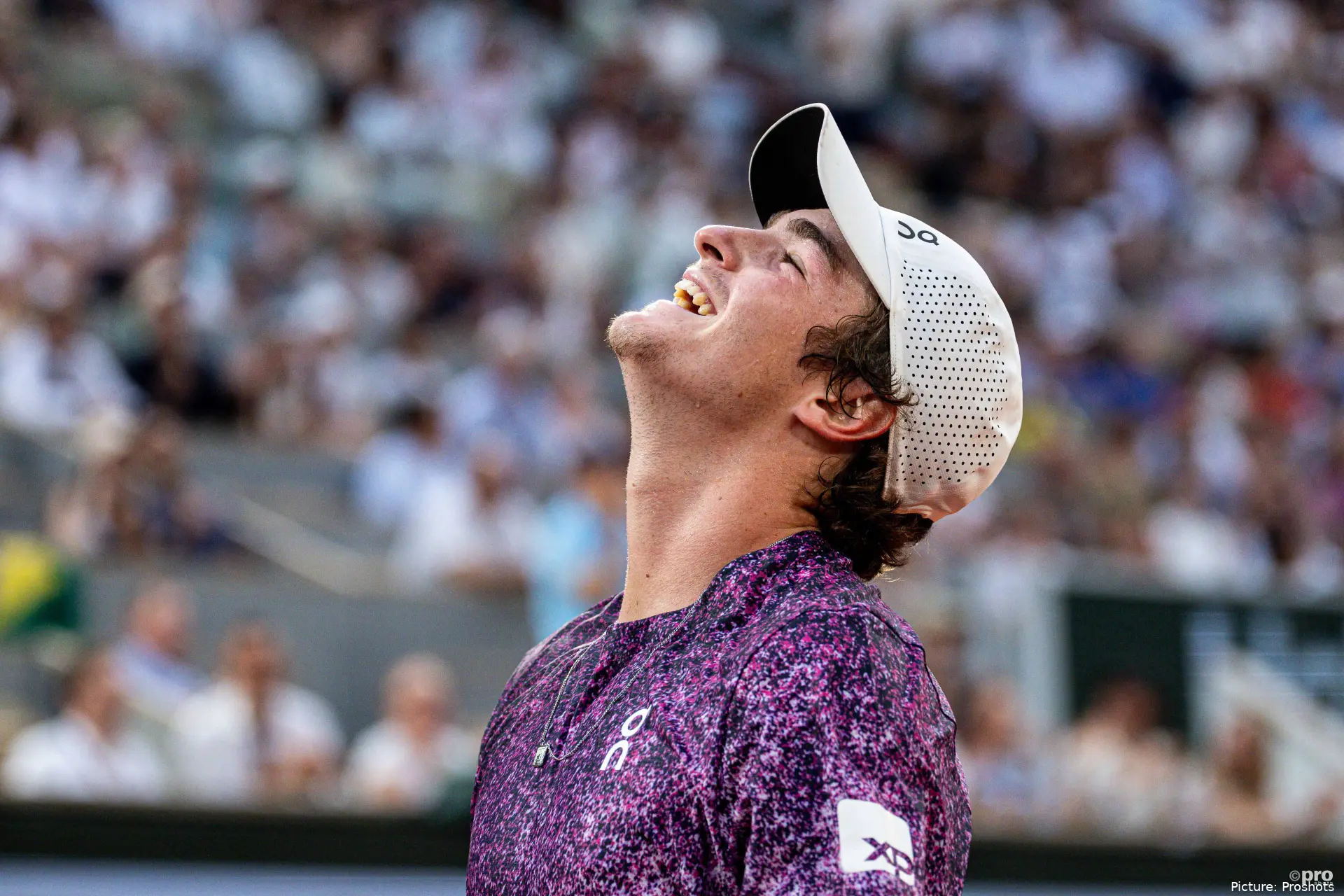
João Fonseca’s breakthrough run at Roland-Garros ended in the quarter-finals on Tuesday night, but the Brazilian left Paris with a clearer sense of his physical and competitive boundaries after a demanding defeat to Jakub Mensik. The 19-year-old, competing in his first Grand Slam quarter-final, fell in a match defined by extended baseline exchanges and high-pressure serving from his opponent.
Mensik closed out a 6-4, 6-3, 7-6(3) victory after two hours and 33 minutes, using his serve and return depth to consistently push Fonseca into defensive positions. The Czech’s ability to sustain intensity in key moments proved decisive, particularly in a third set where Fonseca briefly threatened a comeback before Mensik controlled the tiebreak.
Fonseca had arrived in the last eight after one of the most significant runs of his early career, including a five-set win over Novak Djokovic in the third round and a four-set victory against Casper Ruud. Despite the defeat, he framed the week as a developmental step rather than a setback, highlighting both his performance level and physical response across five-set conditions.
“I think this tournament gives me more conviction and more confidence to keep going,” Fonseca said, while also stressing a clearer understanding of his physical limits. Against Mensik, he insisted the outcome reflected opponent quality more than his own decline in level.
Mensik’s pressure game and Fonseca’s tactical readjustments
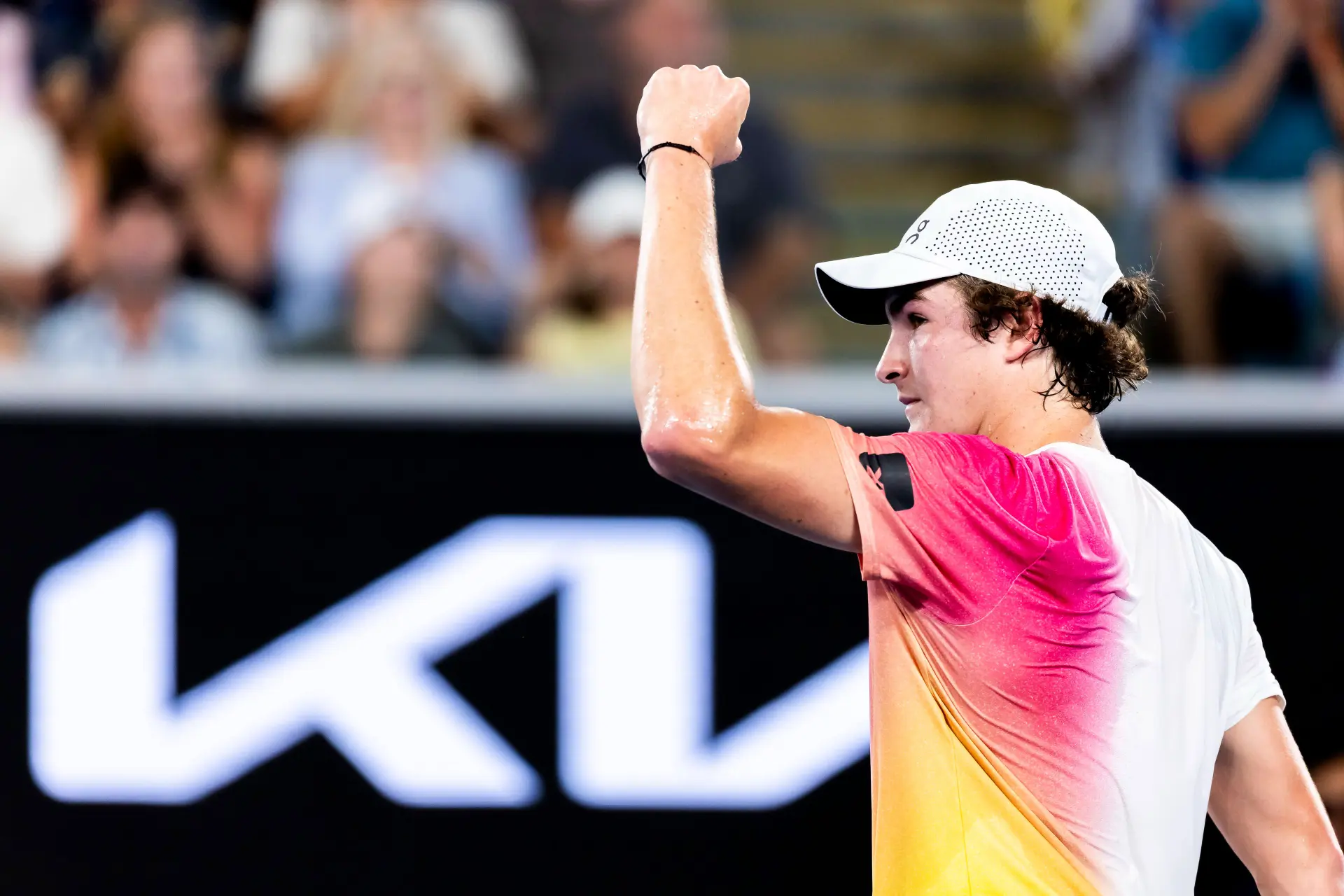
Mensik’s ability to dictate from both serve and return became the central feature of the match. Fonseca repeatedly pointed to the Czech’s consistency in neutralising short exchanges and forcing him into extended defensive positions. The Brazilian described Mensik’s return positioning as particularly damaging, limiting his ability to control service games.
“The way he deals with the important points is also really impressive,” Fonseca explained at press conference. “He controlled most of the part of the match, serving pretty well and doing the return pretty well as well.”

Joao Fonseca after defeating Djokovic to reach the quarter-finals of Roland Garros 2026
Fonseca added that Mensik’s return accuracy placed him under constant pressure, even in service games where he initially established control. The Czech’s willingness to step inside the court and strike early on both first and second serves disrupted Fonseca’s rhythm throughout the contest.
“His return, both first and second serve, are pretty into the court and he puts a lot of pressure on the opponent. Today he missed a very small amount of returns and I think that put me in a tough position today.”
The decisive moments and Fonseca’s assessment of the match
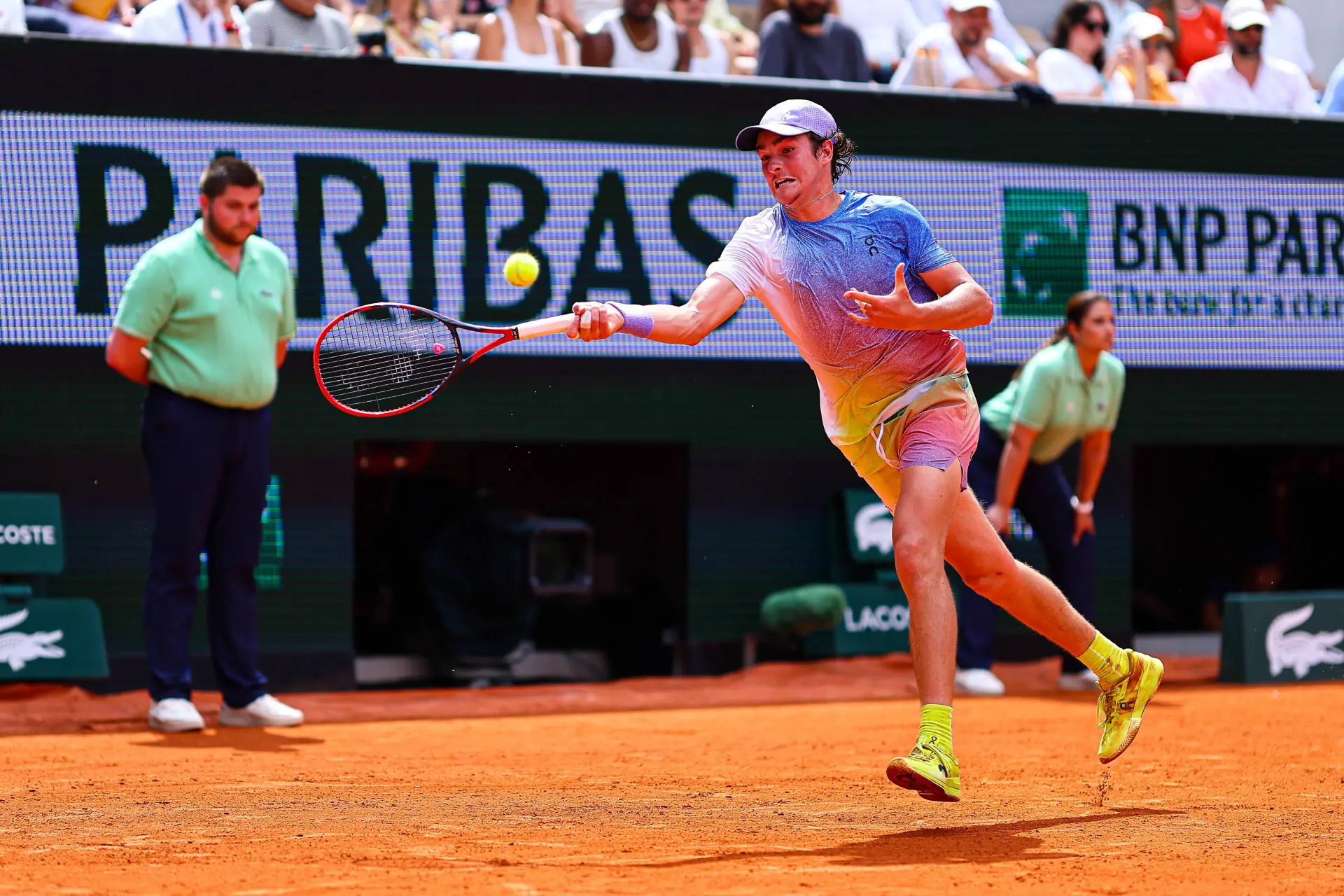
The third set offered Fonseca his clearest opening, particularly in a marathon 12th game that featured multiple match points and extended exchanges. However, Mensik maintained composure in high-pressure situations and eventually sealed the match in the tiebreak, reinforcing the difference in execution under stress.
Fonseca insisted his approach remained focused on isolated points rather than match context, particularly during the critical phase of the third set. He emphasised effort and execution rather than outcome-driven thinking, even as the match reached its decisive moments.
“I was just thinking about winning that game and not thinking about the rest of the match. Just trying to produce the best tennis I could at that moment and trying to fight,” the Brazilain added. “I did my best today. I think I put all I had on court. Unfortunately it was Jacob's day and he played good tennis. I wish him good luck. I don't think I played bad today.”
Learning curve and physical reference points after breakthrough run
Beyond the immediate defeat, Fonseca placed significant emphasis on what the Paris fortnight revealed about his development trajectory. Having entered the tournament with limited expectations due to a minor injury, he described the experience as a reference point for future physical and tactical demands at Grand Slam level.
He was particularly reflective about his capacity to handle long matches, noting that he now has a clearer benchmark for endurance at this stage of his career. “I didn’t know if I could handle a five-hour match or a four-hour match,” Fonseca added. “Nowadays I know I never saw my limit yet, but I already know that I can be confident with my physique and I think I’m more confident with my game.”
He concluded that while his competitive identity remains stable, his tactical adaptability is evolving. “Maybe it’s the same João, but finding new things,” he said, summarising a tournament that combined defeat with measurable progression at the highest level.

Cristhián AvilaTennis Journalist
Cristhián Ávila is a tennis journalist based in Santiago, Chile, and has been part of the TennisUpToDate team since early 2023. He covers the ATP and WTA Tours as well as all four Grand Slams, producing breaking news, match reports, analysis, and regular liveblogs from major tournaments.
His reporting combines statistical analysis with clear explanation, helping readers understand tactical developments, player form, and broader storylines across the tour. Working fluently in both Spanish and English, Cristhián collaborates with an international editorial team and contributes to comprehensive global coverage. As part of his work, he has conducted interviews and media interactions with leading figures in the sport, including Caroline Wozniacki and John McEnroe.
In his journalism, Cristhián places strong emphasis on careful sourcing, editorial accuracy, and updating articles promptly when new, verified information becomes available. His coverage is grounded in research, context, and direct engagement with professional tennis.
claps 0visitors 0
Just In

Popular News
Latest Comments
- Lena... Takin' care of business
 mandoist25-10-2026
 - Can you please stop publishing this nonsense? Stick to Tennis.mandoist25-10-2026
- Does Sinner need that 4.5 mil? I doubt it. He can make that with three modelling gigs!😅🤣Rapunzel21-10-2026
- Did "People Magazine" purchase this website? This nonstop storyline is bullshit.mandoist21-10-2026
- Listen... this is of no concern to anyone but these two. Deal with your own issues -- most of us have our own. Thanks, media, for these insignificant follow-ups which are meaningless.mandoist21-10-2026
- This is so very very sad, for all three of them. I truly thought they had an unbreakable bond, but life throws up so many differing challenges. Having your homeland suffering in such a terrible way, makes happiness lose out to guilt as well. Our thoughts are with them. X💔bjsexton20-10-2026
- I have lost all respect for Svitolina! Could she not have waited until he had played at the Paris Masters!!! She is selfish and don't give a damn about Gael. That is NOT how love is demonstrated Elina!!Rapunzel19-10-2026
- Perhaps convenient tennis tour sex is not a strong enough experience in which to base a marriage?mandoist19-10-2026
- Fight the Good Fight... Tennis (sports in general) need more Humans such as yourself.mandoist18-10-2026
- When is WTA going to mandate Genetic Testing (DNA) ???mandoist18-10-2026

Loading