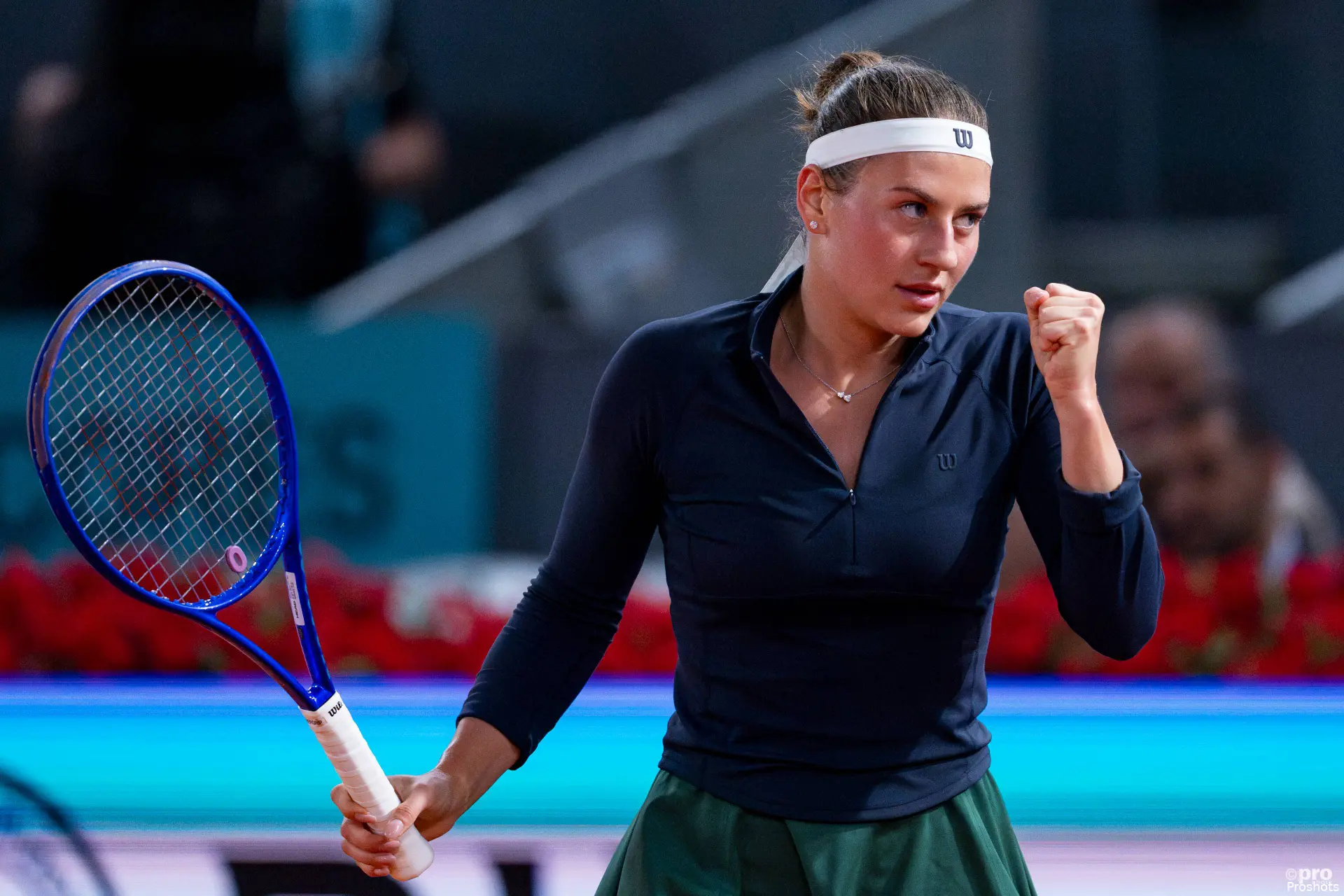
Marta Kostyuk’s progression into the Roland-Garros semi-finals was immediately overshadowed by a broader and more politically charged message, as the Ukrainian player once again addressed the war in Ukraine and the public silence of Russian athletes. From the opening minutes of her press conference, Kostyuk shifted attention away from her 17-match winning streak and toward what she described as structural and moral differences between Ukrainian and Russian sporting realities.
The No. 15 seed’s victory over Elina Svitolina secured her place in the last four, where she is set to face Mirra Andreeva, a rising Russian player. While the sporting matchup looms, Kostyuk’s reflections were primarily focused on the wider context of competing against Russian athletes and the responsibility she believes comes with public visibility during the war.
Rather than framing her run through results alone, Kostyuk consistently returned to themes of resilience among Ukrainian athletes, the psychological burden of representing a country at war, and the role of athletes in acknowledging geopolitical realities. The semi-final against Andreeva was referenced only as part of this wider competitive backdrop.
Her comments were notable for their consistency: separation of sport from politics on court, but no separation in her broader critique of silence and public positioning off it.
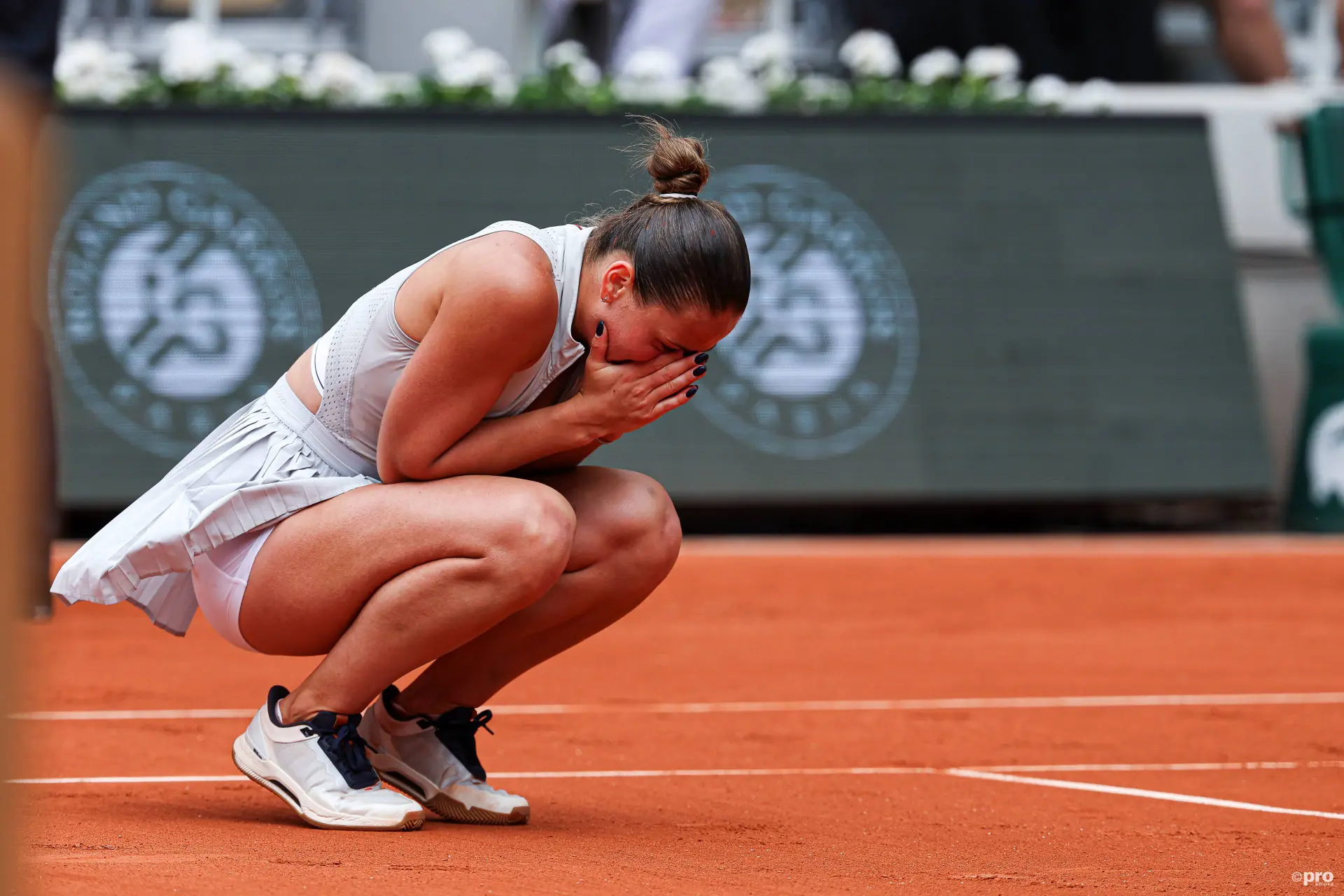
Ukraine, sport under pressure, and representational identity
Kostyuk described Ukrainian sport as functioning under conditions that are structurally different from most of the professional circuit. She highlighted that many athletes remain based in Ukraine and continue training despite instability, while others, like herself, operate abroad with greater logistical freedom.
Her framing positioned Ukrainian athletes as competing under persistent pressure rather than isolated sporting circumstances. “The majority of Ukrainian athletes are coming back to Ukraine to practice. They don’t have the privilege I have to travel all the time and be outside of the danger. So they are practicing in it, they live in it, so to be able to compete, being in this situation is another level.”
She also reiterated that her competitive identity is secondary to national representation, stressing that results are not the primary lens through which she evaluates her tournament experience. Instead, she described participation itself as meaningful within the current context. “Being here is a real blessing and I don’t think about winning. It’s not the most important thing for me. I’m here to represent Ukraine and to enjoy.”
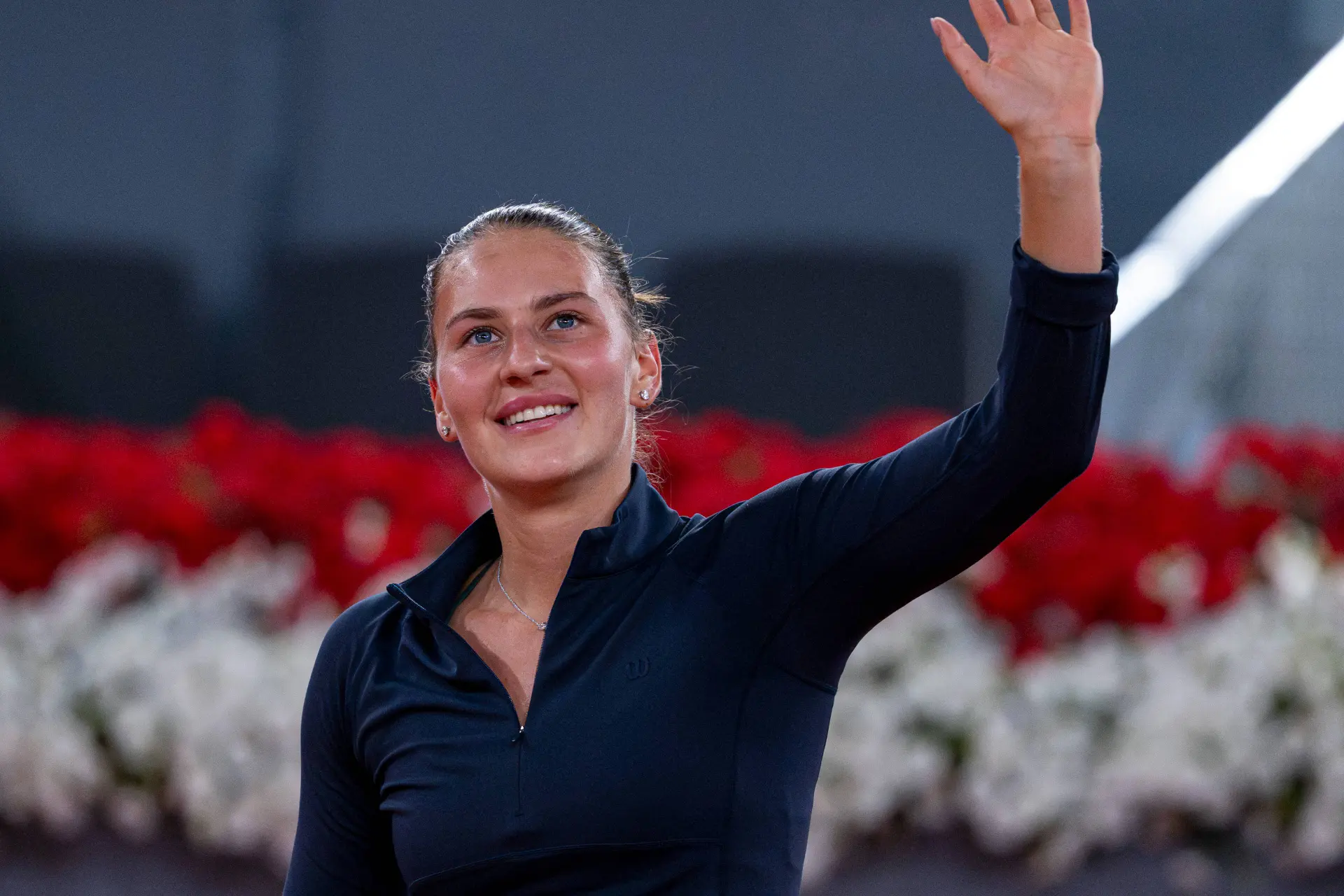
Russian players, silence, and Andreeva semi-final backdrop
While Kostyuk confirmed that she does not adjust her on-court mindset based on nationality, she drew a clearer distinction when addressing public discourse around Russian athletes. This included broader references to players from Russia on tour, within the context of her upcoming semi-final against Mirra Andreeva.
She reiterated that her competitive approach remains unchanged regardless of opponent, reinforcing a professional separation during matches. However, her comments shifted when discussing public silence and perceived avoidance of political reality among athletes. “I usually never care who’s on the other side of the net. I’m there to play tennis and do my job and that’s it, so it’s not going to change for me.”

Her strongest remarks centred on what she described as widespread awareness among Russian athletes, given their access to news and social platforms. She questioned the absence of explicit positions on the war, framing silence as a conscious choice rather than lack of information.
“They are all grown-ups, they know what’s going on, they have phones, they have Instagram, they have news, they are clearly aware of what’s going on. I wish there was some more clear stance on what’s going on, especially when your country is killing other people.”
Kostyuk further argued that athletes who oppose the war have multiple avenues for action, including leaving Russia or publicly condemning it, citing examples of individuals who have done so. She suggested that long-term silence effectively becomes a position in itself.
“If you don’t agree, there is a way to act. There are public figures who have done it. There is a way to, you know, not live there. And after four years I think it’s clear whose side they are on. That is their burden to carry, not mine.”

Cristhián AvilaTennis Journalist
Cristhián Ávila is a tennis journalist based in Santiago, Chile, and has been part of the TennisUpToDate team since early 2023. He covers the ATP and WTA Tours as well as all four Grand Slams, producing breaking news, match reports, analysis, and regular liveblogs from major tournaments.
His reporting combines statistical analysis with clear explanation, helping readers understand tactical developments, player form, and broader storylines across the tour. Working fluently in both Spanish and English, Cristhián collaborates with an international editorial team and contributes to comprehensive global coverage. As part of his work, he has conducted interviews and media interactions with leading figures in the sport, including Caroline Wozniacki and John McEnroe.
In his journalism, Cristhián places strong emphasis on careful sourcing, editorial accuracy, and updating articles promptly when new, verified information becomes available. His coverage is grounded in research, context, and direct engagement with professional tennis.
claps 0visitors 0
Just In

Popular News
Latest Comments
- Lena... Takin' care of business
 mandoist25-10-2026
 - Can you please stop publishing this nonsense? Stick to Tennis.mandoist25-10-2026
- Does Sinner need that 4.5 mil? I doubt it. He can make that with three modelling gigs!😅🤣Rapunzel21-10-2026
- Did "People Magazine" purchase this website? This nonstop storyline is bullshit.mandoist21-10-2026
- Listen... this is of no concern to anyone but these two. Deal with your own issues -- most of us have our own. Thanks, media, for these insignificant follow-ups which are meaningless.mandoist21-10-2026
- This is so very very sad, for all three of them. I truly thought they had an unbreakable bond, but life throws up so many differing challenges. Having your homeland suffering in such a terrible way, makes happiness lose out to guilt as well. Our thoughts are with them. X💔bjsexton20-10-2026
- I have lost all respect for Svitolina! Could she not have waited until he had played at the Paris Masters!!! She is selfish and don't give a damn about Gael. That is NOT how love is demonstrated Elina!!Rapunzel19-10-2026
- Perhaps convenient tennis tour sex is not a strong enough experience in which to base a marriage?mandoist19-10-2026
- Fight the Good Fight... Tennis (sports in general) need more Humans such as yourself.mandoist18-10-2026
- When is WTA going to mandate Genetic Testing (DNA) ???mandoist18-10-2026

Loading