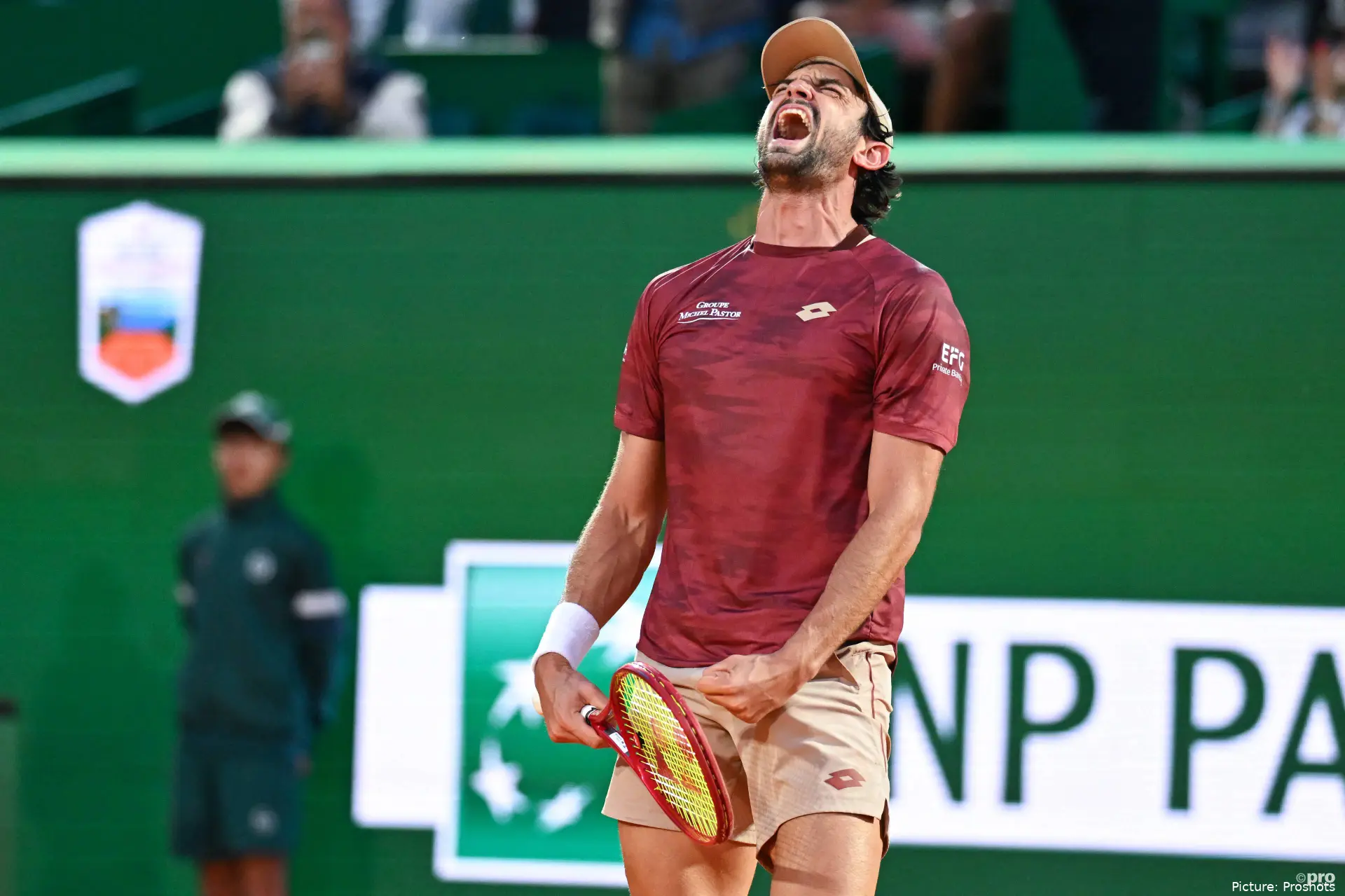
Valentin Vacherot produced the defining run of his career at the Monte Carlo Masters, reaching the semi-finals before falling to Carlos Alcaraz. The 27-year-old, currently ranked World No. 27, became the first Monegasque player to reach the last four of the event, underlining a rapid ascent that has accelerated over the past twelve months.
The result continues a steep trajectory. Just a year ago, Vacherot was positioned outside the Top 200, operating primarily on the Challenger circuit. His unexpected title run at the Shanghai Masters in October 2025 marked a turning point, propelling him into the Top 50 and establishing him as a credible presence on the ATP Tour.
Monte-Carlo represented another step forward, this time on clay and in a high-density field. Competing in the main draw of the tournament for the first time, Vacherot recorded multiple wins over established opponents to reach the semi-finals, translating recent momentum into results at Masters 1000 level.
Despite the defeat to Alcaraz, the broader takeaway centred on consolidation rather than surprise. With his ranking now at No. 27 and trending upward, Vacherot is positioned to enter the remainder of the clay swing — including Roland Garros — with direct entries and increasing expectations.

Breakthrough week confirms internal shift
Vacherot indicated that the run has altered his internal framework more than his external objectives. While the semi-final exceeded his initial expectations, the experience reinforced his belief that he can operate consistently at this level.
“I don’t think I have much more to confirm now. I feel like I’m in my place," Vacherot said during the press conference. "At the start of the week, I couldn’t imagine myself in the semi-final on Saturday. I want to face the best players and beat them.”
A key inflection point came in the second round against Lorenzo Musetti, a former finalist in Monte-Carlo. That result shifted his outlook from progression-based goals to competitive intent against higher-ranked opponents. “From the moment I got through that round, it allowed me to consider a lot of things. After that, I started believing I could go further.”
The overall assessment combined satisfaction with a clear sense of unfinished opportunity, particularly given the margins encountered in the semi-final. “It was a great tournament. I will remember it for the rest of my life. I have a smile on my face, even if there is a bit of frustration. It shows that I want to do better and win even more.”
Alcaraz highlights performance gap at the top
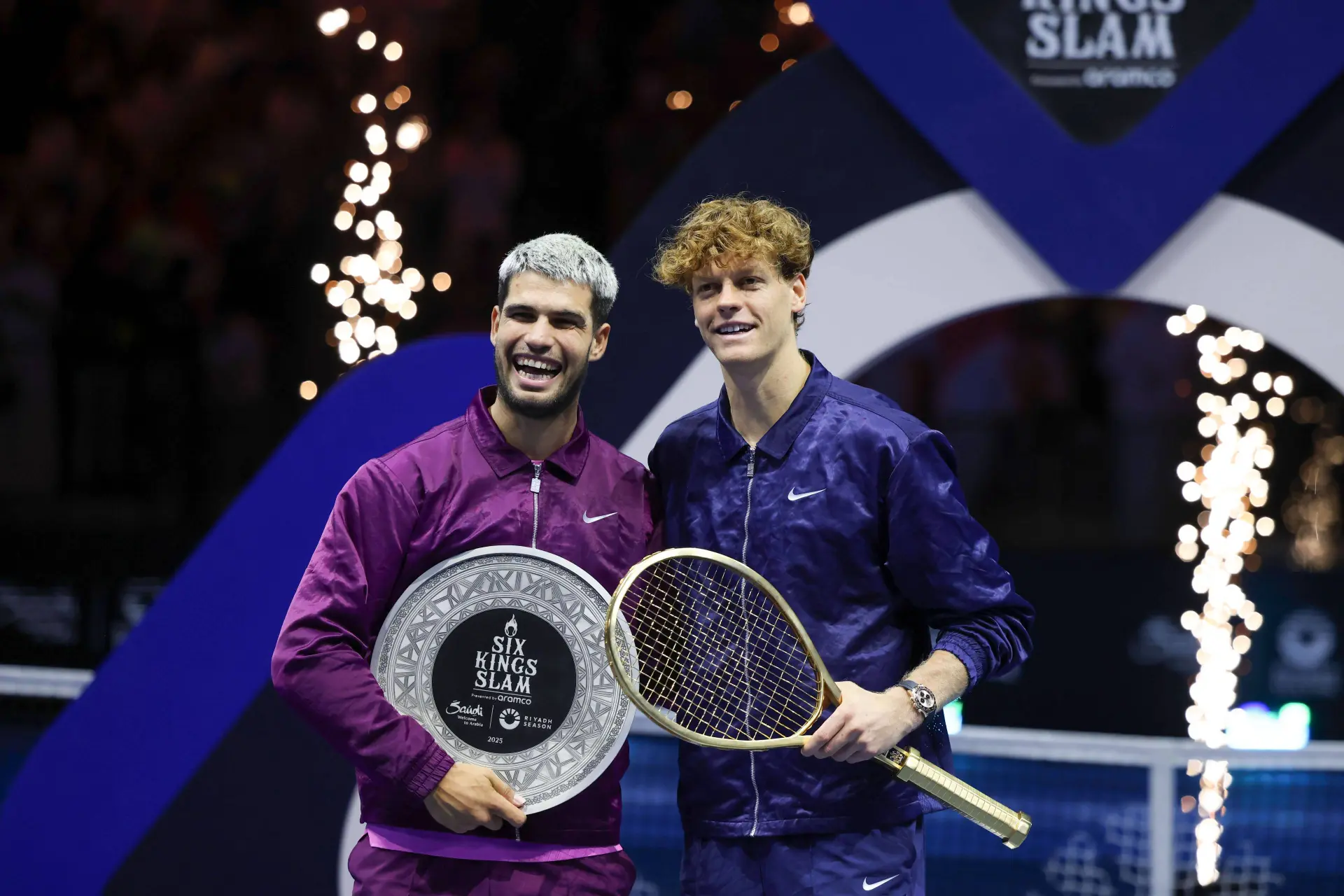
Against Alcaraz, Vacherot encountered sustained pressure, especially on return, where he struggled to generate consistent inroads during the opening phases. The Spaniard’s ability to dictate early in rallies limited Vacherot’s capacity to establish baseline exchanges. “I think I only won three points on his serve in the first set. If you just put him in the rally, he plays with crazy quality. You run on the other side. He takes the ball very early, it’s fast, it moves.”
He also pointed to the evolution of Alcaraz’s serve as a differentiating factor, reducing exposure in service games and reinforcing first-strike patterns. “Compared to a year or two ago, he has progressed a lot on serve. Sometimes you feel like you’ve returned well, and a second later the ball is on the line. You just say ‘bravo.’”
Opportunities did emerge, particularly in the second set, but the conversion rate illustrated the fine margins required at the top level. “I’m still happy with what I did on my serve and how I pushed him. But there is some frustration. At 0–15 on his serve, I missed a forehand that could have changed things. I feel like I had what it takes to go further in that set, maybe even take it.”
Process-focused approach ahead of clay swing
Looking ahead, Vacherot avoided setting explicit ranking targets, maintaining a process-oriented approach despite his rapid rise. His focus remains on incremental improvement rather than short-term positioning. “I don’t like to talk about rankings, and I don’t even like to talk about the Top 20. I will stay the way I am and keep moving forward.”
He noted that the primary adjustment in recent months has been the quality of preparation required to compete with top-tier opponents, particularly in physical conditioning and recovery. “In terms of quantity, not necessarily more, but the quality of work has increased. I try to do better every time, physically and in recovery, because now I play the best players in the world.”
The shift in competitive context — from qualifying draws to direct entry in major tournaments — is now a defining factor in his progression. “To find myself in tournaments I always dreamed of playing, that’s what is new. Madrid and Rome, I played them in qualifying before. Now I’m in the main draw, and that gives me motivation every day.”

Cristhián AvilaTennis Journalist
Cristhián Ávila is a tennis journalist based in Santiago, Chile, and has been part of the TennisUpToDate team since early 2023. He covers the ATP and WTA Tours as well as all four Grand Slams, producing breaking news, match reports, analysis, and regular liveblogs from major tournaments.
His reporting combines statistical analysis with clear explanation, helping readers understand tactical developments, player form, and broader storylines across the tour. Working fluently in both Spanish and English, Cristhián collaborates with an international editorial team and contributes to comprehensive global coverage. As part of his work, he has conducted interviews and media interactions with leading figures in the sport, including Caroline Wozniacki and John McEnroe.
In his journalism, Cristhián places strong emphasis on careful sourcing, editorial accuracy, and updating articles promptly when new, verified information becomes available. His coverage is grounded in research, context, and direct engagement with professional tennis.
claps 0visitors 0
Just In


Popular News
Latest Comments
- A healthy Qinwen may be hard to stop next season. She was already scaring her opponents before her medical leave(s). Unfortunately, Zheng insisted on singing again. On the positive side -- Mirra did not sing!! ;~}
 mandoist11-10-2026
 - Where is it written that athletes, entertainers... People in general... are mandated to keep looking at -- or even using [anti]Social Media? Public & private figures consistently complain and reveal their concerns about negativity and violence thrown at them -- yet they insist on participating. Avoid it, don't use it, don't read it. It's okay to occasionally look up at the World instead beating your eyes & thumbs to death on The Inventions out there.mandoist11-10-2026
- great articlestennisseserver07-10-2026
- Medvedev was leading Djokovic 7-5, 3-5 when an attempted return..' NO you ignorants, Djokovic was leading .weiss05-10-2026
- No more bullshit "Wildcards" to these two. Qualify like everyone else -- there will be cameras there, too. Time to scream... WTF ????!!!!mandoist29-09-2026
- Let's not BS the general public -- Sabalenka started showing cracks in her game last season. Her losses and near-losses started at about the same time she began being distracted by Fame (constant Selfies, making TV commercials, magazine shoots, endless Social Media nonsense, etc., etc.) One would think even Saba could recognize the parallels with others who failed before her -- Raducanu, Giorgi, Bouchard to name a few.mandoist25-09-2026
- Gross!! Hey Raducanu, Giorgi, and Bouchard -- reserve a seat at your Social Media Selfie table for Saba + Naomi. They're heading in your direction soon enough.mandoist24-09-2026
- And then these same players will complain about how lengthy their season’s were and need more time-off. I’m all for more tennis but the amount of tennis we get now is actually kind of crazy! We all need a break, especially the players.DaveyWavey23-09-2026
- You should do a comparison article for "different kinds of justice" the courts decide for tennis players. I can think of at least three players who received very small bans of a few months, however Tara Moore has been fighting for her literal survival the past few years. It seems odd considering she is not a "name" player, unlike the other cases.DaveyWavey22-09-2026
- PRIZE MONEY & POINTS Winner - $185,500 Finalist - $114,500 Semi-Finalist - $66,003 Quarter-Finalist - $35,000 Round of 16 - $18,045 Round of 32 - $13,005 Winner - 500 Finalist - 325 Semi-Finalist - 195 Quarter-Finalist - 108 Round of 16 - 60 Round of 32 - 1DaveyWavey20-09-2026

Loading