“If they don’t want to come here, then don’t come”: Francisco Cerundolo responds to Stefanos Tsitsipas over South American swing debate
ATP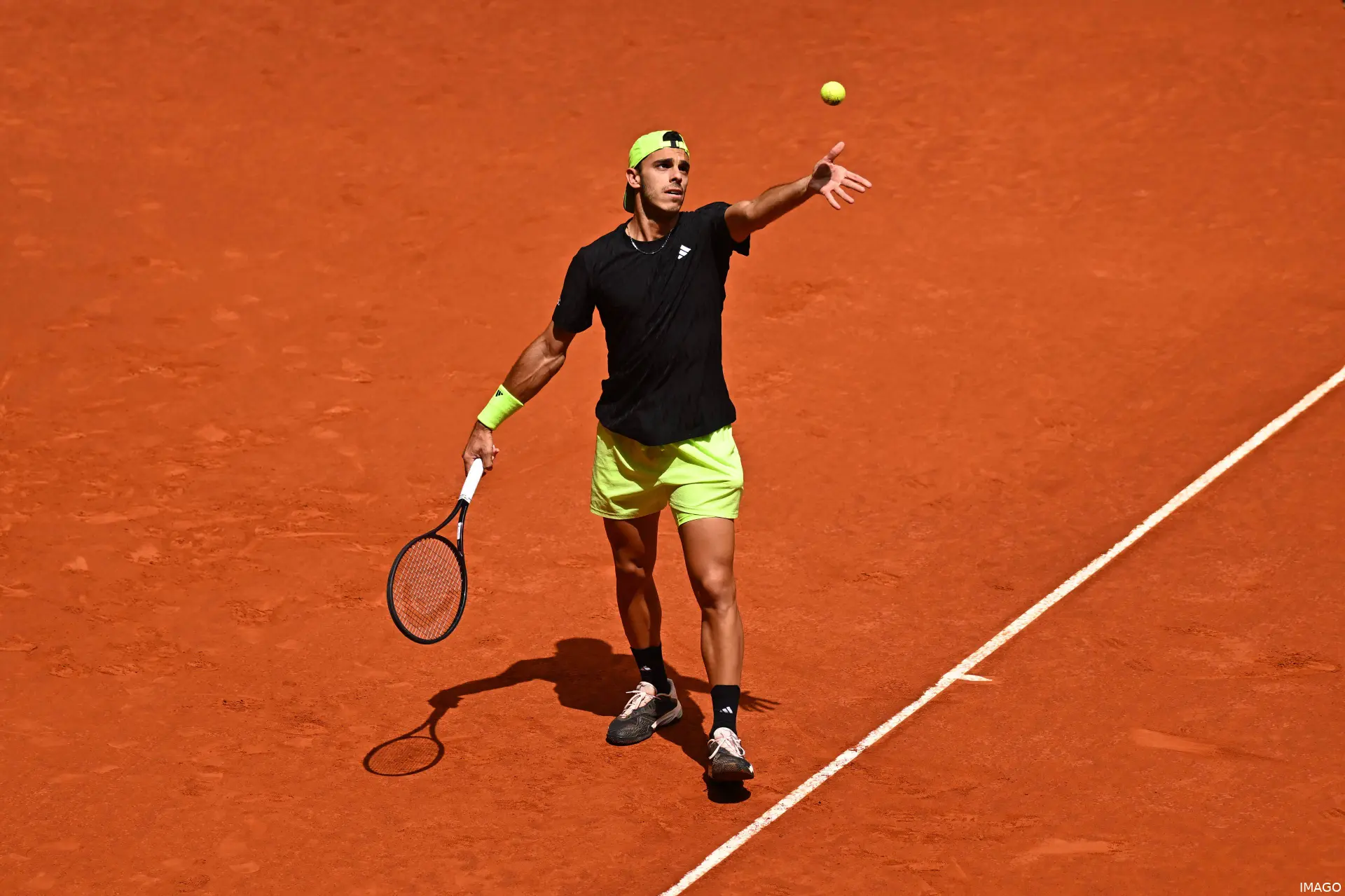
Francisco Cerúndolo offered a direct response to recent comments made by Stefanos Tsitsipas regarding the South American clay swing, stating that players are free to choose their schedules based on their own priorities. The Argentine, currently ranked world No. 19, spoke after advancing to the semi-finals of the ATP 250 in Santiago.
Tsitsipas had recently explained that financial guarantees influence his tournament selection and that South America has not provided appearance fees comparable to those offered in the Middle East or parts of Europe — being the reason why he has not travelled to the Golden Swing, despite his positive impressions of the atmosphere experienced in South America and the commitment of the fans to the tournaments in the region.
Cerúndolo did not contest the financial realities described by Tsitsipas. Instead, he emphasized the autonomy players have within the ATP calendar. The 27-year-old Argentine framed the issue less as a dispute and more as a matter of personal choice, reiterating that participation in ATP 250 and 500 events ultimately depends on individual priorities, whether sporting, logistical or financial.
As rumours emerge that the ATP may be considering ending the South American swing in the coming years — seeking to prioritise larger tournaments and due to a complicated position in the calendar — several South American players have defended the value of their events — currently composed of the Argentina Open, Rio Open and Santiago Open. Until two years ago there were four tournaments, but the Córdoba Open had its final edition in 2024.
Read also

“They can choose whatever they want”: Cerúndolo defends flexibility of ATP calendar
Speaking in Santiago, Cerúndolo addressed the controversy in clear terms, distancing himself from any criticism of fellow professionals while defending the South American swing’s place on the calendar. “If they don’t want to come here, then don’t come,” said the Argentine after his latest victory.
He expanded on that position by highlighting what he considers one of tennis’ structural strengths: schedule flexibility. “They can choose whatever they want, play the schedule they want. The good thing about tennis is that the calendar is flexible, apart from the Grand Slams and the Masters 1000,” the South American No. 1 said. “After that, everyone chooses the 500s and 250s they want to play, wherever they feel most comfortable.”
Cerúndolo pointed out that South America offers a distinct competitive and cultural environment, particularly for players who prioritise clay-court preparation ahead of the European spring. “Those who want to play on clay, who want to feel South America and discover the cities, or play a different kind of tennis, will come. Those who don’t want to come will go to the Middle East or to Acapulco,” he said.
The 27-year-old is currently installed in the semi-finals of the Chile Open, where he will face Yannick Hanfmann in the final four. The top seed is seeking his second title of the season, after having been crowned champion at the Argentina Open two weeks ago — his first title on home soil and the one that precisely opened the Golden Swing campaign.
Financial realities, scheduling logic and surface transition challenges
Tsitsipas’ original comments centred on financial considerations, acknowledging that appearance fees play a decisive role in scheduling decisions. Cerúndolo did not dispute that economic factors influence choices across the tour.
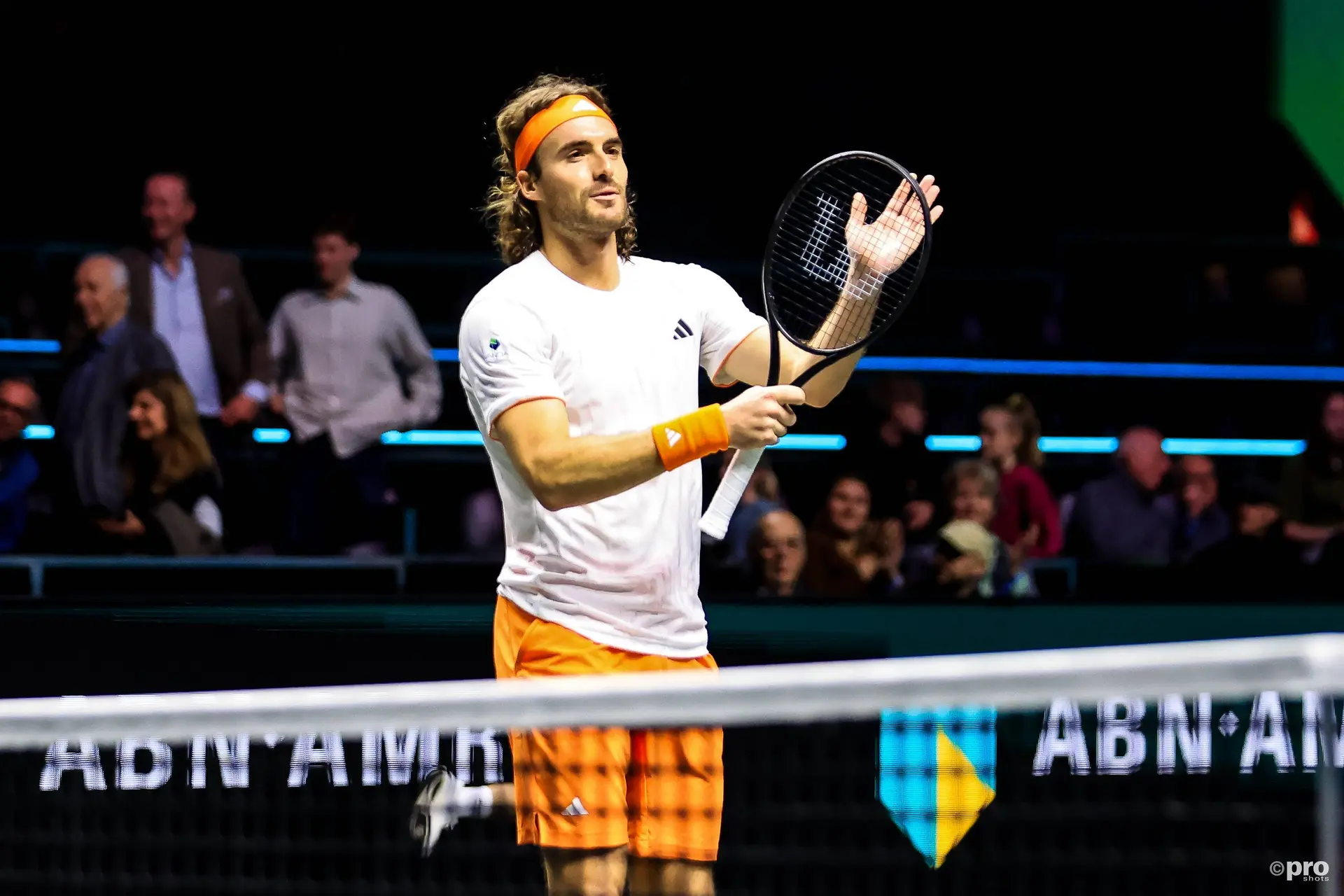
“South America has never offered me a deal good enough to seriously consider it. The Middle East has always been much better in terms of appearance fees. The European swing has also provided strong financial incentives. That makes a difference,” admitted the former world No. 3. “When the financial gap is big, you really have no option but to stick with what supports your career,” he explained.
It is not only a matter of money. Once the Australian Open is finished, the majority of European players choose to return home and take one or two weeks off. The tournaments that follow force players to choose between the February swings: with the Middle East Swing (Qatar, Abu Dhabi, Dubai) taking centre stage, or the North American route (Dallas, Delray Beach, Mexican Open).
Both options not only offer better prize money, but they also remain on hard courts — just like the Sunshine Double played in March — reducing travel distances for most top players, avoiding jet lag, and minimising potential injuries caused by switching from hard courts in January to clay in February, only to return to hard courts again in March.

Cristhián AvilaTennis Journalist
Cristhián Ávila is a tennis journalist based in Santiago, Chile, and has been part of the TennisUpToDate team since early 2023. He covers the ATP and WTA Tours as well as all four Grand Slams, producing breaking news, match reports, analysis, and regular liveblogs from major tournaments.
His reporting combines statistical analysis with clear explanation, helping readers understand tactical developments, player form, and broader storylines across the tour. Working fluently in both Spanish and English, Cristhián collaborates with an international editorial team and contributes to comprehensive global coverage. As part of his work, he has conducted interviews and media interactions with leading figures in the sport, including Caroline Wozniacki and John McEnroe.
In his journalism, Cristhián places strong emphasis on careful sourcing, editorial accuracy, and updating articles promptly when new, verified information becomes available. His coverage is grounded in research, context, and direct engagement with professional tennis.
claps 0visitors 0
Just In

Popular News
Latest Comments
- A healthy Qinwen may be hard to stop next season. She was already scaring her opponents before her medical leave(s). Unfortunately, Zheng insisted on singing again. On the positive side -- Mirra did not sing!! ;~}
 mandoist11-10-2026
 - Where is it written that athletes, entertainers... People in general... are mandated to keep looking at -- or even using [anti]Social Media? Public & private figures consistently complain and reveal their concerns about negativity and violence thrown at them -- yet they insist on participating. Avoid it, don't use it, don't read it. It's okay to occasionally look up at the World instead beating your eyes & thumbs to death on The Inventions out there.mandoist11-10-2026
- great articlestennisseserver07-10-2026
- Medvedev was leading Djokovic 7-5, 3-5 when an attempted return..' NO you ignorants, Djokovic was leading .weiss05-10-2026
- No more bullshit "Wildcards" to these two. Qualify like everyone else -- there will be cameras there, too. Time to scream... WTF ????!!!!mandoist29-09-2026
- Let's not BS the general public -- Sabalenka started showing cracks in her game last season. Her losses and near-losses started at about the same time she began being distracted by Fame (constant Selfies, making TV commercials, magazine shoots, endless Social Media nonsense, etc., etc.) One would think even Saba could recognize the parallels with others who failed before her -- Raducanu, Giorgi, Bouchard to name a few.mandoist25-09-2026
- Gross!! Hey Raducanu, Giorgi, and Bouchard -- reserve a seat at your Social Media Selfie table for Saba + Naomi. They're heading in your direction soon enough.mandoist24-09-2026
- And then these same players will complain about how lengthy their season’s were and need more time-off. I’m all for more tennis but the amount of tennis we get now is actually kind of crazy! We all need a break, especially the players.DaveyWavey23-09-2026
- You should do a comparison article for "different kinds of justice" the courts decide for tennis players. I can think of at least three players who received very small bans of a few months, however Tara Moore has been fighting for her literal survival the past few years. It seems odd considering she is not a "name" player, unlike the other cases.DaveyWavey22-09-2026
- PRIZE MONEY & POINTS Winner - $185,500 Finalist - $114,500 Semi-Finalist - $66,003 Quarter-Finalist - $35,000 Round of 16 - $18,045 Round of 32 - $13,005 Winner - 500 Finalist - 325 Semi-Finalist - 195 Quarter-Finalist - 108 Round of 16 - 60 Round of 32 - 1DaveyWavey20-09-2026

Loading