“The financial gap is big”: Stefanos Tsitsipas explains why South America remains off his schedule
ATP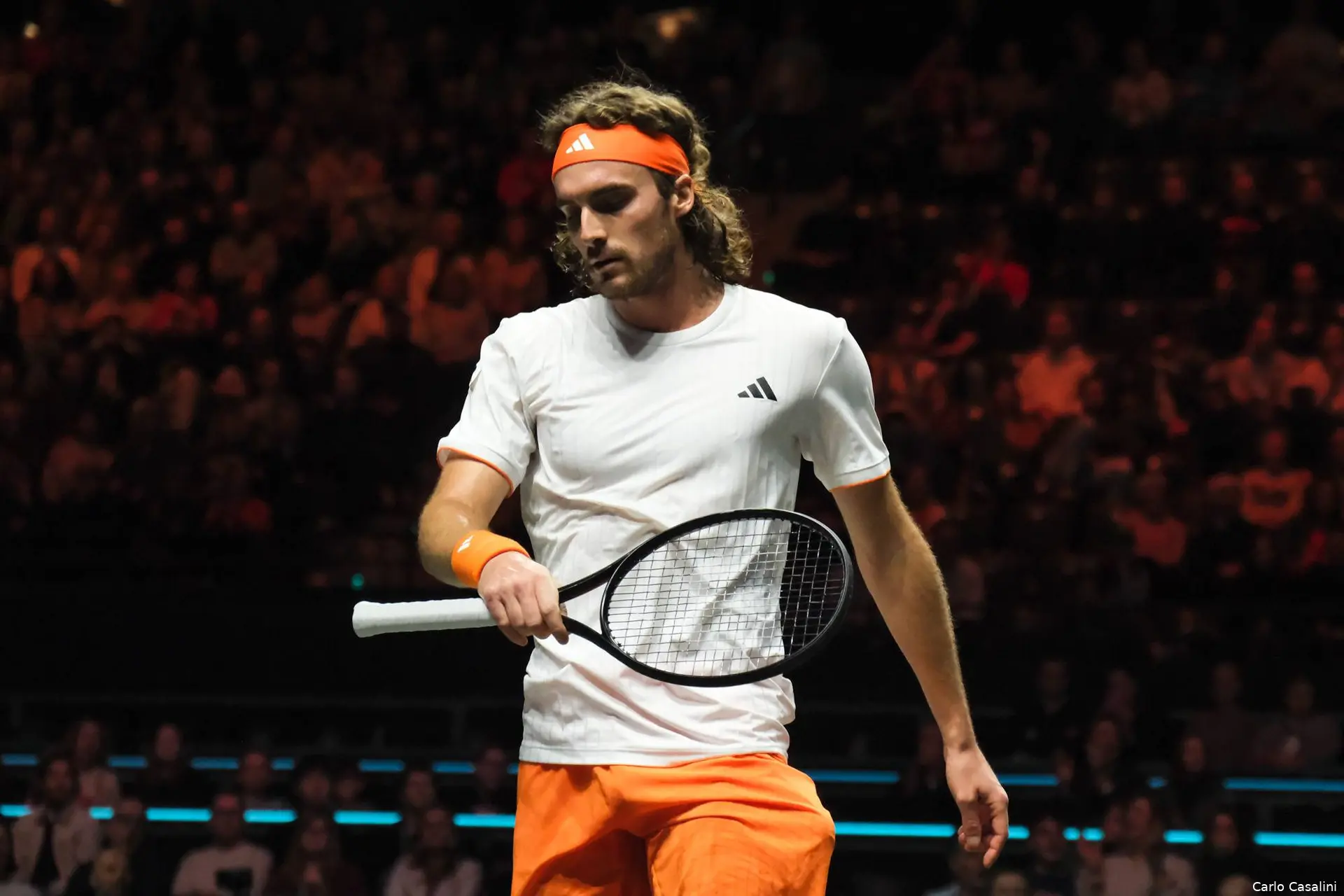
Stefanos Tsitsipas has offered a candid explanation for his continued absence from the South American clay swing, pointing to financial realities that shape the modern ATP calendar. In an interview with CLAY, the former world No. 3 detailed how appearance fees and scheduling incentives influence his decisions.
Tsitsipas, now ranked outside the top five after fluctuating results over the past two seasons, has traditionally opted for the Middle East and European indoor swings following the Australian Open.
While events in Buenos Aires, Rio de Janeiro and Santiago stand out for the atmosphere that is generated and the fervour of their fans, they are also marked by a lack of renowned figures – especially in recent years. The 27-year-old acknowledged the emotional pull of South American crowds, describing their “passion” as unique on the tour.
However, he was direct about the economic gap compared to other regions, particularly the Gulf events, which have aggressively invested in top-tier talent in recent years. It recently became known how the Qatar Open guaranteed $1.2 million to Sinner and Alcaraz just for attending the ATP 500-category tournament – in the same week in which the Rio Open was being played. Doha had up to 12 top-25 players in its entry list, compared to only two in Brazil.
Financial priorities and calendar pressure
Tsitsipas made clear that financial backing remains a decisive factor when structuring his schedule. “I’ve never received good offers to go there; when the financial gap is big, you really have no option but to stick with what supports your career,” the Greek told CLAY in an interview conducted in Australia.
He expanded on the comparison between regions, pointing specifically to the Middle East and Europe as more competitive markets for elite players in terms of appearance fees. “South America has never offered me a deal good enough to seriously consider it,” added the two-time Grand Slam runner-up. “The Middle East has always been much better in terms of appearance fees. The European swing has also provided strong financial incentives. That makes a difference.”
The remarks underline the structural realities of the ATP Tour. February’s calendar places South American clay events immediately after Melbourne, forcing players to choose between hard courts in Dubai or Doha and a quick surface transition to clay. For a player still recalibrating his form, such decisions carry added weight.
Dream destinations and competitive frustration
Despite the financial gap, Tsitsipas insisted that the door is not closed. He spoke openly about his desire to experience the atmosphere in South America and acknowledged his fan base there. “There’s that passion in South America that I sometimes set aside, but when the financial gap is large, you really have no choice but to go with what backs your career.
“I would love to play there. It’s always been my dream to visit South America and I’ve heard wonderful things about it,” the world No. 30 added. “I also have many fans there, and I can see it through the activity on my social media and the constant interaction with followers from that part of the world.”
At the same time, Tsitsipas acknowledged that his deeper concern lies in results at the sport’s biggest events. Once a finalist at Roland Garros and a regular presence in the latter stages of majors, he has struggled to string together consecutive wins in recent Grand Slam appearances. “I’m very disappointed. I had some goals that I couldn’t achieve. It’s been a while since I’ve won several matches in a row at a Grand Slam, and it’s frustrating to find myself in this position again, unable to reach the second week of a major.”
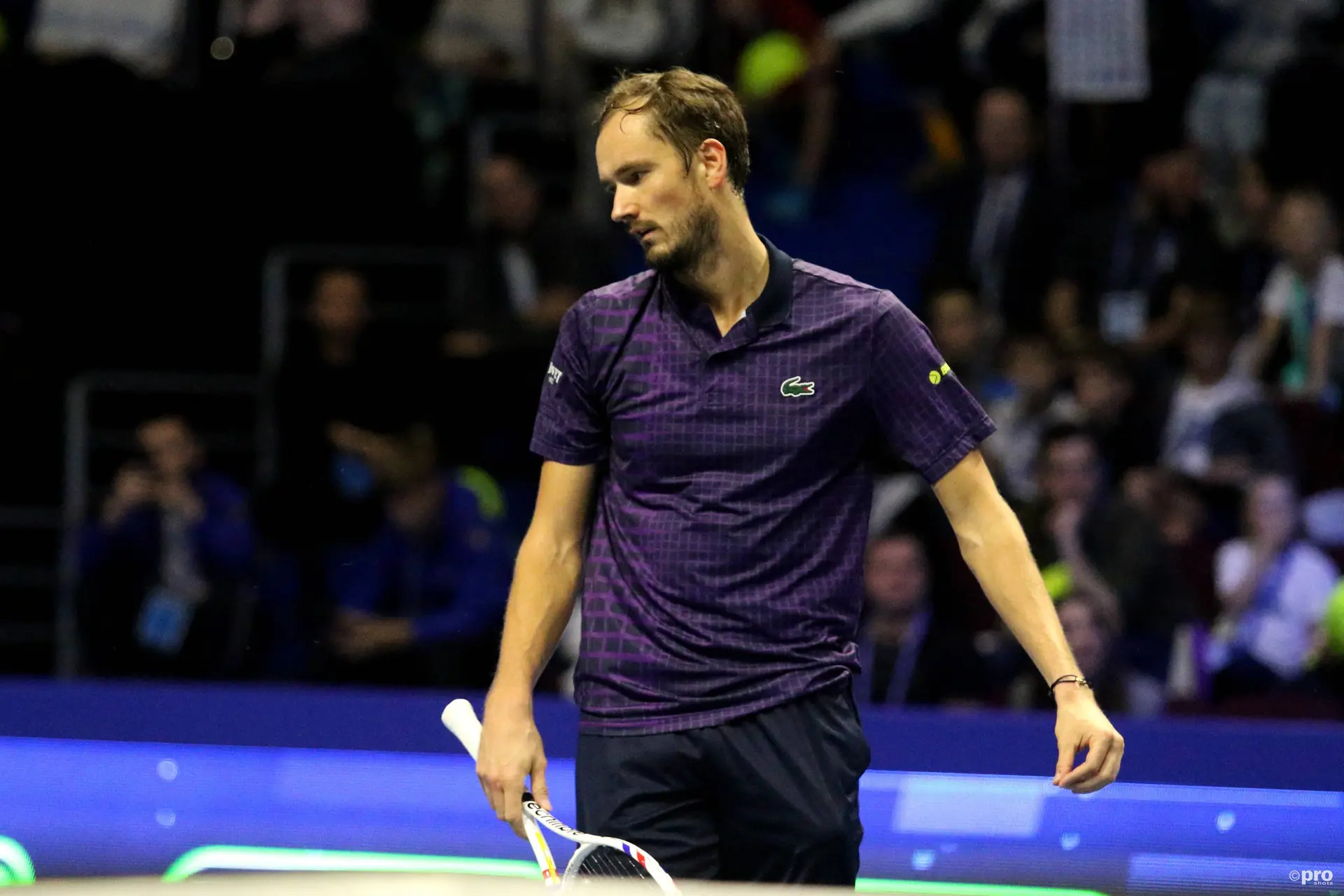
The Greek, post-Australian Open, holds a 3–3 record, highlighted by his run in Doha, where he reached the quarter-finals and earned a victory over Daniil Medvedev – in terms of opponent ranking, his best win on Tour since Monte-Carlo 2024 – where he collected three consecutive top-10 victories, including a triumph over Sinner.
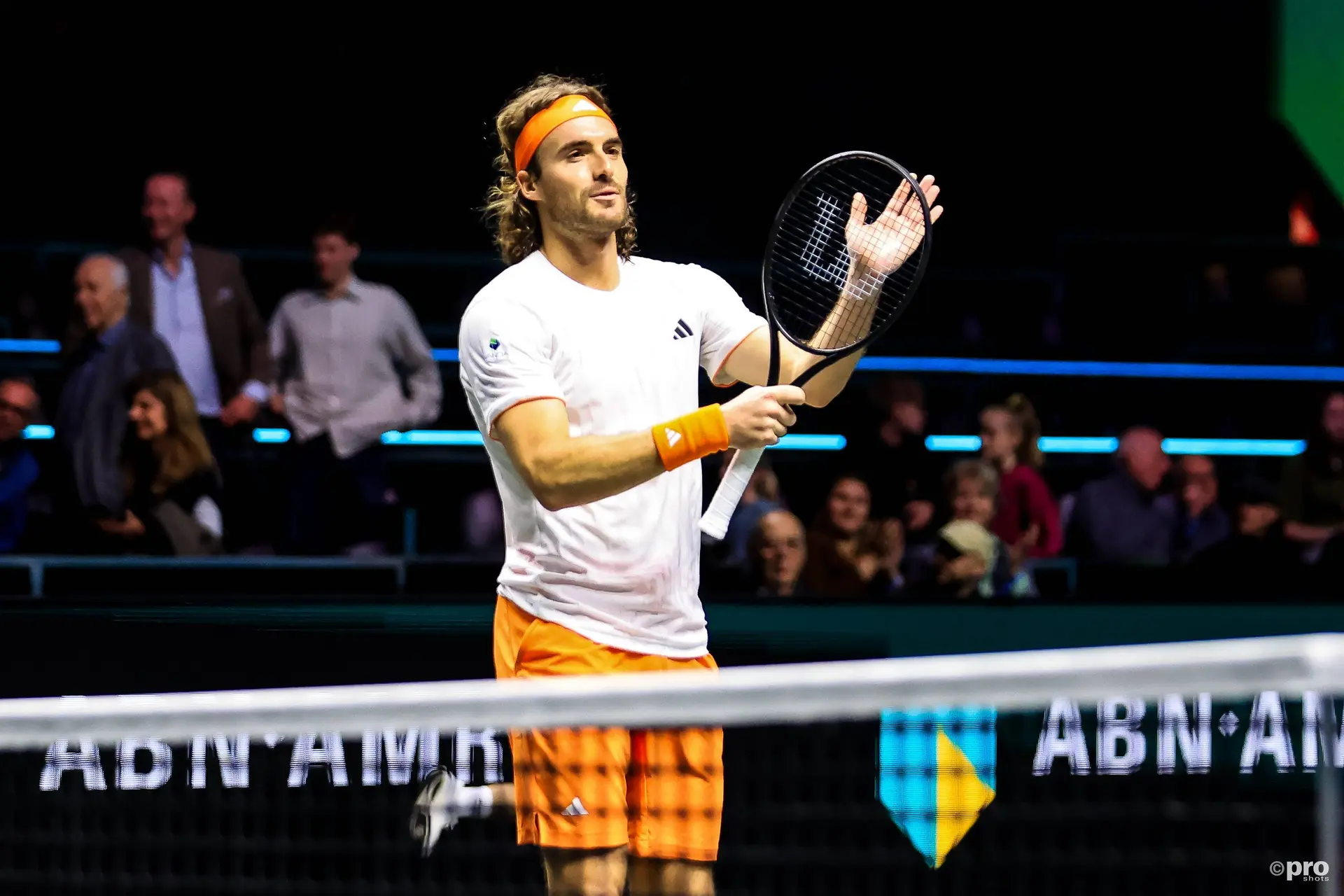
This week in Dubai he suffered an early elimination, falling to Frenchman Ugo Humbert 6-4, 7-5. He will lose several positions in the rankings and will drop outside the top 40 for the first time since 2018. His next challenge will be at Indian Wells – where he reached the fourth round back in 2025.

Cristhián AvilaTennis Journalist
Cristhián Ávila is a tennis journalist based in Santiago, Chile, and has been part of the TennisUpToDate team since early 2023. He covers the ATP and WTA Tours as well as all four Grand Slams, producing breaking news, match reports, analysis, and regular liveblogs from major tournaments.
His reporting combines statistical analysis with clear explanation, helping readers understand tactical developments, player form, and broader storylines across the tour. Working fluently in both Spanish and English, Cristhián collaborates with an international editorial team and contributes to comprehensive global coverage. As part of his work, he has conducted interviews and media interactions with leading figures in the sport, including Caroline Wozniacki and John McEnroe.
In his journalism, Cristhián places strong emphasis on careful sourcing, editorial accuracy, and updating articles promptly when new, verified information becomes available. His coverage is grounded in research, context, and direct engagement with professional tennis.
claps 0visitors 0
Just In

Popular News
Latest Comments
- A healthy Qinwen may be hard to stop next season. She was already scaring her opponents before her medical leave(s). Unfortunately, Zheng insisted on singing again. On the positive side -- Mirra did not sing!! ;~}
 mandoist11-10-2026
 - Where is it written that athletes, entertainers... People in general... are mandated to keep looking at -- or even using [anti]Social Media? Public & private figures consistently complain and reveal their concerns about negativity and violence thrown at them -- yet they insist on participating. Avoid it, don't use it, don't read it. It's okay to occasionally look up at the World instead beating your eyes & thumbs to death on The Inventions out there.mandoist11-10-2026
- great articlestennisseserver07-10-2026
- Medvedev was leading Djokovic 7-5, 3-5 when an attempted return..' NO you ignorants, Djokovic was leading .weiss05-10-2026
- No more bullshit "Wildcards" to these two. Qualify like everyone else -- there will be cameras there, too. Time to scream... WTF ????!!!!mandoist29-09-2026
- Let's not BS the general public -- Sabalenka started showing cracks in her game last season. Her losses and near-losses started at about the same time she began being distracted by Fame (constant Selfies, making TV commercials, magazine shoots, endless Social Media nonsense, etc., etc.) One would think even Saba could recognize the parallels with others who failed before her -- Raducanu, Giorgi, Bouchard to name a few.mandoist25-09-2026
- Gross!! Hey Raducanu, Giorgi, and Bouchard -- reserve a seat at your Social Media Selfie table for Saba + Naomi. They're heading in your direction soon enough.mandoist24-09-2026
- And then these same players will complain about how lengthy their season’s were and need more time-off. I’m all for more tennis but the amount of tennis we get now is actually kind of crazy! We all need a break, especially the players.DaveyWavey23-09-2026
- You should do a comparison article for "different kinds of justice" the courts decide for tennis players. I can think of at least three players who received very small bans of a few months, however Tara Moore has been fighting for her literal survival the past few years. It seems odd considering she is not a "name" player, unlike the other cases.DaveyWavey22-09-2026
- PRIZE MONEY & POINTS Winner - $185,500 Finalist - $114,500 Semi-Finalist - $66,003 Quarter-Finalist - $35,000 Round of 16 - $18,045 Round of 32 - $13,005 Winner - 500 Finalist - 325 Semi-Finalist - 195 Quarter-Finalist - 108 Round of 16 - 60 Round of 32 - 1DaveyWavey20-09-2026

Loading