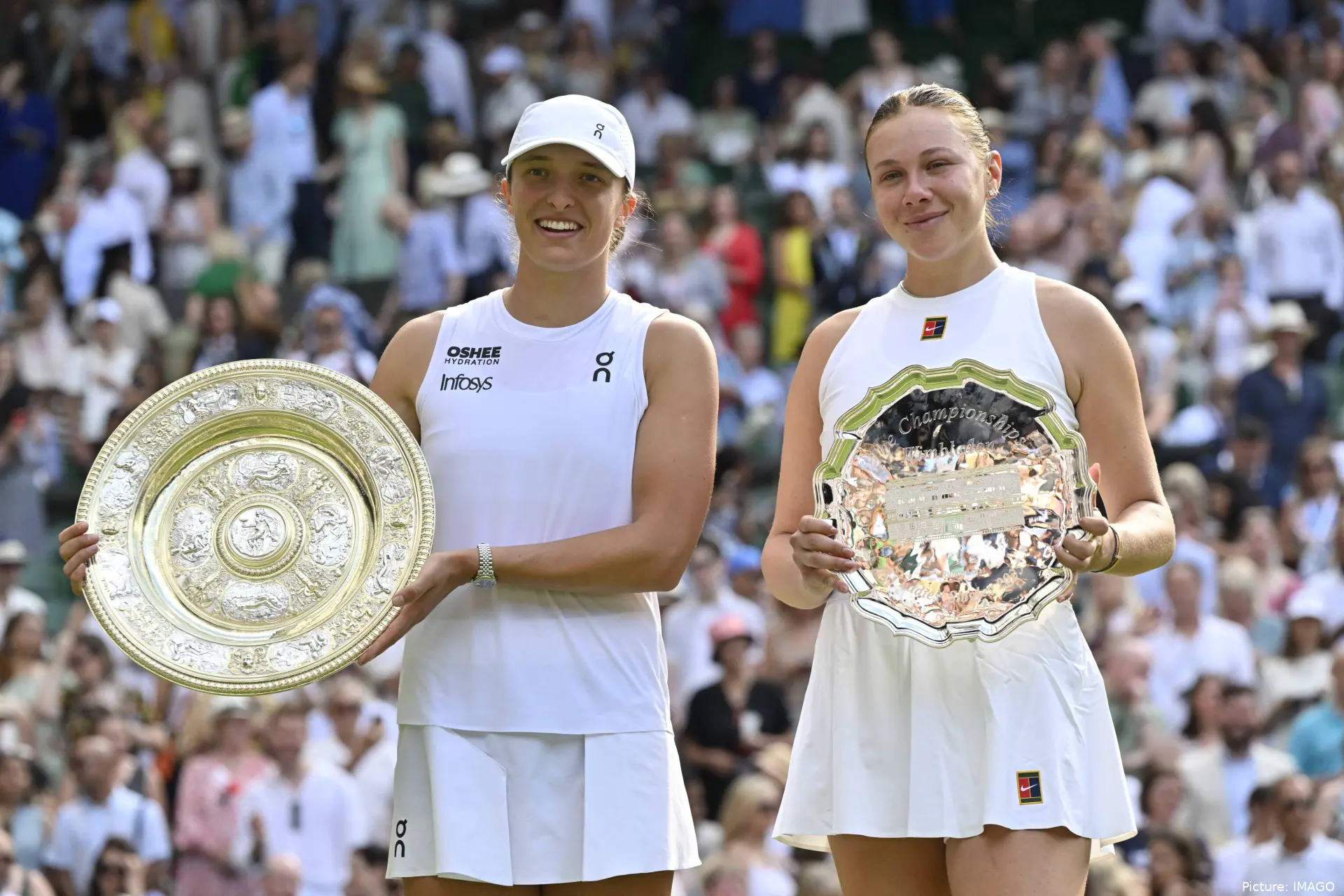
Tennis has long been the global leader in women's sports, but the journey toward equal pay has been a decades-long battle defined by courage and protest. While the four Grand Slams stand today as pillars of equality, the path to parity was anything but easy.
From Billie Jean King’s foundational threats in the 1970s to the WTA’s modern roadmap for total prize money equality by 2033, the fight for a level playing field has reshaped the sport. In this article, we explore the history of the gender pay gap in tennis, the icons who broke the status quo, and how close the professional tours actually are to achieving total financial symmetry
In this article, you will find:
1. How the Grand Slams set the standard
2. When did equal pay begin in tennis?
3. The role of the WTA and Billie Jean King in the fight for equality
4. Is Equal Pay universal across all tournaments?
5. The enduring arguments for and against equal prize money
6. Beyond the majors: where the gap still exists
7. The future of gender pay in tennis
2. When did equal pay begin in tennis?
3. The role of the WTA and Billie Jean King in the fight for equality
4. Is Equal Pay universal across all tournaments?
5. The enduring arguments for and against equal prize money
6. Beyond the majors: where the gap still exists
7. The future of gender pay in tennis
1. How the Grand Slams set the standard
When it was formed, the four chosen locations had deep roots in the game. England invented lawn tennis back in 1877, which led to the first tournament being hosted. It quickly spread over the seas to the United States, France, and Australia, where they adopted the sport and added their twists on it. Paris became the clay court capital of the world, New York became a hot-spot for tennis with the USA's greater influence on the world's stage, while, as it was formerly known as the Austarlasian Championships, it had to bide their time before being recognised with the prestige of the other three, eventually settling down in Melbourne.
Tennis was a colonial and upper-class sport, which led to these four countries developing a huge interest in the activity. As the years and tournaments have flown by, it has cemented itself as the main talking point of the year. Winning one of these events will earn you more ranking points, prize money, and fame than coming out on top anywhere else.
The Slams are played on three surfaces, making it a unique achievement to win in different locations. The locations are some of the biggest cities in the world, leading to a lot of attention and local interest. Over time, they have adapted to distinguish themselves from other tournaments. An example is men's matches being played to the best of five sets, and more recently, the revamped mixed doubles event being held a few days before the main draw at Flushing Meadows.
2. When Did Equal Pay Begin in Tennis?
The US Open was the first to offer equal pay for both men and women back in 1973. It took time for the others to follow suit. The Australian Open reversed its original decision of equal pay first set in 1984, but reinstated it permanently in 2001. Roland Garros and Wimbledon eventually joined them in 2007, with the French competition paying the winners of each competition the same in 2006.
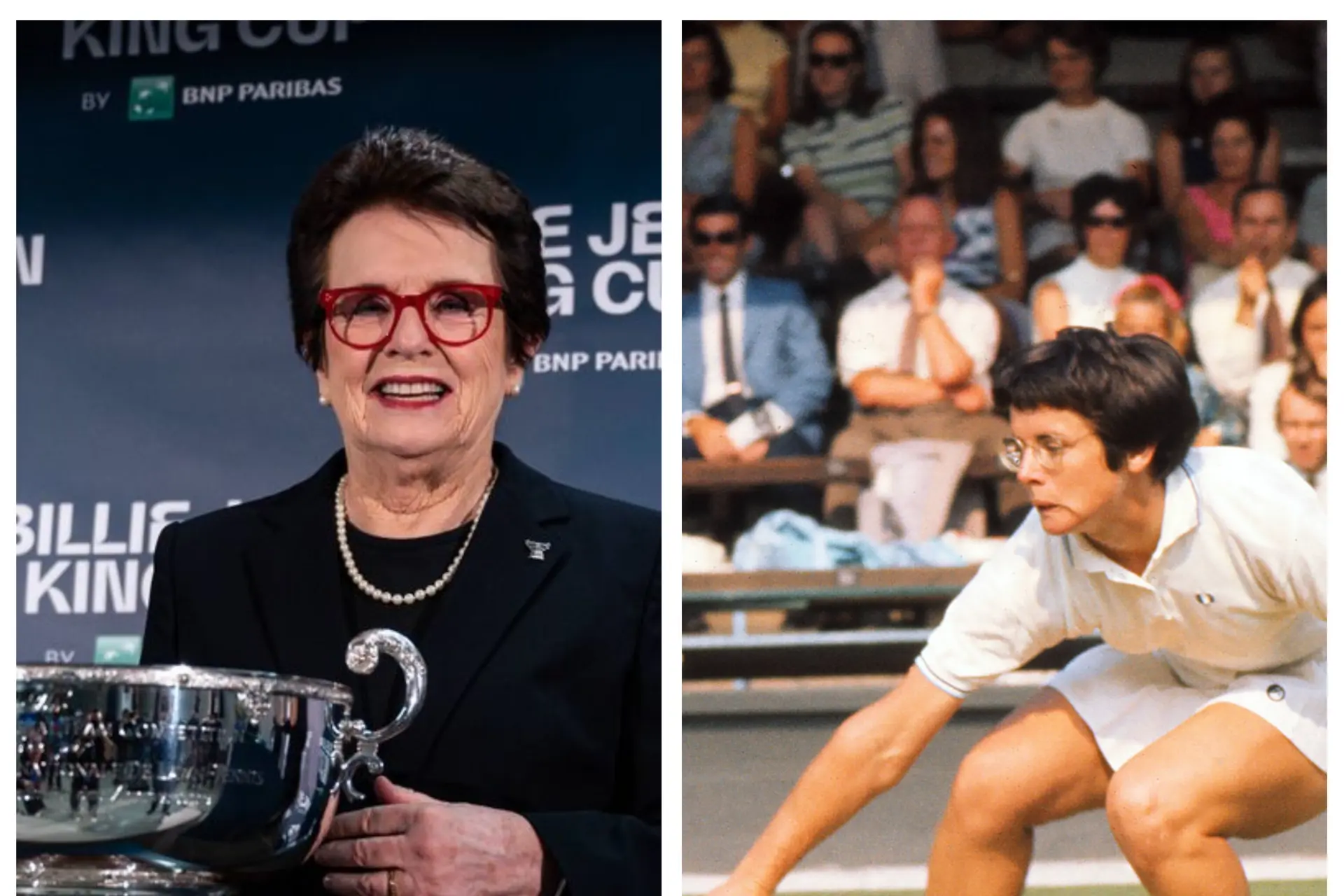
It was a hard-fought struggle, led by one very iconic woman in tennis - Billie Jean King.

Billie Jean King with her cup
| Grand Slam | Year of Equal Pay |
| US Open | 1973 |
| Australian Open | 2001 (first brief instance in 1984) |
| French Open | 2007 |
| Wimbledon | 2007 |
3. The role of the WTA and Billie Jean King in the fight for equality
Back in 1968, when King won her first Wimbledon title, she collected £750. This, compared to the £2,000 that Rod Laver won on the men's side, is a massive margin. The trend continued, and as the sport grew in stature, the men were reaping the rewards from this, earning up to 8x more prize money than what women would receive, whilst also having fewer tournaments to play in.
This burned the fire inside of King, fuelling the American to push for equal pay and for more rights in women's tennis. In 1970, she, along with eight other women, formed the Original Nine. This group would form an independent tour for women only. It was a massive risk, signing $1 contracts to get in while risking their professional careers.
Helped by promoter Gladys Heldman, they formed the Virginia Slims Circuit - an all women's tour named after a cigarette brand targeted for women. This was the first step in forming the Women's Tennis Association (WTA).
Aside from having a voice over how much they are paid, they get to control their schedules, their own tour, and earn enough to make a living from participating in the sport. All whilst fighting for equality not just in tennis, but in all sports.
King was a leading advocate for this, and her work was rewarded at the 1973 US Open, where they offered equal prize money for both men and women. Whilst a bold move at the time from the organisers, they saw the influence and support the Virginia Slims Circuit had, as well as risking the participation of King, who had threatened to boycott the event.
Along with this historical breakthrough, 1973 was also the year the WTA was officially created. Its legacy is still recognised today, with the WTA still a prominent organisation in tennis.
4. Is equal pay universal across all tournaments?
Whilst it took a while for the other Grand Slams to catch up, eventually by 2007 all four majors were offering equal prize money for both men and women, thanks not only to King, but also to the work that Venus Williams put in to get Wimbledon to pay fairly. She used her fame and popularity as a stage to launch a strong argument against the Lawn Tennis Club back in 2005 and 2006, with her even writing an op-ed in The Times providing a convincing reasoning for equality.

Venus Williams
The pressure was too much for them, who in 2007 joined their fellow majors in another ginormous step for women's tennis. Despite all the hard work from King and Williams, among others, there are still tournaments to this day where men get paid more than women.
On tour, there is still a resounding gap between paychecks. An example is numerous Masters 1000 events. Whilst Madrid and Miami are equal, the amounts range from 3% in Indian Wells to 34% in Rome, where there was an 11% gap between the earnings of tournament winners Carlos Alcaraz and Jasmine Paolini.
Adding to that, there is a large disparity between 500 and 250 events. Women tend to play for a prize pool which is 40% smaller than the men's in 250 tournaments, while in 500, it ranges from 25-50%.
5. The enduring arguments for and against equal prize money
This topic has been debated for years, not just in tennis but in all sports. There are all sorts of arguments and reasoning people have behind it, but the main argument for equal prize money is through gender equality. This has been the argument led by King back in the early 70s, with women just wanting to be recognised as equals with their fellow gender.
They play the same sport, work and train as hard as them, travel similar distances, and are viewed around the world by millions regularly, with many girls and boys looking up to talents such as the Williams sisters or today, Iga Swiatek and Aryna Sabalenka. These players draw a massive global audience while playing tennis as entertaining as the men.
This issue goes deeper than sport or money; it is a worldwide problem many women are facing, and for a sport like tennis to display this equality will give hope and inspire a whole new generation.
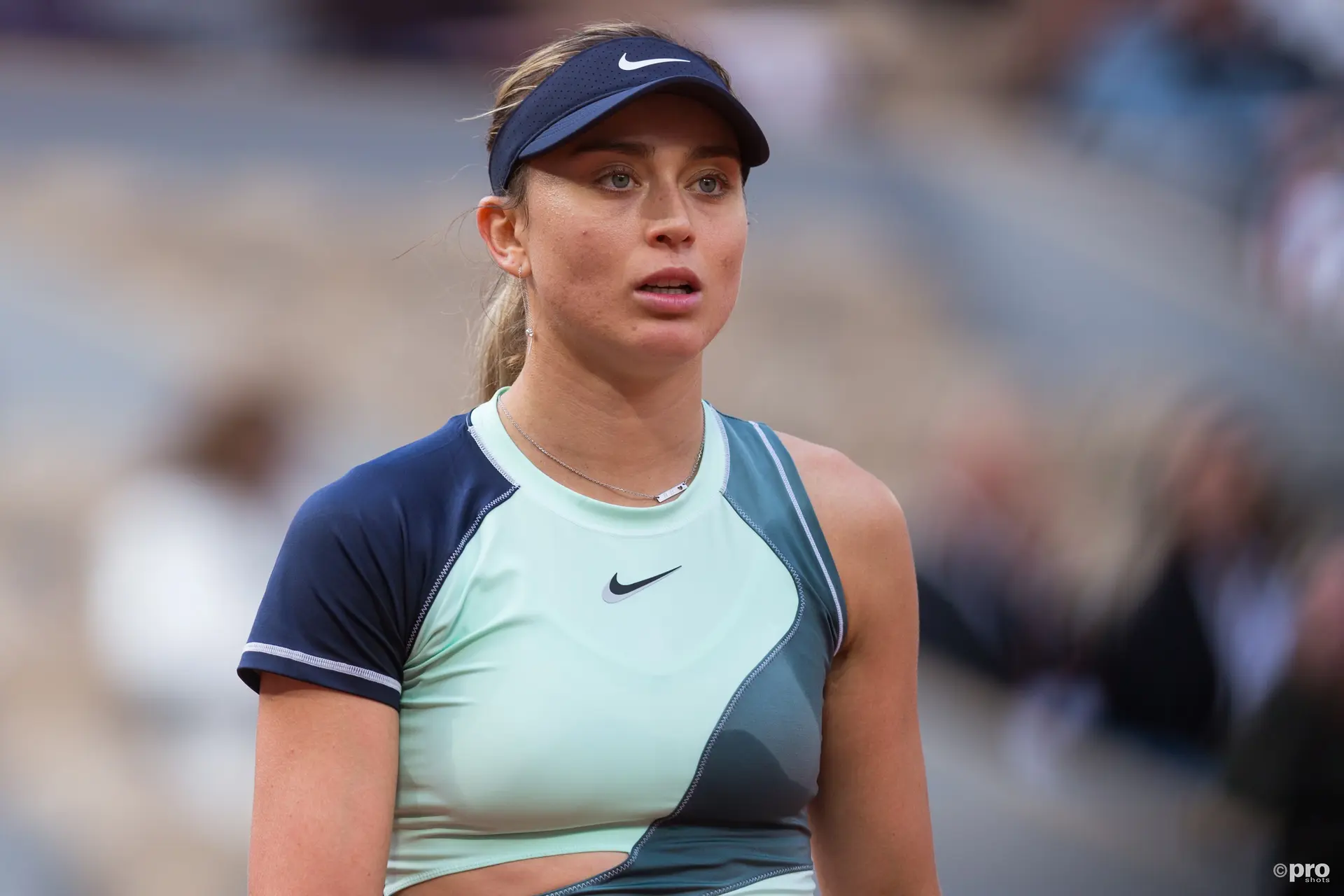
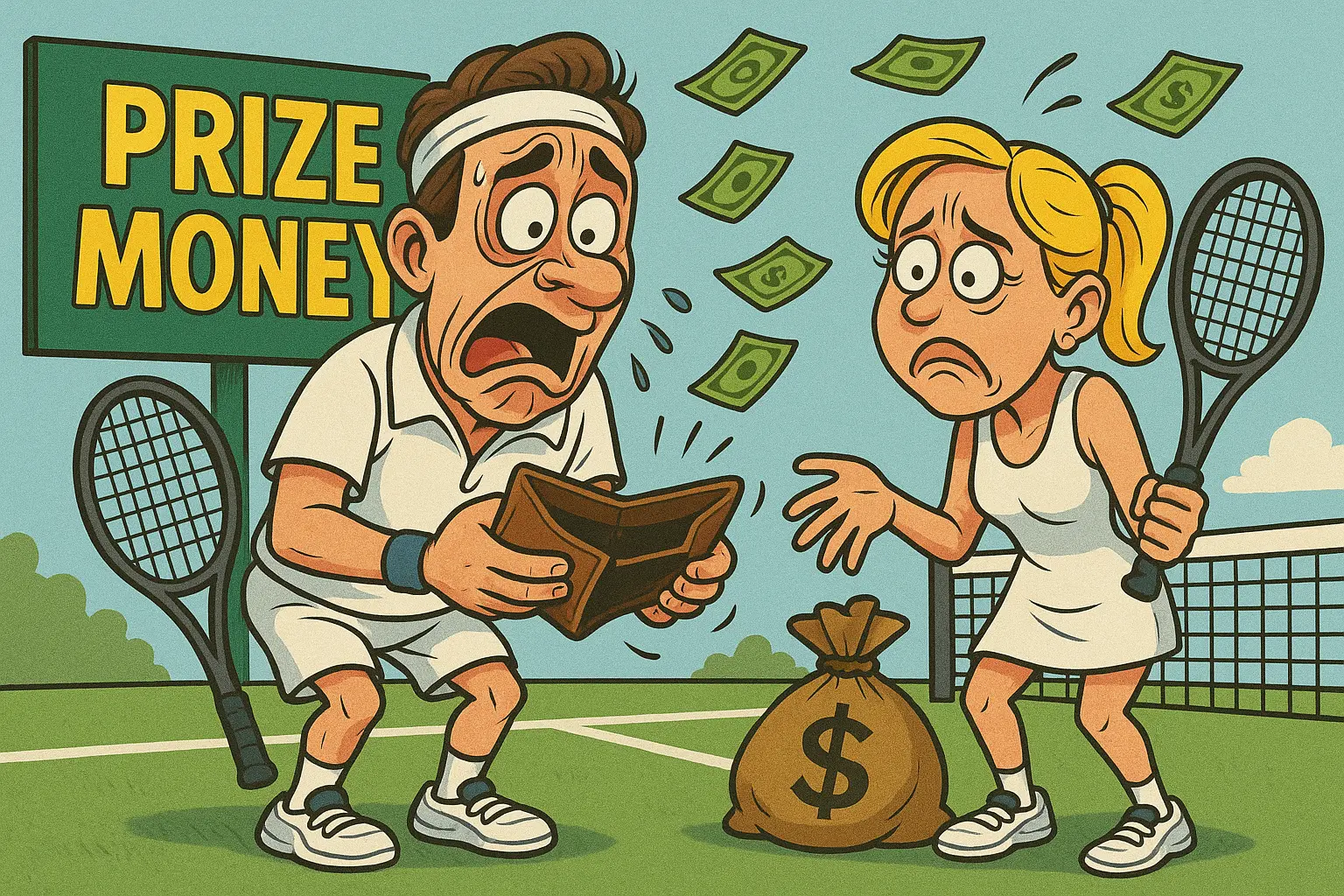
The arguments against mostly come down to viewership and media coverage. Outside of Grand Slams, men tend to rack up higher amounts of commercial revenue and tickets, with organisers looking at it through their business eyes, reflecting prize money based on marketing performance and not gender. It could also put many smaller tournaments under threat if they have to fork out more money than they may not have, possibly leading to tournaments being axed off the calendar.
Another common rebuttal is that men play best-of-five sets at Slams while women play best-of-three. Notably, women tennis players have repeatedly stated they are willing to play best-of-five, but broadcasters and organizers seem to prefer the current format for scheduling
Whatever argument is stated, this issue goes a lot deeper than just tennis, but it is a global issue.
6. Beyond the majors: where the gap still exists
As stated before, the gap in prize money in 250, 500, and 1000 events remains. Along with that, the remnant of media coverage is still quite large. Men tend to get more visibility on live television, especially when on the court. At times, men's games will be slotted in more favourable times for viewing purposes.

Over four million more people watched the men's Wimbledon final than the women's
Women also receive a lot fewer sponsorships than men, leading to another massive money slump. Again, it is due to endorsements favouring the men's game over the women's, citing an opportunity that they believe would earn them more money. This is linked to more time on viewers' screens, popularity on social media, and it being harder for women tennis players to draw in an audience.
7. The Future of Gender Pay in Tennis
Fortunately, there seems to be a positive ending to this story. While on-court men and women are paid equally at Grand Slams, this trend looks to continue on tour. The WTA has committed by 2027 that prize money will be equal at WTA 1000 & 500 combined events, with a later 2033 target set for standalone tournaments. It should be noted that the WTA’s ability to reach equal pay by 2033 is largely tied to its $150 million partnership with CVC Capital Partners. Additionally, one of the biggest drivers for the future of equal pay is the potential "Premium Tour" or the consolidation of commercial rights between the two tours - ATP and WTA.
There is no date for 250 events, but hopefully, with the bigger events being carefully handled, smaller events can swiftly follow in the same optimistic route. There is still work to do to close the gap between men and women in sport, but thanks to the effort and dedication of King, tennis leads the way in the battle for equality.

Lucas MichaelTennis Journalist
Lucas Michael is a tennis journalist based in Cambridge, UK, specializing in comprehensive coverage of the ATP and WTA tours. For the past 1.5 years, he has been a core contributor to TennisUpToDate, where he has authored more than 3,000 data-driven match reports, deep-dive analysis pieces, and engaging liveblogs.
Lucas pairs real-time statistical analysis with on-the-ground reporting, frequently traveling to tournaments to cover the action firsthand from the press box and player press conferences. This blend of advanced metrics and direct access allows him to provide sharp context regarding player form, tactical trends, and breaking tour developments.
He holds a BA (Hons) in Sports Journalism. Grounded in core journalistic ethics, Lucas places a strict emphasis on meticulous sourcing, editorial accuracy, and a commitment to updating live content swiftly as verified information emerges.
claps 2visitors 1
Just In

Popular News
Latest Comments
- A healthy Qinwen may be hard to stop next season. She was already scaring her opponents before her medical leave(s). Unfortunately, Zheng insisted on singing again. On the positive side -- Mirra did not sing!! ;~}
 mandoist11-10-2026
 - Where is it written that athletes, entertainers... People in general... are mandated to keep looking at -- or even using [anti]Social Media? Public & private figures consistently complain and reveal their concerns about negativity and violence thrown at them -- yet they insist on participating. Avoid it, don't use it, don't read it. It's okay to occasionally look up at the World instead beating your eyes & thumbs to death on The Inventions out there.mandoist11-10-2026
- great articlestennisseserver07-10-2026
- Medvedev was leading Djokovic 7-5, 3-5 when an attempted return..' NO you ignorants, Djokovic was leading .weiss05-10-2026
- No more bullshit "Wildcards" to these two. Qualify like everyone else -- there will be cameras there, too. Time to scream... WTF ????!!!!mandoist29-09-2026
- Let's not BS the general public -- Sabalenka started showing cracks in her game last season. Her losses and near-losses started at about the same time she began being distracted by Fame (constant Selfies, making TV commercials, magazine shoots, endless Social Media nonsense, etc., etc.) One would think even Saba could recognize the parallels with others who failed before her -- Raducanu, Giorgi, Bouchard to name a few.mandoist25-09-2026
- Gross!! Hey Raducanu, Giorgi, and Bouchard -- reserve a seat at your Social Media Selfie table for Saba + Naomi. They're heading in your direction soon enough.mandoist24-09-2026
- And then these same players will complain about how lengthy their season’s were and need more time-off. I’m all for more tennis but the amount of tennis we get now is actually kind of crazy! We all need a break, especially the players.DaveyWavey23-09-2026
- You should do a comparison article for "different kinds of justice" the courts decide for tennis players. I can think of at least three players who received very small bans of a few months, however Tara Moore has been fighting for her literal survival the past few years. It seems odd considering she is not a "name" player, unlike the other cases.DaveyWavey22-09-2026
- PRIZE MONEY & POINTS Winner - $185,500 Finalist - $114,500 Semi-Finalist - $66,003 Quarter-Finalist - $35,000 Round of 16 - $18,045 Round of 32 - $13,005 Winner - 500 Finalist - 325 Semi-Finalist - 195 Quarter-Finalist - 108 Round of 16 - 60 Round of 32 - 1DaveyWavey20-09-2026

Loading