“If you don’t feel pressure, it means you don’t care”: Jannik Sinner embraces expectation after extending 30-match streak in Paris
ATPWednesday, 27 May 2026 at 08:30
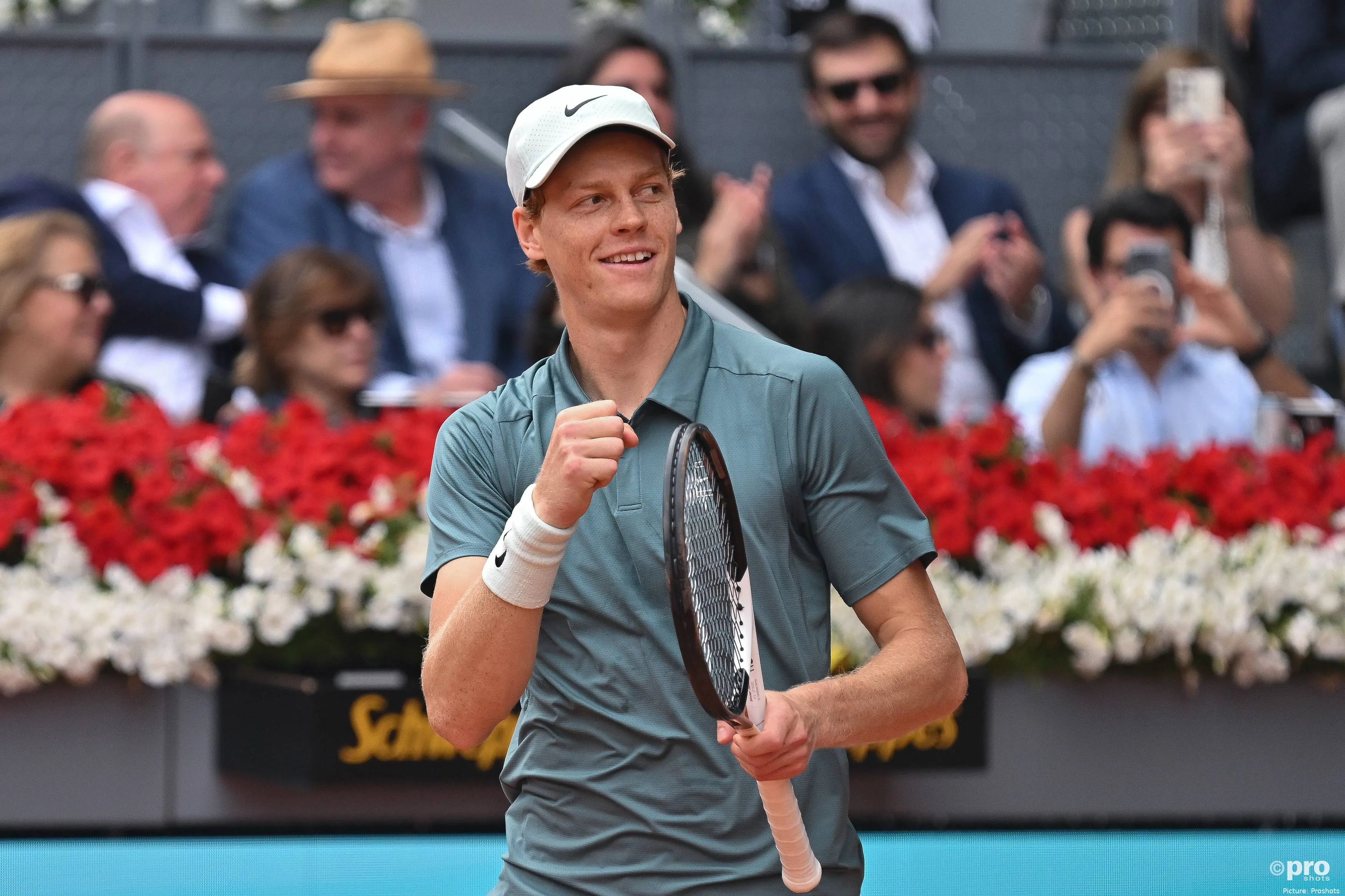
Jannik Sinner opened his French Open campaign with a controlled straight-sets victory over wildcard Clément Tabur, winning 6-1, 6-3, 6-4 in two hours and eight minutes. The world No. 1 delivered a match that followed a familiar pattern: early dominance, sustained control on return, and limited exposure to extended pressure situations across sets.
The result extended Sinner’s winning streak to 30 consecutive matches this season, a run that places him inside the top five longest streaks in ATP history, behind Novak Djokovic, Roger Federer, Thomas Muster and Rafael Nadal. He has not lost since the ATP 500 in Doha against Jakub Menšík, reinforcing his status as the most consistent performer on tour this year.
The Italian also extended his dominance in opening rounds at Grand Slam level, recording his 19th consecutive first-round victory at majors. His last defeat in a Slam opener dates back to Wimbledon 2021 against Márton Fucsovics, highlighting a four-year pattern of early-round stability.
Sinner will now face Juan Manuel Cerúndolo in the second round, following a day of upsets in his section of the draw that removed several seeded players.
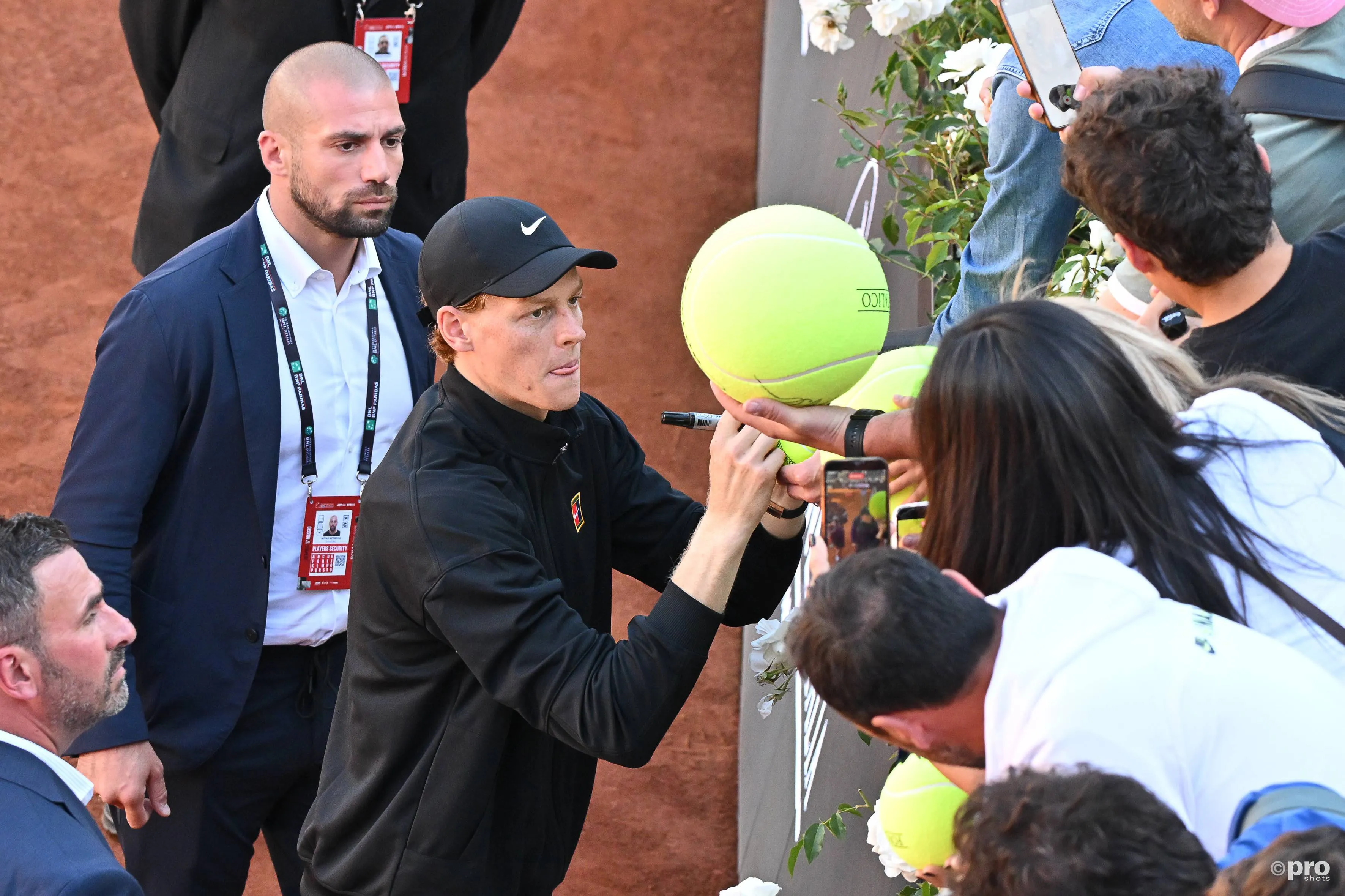
“First-round matches are never easy”
Sinner described the match as a functional but controlled opening performance, emphasising rhythm-building and adaptation rather than tactical complexity. The match was played under night-session conditions, which he noted positively, though he maintained a neutral stance on scheduling overall.
“Starting off a tournament is always very special, and playing the night session is very nice. He is a very good competitor, so I was looking forward to it. We had some really good rallies, so I’m very happy with the level today. First-round matches, as I said, are never easy, so I’m very happy.”

Statistically, the match followed a predictable hierarchy. Sinner’s ability to absorb pace and redirect baseline exchanges limited Tabur’s capacity to sustain pressure, with the Italian controlling service games and dictating return patterns across all three sets. The scoreline reflected the gap between a world No. 1 in form and a player ranked outside the top 150.
The broader context of the draw also shifted in Sinner’s favour. Early defeats for sixth seed Daniil Medvedev and ninth seed Alexander Bublik removed potential quarter-final and semi-final opponents from his projected path, simplifying his route through the bottom half of the draw.
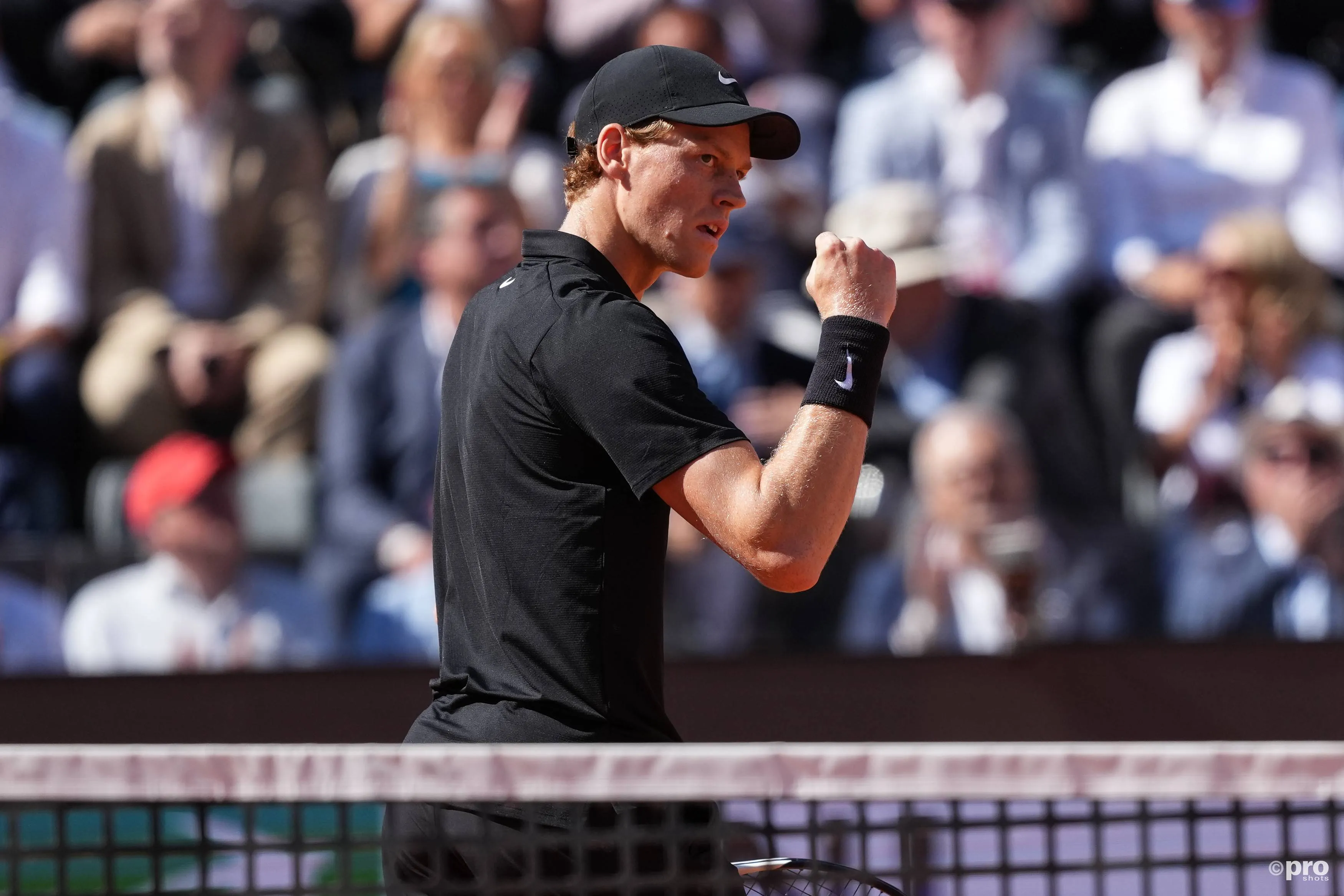
Heat management, scheduling and competitive pressure framing
Beyond the performance itself, Sinner addressed two recurring themes in his recent career: physical management in heat conditions and the psychological framing of pressure at the top of the game. “I mean, we’re going to see. I’m happy to play at night, I’m happy to play at day, whenever they put me. Then we’ll see.”
He also referenced his previous experience managing extreme conditions, pointing to his preparation and adaptation during the season. While acknowledging differences between tournaments, he downplayed concerns about humidity compared to other Grand Slams.
“I think I handled the heat very well in Wales. It was very hot this year, so I didn’t have any issues there. We prepared ourselves in a good way. Of course, here is different heat. But the humidity is not as tough as maybe in Australia or the US.”
Sinner added that adaptation remains a daily process, with no fixed assumptions about future matches or conditions. His approach reflects a broader pattern in his scheduling philosophy: incremental adjustment rather than long-term projection. “We’re going to see. Every day counts. Tomorrow is a good day to get used to the heat. Then we’ll see when I’m going to play. But it’s going to be a problem after tomorrow. So, let’s see.”
Pressure narrative and historical trajectory of dominance
Sinner’s press conference also addressed the broader narrative around expectation, particularly in the context of Carlos Alcaraz’s absence from his immediate competitive environment and Sinner’s own current clay-court form.
“Pressure is always going to be there," the 4-time Grand Slam champion claimed. "It’s part of us as tennis players. I do believe everyone has pressure in their work. I think you also have pressure, hopefully releasing a good piece of journalism."
"It’s normal. I try to take it in a very natural way. I know what kind of player I am. If you don’t feel pressure, it means you don’t care. I do care a lot about what I’m trying to achieve on a tennis court.
"At the same time, I know it’s not like the world is going down if I lose. In any case, I try to do my best. I’m a competitor, I try to put myself in the best possible position. And that’s it.”
At 24, the world No. 1 continues to operate within one of the most statistically dominant stretches of the modern game, with his 30-match winning streak representing the fifth-longest in ATP history and his Grand Slam first-round record placing him among the most reliable starters in the men’s game.
Sinner will return to court on Thursday against Juan Manuek Cerúndolo, carrying both form and historical momentum into the next phase of his Roland Garros campaign.

claps 0visitors 0
Just In
Popular News
Latest Comments
- How unfortunate. Martinez stands far & above these others in effective coaching (and personality).
 mandoist26-05-2026
 - What a Simp.mandoist26-05-2026
- I do not think it is that bad. Many countries do not have a top 10 player on the ATP Tour. The ladies' is indeed not so good since Ash Barty stopped playing suddenly.
 AceOfBase26-05-2026
 - Like Saba :-)AceOfBase26-05-2026
- Still strange that if Swiatek wins Roland Garros, it is a surprise :-)AceOfBase26-05-2026
- Nice article!AceOfBase26-05-2026
- I have her as the winner in my fantasy team on Zweeler.com, so she’d better start bagelling everyone. 🤣
 MrAndreeva25-05-2026
 - She won today!AceOfBase25-05-2026
- Happy it's not my dad, what an assssAceOfBase25-05-2026
- Haha I think someone was a tiny bit pissed today :-)AceOfBase25-05-2026

Loading