Roland Garros ATP Day Three Round-Up | Jannik Sinner secures routine win, Medvedev suffers marathon defeat as as Auger-Aliassime digs deep to advance
ATP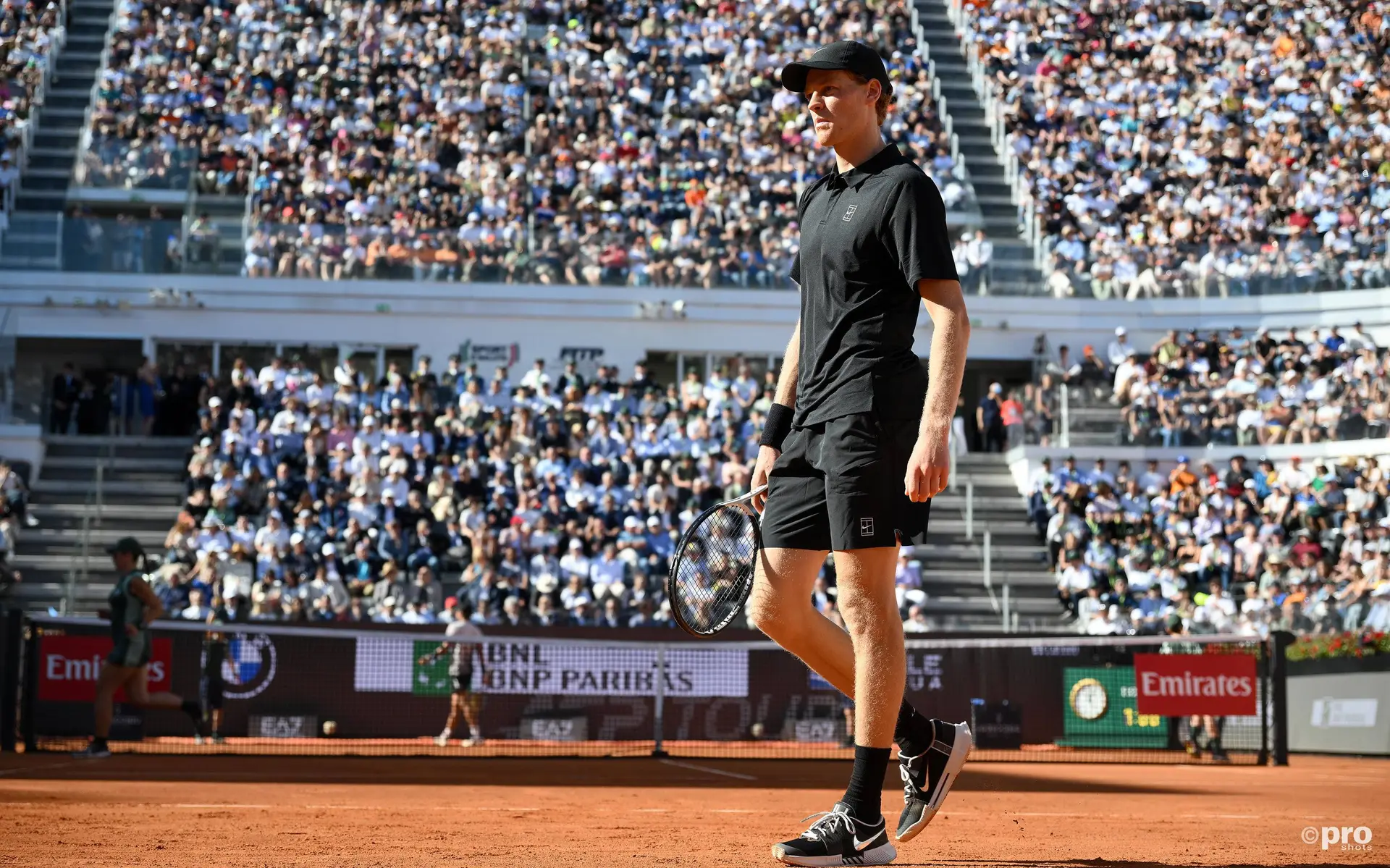
Roland Garros Round One continued on Day Three with a series of high-impact results across the ATP draw, led by Jannik Sinner’s composed opening win and Daniil Medvedev’s five-set defeat to Adam Walton. Stefanos Tsitsipas progressed after Alexandre Muller retired, while several seeded and established players were eliminated in a day defined by volatility in key sections of the draw.
The round also featured notable breakthroughs and upsets, with Marin Čilić falling to a local teenage wildcard, Alexander Bublik eliminated by Jan-Lennard Struff, and Learner Tien producing a dominant win over Cristian Garin. Valentin Vacherot also progressed and will face Alejandro Tabilo in the second round.
Jannik Sinner opens with controlled baseline authority
Jannik Sinner def. Clément Tabur 6-1, 6-3, 6-4
Sinner opened his Roland Garros campaign with immediate structural control, establishing early dominance through deep return positioning and a high first-serve efficiency that limited Tabur’s ability to engage in neutral baseline exchanges. The world No. 1 consistently dictated court positioning from the first games, forcing the French wildcard into defensive patterns behind the baseline.
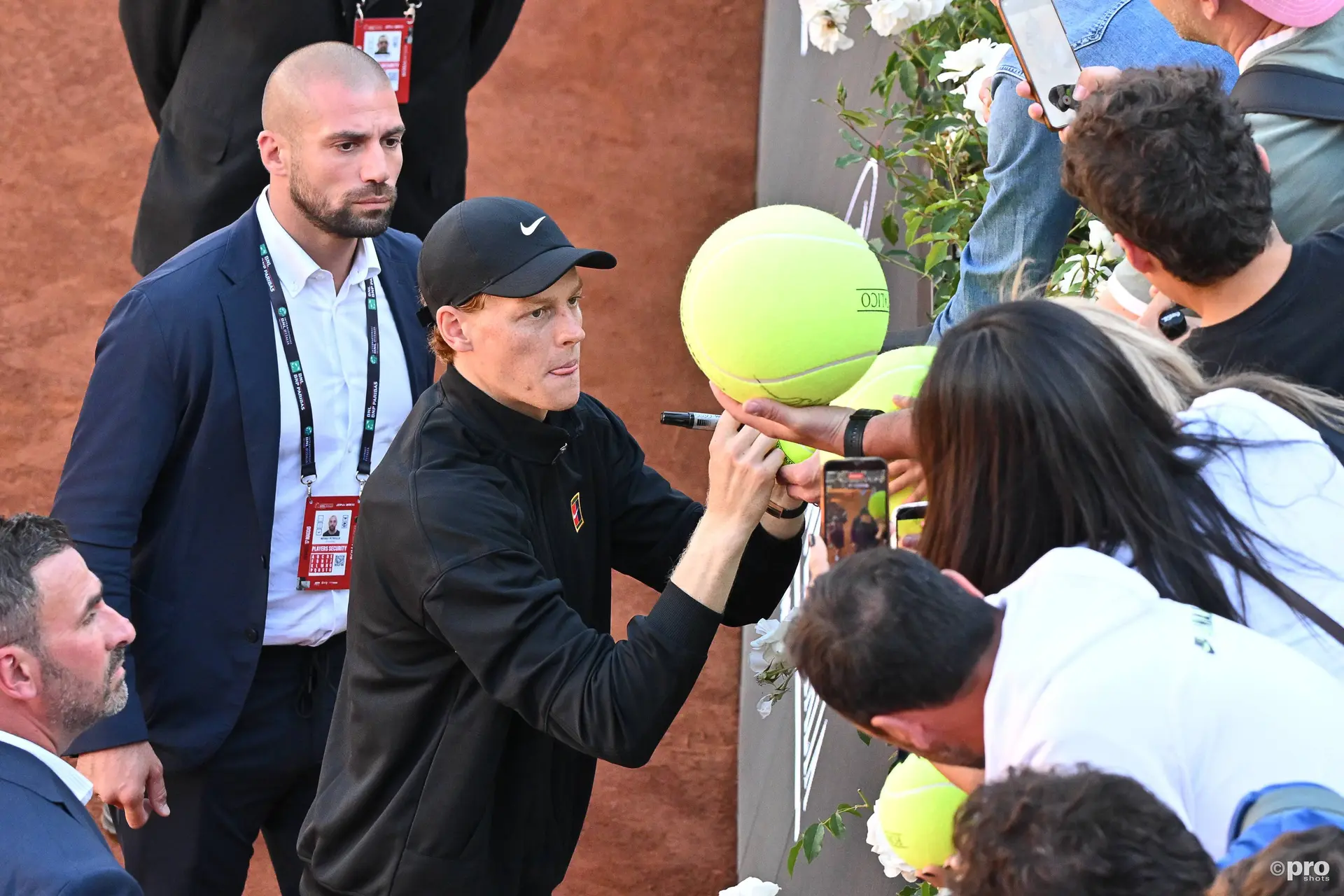
The match stabilised into a controlled tempo set by Sinner, who progressively increased return aggression in the second set to create repeated pressure on Tabur’s second serve. Even when the local player attempted to extend rallies and use crowd momentum, Sinner’s ability to absorb pace and redirect depth prevented any sustained disruption to his service games.
In the third set, Sinner briefly faced longer service holds but maintained control through first-serve consistency and compact rally construction, finishing the match with 71% of total points won and minimal exposure on break points. He extends his clay-court winning streak to 18 matches and advances to the second round, where he will face Juan Manuel Cerúndolo.

Daniil Medvedev suffers five-set defeat to Walton
Adam Walton def. Daniil Medvedev 6-2, 1-6, 6-1, 1-6, 6-4
Medvedev’s Roland Garros campaign ended in a fragmented five-set contest marked by extreme momentum swings. Both players alternated dominance across sets, with Medvedev responding strongly in the second and fourth sets by improving return depth and stabilising baseline exchanges.
The deciding set shifted when Walton increased first-serve consistency and reduced unforced errors, forcing Medvedev into deeper court positions and longer defensive sequences. The Russian struggled to maintain second-serve effectiveness in high-pressure games, which limited his ability to stabilise service holds.
Walton secured the decisive break late in the fifth set and closed out the match with controlled service games, producing one of the most significant early-round results at Roland Garros.

Stefanos Tsitsipas advances after Muller retirement
Stefanos Tsitsipas def. Alexandre Muller 6-2, 3-0 RET
Tsitsipas progressed after Alexandre Muller retired early in the second set, following a first set in which the Frenchman capitalised on early inconsistencies to take control through aggressive baseline positioning. Tsitsipas gradually adjusted by improving first-serve accuracy and extending rally patterns to regain structure.
The Greek immediately shifted momentum at the start of the second set, breaking serve and tightening baseline exchanges before Muller’s physical issue forced retirement. The match ended before a full tactical resolution developed.
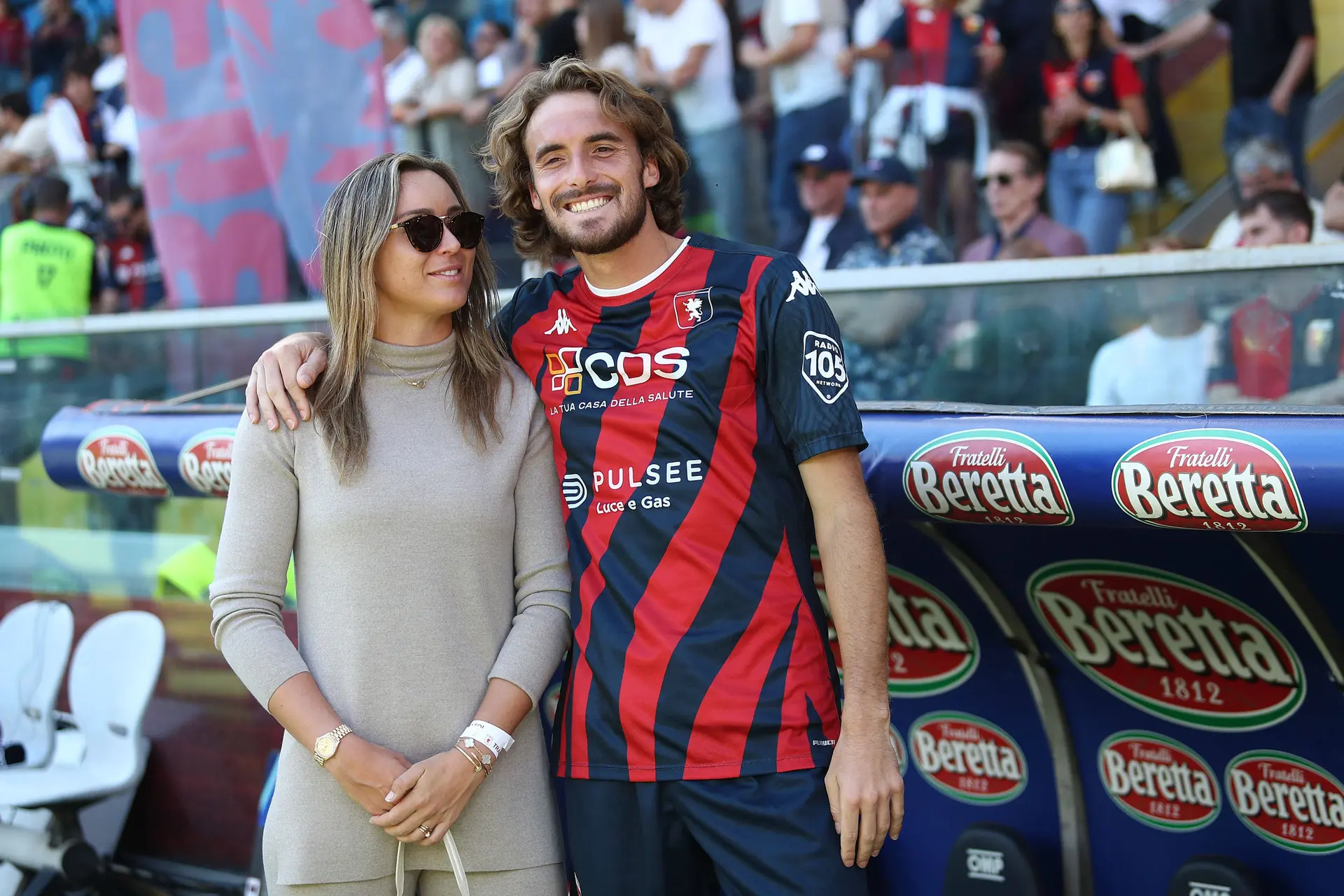
Tsitsipas moves into the second round with limited court time and a relatively fresh physical load compared to other seeded players in his section of the draw. Next he will face the Italian Matteo Arnaldi.
Read also
Alexander Bublik suffers four-set defeat to Jan-Lennard Struff
Jan-Lennard Struff def. Alexander Bublik 7-6, 6-7, 6-4, 7-5
Struff produced a controlled comeback win over Alexander Bublik, recovering from a set and break deficit in a match defined by shifting service patterns and sustained late-stage return pressure. Early stages were dominated by extended hold sequences, with neither player able to consistently establish advantage in return games, keeping the contest finely balanced through the opening sets.
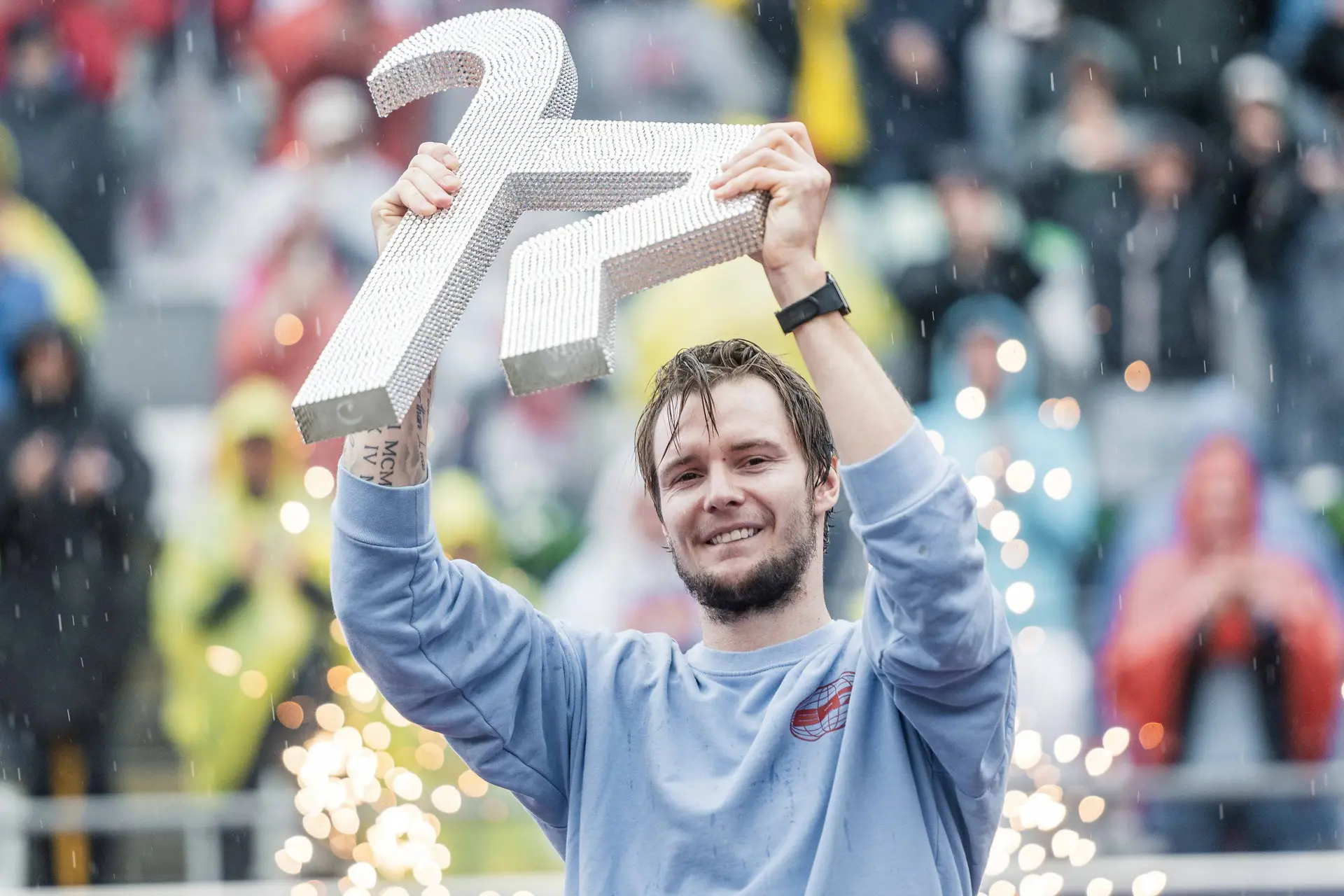
The match turned decisively in the fourth set after Bublik briefly led 5-2 but failed to close out the match, as Struff increased return depth and targeted the Kazakh’s second serve with greater consistency. From that point, Bublik’s efficiency dropped in high-pressure games, with unforced errors rising as momentum shifted toward the German in the closing stages of the set.
Struff ultimately completed the turnaround after trailing 2-5 in the fourth, winning five consecutive games to close out the match and seal the upset. The Kazakh, a French Open quarterfinalist last year, exits despite holding a strong position to force a decider, in a result that contributes to a broader pattern of early top-player eliminations at Roland Garros. Struff advances to the second round, where he will face Jaime Faria, who arrives after eliminating Denis Shapovalov in a notable upset.
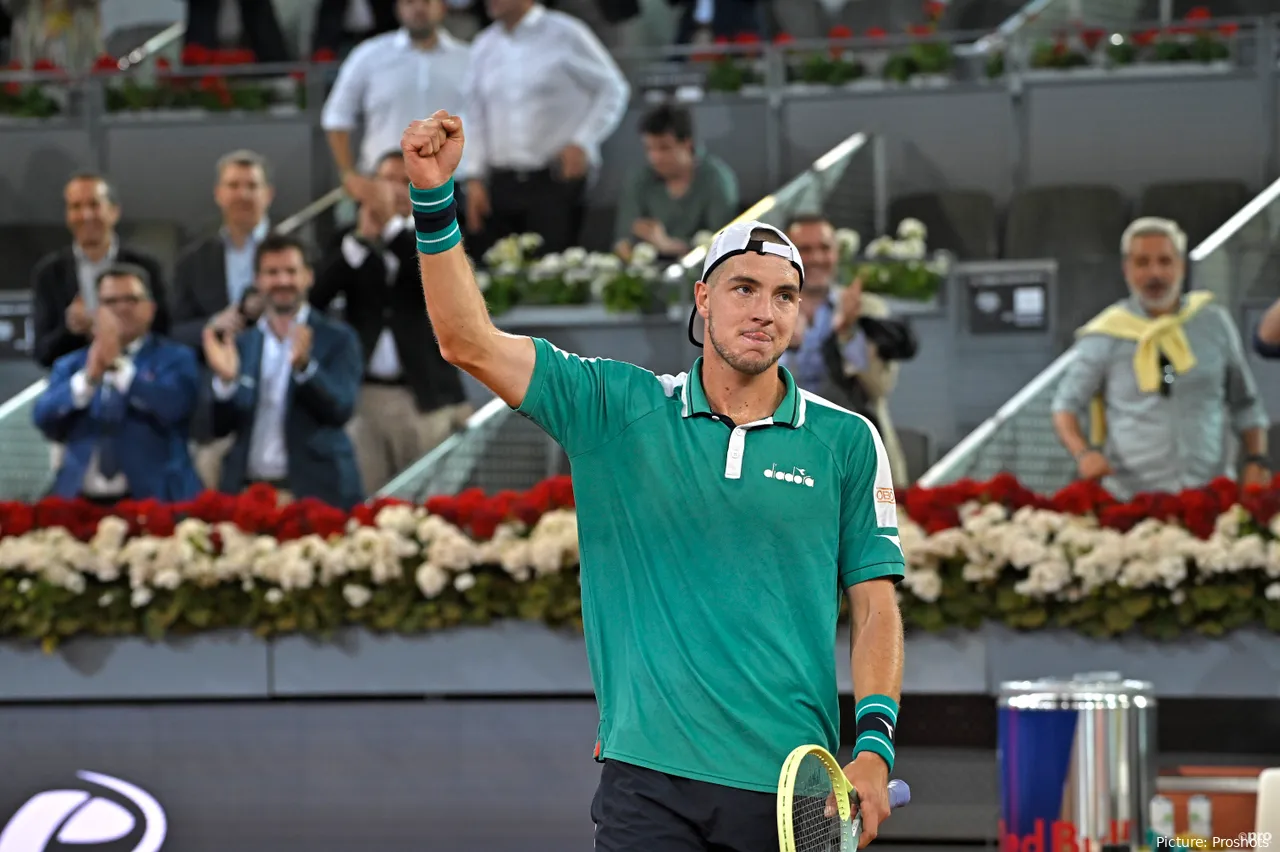
Marin Čilić suffers defeat to teenage home wildcard
Moïse Kouamé def. Marin Čilić 7-6, 6-2, 6-1
Čilić began strongly, taking the first set in a tiebreak through experienced serving and controlled point construction in tight moments. However, the match shifted as Kouamé increased return aggression and began consistently targeting second-serve patterns.
The French teenage wildcard progressively took control from the baseline, forcing Čilić into extended defensive positions and reducing his effectiveness in first-strike exchanges. The Croatian’s serve efficiency declined under sustained pressure across the second and third sets.
Kouamé completed a decisive turnaround to secure one of the standout home victories of the opening round and advances to face the winner of his second-round section.
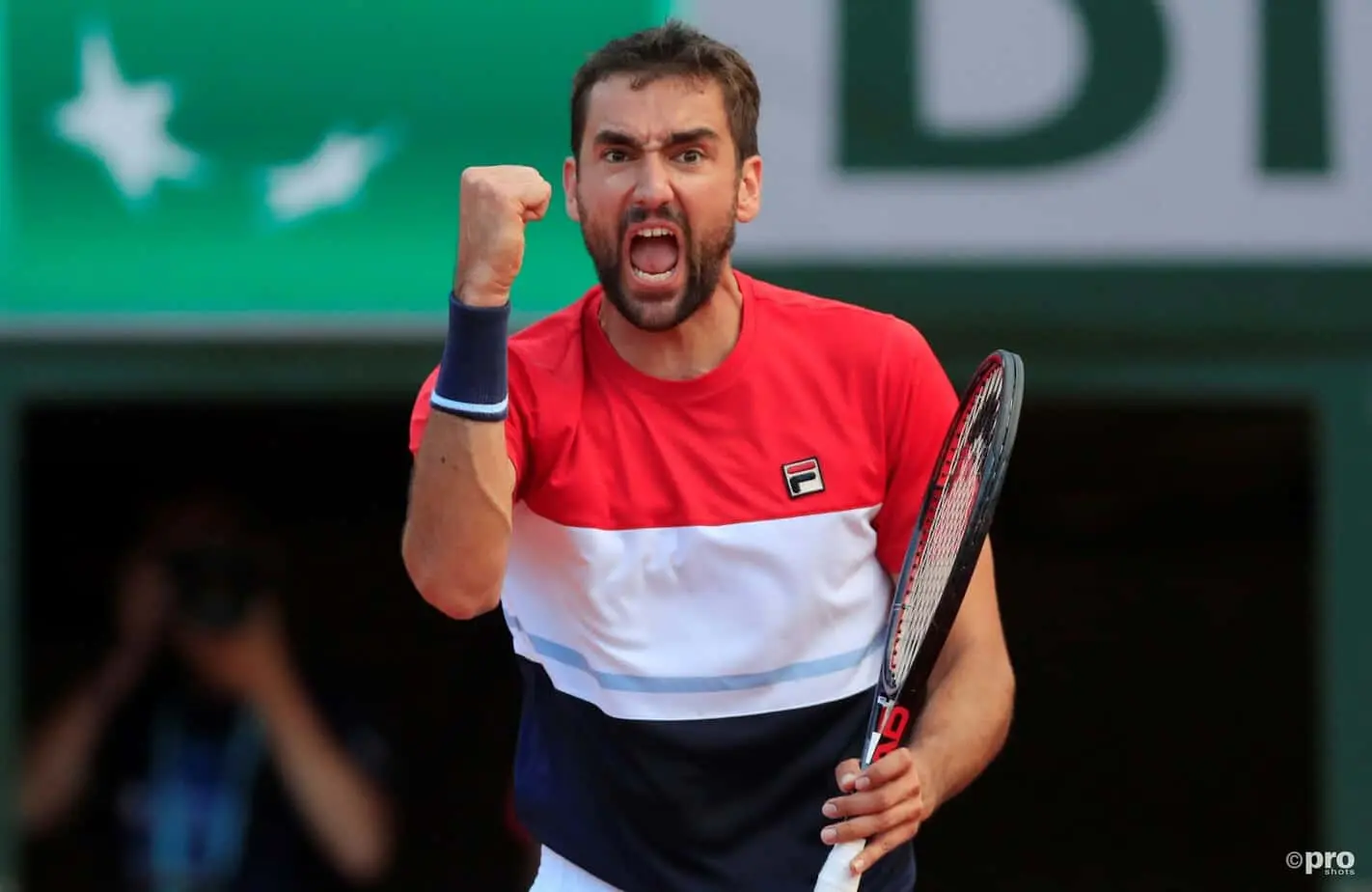
Learner Tien overpowers Cristian Garin
Learner Tien def. Cristian Garin 6-0, 2-6, 6-0, 6-2
Tien delivered a dominant baseline performance to overcome Cristian Garin, a former top-20 player and proven clay-court specialist, in four sets. Despite an irregular score pattern across the match, the American repeatedly imposed control in extended baseline exchanges, with his ability to reset after dropping the third set proving key to maintaining structural stability and preventing Garin from building sustained momentum.
The American’s return positioning was decisive throughout, particularly against Garin’s second serve, where he consistently generated early break opportunities and forced the Chilean into defensive first-strike patterns. Garin struggled to stabilise his rhythm across sets, with his level dropping in longer rallies where Tien’s depth and directional control created persistent pressure in service games.
Tien advances to the second round after a statistically strong and tactically controlled performance that reinforces his upward trajectory on clay, with this win carrying additional weight given Garin’s experience and established pedigree on the surface.

Learner Tien during his fourth round at the Australian Open
Valentin Vacherot progresses to face Tabilo
Valentin Vacherot def. Thomas Faurel 6-3, 6-4, 3-6, 7-6
Vacherot navigated a tightly contested four-set match against French youngster Faurel, who was contesting his first main-draw appearance at Roland Garros. The contest lasted two hours and 50 minutes and was defined by narrow margins across service games and extended tie-break sequences, with neither player able to establish sustained return dominance in the opening phases.
The match remained balanced through extended baseline exchanges, but Vacherot’s ability to execute in key tie-break moments ultimately proved decisive. He consistently protected serve under pressure, while Faurel remained competitive but was unable to convert break opportunities in the most decisive phases of the set structure.
Vacherot won 83% of points behind his first serve, struck 15 aces, and converted 2 of 10 break points, compared to Faurel’s single successful break from limited chances. He advances to the second round in a physically demanding victory shaped by marginal differences in high-pressure games, where he will face Alejandro Tabilo.

Valentin Vacherot during his second round match at the 2026 Rolex Monte-Carlo Masters
Felix Auger-Aliassime seals five-set comeback in marathon battle
Felix Auger-Aliassime def. Daniel Altmaier 4-6, 6-4, 4-6, 6-1, 7-6
Auger-Aliassime recovered from a set down to edge Daniel Altmaier in a physically demanding Roland Garros encounter lasting over four hours and decided in a final-set tiebreak. The match opened with tight service exchanges, but Altmaier struck first by securing marginal gains in return games to take the opening set.
The momentum swung repeatedly through the middle stages, with Auger-Aliassime responding in the second set before Altmaier reclaimed control in the third through improved return depth and extended baseline pressure. The Canadian’s level rose sharply in the fourth set, where he broke repeatedly to force a decider after a dominant 6-1 response.
In the fifth set, Auger-Aliassime battled back from a break down at 1-4, stabilising serve under pressure before a tense tiebreak. He surged to a 4-1 lead in the breaker, saw it erased as Altmaier recovered to 5-5, but ultimately held firm in the closing points to complete the comeback. The Canadian advances to the second round after a match defined by momentum volatility, physical endurance, and high-pressure execution.


Samuel GillEditor-in-Chief
Samuel Gill is the Chief Content Officer (CCO) of TennisUpToDate.com, a role he has held since 2020. He is responsible for editorial governance across the platform, including setting content standards, overseeing accuracy and consistency, and guiding long-term editorial strategy. Since joining, he has contributed more than 10,000 articles and editorial pieces across the TennisUpToDate network, playing a central role in the daily operation and development of the site.
Based in Leicester, Samuel has a broad background in tennis media. In his current role, he works closely with editors and writers to ensure coverage meets clear journalistic standards, with particular attention to verification, consistency, and timely updates when new information becomes available.
claps 0visitors 0
Just In


Popular News
Latest Comments
- Two Things: 1. Stop allowing these Spoiled Trust-Fund Elitists to behave badly. Your little hand-slaps do not deter them. 2. STOP the incessantly annoying "towel wiping" nonsense!!!!
 mandoist15-10-2026
 - A healthy Qinwen may be hard to stop next season. She was already scaring her opponents before her medical leave(s). Unfortunately, Zheng insisted on singing again. On the positive side -- Mirra did not sing!! ;~}mandoist11-10-2026
- Where is it written that athletes, entertainers... People in general... are mandated to keep looking at -- or even using [anti]Social Media? Public & private figures consistently complain and reveal their concerns about negativity and violence thrown at them -- yet they insist on participating. Avoid it, don't use it, don't read it. It's okay to occasionally look up at the World instead beating your eyes & thumbs to death on The Inventions out there.mandoist11-10-2026
- great articlestennisseserver07-10-2026
- Medvedev was leading Djokovic 7-5, 3-5 when an attempted return..' NO you ignorants, Djokovic was leading .weiss05-10-2026
- No more bullshit "Wildcards" to these two. Qualify like everyone else -- there will be cameras there, too. Time to scream... WTF ????!!!!mandoist29-09-2026
- Let's not BS the general public -- Sabalenka started showing cracks in her game last season. Her losses and near-losses started at about the same time she began being distracted by Fame (constant Selfies, making TV commercials, magazine shoots, endless Social Media nonsense, etc., etc.) One would think even Saba could recognize the parallels with others who failed before her -- Raducanu, Giorgi, Bouchard to name a few.mandoist25-09-2026
- Gross!! Hey Raducanu, Giorgi, and Bouchard -- reserve a seat at your Social Media Selfie table for Saba + Naomi. They're heading in your direction soon enough.mandoist24-09-2026
- And then these same players will complain about how lengthy their season’s were and need more time-off. I’m all for more tennis but the amount of tennis we get now is actually kind of crazy! We all need a break, especially the players.DaveyWavey23-09-2026
- You should do a comparison article for "different kinds of justice" the courts decide for tennis players. I can think of at least three players who received very small bans of a few months, however Tara Moore has been fighting for her literal survival the past few years. It seems odd considering she is not a "name" player, unlike the other cases.DaveyWavey22-09-2026

Loading