Kei Nishikori’s last comeback: The former US Open finalist explains why retirement became inevitable
ATP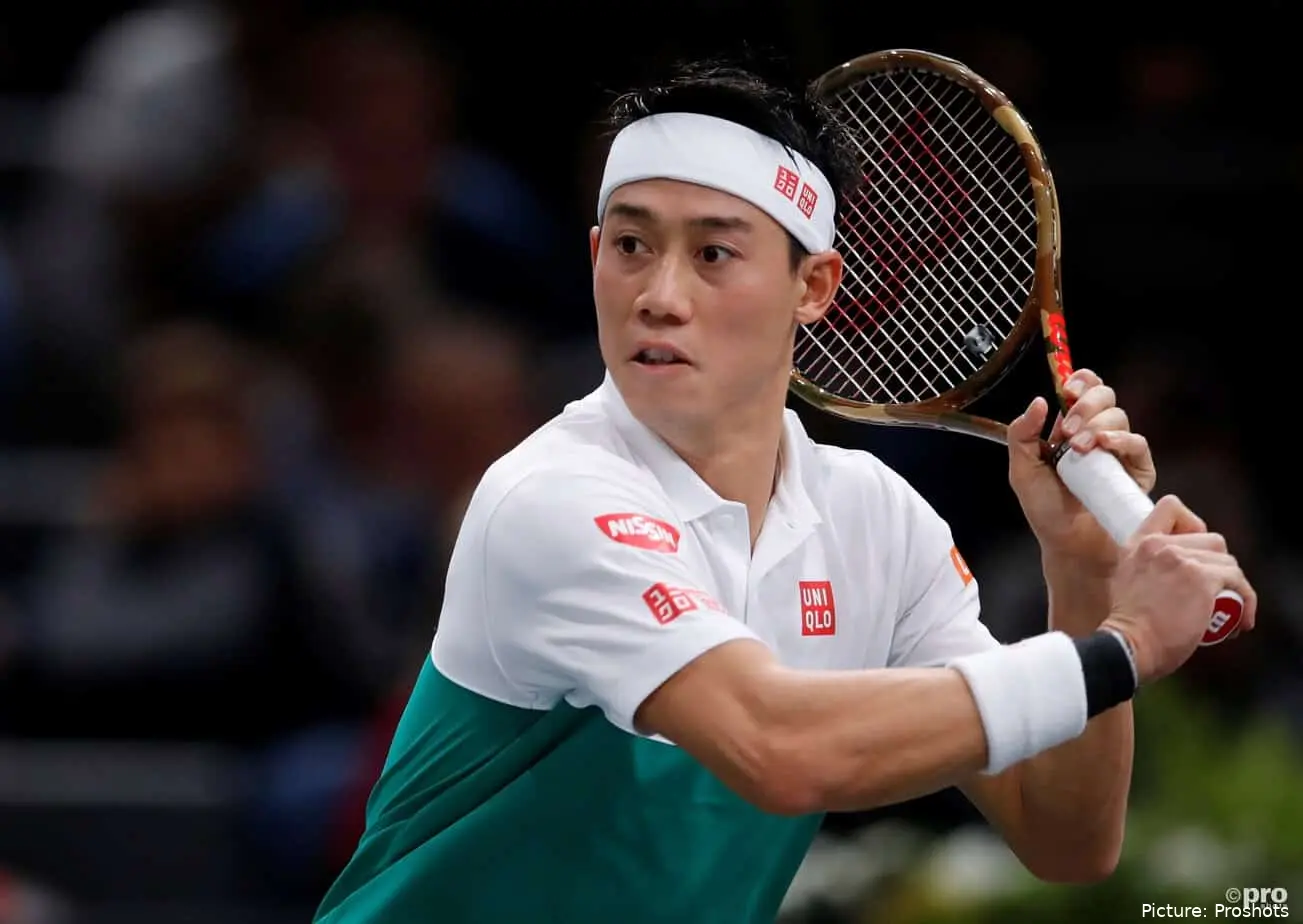
Kei Nishikori’s final season will not be about chasing another career milestone. Instead, the former US Open finalist is looking for something much simpler but perhaps more meaningful: enjoying tennis again after years of injuries, setbacks and physical battles that eventually made retirement feel inevitable.
The 36-year-old Japanese star announced in April that he will end his professional career at the conclusion of the 2026 season, closing the book on one of the greatest careers in Asian tennis history. Nishikori will compete at this week’s DC Open, his first tournament since revealing his retirement decision, as he begins the final chapter of a journey that included a Grand Slam final, a top-four ranking and an Olympic medal.
For years, Nishikori’s career was defined by his ability to fight through adversity. However, after repeated injury problems, the former world No. 4 admitted that he eventually reached a point where finding the motivation to rebuild his body became increasingly difficult.
The Japanese player revealed that the decision to retire first crossed his mind after a tournament last August, when the physical demands of trying to return to his best level became overwhelming. “I had pain in three, four parts of my body and I found myself unable to make up my mind to regain my physical condition in order to battle again,” Nishikori explained.
The injuries that made retirement inevitable
Nishikori’s decline was not caused by a lack of ambition, but by a long list of physical struggles that interrupted the second half of his career. After reaching the highest point of Japanese men’s tennis by climbing to world No. 4 in March 2015, he spent years trying to maintain his level while dealing with constant setbacks.
The biggest obstacle came after left hip surgery in January 2022. Although Nishikori eventually returned to competition in June 2023, other injuries continued to prevent him from building momentum and competing consistently against the best players in the world.
The former world No. 4 admitted that his relationship with tennis changed during that period, with training sessions becoming more difficult mentally and physically. “I was having heavy feet going to practice and training,” Nishikori said. “I hadn’t had that at all until then and the idea (to retire) crossed my mind.”
That admission reflected the reality of a player who had spent almost two decades pushing his body to the limit. Nishikori was one of the most consistent competitors of his generation, but the physical cost of remaining at the highest level eventually became too difficult to ignore.
Despite those struggles, his legacy remains historic. Nishikori became the first Japanese man to reach a Grand Slam singles final in the Open Era when he advanced to the 2014 US Open championship match, where he lost to Marin Cilic. One year later, he reached his career-high ranking of world No. 4, becoming the highest-ranked Japanese male player in tennis history.
He also delivered another unforgettable moment at the 2016 Rio Olympics, defeating Rafael Nadal in the bronze medal match to claim Japan’s first Olympic tennis medal in 96 years.
One final comeback for a Japanese tennis icon
Although Nishikori has already decided that 2026 will be his final season, his return to Washington carries a different feeling. After taking around a month away from competition, the Japanese star believes his body has finally started responding again.
“I’ve been able to practice without holding back and I’m getting better feeling,” Nishikori said. “It’s great that I can sense I’m starting to like tennis again as I approach my finale.”
That renewed enjoyment is perhaps the most important victory for Nishikori at this stage of his career. After years where tennis was often associated with rehabilitation and frustration, he can now focus on appreciating his final moments on court.
His farewell will take place against the backdrop of a career that changed the perception of Japanese tennis worldwide. Nishikori inspired a new generation of players in his country and became one of the most respected competitors on the ATP Tour thanks to his consistency, professionalism and ability to challenge the biggest names in the sport.
The DC Open will provide another opportunity for fans to watch Nishikori compete before his retirement becomes official. The results may no longer define him, but the final months of his career represent something far more personal: a chance to finish tennis on his own terms, with the joy that injuries nearly took away.

Cristhián AvilaTennis Journalist
Cristhián Ávila is a tennis journalist based in Santiago, Chile, and has been part of the TennisUpToDate team since early 2023. He covers the ATP and WTA Tours as well as all four Grand Slams, producing breaking news, match reports, analysis, and regular liveblogs from major tournaments.
His reporting combines statistical analysis with clear explanation, helping readers understand tactical developments, player form, and broader storylines across the tour. Working fluently in both Spanish and English, Cristhián collaborates with an international editorial team and contributes to comprehensive global coverage. As part of his work, he has conducted interviews and media interactions with leading figures in the sport, including Caroline Wozniacki and John McEnroe.
In his journalism, Cristhián places strong emphasis on careful sourcing, editorial accuracy, and updating articles promptly when new, verified information becomes available. His coverage is grounded in research, context, and direct engagement with professional tennis.
claps 0visitors 0
Just In

Popular News

Latest Comments
- Does Sinner need that 4.5 mil? I doubt it. He can make that with three modelling gigs!😅🤣Rapunzel21-10-2026
- Did "People Magazine" purchase this website? This nonstop storyline is bullshit.
 mandoist21-10-2026
 - Listen... this is of no concern to anyone but these two. Deal with your own issues -- most of us have our own. Thanks, media, for these insignificant follow-ups which are meaningless.mandoist21-10-2026
- This is so very very sad, for all three of them. I truly thought they had an unbreakable bond, but life throws up so many differing challenges. Having your homeland suffering in such a terrible way, makes happiness lose out to guilt as well. Our thoughts are with them. X💔bjsexton20-10-2026
- I have lost all respect for Svitolina! Could she not have waited until he had played at the Paris Masters!!! She is selfish and don't give a damn about Gael. That is NOT how love is demonstrated Elina!!Rapunzel19-10-2026
- Perhaps convenient tennis tour sex is not a strong enough experience in which to base a marriage?mandoist19-10-2026
- Fight the Good Fight... Tennis (sports in general) need more Humans such as yourself.mandoist18-10-2026
- When is WTA going to mandate Genetic Testing (DNA) ???mandoist18-10-2026
- Hey, Dan... you just wake up from a coma? Regardless -- Thanks for the comedy this morning!mandoist18-10-2026
- Two Things: 1. Stop allowing these Spoiled Trust-Fund Elitists to behave badly. Your little hand-slaps do not deter them. 2. STOP the incessantly annoying "towel wiping" nonsense!!!!mandoist15-10-2026

Loading