One year after the impossible: Valentin Vacherot returns to Shanghai with a historic title to defend
ATP
Twelve months ago, Valentin Vacherot was an alternate. Ranked No. 204, he had been outside the qualifying cut-off in Shanghai until withdrawals opened a door, and he walked through it as an afterthought. This week he is back in the same city with a terracotta statue in his likeness, a seeded draw position, a career-high ranking of No. 14 and a first-round bye.
The contrast is almost too neat, and it raises a harder question than "How did this happen?" It is: what happens now that everyone knows his name?
The answer carries real consequences. Vacherot's win in 2025 was worth 1,000 ranking points, and all of them come off his total once this tournament ends. A year ago he had nothing to lose. Today he has more to protect than at any point in his career, and he is doing it in a draw that, per the tournament's own bracket, could put him on a collision course with Carlos Alcaraz in the bottom half.
What happened in Shanghai: the run
The fairy tale did not start as one. Vacherot entered the week as an alternate and had to win two qualifying matches, over Nishesh Basavareddy and Liam Draxl, both of which went three sets. Once in the main draw, he went on to win seven more matches in heat and humidity that wore down players across the field. By the end he had been a set-down six times in the tournament, qualifying included, and still found a way through every time.

Valentin Vacherot broke onto the scene at the Shanghai Masters 2025
The match he points to himself as the turning point was not the final or the Djokovic semifinal. It was the second-round win over Alexander Bublik, then No. 17 in the world, because it was the first time he had beaten a player that high. Everything that followed rested on that match. He survived a Tallon Griekspoor three-setter that finished just before 1 a.m., outlasted Holger Rune in nearly three hours, and then beat an unwell Novak Djokovic in straight sets, the first top-10 win by a Monégasque in history.
Then came the final, against his own cousin. Arthur Rinderknech took the first set, but Vacherot broke early in the second, won three consecutive love holds in the third and won 15 straight points on serve in the deciding set. He saved 11 of 14 break points over the last two sets and closed out a 4-6, 6-3, 6-3 win to become the lowest-ranked Masters 1000 champion in the history of the series.
| Round | Opponent | Ranking | Result |
| Qualifying 1 | Nishesh Basavareddy | 113 | 6-7, 6-4, 6-2 |
| Qualifying 2 | Liam Draxl | 119 | 4-6, 7-6, 6-4 |
| Round 1 | Laslo Djere | 82 | 6-3, 6-4 |
| Round 2 | Alexander Bublik (14) | 17 | 3-6, 6-3, 6-4 |
| Round 3 | Tomáš Macháč (20) | 23 | 6-0, 3-1, ret. |
| Round 4 | Tallon Griekspoor (27) | 31 | 4-6, 7-6(1), 6-4 |
| Quarterfinal | Holger Rune (10) | 11 | 2-6, 7-6(4), 6-4 |
| Semifinal | Novak Djokovic (No. 5) | 5 | 6-3, 6-4 |
| Final | Arthur Rinderknech | 54 | 4-6, 6-3, 6-3 |
What he achieved: the records
Strip away the storyline, and the raw achievements are staggering. Vacherot won Shanghai at No. 204, the lowest ranking ever for a Masters 1000 champion since the series began in 1990. He was also the first unseeded champion in the tournament's history, the third qualifier ever to win a Masters 1000, and just the fifth player to claim a Masters crown as his very first tour-level title. He did it in only his 27th tour-level match.
The national firsts came just as quickly. Vacherot became the first Monégasque to win an ATP singles title, the first to reach a tour-level final, the first to reach the top 50 and later the top 20, and the first to beat a top-10 opponent. He also beat five seeded players on the way: Bublik, Macháč, Griekspoor, Rune and Djokovic.
- Lowest-ranked Masters 1000 champion: No. 204 (since 1990)
- Lowest-ranked Masters 1000 finalist ever and the lowest-ranked quarterfinalist in Shanghai history
- Ranking jump: from No. 204 to No. 40 the following Monday, and as high as No. 30 a few weeks later. During 2025 he reached his best ranking as world No. 14 this week – just before the defence of the title.
- First Monégasque to win a tour title, reach a final, beat a top-10 player and enter the top 20
- ATP Breakthrough of the Year for 2025, the first player to receive the award
- Prize money: $1,124,380 for the title
Roger Federer was in the stands. For a player who had spent half a year sidelined by injury in 2024, and who had been a few points from winning his Wimbledon qualifying opener before a bad fall, it was about as complete a reversal as the sport offers.
The cousin: a family final
The most unusual part of the story is that it needed a second miracle to end. Rinderknech, ranked No. 54, was running his own improbable week in the same draw. He started with a walkover, then beat Alex Michelsen, Alexander Zverev, Jiri Lehecka, Felix Auger-Aliassime and Daniil Medvedev, a sequence that included four top-20 opponents. Between them, the cousins beat 10 of the tournament's 32 seeds.
Their connection runs deeper than blood. Both played at Texas A&M and overlapped for two seasons in the mid-2010s, and Vacherot's coach is his older half-brother, Benjamin Balleret, himself a former pro. Rinderknech plays for France; Vacherot, raised in a border town next to Monaco, switched to represent the principality in 2022.
The final was the rare championship match with real affection under the competition. It also gave Rinderknech a consolation prize that would have been the headline in any other year: his own career-high ranking of No. 28. The cousins have stayed linked since, even reaching the Indian Wells doubles final together in March, where they lost to Guido Andreozzi and Manuel Guinard. Rinderknech is also defending serious points this week, 650 from his runner-up result, but he confirmed his withdrawal a few days before the tournament start.

It was a family affair between Valentin Vacherot and Arthur Rinderknech
The year since: from fairy tale to top 15
If the question was whether Shanghai was a lightning strike, the last twelve months say probably not, though the picture is uneven. Vacherot reached the Paris Masters quarterfinals as a wildcard weeks after winning Shanghai, finished 2025 ranked No. 31 and was seeded at the 2026 Australian Open. He reached the third round in Melbourne before losing to Ben Shelton, then later beat Alexander Bublik in the Davis Cup as Monaco continued to benefit from his rise.
The high point came in April at Monte-Carlo, his home Masters. Vacherot beat Lorenzo Musetti and Alex de Minaur, saving 13 break points against the latter, and reached the semifinals before losing to Carlos Alcaraz. The run lifted him to a then-career-high No. 16, making him the first Monegasque player to reach that level.

Valentin Vacherot during his second round match at the 2026 Rolex Monte-Carlo Masters
His 2026 season, however, was interrupted by injury. Vacherot withdrew from Roland Garros before his second-round match against Alejandro Tabilo because of a foot injury, later identified as a stress fracture. The problem kept him out for nearly two months and forced him to miss the entire grass-court season, including Wimbledon. He returned at Gstaad in July, beating Yannick Hanfmann before losing to eventual finalist Raphael Collignon in the quarterfinals.
After returning, the form was uneven. Vacherot went out early in some events and reached the third round of the US Open, where he lost to Frances Tiafoe in straight sets. But the year has still included multiple deep runs and significant wins, making his current level difficult to dismiss as simply the product of his 2025 Shanghai breakthrough.
Then came Tokyo, a week that reminded everyone what he can do. Seeded eighth, Vacherot beat Alexander Blockx, came back from a set down against Stefanos Tsitsipas and knocked out Arthur Fils to reach the semifinals before losing to Jiri Lehecka. The run took him to a new career high of No. 14 and strengthened the case that his Shanghai title was the beginning of a genuine rise rather than a one-off week.
| Milestone | Ranking |
| Before Shanghai 2025 | No. 204 |
| After Shanghai 2025 | No. 40 |
| Highest in 2025 (Nov.) | No. 30 |
| Year-end 2025 | No. 31 |
| May 2026 (after Monte-Carlo) | No. 16 |
| Oct. 6, 2026 (after Tokyo) | No. 14 (career high) |
What comes next: the points math
The picture after Shanghai is shaped almost entirely by arithmetic. Vacherot currently sits on 2,450 points. Once this tournament finishes, his 2025 title points come off, so his base without any new Shanghai result is 1,450. If he scores nothing, he would slide out of the top 30. Anything he earns this week simply gets added to that 1,450.
As the seventeenth seed with a first-round bye, his first match is against the winners of Marcos Giron and Sebastián Báez. Reaching the round of 16 would be worth 100 points, a quarterfinal 200, and so on. Here is how the scenarios break down:
| Result in Shanghai | Points earned | Total after | Change vs. today |
| Loses first match | 10 | 1,460 | −990 |
| Loses in the third round | 50 | 1,500 | −950 |
| Loses in the round of 16 | 100 | 1,550 | −900 |
| Quarterfinal | 200 | 1,650 | −800 |
| Semifinal | 400 | 1,850 | −600 |
| Final | 650 | 2,100 | −350 |
| Title | 1,000 | 2,450 | 0 |
These totals are compared with today's list, on which No. 20 holds 2,220 points. On today's numbers, only a title would keep Vacherot in the top 20; even a final would leave him below that line. The exact landing spot depends on what others do, since many players ahead of him are also defending Shanghai points, but the broad direction is clear.
The damage would then be partly offset by what comes next. He has no points to defend in Basel, where he lost his opener last year, and only 200 to hold at the Paris Masters, where he reached the quarterfinals. A solid indoor stretch could rebuild some of what he loses here.
Read also
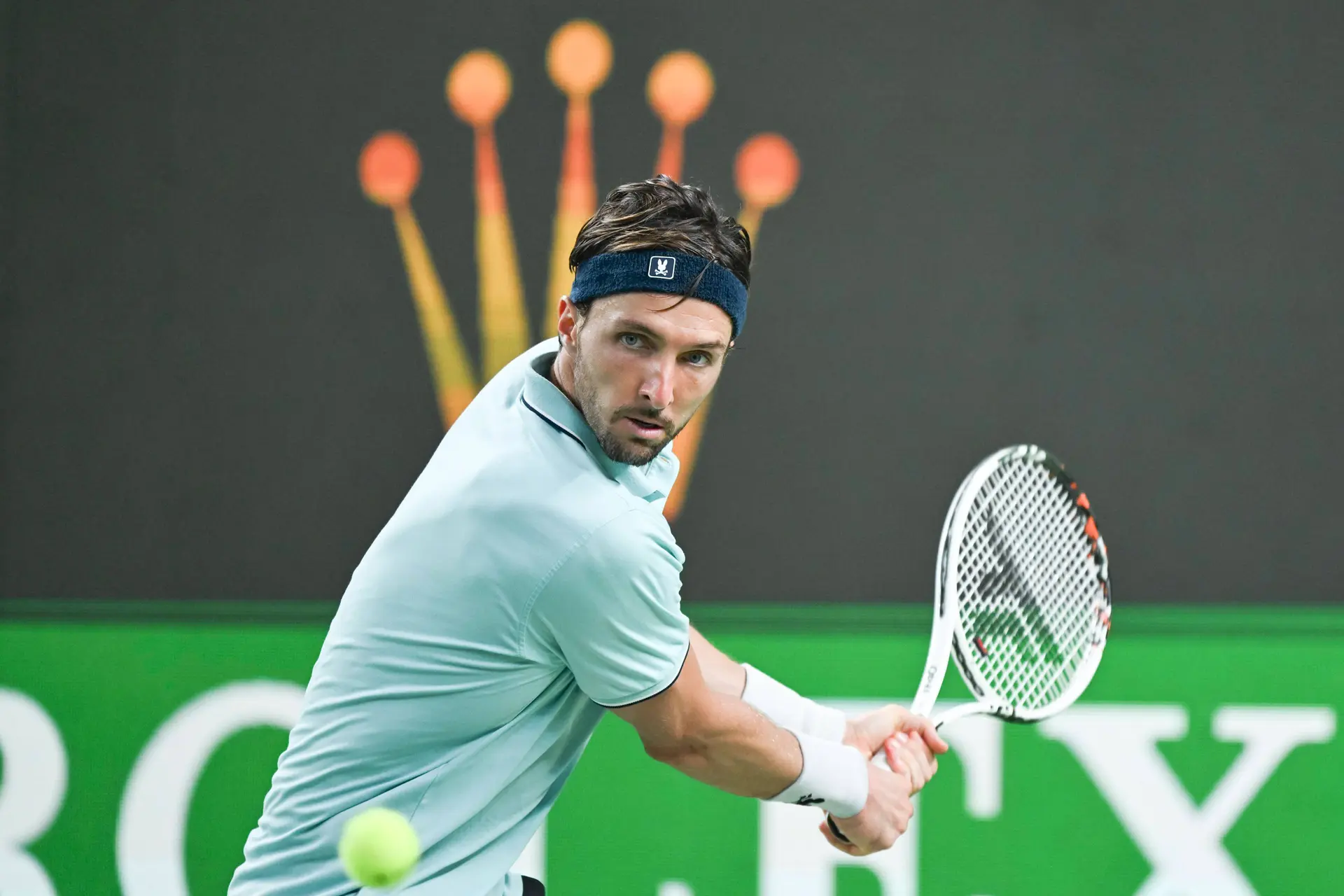
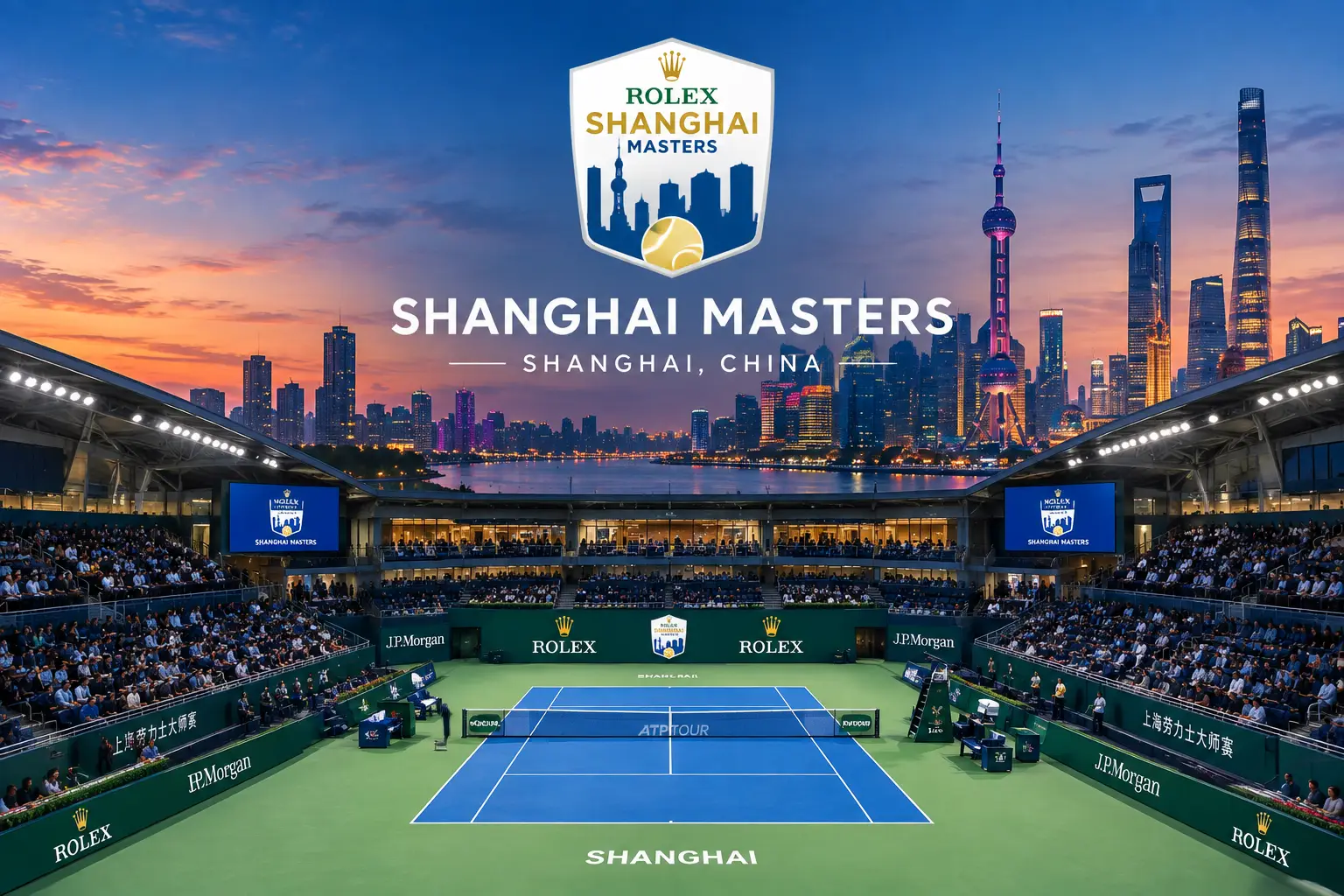
That is the real measure of what Vacherot has done. He will very likely slip in the rankings after this week – around the top 30 to 35 if he loses in the first week – unless he repeats the miracle, and that would be a mathematical outcome, not a sporting verdict.
The question for the rest of 2026 is whether the player who left Shanghai last year as a story has become the one who can stay in the top 20 on merit. On the evidence of Monte-Carlo and Tokyo, plus five top-10 wins in total, the answer looks like yes.

Cristhián AvilaTennis Journalist
Cristhián Ávila is a tennis journalist based in Santiago, Chile, and has been part of the TennisUpToDate team since early 2023. He covers the ATP and WTA Tours as well as all four Grand Slams, producing breaking news, match reports, analysis, and regular liveblogs from major tournaments.
His reporting combines statistical analysis with clear explanation, helping readers understand tactical developments, player form, and broader storylines across the tour. Working fluently in both Spanish and English, Cristhián collaborates with an international editorial team and contributes to comprehensive global coverage. As part of his work, he has conducted interviews and media interactions with leading figures in the sport, including Caroline Wozniacki and John McEnroe.
In his journalism, Cristhián places strong emphasis on careful sourcing, editorial accuracy, and updating articles promptly when new, verified information becomes available. His coverage is grounded in research, context, and direct engagement with professional tennis.
claps 0visitors 0
Just In


Popular News
Latest Comments
- great articlestennisseserver07-10-2026
- Medvedev was leading Djokovic 7-5, 3-5 when an attempted return..' NO you ignorants, Djokovic was leading .weiss05-10-2026
- No more bullshit "Wildcards" to these two. Qualify like everyone else -- there will be cameras there, too. Time to scream... WTF ????!!!!
 mandoist29-09-2026
 - Let's not BS the general public -- Sabalenka started showing cracks in her game last season. Her losses and near-losses started at about the same time she began being distracted by Fame (constant Selfies, making TV commercials, magazine shoots, endless Social Media nonsense, etc., etc.) One would think even Saba could recognize the parallels with others who failed before her -- Raducanu, Giorgi, Bouchard to name a few.mandoist25-09-2026
- Gross!! Hey Raducanu, Giorgi, and Bouchard -- reserve a seat at your Social Media Selfie table for Saba + Naomi. They're heading in your direction soon enough.mandoist24-09-2026
- And then these same players will complain about how lengthy their season’s were and need more time-off. I’m all for more tennis but the amount of tennis we get now is actually kind of crazy! We all need a break, especially the players.DaveyWavey23-09-2026
- You should do a comparison article for "different kinds of justice" the courts decide for tennis players. I can think of at least three players who received very small bans of a few months, however Tara Moore has been fighting for her literal survival the past few years. It seems odd considering she is not a "name" player, unlike the other cases.DaveyWavey22-09-2026
- PRIZE MONEY & POINTS Winner - $185,500 Finalist - $114,500 Semi-Finalist - $66,003 Quarter-Finalist - $35,000 Round of 16 - $18,045 Round of 32 - $13,005 Winner - 500 Finalist - 325 Semi-Finalist - 195 Quarter-Finalist - 108 Round of 16 - 60 Round of 32 - 1DaveyWavey20-09-2026
- Pegula withdrew from this Singapore event
 tennishappens19-09-2026
 - Serena Williams chose her tournaments. It's not such a bad idea.MuswellHillbilly17-09-2026

Loading