"People were counting how many times he bounced the ball": Milos Raonic breaks down Djokovic and Nadal’s routines
ATP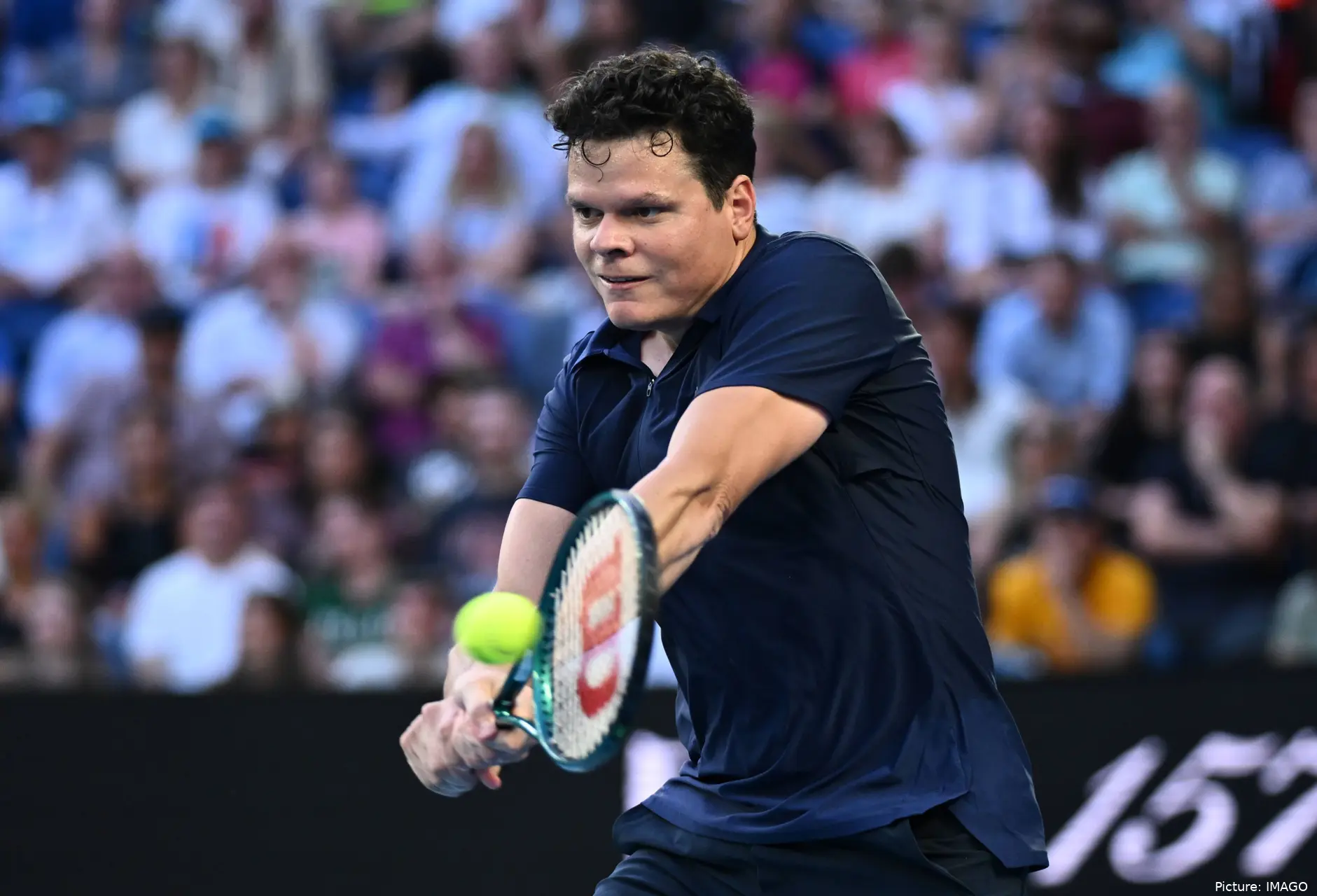
Milos Raonic offered his own explanation of why tennis players rely on routines during matches — from the ball bounces performed by Novak Djokovic to Rafael Nadal’s obsession with lining up his bottles, habits that we regularly observe among players on the Tour.
The former Wimbledon runner-up spoke about the topic in a recent interview on The Changeover podcast, where he referred to the mentality required on court to deal with negative thoughts during a match.
“I think for me, it was always behind. I always struggled with thoughts like, what could I do differently? Or oh, I wish I did that. Almost regret in a way, but in a very small sense, because it’s just a point. For me, the way around it was always routine.”
It was there that the Canadian used two of his rivals as examples: Novak Djokovic and Rafael Nadal — especially the Spaniard, well known for his characteristic movement routine before serving, which he maintained throughout much of his career. “At the end of the day, Rafa’s routine, as obvious as it was to everybody, was just something to reset,” Raonic said. “You do all those things, you check off that whole list, and suddenly: now I’m ready to play, now I’m in the moment. Now this is the only point that matters.”
“Every player is different, right? That one you had — Novak — people were counting how many times he bounced the ball. That was crazy. But that’s all it was: a way to get back to now. I’m here. I’m ready to serve. I’m ready to start this point. The past doesn’t matter, the future doesn’t matter — just now.”
The Canadian holds a 0–12 head-to-head record against Djokovic, while he faced Nadal ten times — winning two of those encounters.
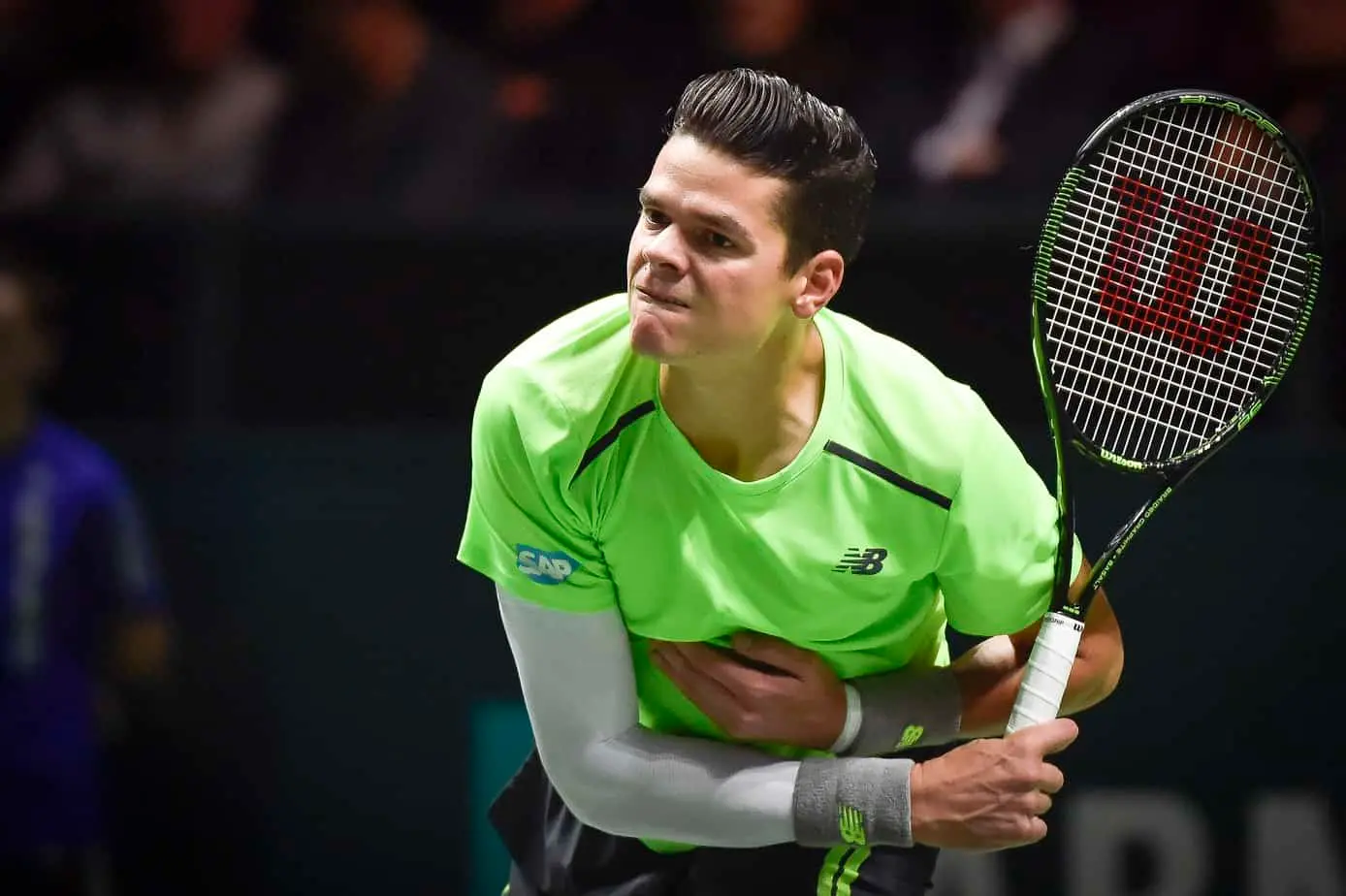
Raonic on routines: “They have to be almost automatic”
Raonic — who recently announced his retirement — added that this is a process he himself used throughout his career and that it is common at the highest level. “I think the biggest mistake — I don’t know if it’s relevant at the professional level, but especially at junior level or in the transition from juniors to pros — is that people think those routines only matter in practice, not in matches. But those things have to be done all the time. They have to be almost automatic.”
“If you’re thinking, how many times do I need to bounce the ball? Did I remember to pick that wedge? — all of that is part of a subconscious process. It gets you to that baseline of: I’m ready to play the point,” Raonic stated. “People sometimes undervalue how much that matters. Having a good attitude, not throwing your racket, forgetting the last point — that has to be done in every single practice.”

Milos Raonic at Wimbledon 2018
“Yeah. I’m not into meditation in the sense of sitting cross-legged or anything like that, but I focused a lot on breathing,” the former world No. 3 added. “Between points, I could feel if I was slowing down or if I needed more energy. Some players jump around or skip at the back of the court. That wasn’t me — mine was breathing.”
“Sometimes I was too amped up or too eager, and then I’d use a different breathing routine. I had two or three things I always knew I could do. If I wanted more intensity, I’d breathe in slower and breathe out fast. If I wanted to slow things down, I’d breathe in faster and breathe out very slowly, really elongating it.”
“That’s a way to work on your parasympathetic system, your nervous system, and try to get ahead of it with breathing. You can do that in those 20 seconds between points,” Milos Raonic added. “Obviously, the first time you try it, you’re not going to master it in 20 seconds. But if you do it all the time in practice, it becomes a habit.”
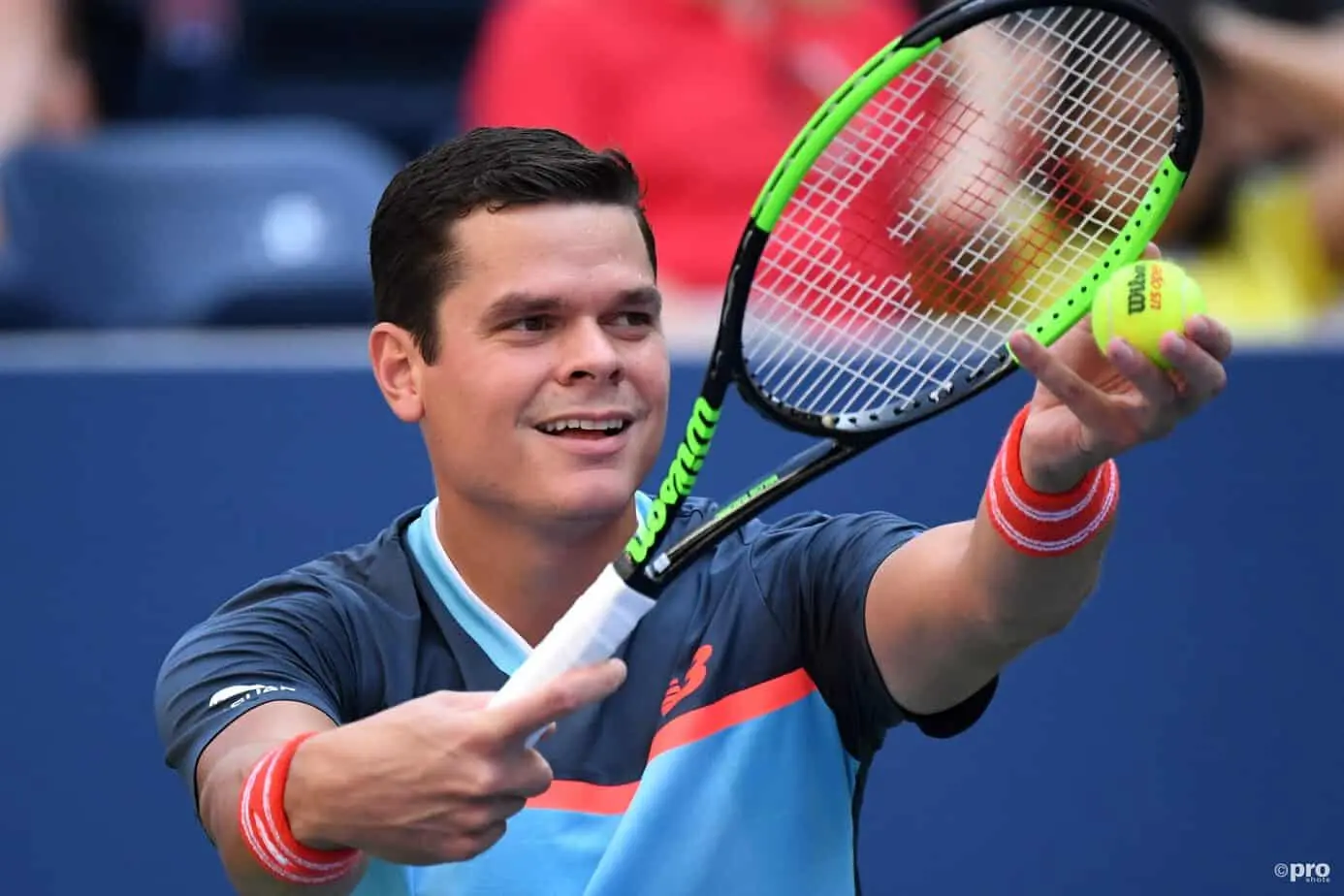
The importance of breathing
The eight-time ATP title winner and 2016 Wimbledon finalist explained that learning to maintain breathing rhythms between points was key for him in order to prepare himself in the best possible way for the next one.
“For me, it was something I did all the time, even when I wasn’t nervous. Between every point. It was the same whether I was up 40–love or down 15–40,” Raonic added. “I always knew I had to bounce the ball an even number of times — usually four or six. If I bounced it five times and noticed it, that counting itself became part of my meditation.
If I bounced it five times, I’d stop and reset. Nobody guarantees I’m going to lose or win that point, but for me, I believed that bouncing the ball an even number of times gave me the best chance to win that point. And that was it. It becomes your mindset. You do it the same way at 15–40 and at 40–love.”


Cristhián AvilaTennis Journalist
Cristhián Ávila is a tennis journalist based in Santiago, Chile, and has been part of the TennisUpToDate team since early 2023. He covers the ATP and WTA Tours as well as all four Grand Slams, producing breaking news, match reports, analysis, and regular liveblogs from major tournaments.
His reporting combines statistical analysis with clear explanation, helping readers understand tactical developments, player form, and broader storylines across the tour. Working fluently in both Spanish and English, Cristhián collaborates with an international editorial team and contributes to comprehensive global coverage. As part of his work, he has conducted interviews and media interactions with leading figures in the sport, including Caroline Wozniacki and John McEnroe.
In his journalism, Cristhián places strong emphasis on careful sourcing, editorial accuracy, and updating articles promptly when new, verified information becomes available. His coverage is grounded in research, context, and direct engagement with professional tennis.
claps 0visitors 0
Just In


Popular News
Latest Comments
- Two Things: 1. Stop allowing these Spoiled Trust-Fund Elitists to behave badly. Your little hand-slaps do not deter them. 2. STOP the incessantly annoying "towel wiping" nonsense!!!!
 mandoist15-10-2026
 - A healthy Qinwen may be hard to stop next season. She was already scaring her opponents before her medical leave(s). Unfortunately, Zheng insisted on singing again. On the positive side -- Mirra did not sing!! ;~}mandoist11-10-2026
- Where is it written that athletes, entertainers... People in general... are mandated to keep looking at -- or even using [anti]Social Media? Public & private figures consistently complain and reveal their concerns about negativity and violence thrown at them -- yet they insist on participating. Avoid it, don't use it, don't read it. It's okay to occasionally look up at the World instead beating your eyes & thumbs to death on The Inventions out there.mandoist11-10-2026
- great articlestennisseserver07-10-2026
- Medvedev was leading Djokovic 7-5, 3-5 when an attempted return..' NO you ignorants, Djokovic was leading .weiss05-10-2026
- No more bullshit "Wildcards" to these two. Qualify like everyone else -- there will be cameras there, too. Time to scream... WTF ????!!!!mandoist29-09-2026
- Let's not BS the general public -- Sabalenka started showing cracks in her game last season. Her losses and near-losses started at about the same time she began being distracted by Fame (constant Selfies, making TV commercials, magazine shoots, endless Social Media nonsense, etc., etc.) One would think even Saba could recognize the parallels with others who failed before her -- Raducanu, Giorgi, Bouchard to name a few.mandoist25-09-2026
- Gross!! Hey Raducanu, Giorgi, and Bouchard -- reserve a seat at your Social Media Selfie table for Saba + Naomi. They're heading in your direction soon enough.mandoist24-09-2026
- And then these same players will complain about how lengthy their season’s were and need more time-off. I’m all for more tennis but the amount of tennis we get now is actually kind of crazy! We all need a break, especially the players.DaveyWavey23-09-2026
- You should do a comparison article for "different kinds of justice" the courts decide for tennis players. I can think of at least three players who received very small bans of a few months, however Tara Moore has been fighting for her literal survival the past few years. It seems odd considering she is not a "name" player, unlike the other cases.DaveyWavey22-09-2026

Loading