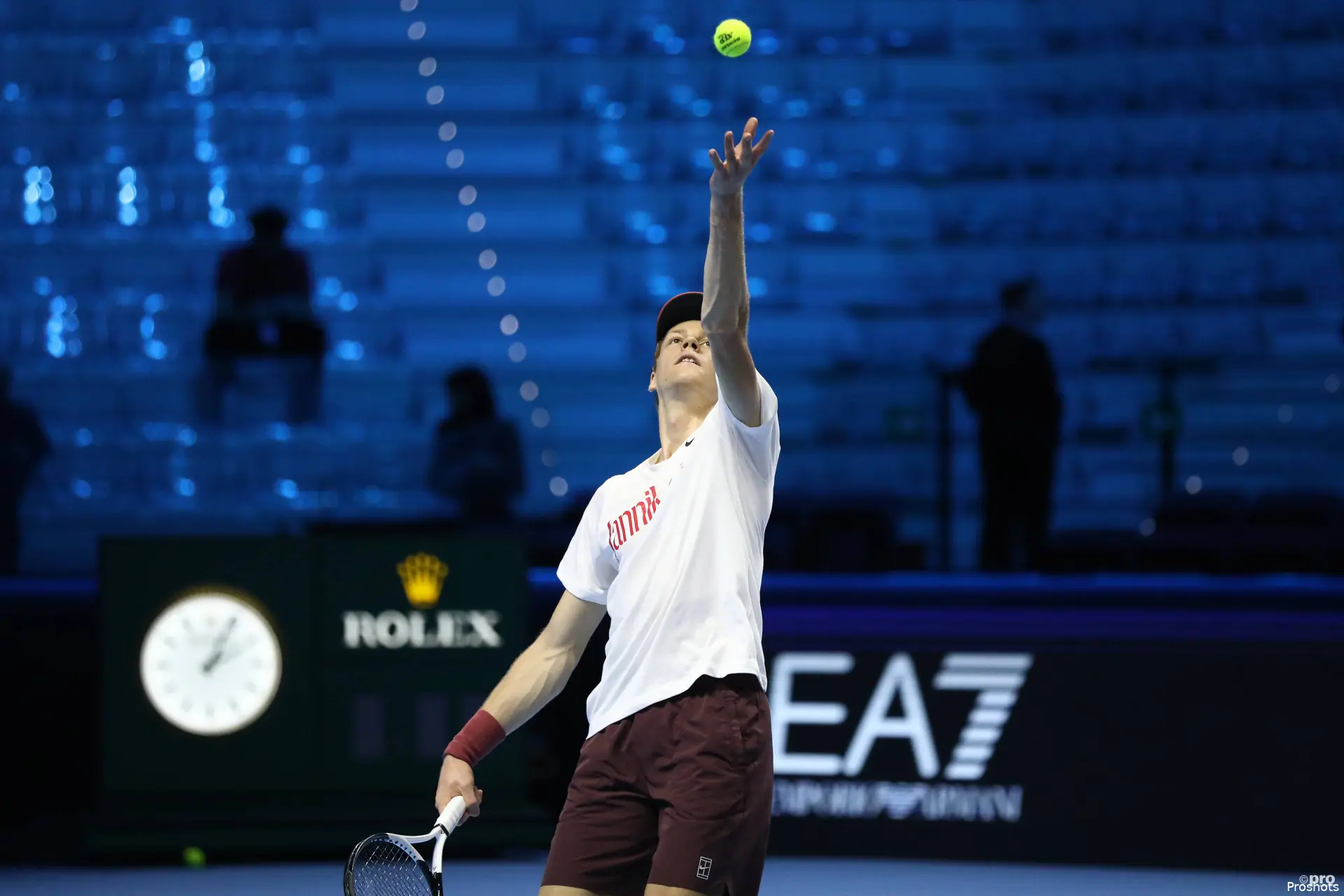
Jannik Sinner’s relationship with skiing has evolved alongside his rise at the top of professional tennis. Now the world No. 2, trailing only Carlos Alcaraz in the rankings, the Italian arrives at the early part of the 2026 season fresh off a semifinal defeat to Novak Djokovic at the Australian Open. Once a daily activity in his Alpine hometown, skiing is now something he approaches with caution, aware of how quickly an injury could derail momentum at the elite level.
Speaking to Vogue, Sinner made clear that his passion for skiing has not disappeared, but that priorities inevitably shifted as tennis became his profession. The change, he explained, began several years ago, when maturity replaced instinct. As expectations increased and his schedule filled with major tournaments, risk management became unavoidable, especially with every ranking point and appearance carrying long-term consequences.
Sinner still follows skiing closely and keeps track of Italy’s top athletes, but he accepts that participation now comes with a cost far greater than a single winter afternoon. With Doha set as his next tournament on the ATP calendar, the margin for error is minimal. Any setback away from the court could compromise preparation, continuity and positioning in a season where consistency is essential.
Tennis, by contrast, has offered him structure, discipline and a clearer sense of control. Matches provide reference points, from the scoreboard to tactical adjustments, and even allow players to manage physical output when necessary. That framework, absent in skiing, has shaped how Sinner now understands pressure and performance. While skiing once defined his competitive identity, tennis has proven better suited to longevity — even if it means sacrificing the raw adrenaline he admits he still misses.
Risk, control and competitive pressure
Sinner described his current relationship with skiing as cautious but respectful. During winter at home, the temptation remains strong, yet the awareness of potential consequences always intervenes. He acknowledged that earlier in his career, he underestimated how fragile physical momentum could be, especially once tennis became his primary profession.
“Yeah, it’s an interesting relationship. When I’m at home in the wintertime, I really love to go. But I was starting to get very, very careful four or five years ago. I had to be sure that nothing happened. I think I was not mature enough. I started to realize that injuries can happen really quickly.”
Despite stepping back, Sinner remains emotionally connected to skiing. He watches competitions, follows athletes and speaks with admiration about Italy’s strength in the discipline. Still, the calculation is unavoidable. One uncontrolled fall could undo months of training and preparation, a risk he now considers unacceptable at the elite tennis level.
The fundamental difference, he explained, lies in control. Tennis offers reference points: scores, sets, tactics and opportunities to adjust. Skiing provides none of that. Once the run begins, there is no recalibration, only commitment. That absence of feedback, he said, creates a distinct and unforgiving form of pressure.
“I would say that skiing has this different sort of pressure. You need to perform well even though you don’t really know where you’re standing. In tennis, you have a huge hand, because you always know the score… But skiing is not like this at all. You just go, and you have no idea until it’s done.”

Adrenaline, doubt and choosing tennis
What Sinner misses most from skiing is not competition or medals, but sensation. Speed, exposure and instinctive decision-making provided a thrill tennis rarely replicates. At the same time, that intensity gradually generated doubt rather than confidence, especially as mistakes carried irreversible consequences.
He explained that the pressure of knowing everything could end in one second became mentally draining. Over time, that reality diminished his enjoyment of competition, even if the physical attraction never disappeared. The adrenaline remained, but the mental cost increased. “So you have this pressure, and for me this turned into mostly, also, doubts. So I enjoyed the competition part a little bit less. But for sure I miss the adrenaline. I miss going fast.”
Sinner’s upbringing made skiing feel inevitable. The slopes were part of daily life, as natural as water is to those raised by the sea. Success came early, reinforcing a sense of belonging in the sport. Tennis, however, presented a harsher path, with no immediate rewards and far fewer guarantees.
The turning point came when Sinner struggled with the imbalance between effort and outcome. Hours, weeks and months of preparation could be erased by a single error. In tennis, he found something different: time, margin and the possibility of recovery. “You can put in a lot of time for it all to be over in one second. I really struggled to get the mentality that one mistake can cost you. In tennis, you can make one mistake after another, but maybe you’re still going to stay in the match.”
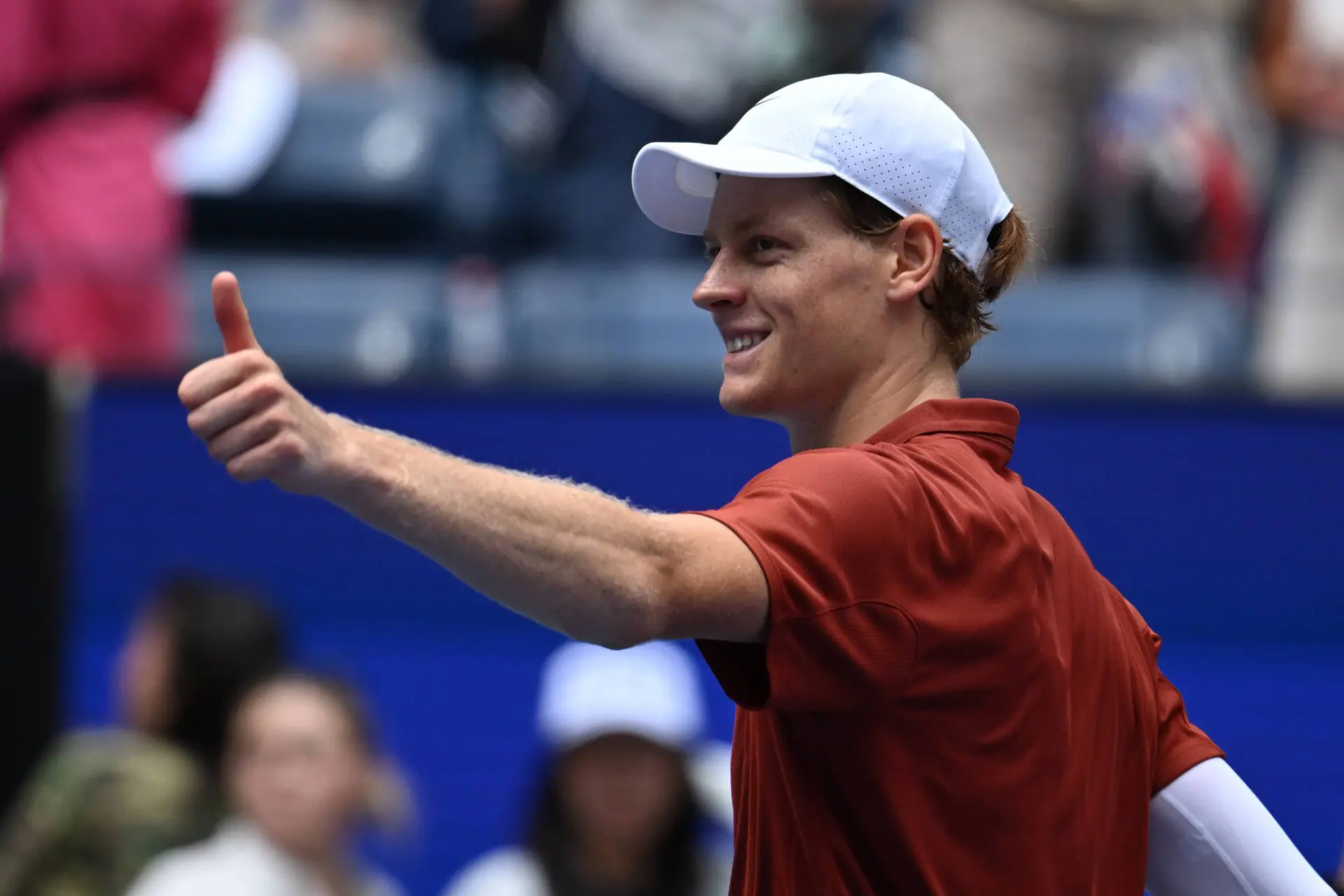
Ultimately, tennis offered Sinner a challenge he had not yet conquered. While he won frequently in skiing as a child, tennis forced him to build success from nothing. That difficulty, rather than early triumph, shaped his ambition and confirmed his path. “When I was young, I won a lot in skiing. I never won anything in tennis. I wanted to build more toward winning at something different.”

Cristhián AvilaTennis Journalist
Cristhián Ávila is a tennis journalist based in Santiago, Chile, and has been part of the TennisUpToDate team since early 2023. He covers the ATP and WTA Tours as well as all four Grand Slams, producing breaking news, match reports, analysis, and regular liveblogs from major tournaments.
His reporting combines statistical analysis with clear explanation, helping readers understand tactical developments, player form, and broader storylines across the tour. Working fluently in both Spanish and English, Cristhián collaborates with an international editorial team and contributes to comprehensive global coverage. As part of his work, he has conducted interviews and media interactions with leading figures in the sport, including Caroline Wozniacki and John McEnroe.
In his journalism, Cristhián places strong emphasis on careful sourcing, editorial accuracy, and updating articles promptly when new, verified information becomes available. His coverage is grounded in research, context, and direct engagement with professional tennis.
claps 1visitors 1
Just In

Popular News
Latest Comments
- A healthy Qinwen may be hard to stop next season. She was already scaring her opponents before her medical leave(s). Unfortunately, Zheng insisted on singing again. On the positive side -- Mirra did not sing!! ;~}
 mandoist11-10-2026
 - Where is it written that athletes, entertainers... People in general... are mandated to keep looking at -- or even using [anti]Social Media? Public & private figures consistently complain and reveal their concerns about negativity and violence thrown at them -- yet they insist on participating. Avoid it, don't use it, don't read it. It's okay to occasionally look up at the World instead beating your eyes & thumbs to death on The Inventions out there.mandoist11-10-2026
- great articlestennisseserver07-10-2026
- Medvedev was leading Djokovic 7-5, 3-5 when an attempted return..' NO you ignorants, Djokovic was leading .weiss05-10-2026
- No more bullshit "Wildcards" to these two. Qualify like everyone else -- there will be cameras there, too. Time to scream... WTF ????!!!!mandoist29-09-2026
- Let's not BS the general public -- Sabalenka started showing cracks in her game last season. Her losses and near-losses started at about the same time she began being distracted by Fame (constant Selfies, making TV commercials, magazine shoots, endless Social Media nonsense, etc., etc.) One would think even Saba could recognize the parallels with others who failed before her -- Raducanu, Giorgi, Bouchard to name a few.mandoist25-09-2026
- Gross!! Hey Raducanu, Giorgi, and Bouchard -- reserve a seat at your Social Media Selfie table for Saba + Naomi. They're heading in your direction soon enough.mandoist24-09-2026
- And then these same players will complain about how lengthy their season’s were and need more time-off. I’m all for more tennis but the amount of tennis we get now is actually kind of crazy! We all need a break, especially the players.DaveyWavey23-09-2026
- You should do a comparison article for "different kinds of justice" the courts decide for tennis players. I can think of at least three players who received very small bans of a few months, however Tara Moore has been fighting for her literal survival the past few years. It seems odd considering she is not a "name" player, unlike the other cases.DaveyWavey22-09-2026
- PRIZE MONEY & POINTS Winner - $185,500 Finalist - $114,500 Semi-Finalist - $66,003 Quarter-Finalist - $35,000 Round of 16 - $18,045 Round of 32 - $13,005 Winner - 500 Finalist - 325 Semi-Finalist - 195 Quarter-Finalist - 108 Round of 16 - 60 Round of 32 - 1DaveyWavey20-09-2026

Loading