Tennis Legends: Andy Murray - three-time Grand Slam champion who ended Britain's decades of waiting
ATP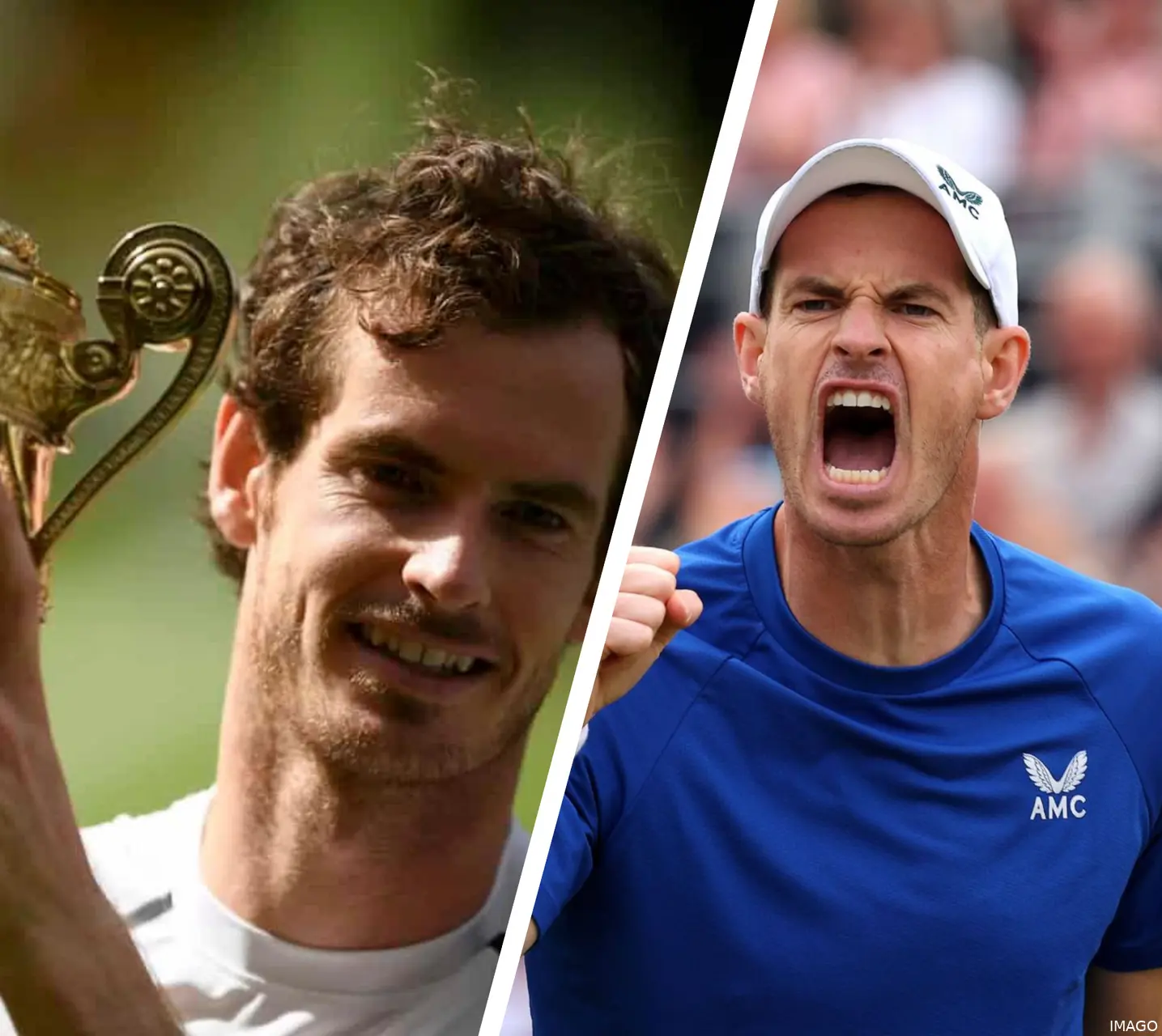
Very few tennis players have felt the weight of history like Andy Murray experienced. In Great Britain, men's tennis, despite hosting a Grand Slam, had failed for decades to produce a player to win Grand Slams.
After Fred Perry won his last Grand Slam singles title in 1936, Britain waited 76 years for another man to reach the promised land of Grand Slam glory. Murray's capture of the 2012 US Open ended decades of British hurt. Competing in the age of the three most prolific Grand Slam winners, Novak Djokovic, Rafael Nadal and Roger Federer, further validates the magnitude of Murray’s numerous achievements.
Andy Murray: Coached by his mom and at a school struck by tragedy
Born in Glasgow, on May 15, 1987, to parents Judy and Willie. The younger brother of Jamie, who has enjoyed Grand Slam doubles success. His maternal grandad, Roy Erskine, played professional football, representing clubs such as Arsenal and Hibernian.
Murray's love for tennis was fostered through his mother, a qualified tennis coach. She took Andy to his first tournament when he was just five. The Murray brothers both attended Dunblane Primary School. They were present when an unthinkable massacre occurred on March 13, 1996. A lone gunman broke into the school and killed 16 children and a teacher. The event triggered a change, brought about by parents of pupils at the school, in UK gun laws.
Murray rarely speaks about the atrocity, partly due to not understanding the full impact of it at the time, but he does mention in his autobiography Hitting Back how he used to frequent youth groups run by the perpetrator.
Relocation to Spain accelerates Murray's rise as a junior into the professional game
After his parents split at the age of 10, the brothers lived with their father and continued to be mentored in tennis by their mother. Murray, when aged 15, turned down an offer to train with Rangers Football Club. The headstrong Scot wanted to follow a pathway into elite tennis. He made the decision to relocate and join the Sanchez-Casal Academy in Barcelona.
In 2003, Murray started to compete in Challenger and Futures-level tournaments. His junior career ended on a glorious note after he claimed the US Open Junior title in 2004. This triumph led to him being named the BBC Young Sports Personality of the Year.
Murray transitioned into the professional ranks in the 2005 campaign. He became the youngest player to represent Great Britain in the Davis Cup. A main draw debut in a Grand Slam materialised at Wimbledon, losing in round three to David Nalbandian. By the end of 2005, Murray had reached his first ATP final, losing to Federer in Thailand.
Now ranked inside the top 100, less than a year after stopping junior competition, Murray continued on an upward trajectory in 2006. A maiden title was accrued when lifting the trophy at the Pacific Coast Championships in San Jose. Fourth round showings at Wimbledon and the US Open helped Murray finish inside the world's top twenty at the season's end.
Murray establishes himself as a threat to Federer/Nadal hegemony
Murray picked up a solitary title in a 2007 season truncated by an injury that forced him out of both the French Open and Wimbledon.
It was in the 2008 season where Murray developed from a promising outsider to a genuine contender who had the capacity to challenge the Federer/Nadal duopoly that was dominating men's tennis at this stage.
A run to the quarter-finals at Wimbledon was ended by Nadal before the fiery Scot reached his first Grand Slam final at the 2008 US Open, losing in straight sets to Federer. Murray became only the third male British player, after John Lloyd and Greg Rusedski, to appear in a major singles final since World War Two.
Capturing his first Masters titles in Cincinnati and Madrid emphasised Murray’s arrival as a major force. They were two of five titles he won to finish the season at number four in the world rankings, a position he became familiar with over the coming years.
The 2009 season yielded six ATP titles including further Masters glories in Miami and Montreal. He also picked up his first title at home, the Queen's Club Championships, on grass in London.
Murray was now a consistent threat at majors. A four set semi-final loss to Andy Roddick at Wimbledon particularly hurt due to being considered favourite for the match.
Murray continues to be the nearby man as Federer and Djokovic outclass him in Grand Slam finals
Murray's 2010 season commenced with a run to the Australian Open final. Federer delivered a clinic to dispatch Muzza in three sets. A second semi-final loss at Wimbledon to Nadal was then followed by a strong end to the 2010 campaign, defending his Masters title in Canada and winning another in Shanghai.
The 2011 season began like the last one, coming short in the Australian Open final. This time, it was Djokovic handing out the masterclass. Murray went on this term to amass five ATP titles, including second trophy lifts at both the Cincinnati and Shanghai Masters. For a fourth consecutive season, Murray finished the year ranked fourth in the world.
After Wimbledon heartbreak, Murray finds Olympic redemption and US Open ecstasy
After losing his first three Grand Slam finals, Murray hired eight-time Grand Slam champion Ivan Lendl as coach. It proved an inspired choice as the abrasive Lendl had little time for the surly on-court outbursts that many felt were holding Murray back. Lendl had also lost his first four major finals before winning one.
At the 2012 Wimbledon Championships, Murray became the first British man to reach a Wimbledon final in 74 years. It was Federer waiting for him. Federer, aiming for a record-equalling seventh Wimbledon crown, prevailed in a four-set final. This loss witnessed Murray break down in tears when interviewed by the BBC's Sue Barker. His public vulnerability partly thawed His relationship with the British public, which had felt a little mixed at this stage.
Just a few weeks later, on the same court, against the same opponent, Murray enjoyed revenge when producing a barnstorming display in trouncing Federer in the Olympic Games final. A hugely cathartic triumph that acted as a catalyst for giving him the belief he could beat the ‘big 3’ in five-set matches. September 2012 was the month when the 76-year wait for a British men's Grand Slam champion ended. Murray came through in a five-set US Open final over Djokovic.
Wimbledon nirvana on a sultry day in London
Murray began 2013 with a title in Brisbane before losing to Djokovic in his third Australian Open final in four years.
Trophy lifts in Miami and Queen's were a tonic for a player now rarely failing to reach the last eight of any Grand Slam.
Although Murray had ended the Grand Slam wait, Britain's sporting public are mainly centred on Wimbledon when it comes to the tennis viewing. The burden of ending a long wait for a British men's champion still weighed heavily.
He made it through to a second consecutive final and would face Djokovic on an extremely hot day in the English capital.
In an unusually long three set match, especially on grass, Murray bested the Serb in three sets to achieve his ultimate ambition and overcome the weight of a sporting nation eager for him to deliver.
This remains a British sporting landmark to sit alongside ‘Super Saturday’ at the 2012 Olympics or Torvill and Dean winning gold at the 1984 Winter Olympics. A peak BBC audience of over 17 million underlined just how much his triumph had impacted the nation.
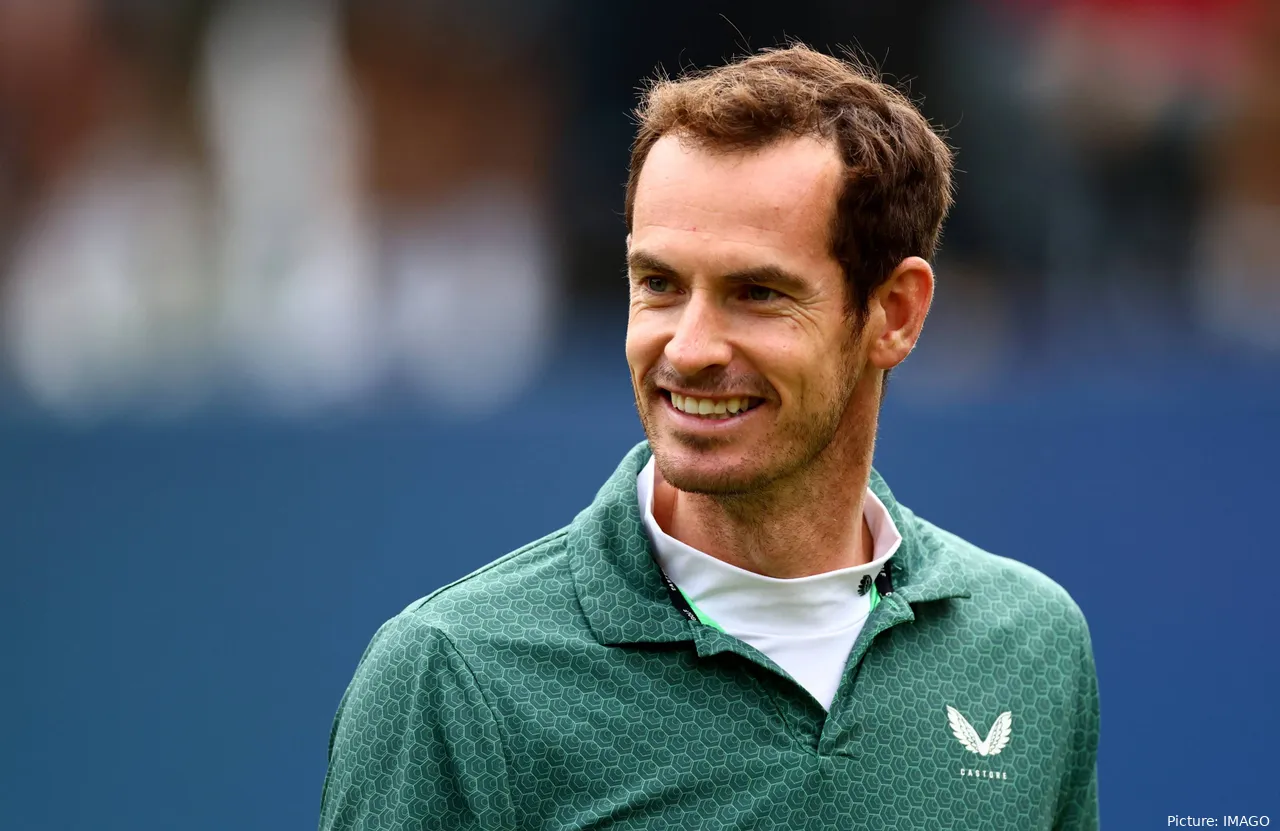
Andy Murray playing golf after his retirement from tennis
A quieter 2014 followed by another couple of stellar campaigns
Three titles in 2014, though none above the 500 level, made the campaign a solid one for Murray. He also reached a semi and three-quarters at the majors. This slight regression triggered a split with Lendl. Murray's 2015 season was highlighted by yet further rewriting of British tennis history. The Glasgow native spearheaded Britain's first Davis Cup win for 79 years.
Across Britain's four ties under the now defunct World Group format, Murray won all eight of his singles rubbers and partnered brother Jamie to win three doubles rubbers. Only a single point of the twelve required for outright glory didn't feature the British number one. It was fitting in the final, against Belgium in Ghent, that Murray clinched the winning point by virtue of a singles victory over David Goffin.
Murray lifted four ATP singles crowns in 2015, including a third Canadian Open success and a record-equaling fourth Queens Club Championships title.
The 2016 season could be regarded as Murray's finest. He pocketed a career high eight titles during the campaign, and a late-season burst enabled him to finish the term as world number one. The first half of Murray’s season was relatively quiet in terms of silverware. However, a runner-up appearance at the Australian Open for a fifth time and making his way through to a maiden French Open final maintained his lofty status. The Melbourne Slam would prove elusive. No player has ever lost more Australian Open finals without winning the title.
Like in 2013, Murray warmed up for Wimbledon by taking the honours at Queen's. This time represented a record-breaking fifth title at the West London venue. Murray then went on and completed the Queens/Wimbledon double. He beat Canadian Milos Raonic in both finals. A third Grand Slam title for Murray, who now had designs on the world number one spot.
The summer was topped off when Murray retained his Olympic title with a four-set triumph over Argentina's Juan Martin Del Potro at the Rio Olympics. Murray is the only player in Olympic tennis history to have snared two Olympic gold medals in singles.
In a prolific autumn, Murray captured a trio of trophies heading into the season-ending ATP Tour Finals in London. The number one spot was on the line between him and Djokovic. The organisers were given a final shootout between the men, and it was the home favourite that reached the summit of men's tennis. He's the only Briton, male or female, to lead the rankings.
Hip injury at Wimbledon ends Murray’s time at the very top
A hip injury during his quarter-final final defeat to Sam Querrey at the 2017 Wimbledon Championships curtailed Murray's season and would eventually lead to serious contemplation over retirement.
No player had ever overcome such an injury and returned to play singles. It's a testament to Murray's willpower and hunger for the sport that he managed a full-time return. The injury limited his playing arsenal, and he never returned to the top ten, but did add a 46th and last singles crown at the 2019 European Open.
He last competed in singles at the 2024 French Open. The impact of going through hip resurfacing surgery was that it never allowed him to be devoid of pain when playing. A farewell at Wimbledon was reduced to a doubles first-round loss with his brother. His final tournament would be the Paris Olympics, bowing out alongside Dan Evans in the quarters.
Personal life and career legacy
Murray embarked on a relationship with Kim Sears in 2005, the daughter of former player-turned-coach Nigel Sears. They married at Dunblane Cathedral in April 2015. The two have produced four children, a son and three daughters. Since retiring in 2024, Murray briefly worked with Djokovic last year as his coach. A slightly bizarre arrangement given their playing careers had run parallel to each other.
Over the years, Murray has been a three-time winner of BBC Sports Personality of the Year. In 2014, he was awarded the Freedom of Stirling. The same year, he won the Arthur Ashe Humanitarian Award. Murray's haul of three Grand Slams doesn't do sufficient justice to just how great a player he was. He competed in the greatest era of men's tennis, and his three principal rivals are at the top of the Grand Slam pile.
The Scot has also ticked off so many of the big milestones in the sport outside his treble of Grand Slams. Olympic golds, Davis Cup glory, 14 1000 wins and 41 weeks at world number one. He was a genuine member for around six to seven years of the Big Four in men's tennis with Federer, Nadal and Djokovic. He's in the all-time top ten for Grand Slam semi-finals and quarter-finals played. Only a select number have also carried such national expectation around them as Murray did, trying to erase decades of hurt. For stopping the pain, Murray is a true icon of British sport.
Andy Murray: Career Titles and Major Achievements
| Category | Achievement | Details |
| Singles Grand Slams | 3 | Wimbledon (2), US Open (1) |
| Total Grand Slams | 3 | Won 3 Singles titles; Finalist at all 4 Majors |
| Career Grand Slam | All 4 Finals | One of the few players to reach the final of all 4 Grand Slams |
| Olympic Record | 2 Gold Medals | Only male player to win two Olympic Singles gold medals (2012, 2016) |
| Davis Cup Titles | 1 | Led Great Britain to their first title in 79 years (2015) |
| World No. 1 | 2016 | Finished the 2016 season as the undisputed World No. 1 |
| ATP Masters 1000 | 14 Titles | Won 14 titles across 7 different Masters tournaments |
| ATP Finals | 1 Title | Defeated Novak Djokovic to win the year-end championships (2016) |
Andy Murray: Major Finals and Milestones
| Year | Competition / Tournament | Result | Category |
| 2006 | San Jose (SAP Open) | Winner | 1st ATP Singles Title (Defeated Lleyton Hewitt) |
| 2008 | US Open | Runner-up | 1st Grand Slam Singles Final |
| 2012 | London Olympics | Winner | 1st Olympic Gold Medal (Defeated Roger Federer) |
| 2012 | US Open | Winner | 1st Grand Slam Singles Title (Defeated Novak Djokovic) |
| 2013 | Wimbledon | Winner | 1st Wimbledon Title; ended 77-year British drought |
| 2015 | Davis Cup | Winner | 1st Davis Cup Title for Great Britain since 1936 |
| 2016 | Wimbledon | Winner | 2nd Wimbledon Title (Defeated Milos Raonic) |
| 2016 | Rio Olympics | Winner | 2nd Olympic Gold Medal; created Olympic history |
| 2016 | ATP Finals | Winner | Clinched Year-End World No. 1 ranking |
| 2019 | Antwerp (European Open) | Winner | Final ATP Title; remarkable comeback post-surgery |
| 2024 | Paris Olympics | Retired | Final professional match of a legendary career |
Samuel GillEditor-in-Chief
Samuel Gill is the Chief Content Officer (CCO) of TennisUpToDate.com, a role he has held since 2020. He is responsible for editorial governance across the platform, including setting content standards, overseeing accuracy and consistency, and guiding long-term editorial strategy. Since joining, he has contributed more than 10,000 articles and editorial pieces across the TennisUpToDate network, playing a central role in the daily operation and development of the site.
Based in Leicester, Samuel has a broad background in tennis media. In his current role, he works closely with editors and writers to ensure coverage meets clear journalistic standards, with particular attention to verification, consistency, and timely updates when new information becomes available.
claps 1visitors 1
Just In

Popular News
Latest Comments
- Does Sinner need that 4.5 mil? I doubt it. He can make that with three modelling gigs!😅🤣Rapunzel21-10-2026
- Did "People Magazine" purchase this website? This nonstop storyline is bullshit.
 mandoist21-10-2026
 - Listen... this is of no concern to anyone but these two. Deal with your own issues -- most of us have our own. Thanks, media, for these insignificant follow-ups which are meaningless.mandoist21-10-2026
- This is so very very sad, for all three of them. I truly thought they had an unbreakable bond, but life throws up so many differing challenges. Having your homeland suffering in such a terrible way, makes happiness lose out to guilt as well. Our thoughts are with them. X💔bjsexton20-10-2026
- I have lost all respect for Svitolina! Could she not have waited until he had played at the Paris Masters!!! She is selfish and don't give a damn about Gael. That is NOT how love is demonstrated Elina!!Rapunzel19-10-2026
- Perhaps convenient tennis tour sex is not a strong enough experience in which to base a marriage?mandoist19-10-2026
- Fight the Good Fight... Tennis (sports in general) need more Humans such as yourself.mandoist18-10-2026
- When is WTA going to mandate Genetic Testing (DNA) ???mandoist18-10-2026
- Hey, Dan... you just wake up from a coma? Regardless -- Thanks for the comedy this morning!mandoist18-10-2026
- Two Things: 1. Stop allowing these Spoiled Trust-Fund Elitists to behave badly. Your little hand-slaps do not deter them. 2. STOP the incessantly annoying "towel wiping" nonsense!!!!mandoist15-10-2026

Loading