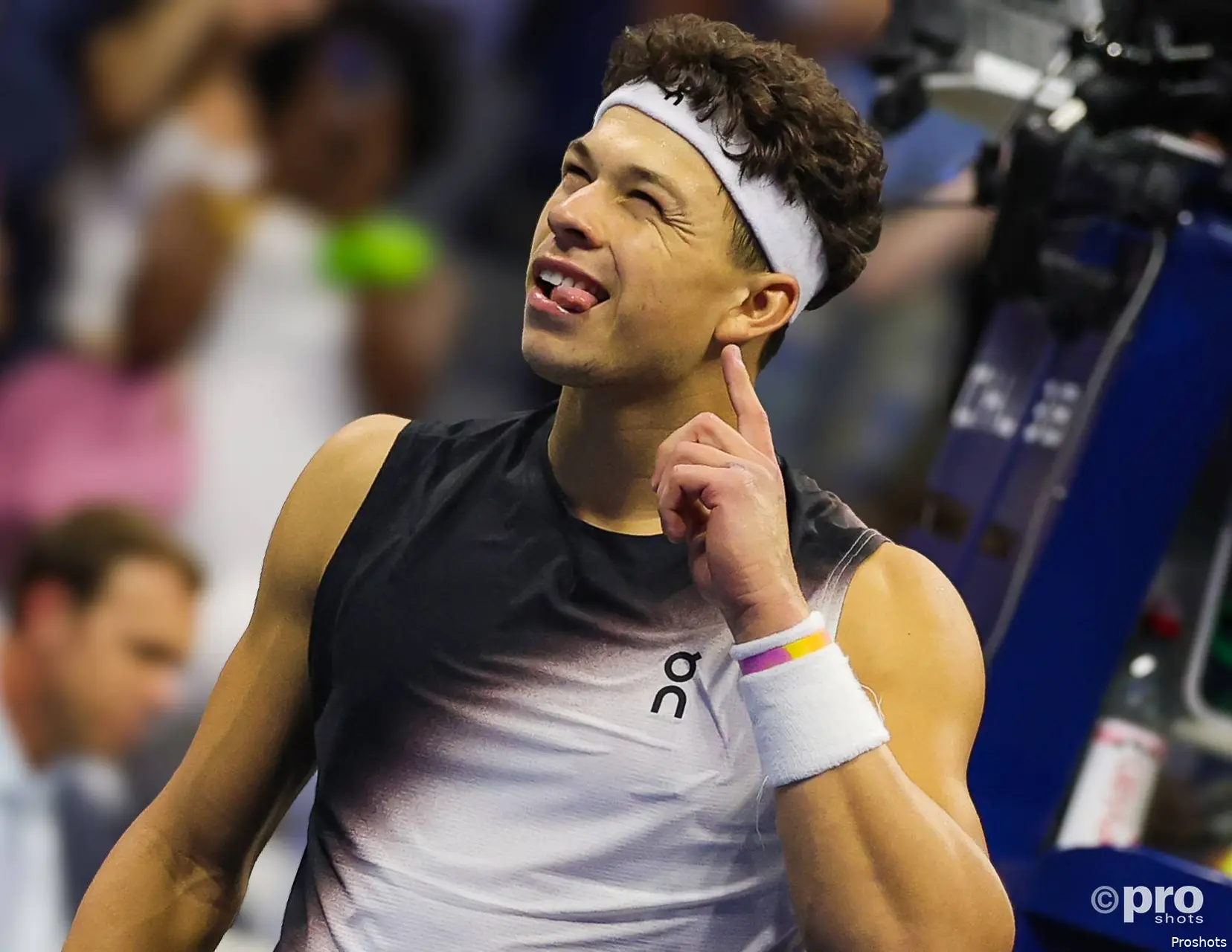
Every Grand Slam produces a champion, but the more interesting story is usually further down the draw sheet — the players whose careers pivot in ways a trophy alone can't capture. This US Open has been unusually generous on that front. Between a 3:33 a.m. classic, a new world No. 1, and a run from qualifying that nobody saw coming, five players are leaving New York in a genuinely different place than they arrived.
Elena Rybakina will leave New York as world No. 1. Ben Shelton will leave having finally beaten a top-three opponent — and the defending US Open champion. Zheng Qinwen arrived through qualifying and departed having beaten Iga Swiatek.
They aren't the only players whose careers have shifted at Flushing Meadows. Frances Tiafoe has returned to the world's top eight, while Karen Khachanov has gone from unseeded and ranked No. 50 to a Grand Slam semifinalist.
None of them needed to win the US Open to make this tournament one of the most important of their careers. Some of these shifts are immediate and measurable — a ranking jump, a career-high seeding, a guaranteed place among the tour's elite for the rest of the season. Others are more about validation than numbers: proof that a player written off weeks earlier, or questioned for years despite obvious talent, actually belongs at the level their best results always suggested they could reach. Both kinds of change are on display this fortnight.
What ties all five stories together is timing. None of these players needed to win the whole tournament for their year, or in some cases their career, to look meaningfully different by the time they left Flushing Meadows. That's usually the surer sign of a Grand Slam that mattered — not just who holds the trophy on Sunday, but how many careers were quietly rewritten on the way there.
1. Ben Shelton
Shelton's biggest result of 2026 didn't come with a trophy — it came at 3:33 in the morning, in the latest finish in US Open history. Beating defending champion Carlos Alcaraz 6-7(5), 6-1, 6-3, 1-6, 7-6(7) ended an 0-17 career record against top-3 opponents and knocked out the reigning champion in the same match, instantly making Shelton one of the tournament's new favorites. It's his third career Grand Slam semifinal and his second at this specific event.
The ranking impact is immediate. Shelton is set to move to a live world No. 4, with a chance of settling at No. 5 if Tiafoe ends up winning the title instead. He's also climbed to fourth in the ATP Race, behind only Sinner, Zverev and Alcaraz, and while he hasn't mathematically clinched a place at the ATP Finals yet, the points cushion he's built this week means Turin is now a matter of when, not if.
2. Frances Tiafoe
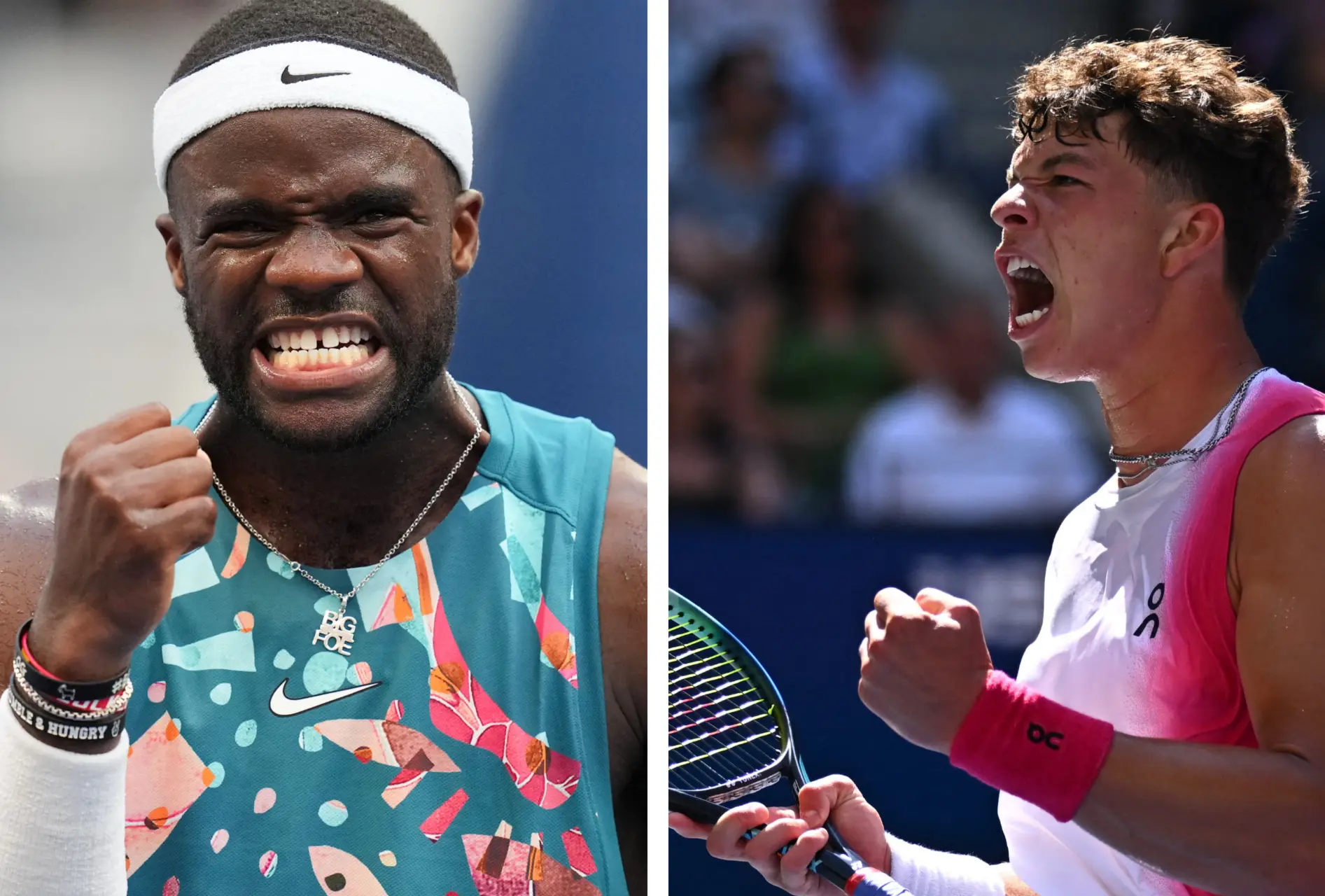
Tiafoe is back in a US Open semifinal for the third time in five years, and doing it in a season that's finally starting to look like the one his talent always promised. He arrived off a second career Masters 1000 final in Cincinnati, then beat Daniil Medvedev en route to this semifinal — the kind of win, on the biggest American stage, that suggests he's no longer just a fixture around the fringes of the top 20.
At 27, and with nearly a decade of pro tennis behind him, Tiafoe has climbed back inside the top 10, reaching a new career-best of world No. 8 heading into the semifinal. Whatever happens from here, beating one of the sport's most decorated hard-court competitors at his home Grand Slam is proof he's taken a real step forward at this stage of his career — and on US soil specifically, in the tournaments that matter most to him, he's starting to look like the kind of player who consistently raises his level rather than one who occasionally flashes it.
3. Elena Rybakina
Rybakina's tournament carries the single biggest structural change of anyone on this list: regardless of Saturday's final against Aryna Sabalenka, she is guaranteed to become the WTA's world No. 1 — only the 30th woman in history to do so, and, at 27, the second-oldest player ever to reach the top spot for the first time, behind only Angelique Kerber. It ends Sabalenka's 99-week reign at the top of the rankings.
It's also the culmination of a genuinely uneven road. More than four years on from her first Grand Slam title at Wimbledon in 2022, Rybakina has dealt with public tension around her coach Stefano Vukov, stretches of visible emotional strain, and long periods where her results didn't match the level everyone knew she was capable of. Reaching a fourth major final while claiming the ranking she's arguably deserved for years turns this fortnight into the validation her career had been missing, win or lose on Saturday.
The results that carried Rybakina to No. 1
| Date | Achievement |
| Oct 2025 | Wins the Ningbo title |
| Nov 2025 | Wins the WTA Finals undefeated (5-0), beating Sabalenka in the final |
| Jan 2026 | Wins a second Grand Slam title at the Australian Open, beating Sabalenka in the final |
| Mar 2026 | Reaches the Indian Wells final; climbs to a career-high world No. 2 |
| Sep 2026 | Reaches the US Open final, clinching the world No. 1 ranking |
4. Zheng Qinwen
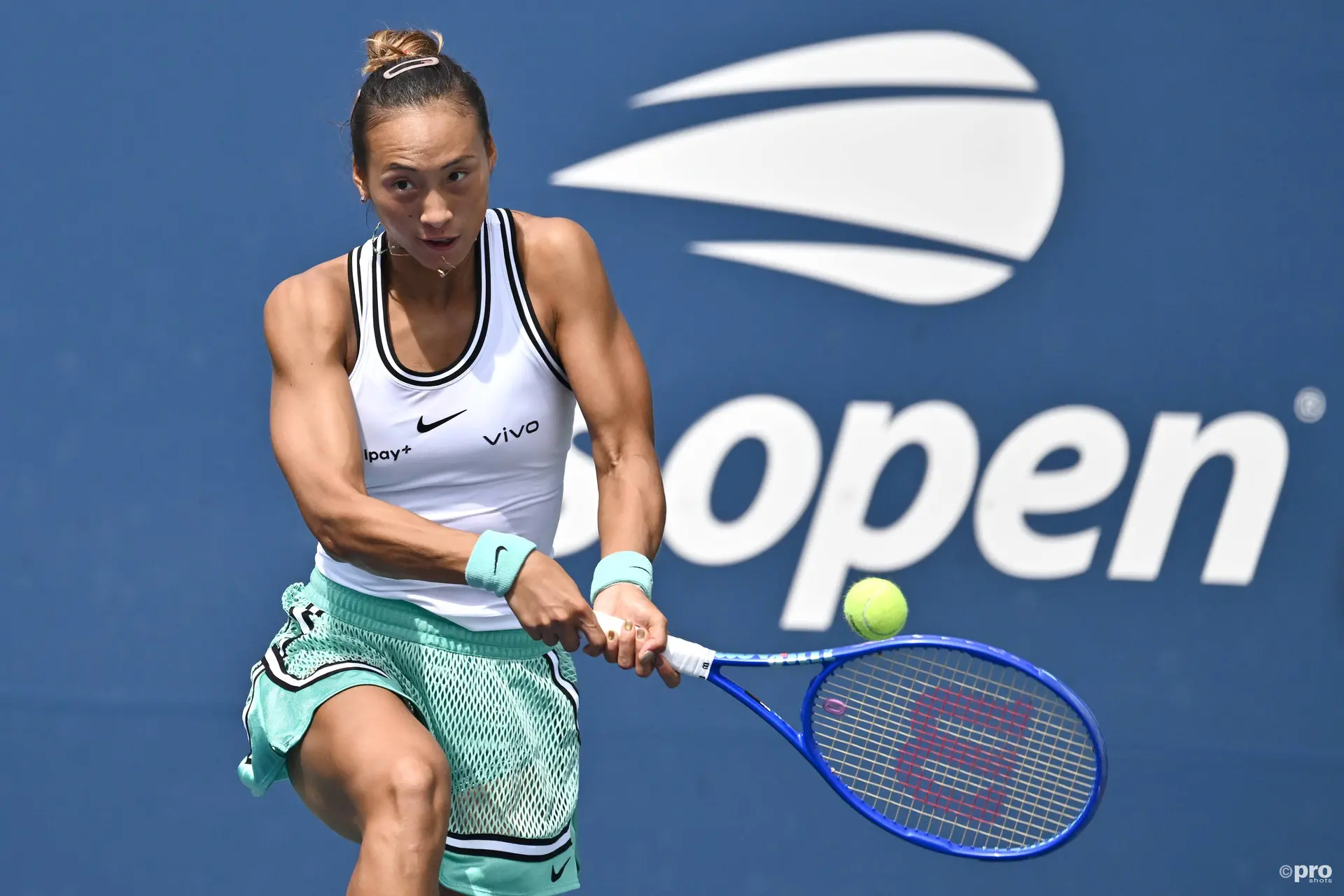
Nobody at this US Open needed a result more than Zheng. Coming through qualifying, she strung together seven consecutive wins — including victories over Madison Keys and, most strikingly, Iga Swiatek — before finally falling to the soon-to-be world No. 1 Rybakina in the quarterfinal, 3-6, 6-1, 6-4. For a player who had been unable to get into the main draw of tour-level events by ranking alone earlier this season, it's a stunning turnaround.
The ranking reward reflects it: Zheng jumped almost 70 spots to No. 52, and climbs even further in the Race, edging toward the top 40 with little left to defend for the rest of the season heading into an Asian swing where she's historically one of the most popular and dangerous players on tour. She's still only 23, an Olympic gold medalist, and this week was a reminder that a healthy, confident Zheng is a top-10 — even top-5 — level threat whenever those two conditions line up.
5. Karen Khachanov
Khachanov arrived at this US Open unseeded at a major for the first time since 2018, snapping a run of 29 consecutive seeded Grand Slam appearances, and came in with a losing record for the season at just world No. 50. None of that stopped him from putting together the best run of his year: a statement win over third seed Felix Auger-Aliassime, plus victories over Learner Tien and Alexander Blockx, carried him to his third career major semifinal — his second specifically at the US Open.
He ultimately fell to Zverev in three tight sets, 6-3, 7-6(7), 7-6(6), but the run alone lifts him back inside the world's top 30, putting him in rare company: alongside Djokovic and Medvedev, one of the very few players over 30 still occupying that part of the rankings in an era increasingly dominated by players a decade younger. For a player written off by his own ranking just two weeks ago, that's a genuinely significant reset.
Read also

None of these five stories needed a trophy to matter. A ranking jump, a validated comeback, a career-best result at 27 or 32 rather than 21 — these are the kinds of shifts that quietly reshape the rest of a season, and in some cases the rest of a career.
Whoever lifts the actual trophies this weekend, this US Open has already rewritten the immediate future for five players who will carry what happened in New York with them for a long time.
What it all adds up to
| Player | What changed | New status |
| Ben Shelton | First win over a top-3 opponent; beat defending champion | Rising to world No. 4 |
| Frances Tiafoe | Beat Medvedev to reach a third US Open semifinal | New career-high ranking, No. 8 |
| Elena Rybakina | Reached her fourth Grand Slam final | Becomes WTA world No. 1 |
| Zheng Qinwen | Ran from qualifying to the quarterfinal | Jumps to No. 52 |
| Karen Khachanov | Beat Auger-Aliassime to reach the semifinal, unseeded | Returns to the world's top 30 |

Cristhián AvilaTennis Journalist
Cristhián Ávila is a tennis journalist based in Santiago, Chile, and has been part of the TennisUpToDate team since early 2023. He covers the ATP and WTA Tours as well as all four Grand Slams, producing breaking news, match reports, analysis, and regular liveblogs from major tournaments.
His reporting combines statistical analysis with clear explanation, helping readers understand tactical developments, player form, and broader storylines across the tour. Working fluently in both Spanish and English, Cristhián collaborates with an international editorial team and contributes to comprehensive global coverage. As part of his work, he has conducted interviews and media interactions with leading figures in the sport, including Caroline Wozniacki and John McEnroe.
In his journalism, Cristhián places strong emphasis on careful sourcing, editorial accuracy, and updating articles promptly when new, verified information becomes available. His coverage is grounded in research, context, and direct engagement with professional tennis.
claps 0visitors 0
Just In

Popular News

Latest Comments
- Does Sinner need that 4.5 mil? I doubt it. He can make that with three modelling gigs!😅🤣Rapunzel21-10-2026
- Did "People Magazine" purchase this website? This nonstop storyline is bullshit.
 mandoist21-10-2026
 - Listen... this is of no concern to anyone but these two. Deal with your own issues -- most of us have our own. Thanks, media, for these insignificant follow-ups which are meaningless.mandoist21-10-2026
- This is so very very sad, for all three of them. I truly thought they had an unbreakable bond, but life throws up so many differing challenges. Having your homeland suffering in such a terrible way, makes happiness lose out to guilt as well. Our thoughts are with them. X💔bjsexton20-10-2026
- I have lost all respect for Svitolina! Could she not have waited until he had played at the Paris Masters!!! She is selfish and don't give a damn about Gael. That is NOT how love is demonstrated Elina!!Rapunzel19-10-2026
- Perhaps convenient tennis tour sex is not a strong enough experience in which to base a marriage?mandoist19-10-2026
- Fight the Good Fight... Tennis (sports in general) need more Humans such as yourself.mandoist18-10-2026
- When is WTA going to mandate Genetic Testing (DNA) ???mandoist18-10-2026
- Hey, Dan... you just wake up from a coma? Regardless -- Thanks for the comedy this morning!mandoist18-10-2026
- Two Things: 1. Stop allowing these Spoiled Trust-Fund Elitists to behave badly. Your little hand-slaps do not deter them. 2. STOP the incessantly annoying "towel wiping" nonsense!!!!mandoist15-10-2026

Loading