COLUMN - Once is a comeback, twice needs another word as Zheng Qinwen does the unthinkable again at the US Open
WTA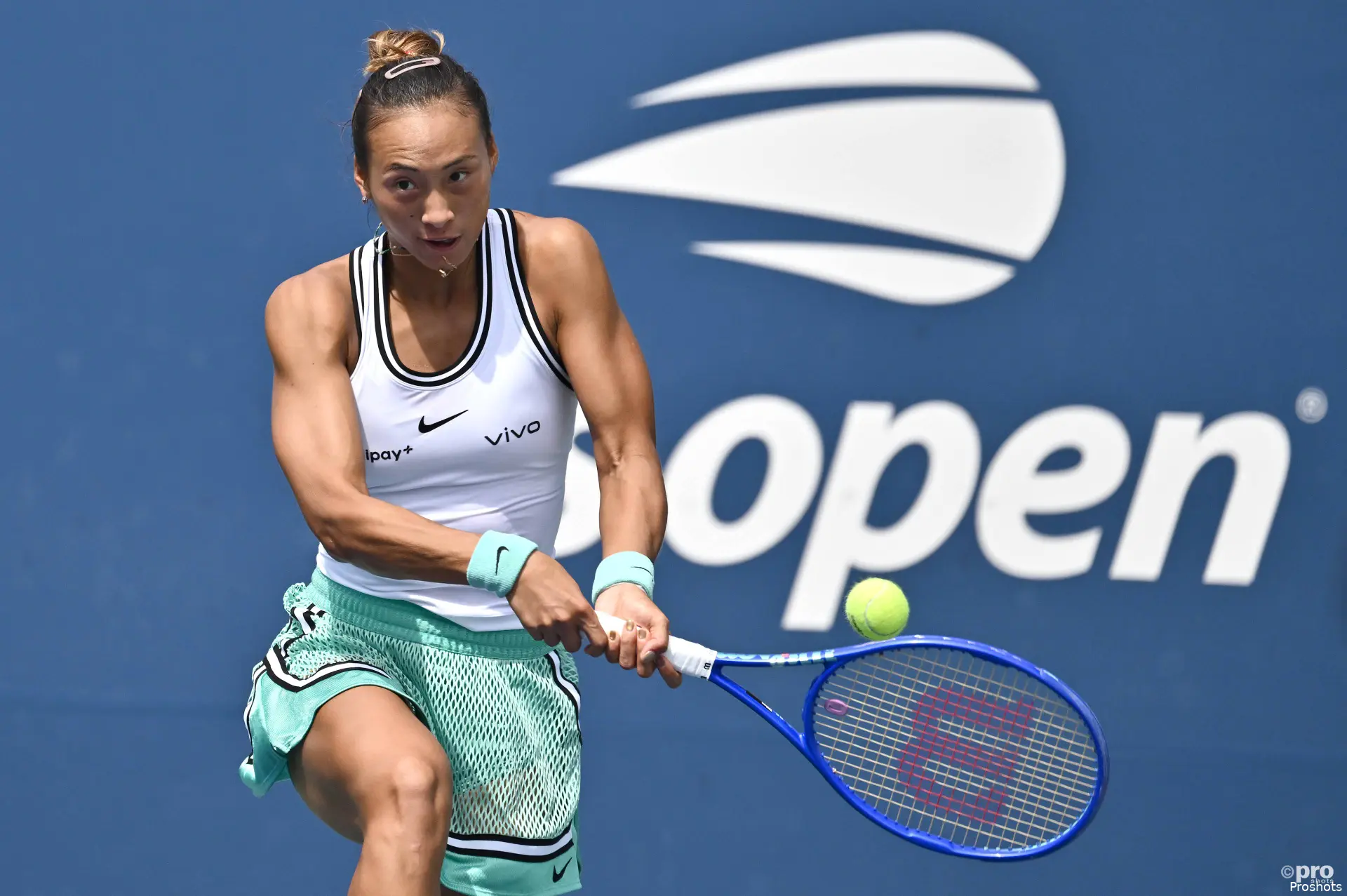
Okay. Once is a comeback. Twice needs another word. Forty-eight hours ago, Zheng Qinwen did something against Madison Keys that bordered on statistical absurdity. Down 0-5 in the third and deciding set, with Keys holding a match point and the U.S. Open seemingly seconds away from ending for her, Zheng won seven consecutive games.
Not seven games over the remainder of a long match. Seven straight games. She turned 0-5 into 7-5 and walked off the court a winner.
It was the sort of match that immediately invites two competing explanations. One is that Zheng pulled off one of the great escapes in recent Grand Slam history. The other is that Keys collapsed. There was evidence for the second interpretation. Keys was candid afterward about the nerves she felt as the finish line got closer. Her game tightened. The errors came. A match she had completely controlled somehow became a match she could no longer close.
So, fine. Call it a collapse if you want. Then explain what happened Monday. Because Zheng just did it again. This time the player across the net was Iga Świątek.
Zheng fell behind 0-5 in the first set. Again. And then she won seven consecutive games. Again. She took the set 7-5, then beat Świątek 6-3 in the second to reach the U.S. Open quarterfinals. Read those two scorelines together because I am not sure they look any less ridiculous the tenth time you see them.
Against Madison Keys: 0-5 to 7-5. Forty-eight hours later, against Iga Świątek: 0-5 to 7-5. This isn't supposed to happen.

Zheng Qinwen battles back again.
Actually, we can be considerably more precise than that. Coming back from 0-5 in a deciding set at a major is so rare that Zheng's comeback against Keys belonged to a tiny historical category before she ever stepped onto the court Monday. Then she followed it by spotting one of the greatest players of her generation five consecutive games and doing essentially the same thing again.
I have gone looking for an equivalent in women's Grand Slam tennis. I can't find one. There may be some forgotten statistical ancestor buried deep in tennis history, and I am always wary of declaring anything in a sport this old to have literally never happened. But in the Open Era, I can find no woman who has done what Zheng just did: erase a 0-5 deficit to win a set 7-5 and then, in her very next Grand Slam match, erase another 0-5 deficit to win another set 7-5. And these weren't early rounds against overmatched opponents.
These were Madison Keys and Iga Świątek. Keys is a Grand Slam champion. Świątek is a six-time major champion and a player Zheng had beaten only once before Monday. That one victory happened to be one of the defining matches of Zheng's career, when she stunned Świątek at the Paris Olympics on her way to the gold medal.
Which is why Monday matters so much. If Saturday happened in isolation, we could spend the rest of the tournament debating whether Zheng won the match or Keys lost it.
Monday effectively ends the debate. Madison Keys may have tightened. She may have contributed enormously to her own demise. But what we saw Saturday was also something happening on Zheng's side of the net. And now we know it. There is a strange psychological point in tennis when a match that appears over stops feeling over.
Usually it happens gradually. The player who is behind holds serve. Then gets a break. The crowd wakes up. The favorite starts looking at the box. A few balls that were landing inside the baseline start missing by six inches.
At 0-5, though, there normally isn't enough time for all of that. That is why 0-5 is different from 2-5 or even 1-5. The trailing player doesn't merely need to play better. She needs to be almost perfect and to get that way literally immediately. She then remain almost perfect while the person across the net gets multiple opportunities to end the set. Zheng has now navigated that situation twice in two matches. And look at what happened after the second escape. She didn't spend the second set recovering emotionally from the first. She didn't give Świątek time to reset and restore the natural order of the match.
She kept going. After losing the first five games Monday, Zheng won 13 of the final 16. Against Iga Świątek.
That is not survival. That is domination after spotting your opponent a five-game head start. And perhaps the most remarkable part of all of this is who is doing it.
Zheng isn't arriving in New York after some dominant summer in which everything has gone right. She is working her way back from the elbow problems that required surgery and derailed her career. She entered this U.S. Open ranked No. 121 in the world and had to qualify for the main draw.
Two years ago, she was an Olympic champion and one of the most exciting young stars in tennis. This year, she had to earn her way through qualifying just to get into the U.S. Open. Now she is in the quarterfinals.
There is an obvious temptation after matches like these to reach for the usual sports words. Resilience. Mental toughness. Belief. Heart. All of them apply. None of them quite explains this. Plenty of tennis players are resilient. Almost every player who reaches this level possesses extraordinary mental toughness. They have all won matches they appeared destined to lose.
They do not routinely come back from 0-5. And they certainly don't do it twice in 48 hours at a Grand Slam against two major champions.
Maybe what we are watching is something rarer. Maybe Zheng has reached the point where the score has stopped telling her what is possible.
That sounds like sportswriter mythology until you watch these two matches back-to-back. At 0-5 against Keys, she had every rational reason to believe her U.S. Open was over.
She won seven straight games. At 0-5 against Świątek, she had every rational reason to believe the first set was over. She won seven straight games.
There is something almost unsettling about a player who has stopped accepting the premise that 0-5 means what the rest of us think it means. And now imagine being Zheng's next opponent. What exactly is a safe lead? 3-0? 4-0? Apparently not 5-0. That may be the most consequential thing Zheng has accomplished over the last 48 hours. She hasn't merely reached a Grand Slam quarterfinal.
She has changed the psychology of every match she plays from here. Because once you've watched someone come back from 0-5, you know she can do it.
Read also
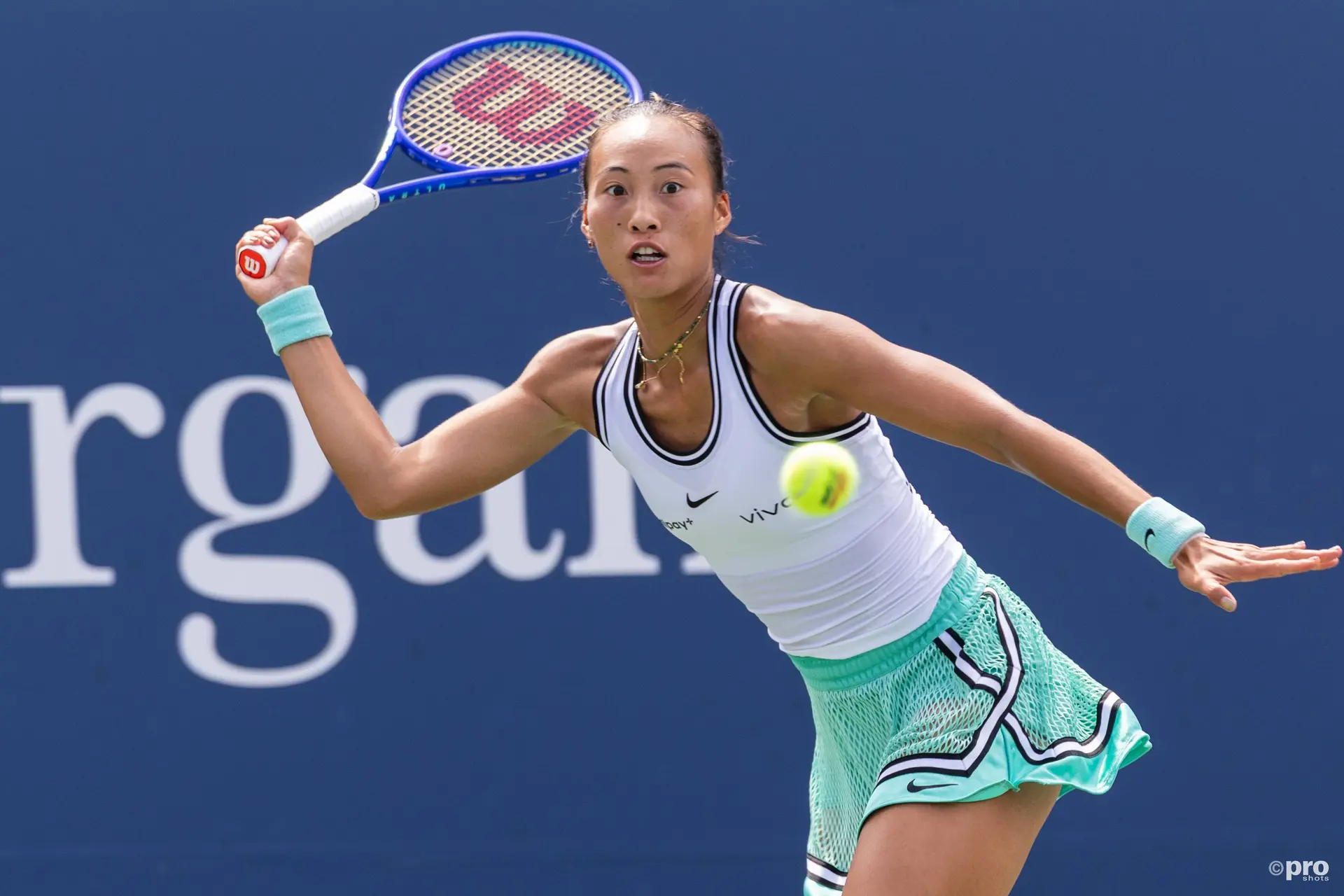

When you've watched her do it twice in consecutive matches, she knows you know. Tennis is a sport built around the accumulation of tiny advantages. One break. One loose service game. One opportunity converted at exactly the right moment.
Zheng Qinwen has spent the last 48 hours making five-game advantages look temporary. Once is a comeback. Twice is something else. And whatever we decide to call it, we may never see it again.

Aron SolomonGuest Author
A Pulitzer Prize-nominated journalist for his groundbreaking op-ed in The Independent exposing the NFL’s “race-norming” policies, Aron Solomon, JD, is a globally recognized thought leader in law, media, and strategy.
As Chief Strategy Officer for AMPLIFY, he leverages his deep expertise to shape the future of legal marketing. Aron has taught entrepreneurship at McGill University and the University of Pennsylvania and was honored as a Fastcase 50 recipient, recognizing him among the world’s top legal innovators. A prolific commentator on law, business, and culture, his insights regularly appear in Newsweek, The Hill, Crunchbase News, and Literary Hub.
He has also been featured in The New York Times, Fast Company, Fortune, Forbes, CBS News, CNBC, USA Today, ESPN, TechCrunch, BuzzFeed, Venture Beat and countless other leading global media outlets. We are proud to have Aron on board at TennisUpToDate, where his deep tennis expertise enriches the site with sharp, original columns that connect the sport to wider cultural debates.
claps 1visitors 1
Just In



Popular News

Latest Comments
- I have lost all respect for Svitolina! Could she not have waited until he had played at the Paris Masters!!! She is selfish and don't give a damn about Gael. That is NOT how love is demonstrated Elina!!Rapunzel19-10-2026
- Perhaps convenient tennis tour sex is not a strong enough experience in which to base a marriage?
 mandoist19-10-2026
 - Fight the Good Fight... Tennis (sports in general) need more Humans such as yourself.mandoist18-10-2026
- When is WTA going to mandate Genetic Testing (DNA) ???mandoist18-10-2026
- Hey, Dan... you just wake up from a coma? Regardless -- Thanks for the comedy this morning!mandoist18-10-2026
- Two Things: 1. Stop allowing these Spoiled Trust-Fund Elitists to behave badly. Your little hand-slaps do not deter them. 2. STOP the incessantly annoying "towel wiping" nonsense!!!!mandoist15-10-2026
- A healthy Qinwen may be hard to stop next season. She was already scaring her opponents before her medical leave(s). Unfortunately, Zheng insisted on singing again. On the positive side -- Mirra did not sing!! ;~}mandoist11-10-2026
- Where is it written that athletes, entertainers... People in general... are mandated to keep looking at -- or even using [anti]Social Media? Public & private figures consistently complain and reveal their concerns about negativity and violence thrown at them -- yet they insist on participating. Avoid it, don't use it, don't read it. It's okay to occasionally look up at the World instead beating your eyes & thumbs to death on The Inventions out there.mandoist11-10-2026
- great articlestennisseserver07-10-2026
- Medvedev was leading Djokovic 7-5, 3-5 when an attempted return..' NO you ignorants, Djokovic was leading .weiss05-10-2026

Loading