“There must be a reason”: The Federer connection behind Felix Auger-Aliassime’s fascinating new career move
ATP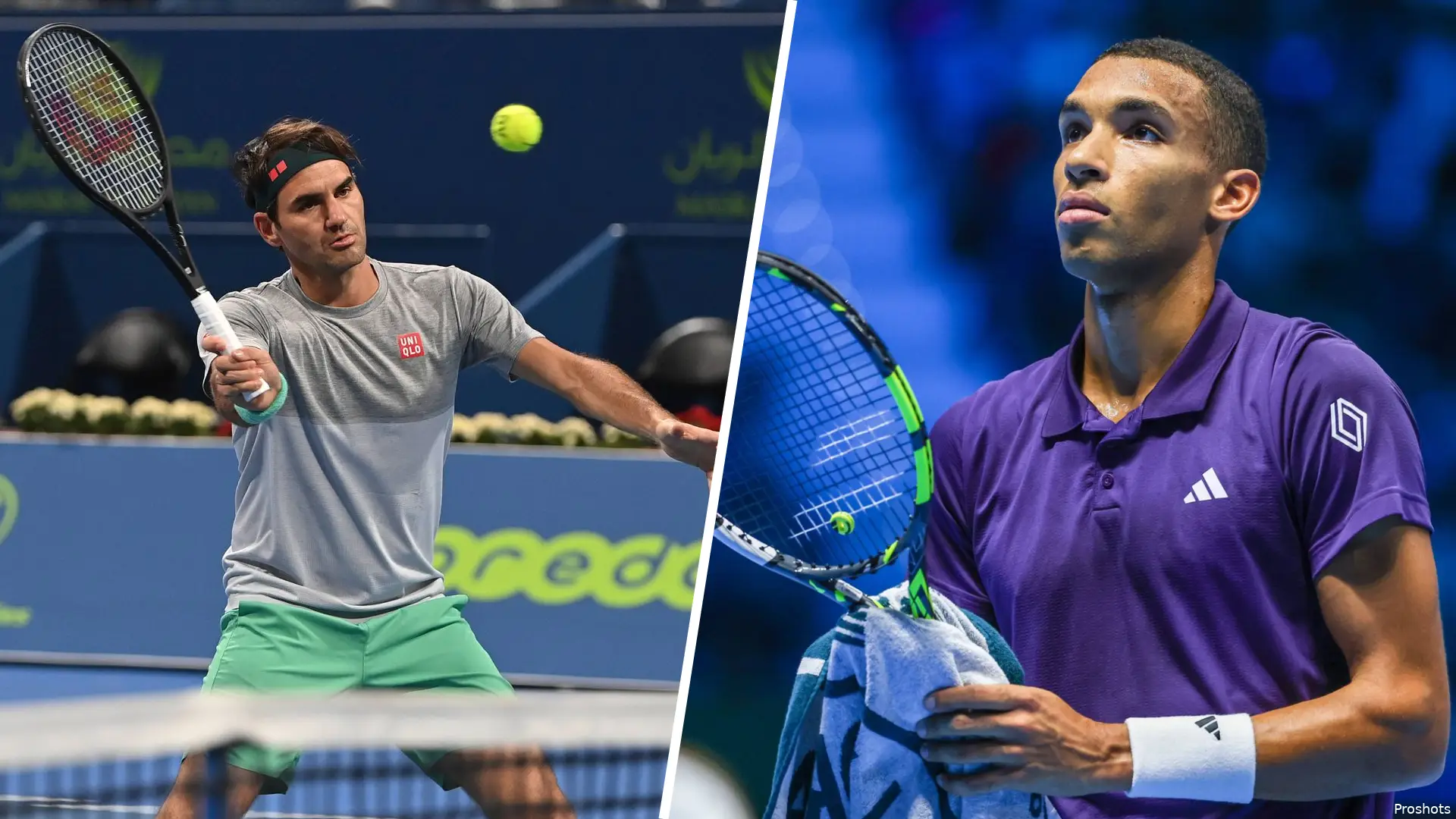
Felix Auger-Aliassime doesn't lack weapons. He's ranked fifth in the world, he hits one of the biggest serves on tour, and he's spent the better part of four years as a fixture in the top 10. What he doesn't have is a Masters 1000 title, a Grand Slam title, or, until this week, an obvious answer for why a game this complete keeps stalling at the quarterfinal stage.
On Friday he hired Ivan Ljubicic, the coach who took a 34-year-old Roger Federer and turned him back into a Grand Slam champion, and the question worth asking isn't whether Ljubicic can get Felix to a major final. It's what, exactly, he sees that nobody else has managed to unlock.
Auger-Aliassime announced the move on Instagram — "Excited to start a new chapter with Ivan. Let's get to work" — just days before his first match under the new partnership at the Shanghai Masters.
The hire fills a vacancy that's been open since July, when Felix ended his nearly decade-long relationship with Frederic Fontang right after a Wimbledon quarterfinal loss to Novak Djokovic. Since then, he hasn't reached another tour-level quarterfinal. That drought, more than the ranking itself, is the actual backdrop for this appointment.
What Ljubicic actually changed in Federer's game
The popular version of the Federer story is that Ljubicic rebuilt his backhand. Ljubicic himself has spent years politely pushing back on that framing, and the nuance matters here. What he pushed for, repeatedly and specifically, was a flatter backhand — hit through the ball rather than flicked, looped, or played high and defensive, the way Rafael Nadal's heavy topspin had neutralized Federer's backhand for a decade.
That one mechanical adjustment fed into something bigger: a Federer who took the ball earlier, shortened points, and attacked instead of absorbing pressure and waiting for an opening.
That shift arrived alongside a longer racket-head switch and a full season away from the tour rebuilding from knee surgery, so it's never been a clean experiment with one variable. But the results aren't in dispute. Federer came back from his 2016 layoff and won the 2017 Australian Open over Nadal in five sets, beat Nadal four more times that season, then added Wimbledon in 2017 and the Australian Open again in 2018 — three majors and a return to world No. 1, all built on a backhand and a court-positioning philosophy that were both measurably more aggressive than the Federer of 2013-2015.

Roger Federer kisses Australian Open trophy.
Ljubicic's own description of the job is less about technique than decision-making: getting Federer to commit to playing through Nadal's forehand rather than away from it, staying locked on the ball instead of the occasion, trusting the new shot in the moments that mattered most.
That's a coaching philosophy built around confidence and tactical clarity as much as stroke mechanics, which is worth remembering before assuming Ljubicic's plan for Felix starts and ends with a grip change.
The weapons were never the problem
Start with what Auger-Aliassime already brings to the court. His serve is one of the biggest weapons on Tour, and when it is working, it can make him extremely difficult to break. Add a forehand capable of ending points from deep behind the baseline, and the profile becomes that of a player built for exactly the kind of first-strike, take-the-initiative tennis that Ljubicic preached to Federer.
The resume backs it up in flashes. Auger-Aliassime has beaten a reigning world No. 1 — twice, against Carlos Alcaraz in 2022 — has reached two Grand Slam semifinals (US Open 2021 and 2025), and became the first Canadian man to complete the set of all four major quarterfinals when he reached the last eight at Roland Garros this June. He's a multiple-time Masters 1000 finalist. None of that happens on serve and forehand alone; there's real tactical range in his game when it's clicking.

And yet "when it's clicking" is doing a lot of work in that sentence. The same player who can blow opponents off the court for a set has also been the player who goes two full rounds without finding that version of himself, and the gap between his best tennis and his average tennis is wider than it should be for someone with his tools.
The Canadian has nine titles, all on hard courts, with eight of them coming indoors. When his serve is working, the difference is obvious and he becomes almost unbreakable. He has already established a recognized hierarchy on Tour, and behind the Alcaraz-Sinner-Zverev dominance, there is no doubt that Felix is one of the leading names in the next tier.
Why the results have never quite matched the weapons
The clearest evidence that this isn't new is Auger-Aliassime's start in tour finals: he lost his first eight, from Rio in February 2019 to Stuttgart in June 2021, without taking a single set in three of them. That's not a player who lacked the game to get to finals — he got there plenty — it's a player who couldn't consistently execute his best tennis when the stakes were highest. He broke the streak at Rotterdam in 2022 and has been much better in finals since, but the pattern resurfaced this February, when he lost another Rotterdam final to Alex de Minaur without facing a single break point.
The bigger structural gap, though, is the ceiling he hasn't reached. Nine ATP titles, multiple Masters 1000 finals, zero Masters 1000 trophies. Two Grand Slam semifinals across six years in the top 20, zero finals. For a player who serves like a top-three player and strikes the ball like one, those are results that belong to someone ranked closer to 15 than to 5 — the ranking is almost entirely a function of week-to-week consistency rather than the kind of marquee week that changes a career.

Sinner and Felix together.
Felix Auger-Aliassime — ATP finals since 2025
| Year | Tournament | Level | Surface | Opponent | Result | Score |
| Jan 2025 | Adelaide International | ATP 250 | Hard | Sebastian Korda (USA) | Win — Title | 6–3, 3–6, 6–1 |
| Feb 2025 | Open Occitanie | ATP 250 | Hard (i) | Aleksandar Kovacevic (USA) | Win — Title | 6–2, 6–7(7), 7–6(2) |
| Feb 2025 | Dubai Tennis Championships | ATP 500 | Hard | Stefanos Tsitsipas (GRE) | Loss | 3–6, 3–6 |
| Oct 2025 | European Open | ATP 250 | Hard (i) | Jiri Lehecka (CZE) | Win — Title | 7–6(2), 6–7(6), 6–2 |
| Nov 2025 | Paris Masters | ATP 1000 | Hard (i) | Jannik Sinner (ITA) | Loss | 4–6, 6–7(4) |
| Feb 2026 | Rotterdam Open | ATP 500 | Hard (i) | Alex de Minaur (AUS) | Loss | 3–6, 2–6 |
| Feb 2026 | Open Occitanie | ATP 250 | Hard (i) | Adrian Mannarino (FRA) | Win — Title | 6–3, 7–6(4 |
A technical fix, or an identity change?
The honest answer is that nobody outside Auger-Aliassime's team knows yet. But Ljubicic's work with Federer suggests that a complete technical overhaul is unlikely. He did not rebuild Federer's game from scratch. Instead, he made a specific adjustment to his backhand and, more importantly, helped him trust a more aggressive style. With Felix, the focus may be less on changing his serve or forehand and more on what happens after those first shots.
There is also the example of Milos Raonic, another big-serving North American who worked with Ljubicic. Raonic reached a career-high No. 3 ranking and the Wimbledon final in 2016 during their partnership. That experience gives Ljubicic another reference point when working with a player whose biggest weapons are already clear.
That does not mean the solution will be purely technical. Auger-Aliassime has already shown that he can produce elite-level tennis. The bigger question is whether he can maintain that level when matches become tight and the pressure increases. His record in finals and his occasional dips during matches suggest that confidence, decision-making and consistency could be just as important as any technical adjustment.
What Shanghai — and the rest of 2026 — will actually tell us
The first test comes immediately in Shanghai. Auger-Aliassime reached the quarterfinals there last year before losing to Arthur Rinderknech, and the tournament gives Ljubicic an early opportunity to see his new player in a competitive environment. There should be no expectation of an instant transformation, especially after such a long partnership with Fontang.
The more important evidence will come over the following weeks. Auger-Aliassime has already shown that he can go deep at the biggest tournaments, but the challenge is doing it more often. Another run to the later stages of a Masters 1000, or a strong finish against top-10 opposition, would give an early indication of whether the new partnership is helping him turn his weapons into bigger results.
Read also
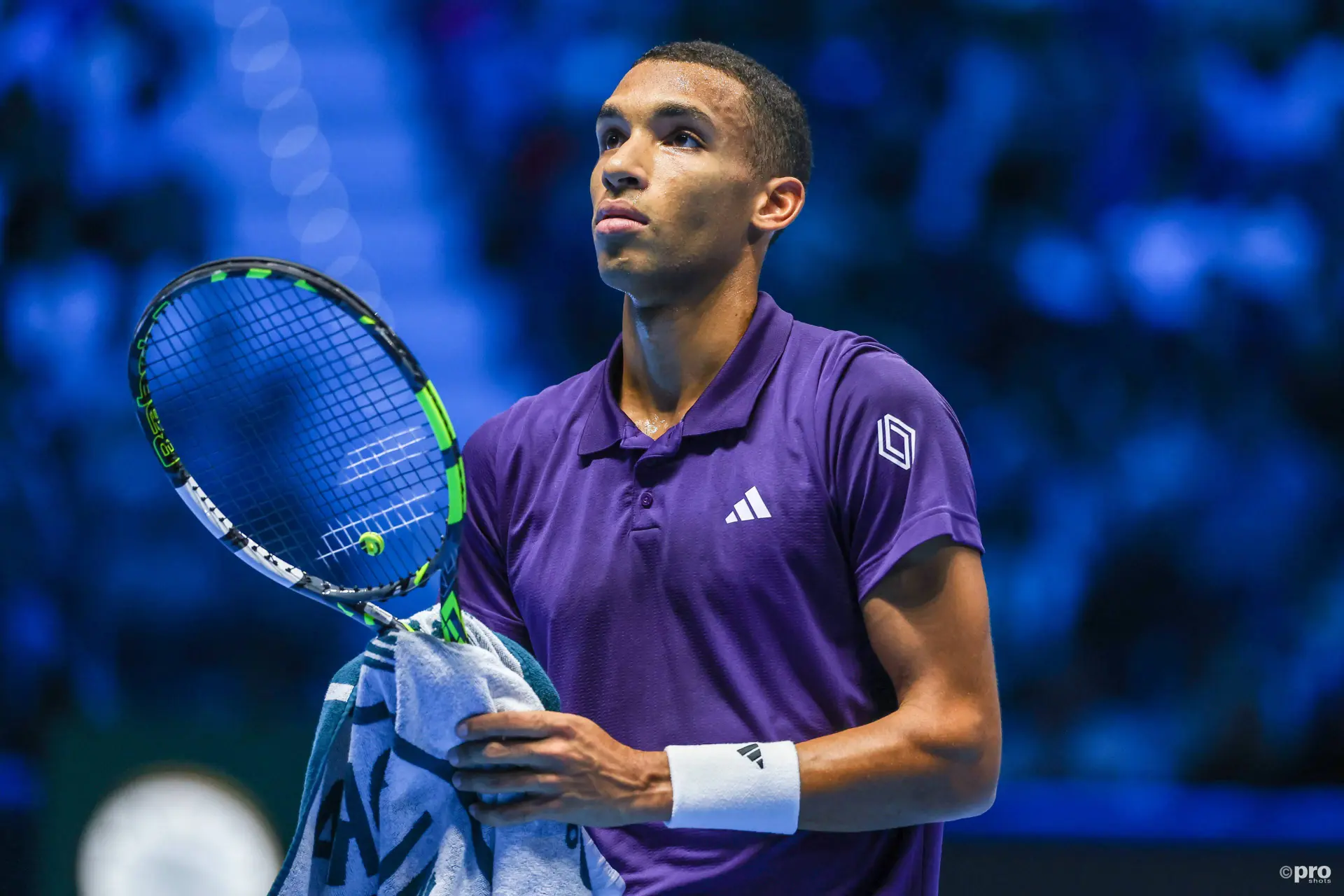
That is what makes the appointment interesting. Ljubicic is not arriving to give Felix a completely new game. He is taking over a player who already has a huge serve, a powerful forehand, nine ATP titles and two Grand Slam semifinals.
It will be a challenging period either way. Auger-Aliassime is defending a significant number of ranking points over the coming weeks, meaning his place in the top 10 could come under pressure if he does not produce results quickly.
It is difficult to know whether early exits would have any impact on the new partnership, but the pressure is not necessarily coming from Ljubicic. This is the part of the season where Felix has traditionally been at his best, and he will need some deep runs quickly to match the expectations created by his indoor record.

Cristhián AvilaTennis Journalist
Cristhián Ávila is a tennis journalist based in Santiago, Chile, and has been part of the TennisUpToDate team since early 2023. He covers the ATP and WTA Tours as well as all four Grand Slams, producing breaking news, match reports, analysis, and regular liveblogs from major tournaments.
His reporting combines statistical analysis with clear explanation, helping readers understand tactical developments, player form, and broader storylines across the tour. Working fluently in both Spanish and English, Cristhián collaborates with an international editorial team and contributes to comprehensive global coverage. As part of his work, he has conducted interviews and media interactions with leading figures in the sport, including Caroline Wozniacki and John McEnroe.
In his journalism, Cristhián places strong emphasis on careful sourcing, editorial accuracy, and updating articles promptly when new, verified information becomes available. His coverage is grounded in research, context, and direct engagement with professional tennis.
claps 0visitors 0
Just In


Popular News
Latest Comments
- Does Sinner need that 4.5 mil? I doubt it. He can make that with three modelling gigs!😅🤣Rapunzel21-10-2026
- Did "People Magazine" purchase this website? This nonstop storyline is bullshit.
 mandoist21-10-2026
 - Listen... this is of no concern to anyone but these two. Deal with your own issues -- most of us have our own. Thanks, media, for these insignificant follow-ups which are meaningless.mandoist21-10-2026
- This is so very very sad, for all three of them. I truly thought they had an unbreakable bond, but life throws up so many differing challenges. Having your homeland suffering in such a terrible way, makes happiness lose out to guilt as well. Our thoughts are with them. X💔bjsexton20-10-2026
- I have lost all respect for Svitolina! Could she not have waited until he had played at the Paris Masters!!! She is selfish and don't give a damn about Gael. That is NOT how love is demonstrated Elina!!Rapunzel19-10-2026
- Perhaps convenient tennis tour sex is not a strong enough experience in which to base a marriage?mandoist19-10-2026
- Fight the Good Fight... Tennis (sports in general) need more Humans such as yourself.mandoist18-10-2026
- When is WTA going to mandate Genetic Testing (DNA) ???mandoist18-10-2026
- Hey, Dan... you just wake up from a coma? Regardless -- Thanks for the comedy this morning!mandoist18-10-2026
- Two Things: 1. Stop allowing these Spoiled Trust-Fund Elitists to behave badly. Your little hand-slaps do not deter them. 2. STOP the incessantly annoying "towel wiping" nonsense!!!!mandoist15-10-2026

Loading