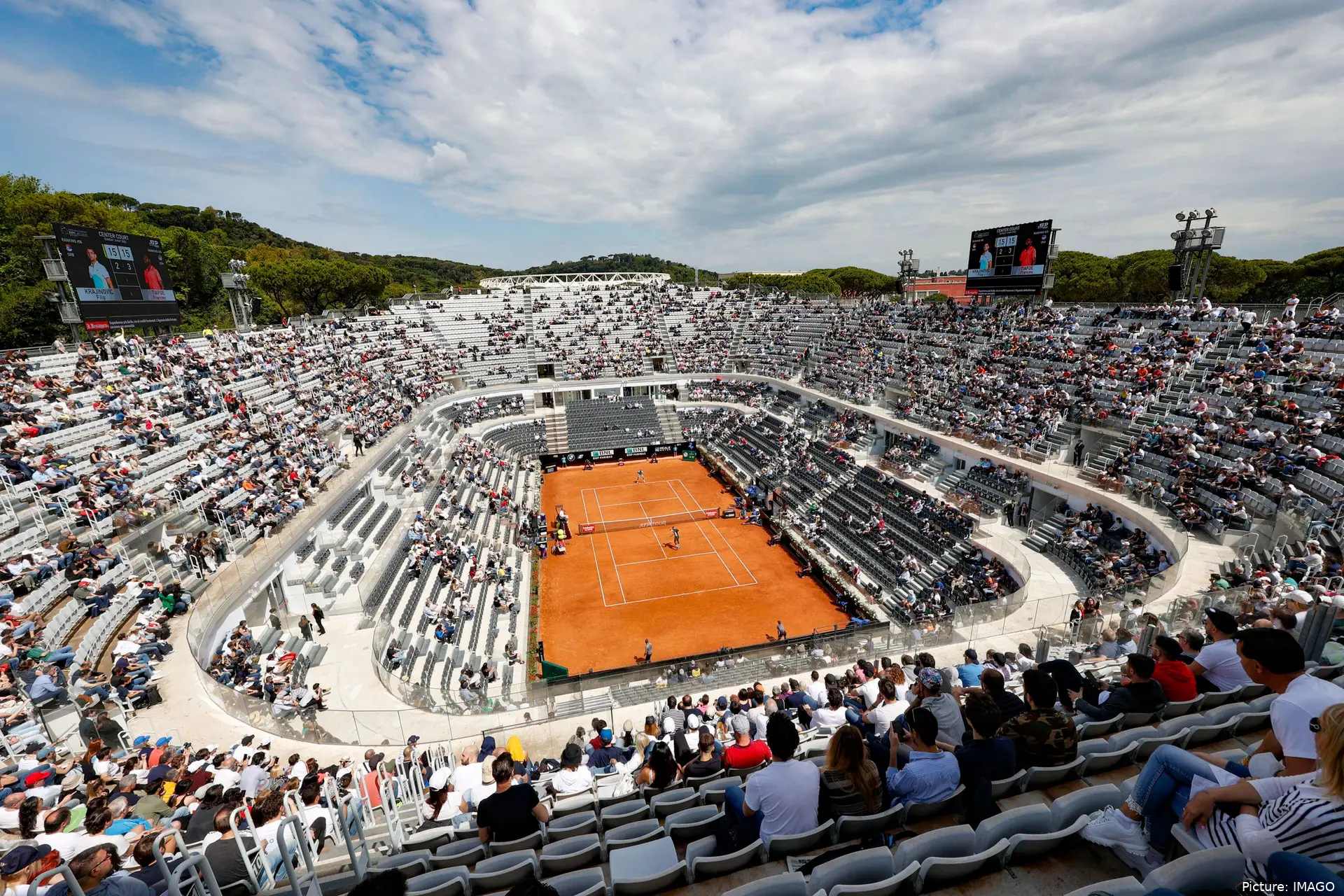
The US Open introduced a new kind of commercial partner in August 2026 when it signed an agreement with prediction-market operator Kalshi. On 15 October, the International Tennis Integrity Agency (ITIA) announced a 24-year ban for a player involved in match-fixing.
The offences behind the ban predate the partnership and aren't connected to Kalshi. The timing has brought tennis's commercial relationships and integrity controls into the same discussion.
What Kalshi's US Open agreement covers
The United States Tennis Association named Kalshi the tournament's first Official Prediction Market Partner on 31 August. The exclusive, multi-year agreement began with the 2026 singles main draw and included visibility across US Open digital platforms and on-court signage.
Kalshi also outlined plans to use market data in tournament coverage, including previews and round-ups. Event contracts let traders take positions on the outcome of a match or competition, with prices changing as people buy and sell. Those prices reflect activity in a market, rather than an assessment made by tennis officials.
The USTA didn't publish the financial value of the agreement.
Another lengthy ban puts match-fixing back in focus
Serbian player Stefan Milićević was suspended for 24 years and fined $70,000 following an ITIA investigation. The agency said he fixed six matches, attempted to fix six more and tried to recruit other professionals between 2022 and 2024. His suspension runs until 8 October 2050.
The case follows other substantial sanctions. In our earlier report on Quentin Folliot's 20-year ban, we covered the French player's involvement in a wider fixing network and his attempts to bring other players into it.
Neither case involved Kalshi or the US Open agreement.
How tournament advertising reaches fans
Kalshi's name reached tennis fans through tournament signage and official coverage. Away from the US Open, customer offers such as a Kalshi sign up bonus advertise the company's trading platform more directly. Those promotions have their own eligibility conditions and aren't part of the USTA agreement.
For tennis organisers, selling advertising space is only one part of working with a prediction-market company. They also have to decide which outcomes can be traded and what information can be shared if unusual activity is detected.
What the new integrity arrangements include
The USTA and Kalshi announced specific safeguards as part of the partnership. Three details are particularly relevant to professional tennis.
Restrictions on sensitive outcomes
The partners said markets involving umpire decisions, player injuries and code violations would be restricted. Such events may involve information or decisions that aren't available to everyone at the same time.
Sharing trading information
Kalshi said it had signed a confidential data-sharing agreement with the ITIA to support real-time market surveillance. The arrangement could help investigators examine unusual trading patterns, although the full operational details haven't been published.
Existing player rules
The ITIA continues to investigate breaches of tennis's anti-corruption programme, irrespective of which commercial partners a tournament signs. The Milićević and Folliot cases were handled through those existing processes, not the new US Open agreement.
Player abuse remains a separate concern
Players also deal with anger from people who have lost money on their matches. Katie Boulter has spoken about abusive messages referencing gambling, while Elina Svitolina publicised threats following her defeat to Naomi Osaka in Montreal in August 2025.
As per this article on gambling-related abuse, monitoring company Signify said angry gamblers accounted for 40% of the abusive messages detected during the period it examined. Its work with tennis authorities uses technology to identify threats and other harmful messages.
Abusive messages and match manipulation aren't the same offence. Monitoring trading activity may help identify possible corruption, but it can't replace action against harassment or the support players need after receiving threats.
What tennis can assess next
The US Open partnership established a commercial relationship and set out safeguards for a growing type of sports market. The October sanction showed that investigators are still dealing with serious fixing cases involving earlier seasons.
The USTA has outlined its restrictions and Kalshi has confirmed an information-sharing agreement with the ITIA. Greater detail about how suspicious trades are identified and examined would allow those safeguards to be judged beyond the partnership announcement.

Samuel GillEditor-in-Chief
Samuel Gill is the Chief Content Officer (CCO) of TennisUpToDate.com, a role he has held since 2020. He is responsible for editorial governance across the platform, including setting content standards, overseeing accuracy and consistency, and guiding long-term editorial strategy. Since joining, he has contributed more than 10,000 articles and editorial pieces across the TennisUpToDate network, playing a central role in the daily operation and development of the site.
Based in Leicester, Samuel has a broad background in tennis media. In his current role, he works closely with editors and writers to ensure coverage meets clear journalistic standards, with particular attention to verification, consistency, and timely updates when new information becomes available.
claps 0visitors 0
Just In

Popular News
Latest Comments
- I, like writer of this wonderful article, also picked Noskova to win this entire thing. I would love it if she and Andreeva are in the final.Rapunzel12-11-2026
- "Priorities", Saba... spend less time in front of cameras, anti-Social Media, selfies and back to Tennis.
 mandoist12-11-2026
- Tell this to Andreeva!mandoist12-11-2026
- Andreeva with 11 games in a row to add to Saba's downward spiral issue !!! Personal feelings aside... Jess Pegula may want to reassess her evaluation of Mirra's abilities.mandoist12-11-2026
- I predicted whenthe list was finalised that Linda Noskova would win the WTA Finals and her matches against Gauff and Kostyuk prove that. She is the best (underrated) player in the world!Rapunzel11-11-2026
- Either Lena has a chronic internal ailment (i.e., colitis, enteritis, Crohn's, or some type of lower abdomen issue) -- or she is once again dealing with 'Vukovitis'. Mental stress can indeed cause lower body pains. No matter... whatever is truly going on sucks. "Virus" excuse is getting a bit old -- and often -- at this point.mandoist09-11-2026
- Ironically, Martina became a U.S. Citizen about the same time as the Orange Convicted Felon & Abuser was just beginning on his road to losing all Daddy's Millions!!mandoist09-11-2026
- "Another fresh start is in the cards." Thanks for the Humor!! I'm guessing this is the minimum one can do to keep all your sponsors hanging-on in perpetuity?mandoist09-11-2026
- Vukov is doing this to Lena... AGAIN!!!!! WTA's autonomous collective should be dismantled for allowing Vukov to re-emerge from his hand-slapping suspension. Just ask WTA employees how that's been going lately as they witness his continued verbal abuses. Women's Pro Tennis should start over.mandoist08-11-2026
- Can't help but suspect Vukov is back to his old self again. Thank you, WTA. Perhaps you can give them a "Battling Couple of the Year Award 2026" ??mandoist08-11-2026
