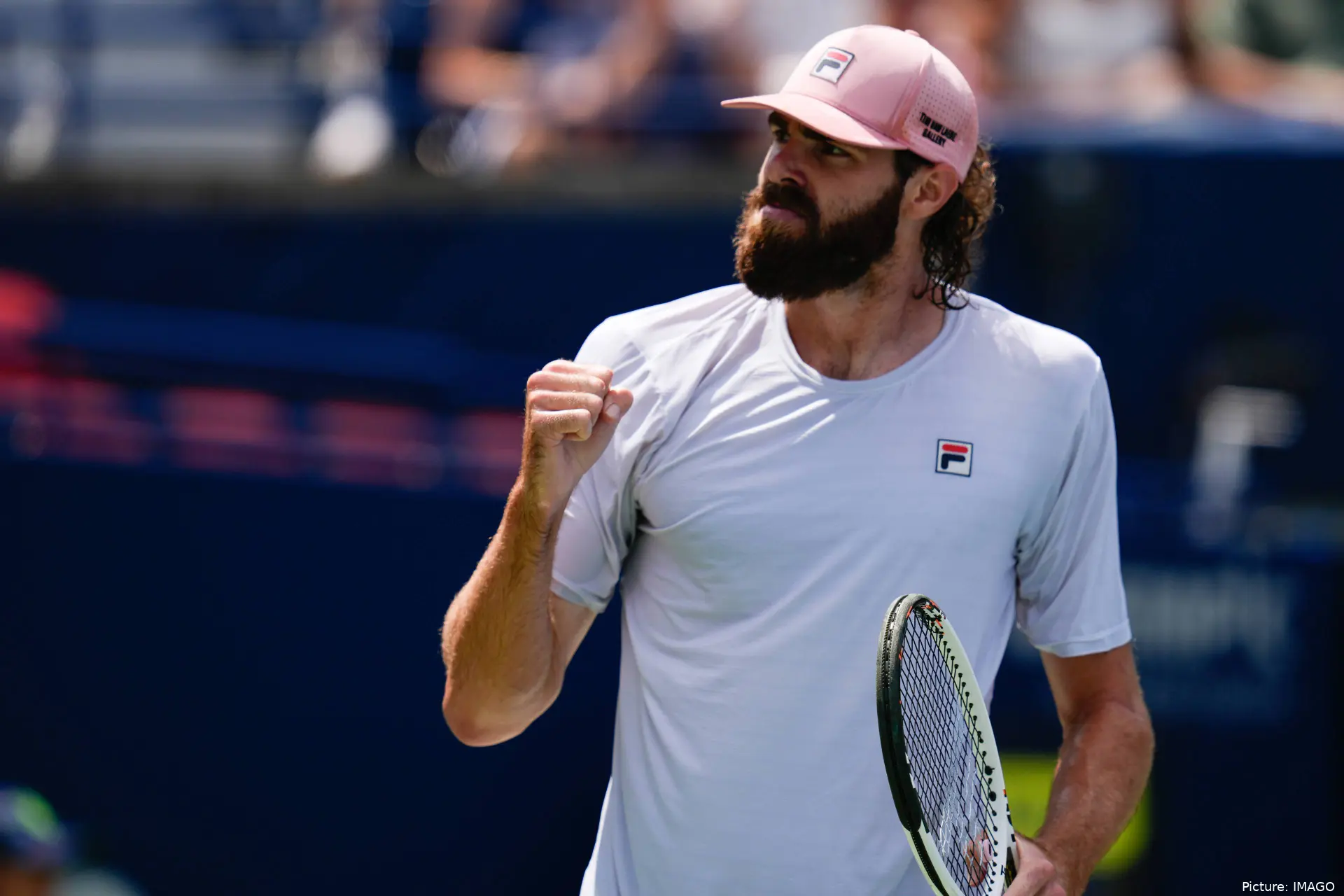
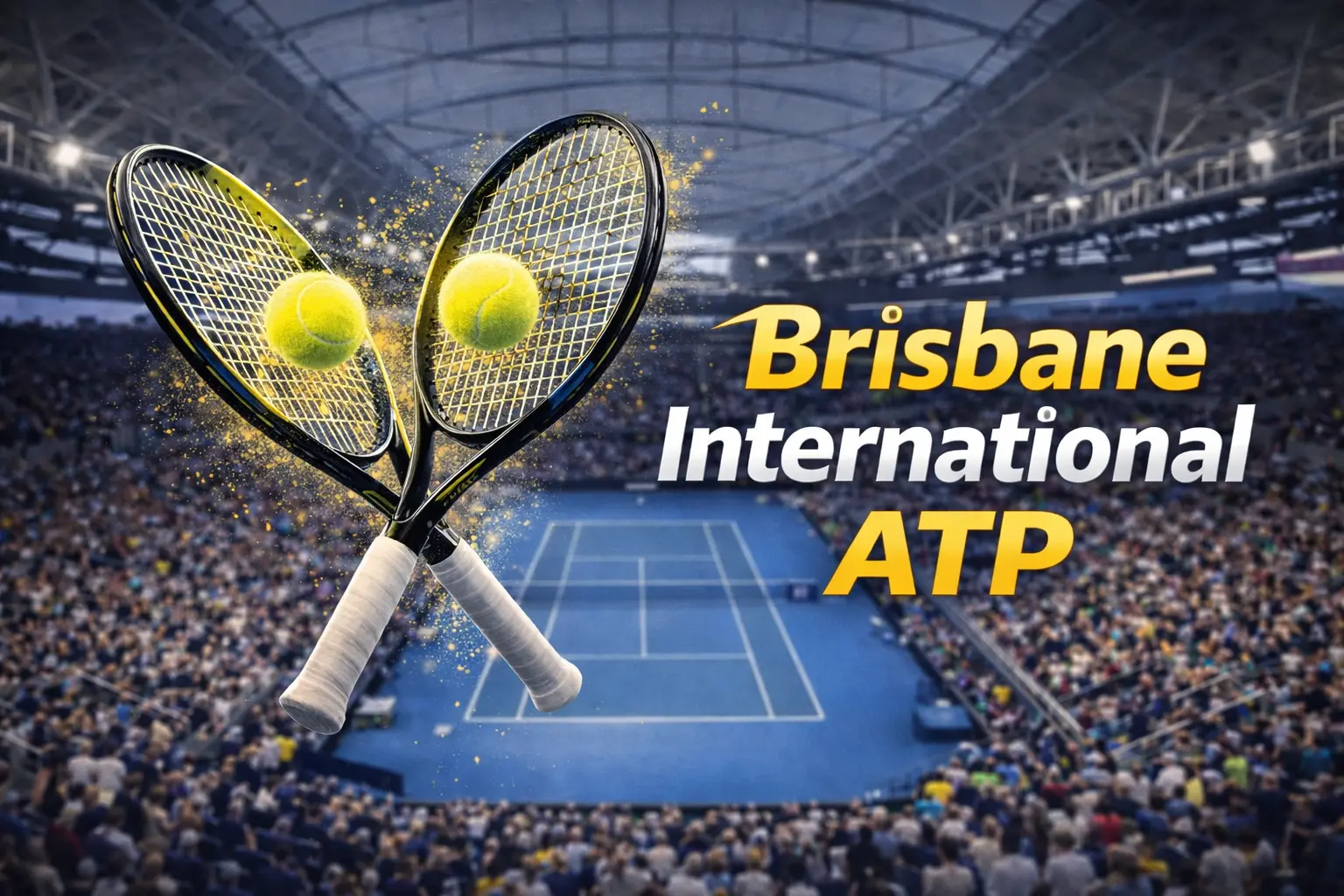
Reilly Opelka and Dane Sweeny turned a routine first-round match in Brisbane into one of the most peculiar moments of the early 2026 tennis season. What looked like a standard win for the American giant ended with a gesture that instantly went viral.
Opelka arrived in Brisbane with unfinished business. Last year’s finalist, beaten in the title match by Czech world No. 1 Jiri Lehecka, opened his campaign with authority. His serve dictated everything, allowing him to control the tempo and shorten rallies. Against a local player eager to prove himself, Opelka never allowed the contest to slip from his hands.
The numbers backed up the visual dominance. Opelka fired 21 aces, won the majority of points on first serve, and did not face a single break point. Sweeny, newly qualified and ranked No. 183 in the world, fought hard but found no openings. The American closed the match 6–3, 7–5, advancing without drama — at least until the final point was played.
As the players walked toward the net, the tone suddenly shifted. Instead of a routine handshake, Sweeny appeared holding a chair. The Australian stepped onto it, lifting himself to match Opelka’s eye level. The height difference — 41 centimetres — became the punchline. What could have been an invisible loss turned into the defining image of the match.
Read also
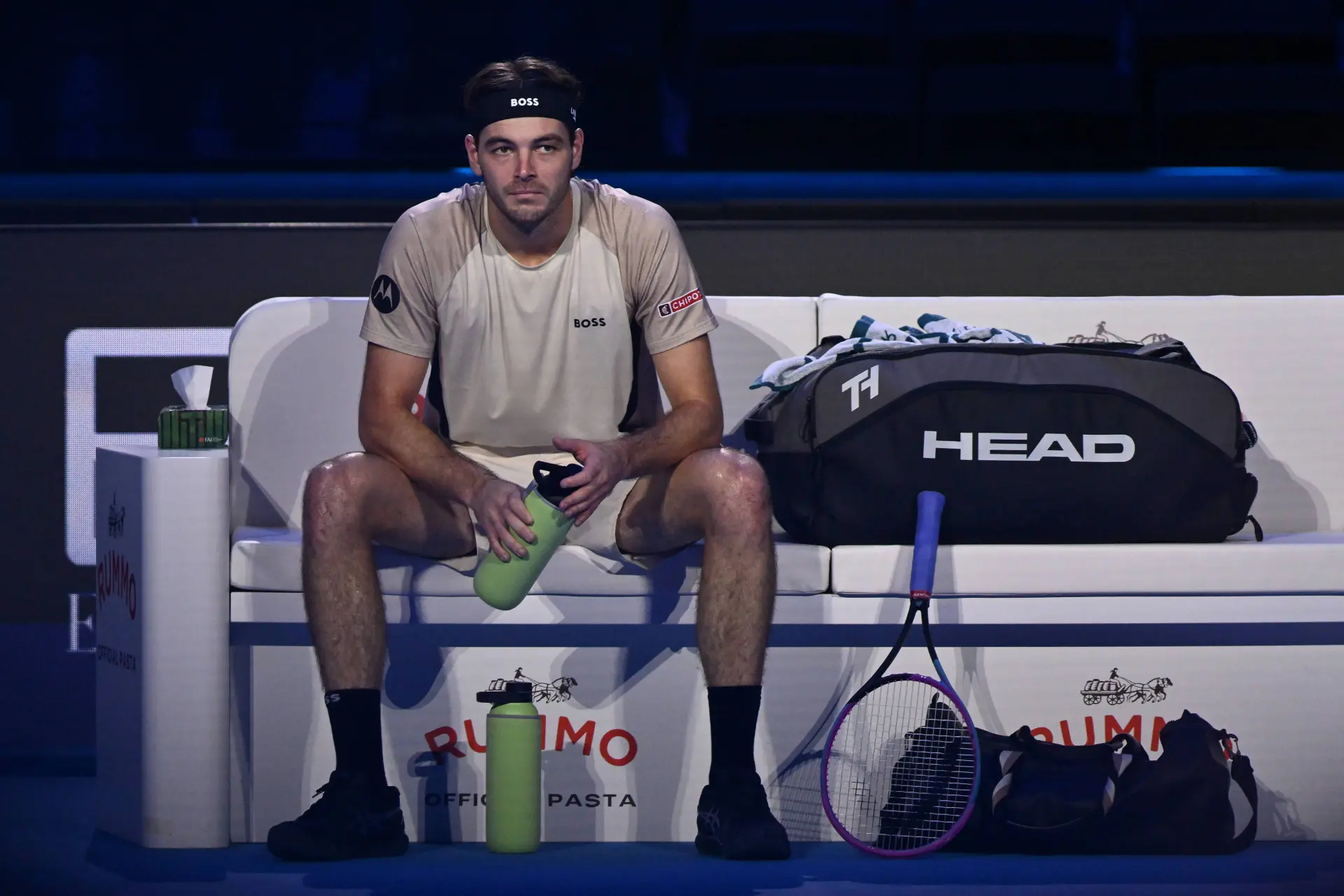
A chair that changed the conversation
The gesture was instant, clear, and impossible to misinterpret. Sweeny wasn’t protesting the loss or mocking his opponent. He was acknowledging reality with humour. At 170 centimetres tall, he simply cannot meet a 211-centimetre opponent at eye level. Rather than ignore it, he embraced it — literally — and the crowd responded immediately.
Laughter spread through the stands as cameras rushed to capture the scene. Opelka’s reaction said everything. Surprised, amused, and relaxed, he accepted the handshake without tension. In a sport often criticized for being overly rigid, the moment felt refreshing. It was unscripted, harmless, and genuinely funny.
The clip quickly made its way across social media, resonating far beyond Brisbane. Fans praised the creativity and sportsmanship. Analysts pointed out how rare such moments are in professional tennis. In seconds, Sweeny transformed an early-round defeat into global visibility — something rankings alone cannot guarantee.
This wasn’t the first time tennis had seen such a moment. More than a decade ago in Bogotá, Israel’s Dudi Sela famously used a chair to congratulate Ivo Karlovic, another 211-centimetre server, after losing a final. That image became part of tennis folklore, remembered long after the trophy ceremony. Sweeny’s gesture fits perfectly into that same tradition.

Opelka moves forward, sweeny looks ahead
Lost beneath the humour was a serious performance from Opelka. The American looked sharp, confident, and physically imposing. His serve remains one of the most devastating weapons on tour, especially on quick Australian courts. Brisbane has historically suited his game, and this opening-round win reinforced his status as a dangerous contender.
Next up for Opelka is Poland’s Kamil Majchrzak in the second round. The matchup will test whether the American can maintain consistency beyond serve dominance. For Opelka, this tournament is not just preparation — it is a chance to build momentum ahead of the Australian Open, where expectations follow him every year.
Sweeny’s path now shifts to Melbourne. The Australian will compete in the qualifying rounds of the Australian Open starting January 12. While his Brisbane campaign ended early, he leaves with something valuable: confidence, exposure, and a moment that connected him with fans worldwide.
Tennis seasons are long, and early-round losses are quickly forgotten. Viral moments are not. For Opelka, the win keeps him on track. For Sweeny, the chair ensured that his name will be remembered — not for the scoreline, but for the way he handled defeat.

Cristhián AvilaTennis Journalist
Cristhián Ávila is a tennis journalist based in Santiago, Chile, and has been part of the TennisUpToDate team since early 2023. He covers the ATP and WTA Tours as well as all four Grand Slams, producing breaking news, match reports, analysis, and regular liveblogs from major tournaments.
His reporting combines statistical analysis with clear explanation, helping readers understand tactical developments, player form, and broader storylines across the tour. Working fluently in both Spanish and English, Cristhián collaborates with an international editorial team and contributes to comprehensive global coverage. As part of his work, he has conducted interviews and media interactions with leading figures in the sport, including Caroline Wozniacki and John McEnroe.
In his journalism, Cristhián places strong emphasis on careful sourcing, editorial accuracy, and updating articles promptly when new, verified information becomes available. His coverage is grounded in research, context, and direct engagement with professional tennis.
claps 0visitors 0
Just In

Popular News

Latest Comments
- Fight the Good Fight... Tennis (sports in general) need more Humans such as yourself.
 mandoist18-10-2026
 - When is WTA going to mandate Genetic Testing (DNA) ???mandoist18-10-2026
- Hey, Dan... you just wake up from a coma? Regardless -- Thanks for the comedy this morning!mandoist18-10-2026
- Two Things: 1. Stop allowing these Spoiled Trust-Fund Elitists to behave badly. Your little hand-slaps do not deter them. 2. STOP the incessantly annoying "towel wiping" nonsense!!!!mandoist15-10-2026
- A healthy Qinwen may be hard to stop next season. She was already scaring her opponents before her medical leave(s). Unfortunately, Zheng insisted on singing again. On the positive side -- Mirra did not sing!! ;~}mandoist11-10-2026
- Where is it written that athletes, entertainers... People in general... are mandated to keep looking at -- or even using [anti]Social Media? Public & private figures consistently complain and reveal their concerns about negativity and violence thrown at them -- yet they insist on participating. Avoid it, don't use it, don't read it. It's okay to occasionally look up at the World instead beating your eyes & thumbs to death on The Inventions out there.mandoist11-10-2026
- great articlestennisseserver07-10-2026
- Medvedev was leading Djokovic 7-5, 3-5 when an attempted return..' NO you ignorants, Djokovic was leading .weiss05-10-2026
- No more bullshit "Wildcards" to these two. Qualify like everyone else -- there will be cameras there, too. Time to scream... WTF ????!!!!mandoist29-09-2026
- Let's not BS the general public -- Sabalenka started showing cracks in her game last season. Her losses and near-losses started at about the same time she began being distracted by Fame (constant Selfies, making TV commercials, magazine shoots, endless Social Media nonsense, etc., etc.) One would think even Saba could recognize the parallels with others who failed before her -- Raducanu, Giorgi, Bouchard to name a few.mandoist25-09-2026

Loading